


 Industrial coated textiles / OEM roll supply
PVC Fabric for Industrial Awning Workshops
A converter-focused sourcing guide for shops making custom awnings, shopfront covers, fixed canopies and rail-guided shade panels. DERFLEX PVC-coated fabric rolls can be reviewed for cutting yield, sewing or welding, Keder integration, cleanable surfaces and print-ready appearance. The workshop must validate its own finished panel geometry, hardware interface and weather loads.
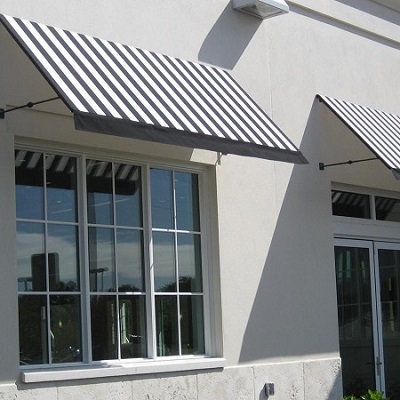
Which PVC fabric should an awning workshop put on its cutting table?
An industrial awning shop needs more than a general outdoor fabric claim. The material must suit the shop’s pattern layout, fabric width, panel joining method and exact connection to the frame. The same PVC-coated textile may be useful for a welded fixed canopy and unsuitable for a highly folded retractable awning if its stiffness, edge behavior or rolling appearance does not pass a trial.
Polyester-reinforced PVC can provide a waterproof, printable or cleanable surface and enables several joining routes. A fabricator still needs to verify coating behavior under its welding equipment, needle penetration when sewing, seam finish, grommet reinforcement and edge tension. Where a rail is used, bead diameter and flap construction must match the physical channel.
This page addresses roll purchasing, cutting and conversion decisions. DERFLEX’s broader awning supplier pages cover the general product family; a finished frame, anchorage or structural wind rating is not implied by ordering fabric rolls.
Start with the workshop process and attachment interface
A material color card cannot reveal whether the edge can slide freely in a track or whether a chosen weld will hold across multiple thicknesses. Prototype the most complex junction before buying volume.
| Workshop output | Fabric and process focus | What to check before approval |
|---|---|---|
| Welded fixed awning or canopy | Weldable PVC face, tensile support, rain runoff and surface cleaning | Actual overlap seam, edge reinforcement and local drainage detail. |
| Sewn replacement awning | Needle compatibility, thread, hem lay, shade and dimensional stability | Pucker, stitch-hole behavior and match to old frame measurements. |
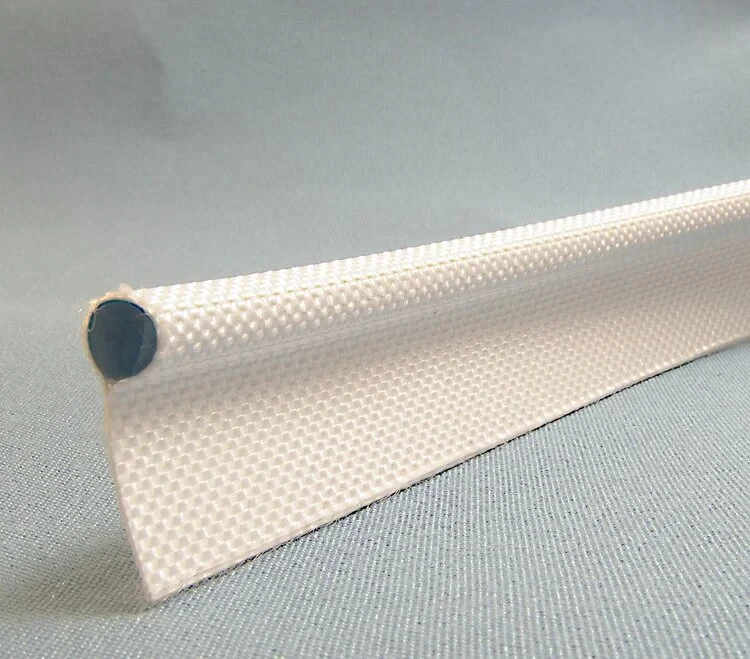
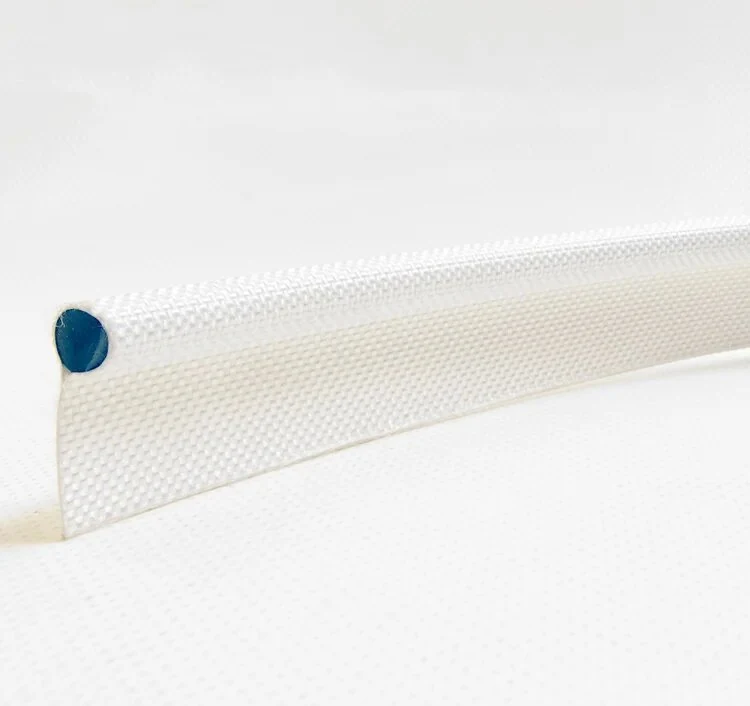
| Keder-guided panel | Bead and flap compatibility with the rail, coating and seam thickness | Slide the finished keder assembly through the exact channel, including curved sections. |
| Printed commercial awning | Surface preparation, ink system, adhesion, color and washing requirements | Print-and-clean trial after welding or sewing, including fold lines. |
| Moving or retractable shade | Fold-memory, surface blocking, movement abrasion and roll tension | Cycle the panel on the actual hardware and inspect wear points. |
Control six properties that change workshop yield
A repeatable material program records not just GSM, but fabric direction, surface, connection design and the way batches perform on the actual equipment.
Roll width and pattern efficiency
Match net width to awning projection and seam plan; include realistic trimming and warp direction before comparing price per square metre.
Coating and surface finish
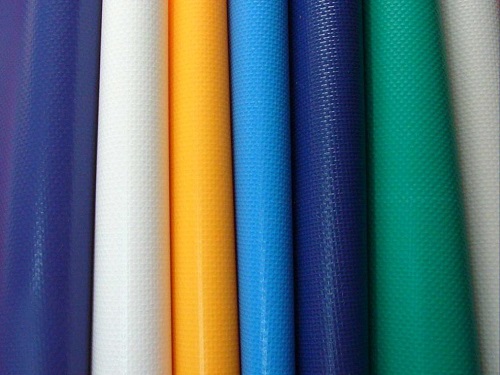
Compare suitable glossy, matte or treated PVC surfaces by cleanliness, scuff visibility, UV exposure and finished-product appearance.
Sewing and thread pairing
Trial needle size, thread type, stitch pitch and hem thickness. Sewn seams may need separate weather-management details.
Thermal joining
Test HF, hot-air or wedge methods with the chosen material stack. Record settings and seam acceptance, but do not assume one universal temperature.
Keder and edge design
Measure channel opening, bead diameter, flap width, seam buildup, reinforcement and bend clearance on the installed rail.
Printing and identity
Check proposed ink compatibility, required graphics size, orientation and color controls. An untested printed surface may react differently to heat and cleaning.
Workshop trial: cut, join, attach, clean, repeat
Build the test around the actual factory work order. A passing raw material sheet is useful, but a converter’s scrap rate and field quality often depend on details between the roll and the finished awning.
01 · Check usable roll width
Record warp/weft, trimmed edge and fabric lay. Test whether panel nesting leaves practical allowance for overlaps and tensioning.
02 · Cut and join a full detail
Make a representative panel corner with the true layer stack. Check seam continuity, needle marks, curling, surface gloss and visible mismatch.
03 · Trial rails and reinforcement
Run the finished Keder through the actual rail. Load-check hems, eyelets or webbing connections with the proposed fixing spacing.
04 · Print and clean a sample
Use your specified printing and washing chemistry. Observe ink adhesion, streaking, color change and coating damage after realistic wiping.
05 · Evaluate movement and weather
Where relevant, cycle retractable panels and assess scuff points. Confirm pitch, drainage and fixing loads at the level of the complete awning design.
06 · Freeze an OEM reference
Keep approved fabric swatches, color standard, joined corner, Keder profile and packing label for comparing future rolls.
Decide what belongs in the fabric order and what belongs in your shop
A workshop purchasing fabric rolls usually undertakes pattern development, cutting, welding or sewing, edge assembly, local hardware sourcing and finished-cover fitting. DERFLEX can discuss the PVC-coated material construction, supply width and suitable surface direction around that workflow.
An awning system additionally depends on arms, rails, channels, frame pitch, mechanical fixings, drainage, motors if present, and site wind exposure. The fabric’s tensile performance alone cannot certify the frame or whole installed assembly. State any request for fabricated panels, finished Keder or accessories as a distinct quotation line.
For brands purchasing repeatedly, the best control is an approved physical appearance-and-conversion pack: master swatch, finished seam, Keder sample, ink test and defined roll inspection method. This avoids subjective disputes about whether the new shipment “looks the same.”
Actual DERFLEX material and application references
The photographs below are sourced from existing DERFLEX pages. They illustrate materials or related applications; they do not establish a certified grade or finished-project performance for this purchase.
Awning workshop request-for-quotation brief
Your shop drawing and current equipment are as important as the finish color. If you make both fixed and retractable products, specify the two workflows separately.
Send with your inquiry
- Finished awning type and panel span/projection
- Roll width, cutting pattern and monthly output estimate
- Target texture, color, gloss and cleaning requirement
- Sewing machine, welding equipment and seam process
- Keder core/profile or existing rail cross-section
- Reinforced hems, webbing or eyelet details
- Printing technology, sample artwork and color target
- Exposure climate, named test requirements and packaging
How to approve a repeat order
Approve one material-and-conversion sample kit before issuing repeat orders. Retain the fabric swatch, printed reference, stitched or welded sample and fitted Keder.
For every production lot, review roll width, face/back orientation, color, finish, defect frequency and seam trial. Record approved recipe changes because a coating change can affect both welding and printing.
Frequently asked questions
Can awning sewing fabric rolls also be welded?
Some PVC-coated polyester awning fabrics support both sewing and suitable thermal welding. The correct method depends on coating construction, equipment, overlapping layers and required seam performance; test on your line.
How do I specify fabric for an awning with Keder rails?
Send the exact rail cross-section, bead diameter and allowable flap thickness. Build and slide a complete edge sample to confirm clearance, joint strength and practical assembly.
Does PVC awning fabric need a separate surface treatment?
That depends on climate, visual finish, dirt pickup, cleaning chemicals and print requirements. Request and test the relevant coating or finish rather than assuming all PVC fabric is self-cleaning.
Are printed PVC awnings suitable for solvent, UV or latex ink?
Compatibility varies by surface coating and ink system. Print, cure and clean a sample with your equipment, and check the appearance after heat joining and bending.
Is the fabric quotation also a quotation for a finished awning?
No. Roll material pricing does not automatically include cutting, joining, Keder, frame, arms, hardware or installation. Define the supply format explicitly.
What is the most useful reference for repeat awning fabric orders?
Keep an approved physical fabric swatch, color or printed target, joining sample, roll width tolerance and edge-interface prototype. Match later lots using the same inspection method.
Discuss fabric that works in your workshop.
Share a sample panel, seam method and Keder drawing. We can review a candidate roll material and the tests needed before volume conversion.
DERFLEX / PVC-coated technical textiles. Selection and test evidence apply to the specific approved grade, not to every PVC-coated fabric or finished assembly.