


 DERFLEX · ARCHITECTURAL MEMBRANE MATERIALS
Tent Insulation Liners for Dome & Resort Enclosures
Create a comfortable interior enclosure with a liner construction that can actually be described, tested and maintained. For resort domes and glamping rooms, specify facing, insulation core, backing, humidity strategy, removable sections and openings as one assembly. Nominal 8 mm or 12 mm thickness and a PU leather facing are configuration descriptors—not proof of thermal insulation or fire performance.
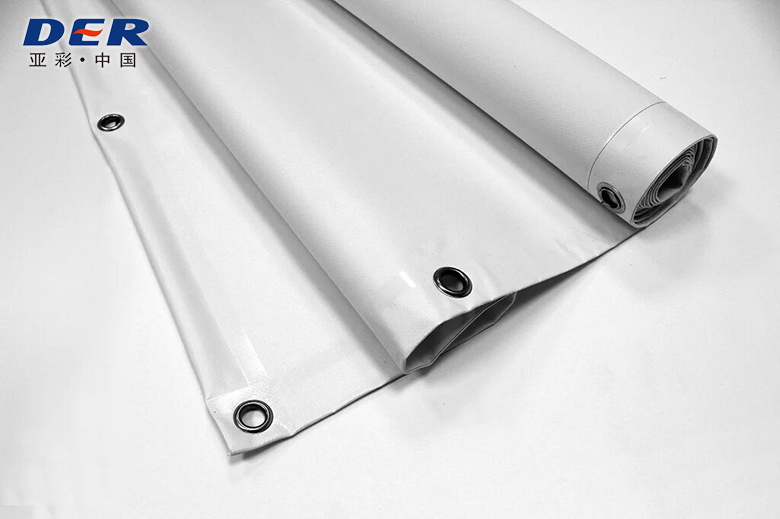
Interior liner as an engineered material assembly
An insulation liner is a secondary surface within a tent or geodesic dome that may improve comfort, visual finish and moisture control when its construction and installation have been validated. Typical proposals involve a face material, insulation core, backing and attachment interface; some use an air cavity or removable panels.
Layer build-up
Specify every layer and the joining method, rather than purchasing only by nominal overall thickness.
Moisture and access
Design cavity ventilation, cleaning access, condensation prevention and removable service areas together.
Evidence before claims
Thermal resistance, reaction to fire, smoke, chemical and hygiene requirements need product- or assembly-specific reports.
Layer build-up and attachment design
Choose an interior facing for cleanability, appearance and handling; select the insulation core for its verified thermal and mechanical properties. Coordinate the liner with the frame geometry, shell-to-liner gap and fixing points.
An attachment might use tapes, loops, zippers, keder-type edges, track or project-specific clips. Each interface needs a load, wear and cleaning plan. Avoid unsupported assumptions about mechanical compatibility with an existing dome model.
Thickness, density and moisture management
Dimensions alone cannot predict insulation. Ask for thermal conductivity or resistance under a stated test method and construction, and evaluate the complete assembly—including gaps, fasteners and thermal bridges.
| Property | What must be specified | Why it matters |
|---|---|---|
| Nominal thickness | Measured overall thickness, tolerance, compressed thickness where relevant | 8 mm or 12 mm labels do not prove thermal performance |
| Core density and composition | Material chemistry, density range, layer count and facing weight | Influences handling, compression and thermal properties |
| Thermal evidence | Conductivity or R-value, standard, conditions and sample identification | Makes different proposals comparable |
| Vapor / condensation | Climate, humidity, air exchange, vapor-control location and drainage | Reduces trapped moisture and hidden surface deterioration |
| Removability | Panel size, access route, fastener type and laundering or wipe-clean limitations | Supports actual servicing without damaging the liner |
| Fire / smoke | Applicable destination or occupancy test criteria and assembly details | Individual layer claims may not represent the installed system |
Openings, removable sections and maintenance
Doors and windows
Register every opening against the outer-shell drawing; plan return edges, light-control details and serviceable zipper paths.
Mechanical services
Coordinate HVAC outlets, ducts, lights, sensors and electrical interfaces with qualified installers. Do not obstruct required exits or ventilation.
Cleaning and access
Limit module size for safe removal, label panel orientation and check whether each surface can be wiped, disassembled or professionally cleaned.
Preserve inspection access where condensation or shell damage could otherwise remain hidden. A moisture-sensitive assembly should be reviewed with the local operating climate and occupancy pattern.
Thermal and fire evidence: the sample gate
Where exact liner construction is not verified, treat the design as a procurement guide until a tested material sample and an approved assembly description exist. The following sequence prevents a decorative material from being mistaken for an accredited insulation product.
Define the room performance target
State climate zone, occupancy, comfort and maintenance expectations without promising a particular heating saving.
Freeze the construction concept
Confirm facing, core, backing, nominal dimensions, interface and moisture path.
Request relevant testing
Identify method, standard edition, lab, specimen description and validity for thermal and fire/smoke claims.
Build an actual sample bay
Review attachment, wrinkles, condensation, cleaning access, doors and window alignments.
Approve repeat production
Record layers, batch criteria, finished panel patterns, labelling and replacement modules.
Related outer-shell and fabric references
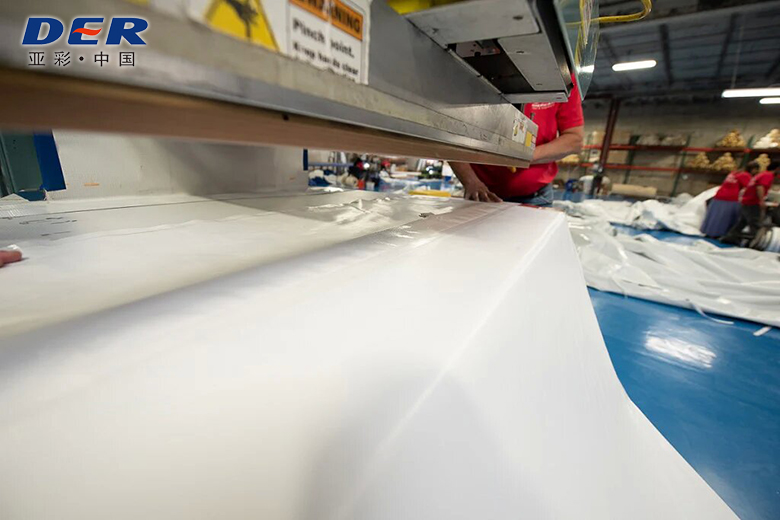
The following DERFLEX material and fabrication photos are context for the surrounding dome envelope, not photographs of a tested insulated liner SKU.
Send the liner assembly brief
At the quotation stage, buyers can supply a marked photo, sketch or reference swatch. Detailed materials and test reports are necessary before final validation.
| Input | Practical detail |
|---|---|
| Dome geometry | Frame model, height, base perimeter, dome frequency, section drawings and liner fixing positions |
| Layer build-up | Facing, insulation core, backing, density, 8/12 mm or other thickness goal |
| Thermal / fire claims | Required standards, actual available reports and intended occupancy/destination |
| Opening map | Doors, glazing, vents, lights and HVAC or service penetration locations |
| Cleaning and moisture | Humidity conditions, remove/refit approach, condensation control and maintenance frequency |
| Commercial scope | Material rolls vs cut/finished panels, approximate area, quantity, packing and delivery market |
Installation hardware, HVAC design, structural and moisture engineering, independent testing and complete dome systems are separate items to confirm in writing.
Frequently asked questions
What is a tent insulation liner?
It is a secondary interior lining installed inside a dome or enclosure shell. Depending on its construction, it may contribute to thermal moderation, condensation management, comfort, privacy or decorative finish.
Does an 8 mm or 12 mm liner guarantee thermal performance?
No. Thickness is not a thermal resistance rating. Thermal conductivity, density, layer structure, bridges, air gaps and installation quality determine actual performance.
Is a PU leather tent liner suitable for insulation?
PU leather can be considered as a decorative or cleanable facing in an engineered assembly, but its presence alone does not establish insulation performance or fire suitability.
Can the liner be removable for cleaning?
A removable design may be possible with compatible segmented panels, hook-and-loop, zippers, tracks or other interfaces. Confirm dimensions, disassembly access, cleaning method and reinstallation tolerances.
How can condensation behind a liner be avoided?
Use an enclosure-specific moisture strategy: study vapor control, ventilation, cold surfaces, air leakage and drainage. Avoid sealing a cavity without a project-specific humidity assessment.
Does insulation liner material need a fire report?
Applicable fire requirements depend on destination, occupancy and the assembled system. Request a valid test report for the actual material or assembly and check that the cited standard matches the intended installation.
Can a dome liner include doors, windows and service penetrations?
Yes in a project-defined design, with carefully mapped openings, removable access panels and reinforcement. Coordinate alignment with the outer cover, frame and any HVAC or electrical penetrations.
What details are needed to request a sample?
Provide dome geometry, target layer build-up, thickness and density, lining facing, panel joint style, removable parts, cleaning practice, required thermal and fire evidence, and approximate quantity.
Explore compatible tent fabrics and systems
These related DERFLEX topics address outer skins, textile choices, transparent panels, interfaces and project-specific testing. Confirm that any not-yet-published topic URL is live before public deployment.
Bring the drawing. Define the scope. Approve the sample.
Send your existing dome information, application, quantity, target performance and destination. DERFLEX can review material and fabrication options, then agree on what sample and supply scope should be quoted.