News
Industry News

Construction Weather Protection | Temporary Enclosures & Jobsite Covers | DERFLEX

Update:2026/9/13 17:36:19 Views:
Construction Weather Protection · Project-Specified Tarp Systems

Construction Weather Protection for Rain, Wind & Temporary Enclosure

DERFLEX supplies coated fabrics and custom tarpaulin systems for construction site weather protection: scaffold enclosures, temporary roof covers, open-building screens, material covers, equipment protection and winter work zones. The useful specification starts with the weather risk, installation geometry and fixing method—not with tarp weight alone.

  • Waterproof PVC coated polyester, PE and mesh directions
  • Custom panels, roll goods and finished weather covers
  • Reinforced hems, webbing, grommets, D-rings and welded seams
  • UV, cold-flexibility and project-specific flame-retardant directions
  • Temporary roofing, scaffold wrapping and material-storage protection
  • OEM, distributor and project-based B2B supply
Large temporary enclosures can change wind loads on scaffolding and temporary structures. Material selection and fixing details should be coordinated with the project’s temporary-works design, local rules and approved installation method.
Quick Answer

What Is Construction Weather Protection?

Construction weather protection is the temporary covering and enclosure system used to reduce rain, wind, snow, cold, UV, dust and moisture exposure while a building, roof, facade or material package is still vulnerable. It can include waterproof roof tarps, scaffold sheeting, temporary wall panels, mesh screens, equipment covers and protected storage zones.

A professional system is not one universal tarp. Roof zones need water shedding and secure perimeter fixing. Scaffold faces need a wind-load strategy. Stored drywall or insulation needs moisture control. Winter enclosures may need low-temperature flexibility, controlled ventilation and coordination with temporary heating. DERFLEX can supply roll material, fabricated panels or finished covers around those different requirements.
One Jobsite · Multiple Protection Zones

Build Weather Protection Around the Vulnerable Zone

The same construction site often needs different cover structures at the same time. Treat each zone as a separate protection problem, then connect them into one site plan.

01

Temporary Roof & Deck

Prioritize waterproof fabric, welded seams where appropriate, slope, runoff path, overlap direction and reinforced anchoring. Avoid flat installation that can allow water pooling.

02

Scaffold & Facade

Balance weather exclusion with wind pressure. Solid PVC or reinforced PE can provide stronger enclosure; mesh or mixed zones can add airflow where pressure relief matters.

03

Openings & Incomplete Walls

Use temporary screen or panel systems to reduce wind-driven rain and dust while keeping access, ventilation, daylight and future cladding work practical.

04

Material Storage

Drywall, cement bags, insulation and timber need water control; steel and pipes may need abrasion protection and secure tie-downs. Cover shape matters as much as material weight.

05

Equipment & Tools

Generators, compressors, pumps and machinery may require fitted covers, access flaps, straps, ventilation allowance and reinforced contact points instead of a loose rectangular sheet.

06

Winter Work Zone

Cold-weather enclosures should consider low-temperature flexibility, joint sealing, temporary heating method, controlled airflow and project-specific fire requirements.

Weather Risk Selection Matrix

Match the Cover to the Weather Failure Mode

Instead of ordering “heavy duty” by description alone, define what weather is most likely to cause failure and what design response reduces that risk.

Weather / Site RiskTypical FailureMaterial DirectionFabrication & Installation FocusBuyer Check
Heavy rain / wind-driven rainWater through seams, openings or low pointsSolid PVCReinforced PEWelded or well-planned joints, external overlaps, slope, drainage path, sealed transitionsWhere will water run after it reaches the cover?
Strong windFlapping, torn eyelets, overloaded scaffold or loose panelsMeshMixed solid + meshProject-specified solidWind-load review, reinforced fixing zones, smaller modular panels, pressure relief where permittedHas the temporary structure been designed for the enclosed area?
Snow / winter exposureCold stiffness, ice loading, water entry after thawCold-flexible PVCInsulated panel directionLow-temperature formulation, sloped surfaces, secure edges, controlled access and ventilationWhat minimum service temperature and heating method apply?
Long UV exposureSurface aging, embrittlement, color change, reduced flexibilityUV-stabilized PVCOutdoor formulation, compatible surface finish, inspection and cleaning planHow long will the cover remain continuously exposed?
Dust / oversprayContamination leaving the work zone or entering finished areasSolid sheetingMesh where airflow is neededJoint continuity, access-door design, perimeter sealing, airflow / extraction strategyIs the goal weather protection, containment or both?
Repeated handlingAbrasion, corner tears, hardware pull-out, coating damagePVC coated polyesterWebbing, corner patches, D-rings, reinforced hems, protected sharp contact zonesHow often will crews move, fold or reinstall the cover?
Important: A heavier tarp is not automatically a safer weather enclosure. Solid, large-area sheets can increase wind loading. Final panel size, permeability, fixing density and structural attachment should follow the actual temporary-works design.
Material Routes

PVC, Reinforced PE or Mesh?

Construction weather protection is usually a material-matching problem. The right route depends on exposure duration, waterproofing level, wind strategy, handling cycle and fabrication needs.

PVC Coated Polyester

Best suited to reusable or demanding weather protection where waterproofing, strength, welding and custom finishing matter.

  • Temporary roofs and wall panels
  • Repeated-use equipment or material covers
  • Custom hems, webbing, D-rings and welded seams
  • UV, cold-flexibility and project-defined functional options

Explore PVC tarpaulin material →

Reinforced PE Sheeting

A lighter and often more economical route for temporary enclosure, short-duration site covers and rapid-deployment protection.

  • Short-term weather screens
  • Large-area temporary wrapping
  • Lower handling weight
  • Project-defined reinforcement and fixing bands

Compare construction tarp options →

PVC / PE Mesh

Used where airflow, screening and reduced wind pressure are more important than complete waterproof enclosure.

  • Scaffold perimeter screening
  • Dust and light-debris control
  • Wind-sensitive elevations
  • Shade and visibility reduction

Review mesh tarp materials →

DERFLEX Image Pack

Construction Enclosure & Weather Protection in Use

Real DERFLEX website images show the difference between full-building scaffold wrap, modular sheeting and large temporary enclosure panels.

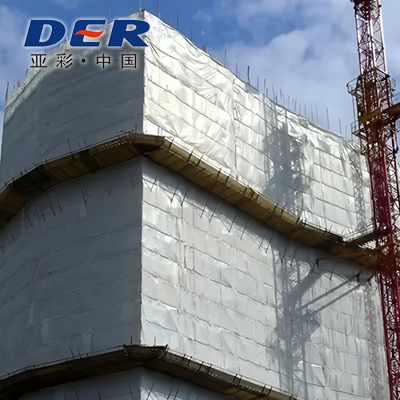
DERFLEX high strength scaffold tarps for construction weather protection and temporary enclosure
Full-Building Weather EnclosureLarge scaffold wrapping reduces direct rain and wind exposure around facade work. Panel area, attachment and scaffold loading must be reviewed together.
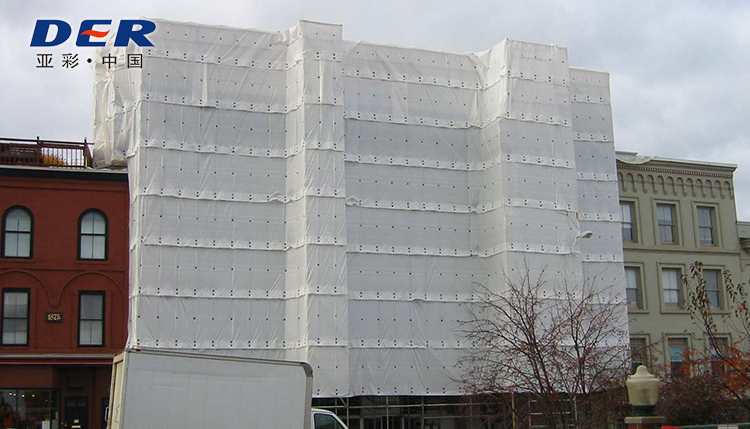
DERFLEX reinforced scaffold sheeting with repeated fixing points for temporary weather protection
Reinforced Scaffold SheetingRepeated fixing zones support modular facade enclosure and easier panel replacement.
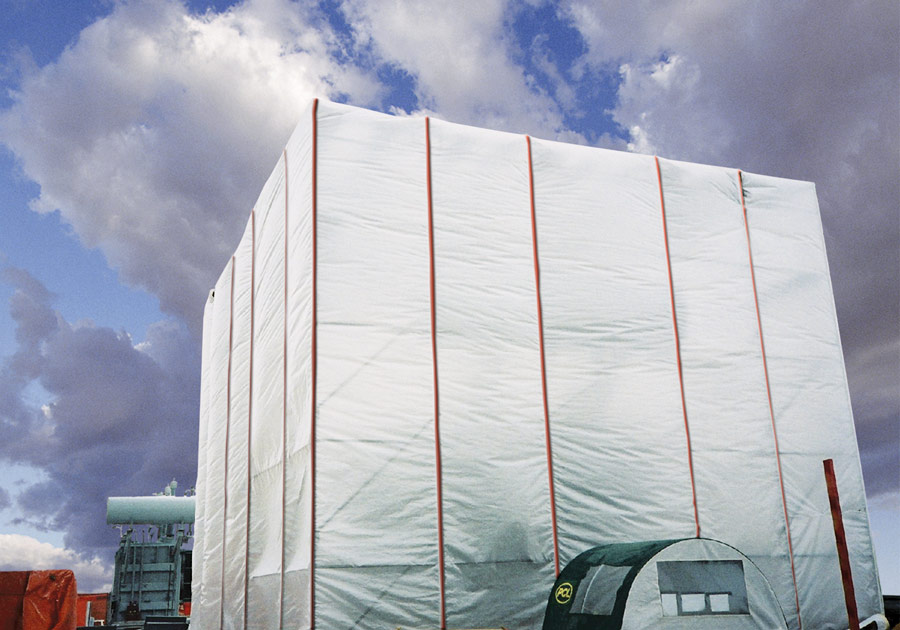
DERFLEX temporary building enclosure tarp for construction site weather protection
Temporary Building EnclosureLarge-panel weather barrier around an exposed industrial work zone.
Project Specification Framework

What Can Be Customized for a Weather Protection Program?

Final values should be confirmed against the selected material, approved sample, project requirements and fabrication method. DERFLEX should not freeze a generic specification before the site conditions are understood.

MaterialPVC coated polyester, reinforced PE, mesh or project-defined temporary enclosure material.
Weight / ThicknessSelected around handling, exposure duration, durability and enclosure type; confirm target with DERFLEX.
Finished SizeRoll goods, modular sheets, fabricated roof panels, shaped equipment covers or large enclosure panels.
ReinforcementFolded hems, webbing, rope edges, reinforced bands, corner patches and project-defined pull zones.
HardwareGrommets, D-rings, loops, straps, pockets, buckles or compatible project hardware.
SeamsWelded or sewn construction depending on material route, waterproofing objective and panel geometry.
Weather OptionsUV stability, cold flexibility, anti-mildew direction, cleanability and other application-specific options subject to material selection.
IdentificationProject marks, panel codes, orientation graphics, logos, warnings and private-label requirements can be discussed.
Engineering & Fabrication Notes

Six Details That Decide Whether the Cover Works on Site

Most weather-protection failures begin at interfaces: seams, fixing points, corners, low spots, openings and structural transitions.

1. Give Water a Planned Exit

Waterproof fabric cannot compensate for a flat roof cover that ponds. Use slope, drainage paths and overlap orientation so rain moves off the protected zone instead of collecting in low areas.

2. Spread Pull Loads Beyond the Eyelet

Isolated grommets can concentrate wind and tie-down force. Reinforced hems, webbing or dedicated fixing bands help distribute load into a larger area of the panel.

3. Treat Wind as a Structural Input

Closing an open scaffold or frame changes its aerodynamic behavior. Select solid, mesh or mixed coverage only after the temporary structure and anchorage strategy are reviewed for the actual site.

4. Protect Sharp Contact Zones

Steel edges, couplers, concrete corners and protrusions can damage a coating even when the base fabric is strong. Add padding, local reinforcement or geometry changes where rubbing cannot be avoided.

5. Design Doors & Openings Before Fabrication

Access doors, loading points, windows, service penetrations and cladding interfaces should be planned in the panel layout. Unplanned site cuts can create weak points and water-entry paths.

6. Coordinate Temporary Heating

Winter enclosures need ventilation and fire-safety planning as well as weather exclusion. State the heater type, air movement and required material documentation before production.

Common Procurement Mistakes

Five Ways Weather Protection Gets Specified Too Late

Correcting these issues before quotation is usually easier than repairing them after installation.

Buying by GSM Alone

Weight does not define seam quality, fixing strength, wind permeability, cold flexibility or water-shedding geometry.

Ignoring Water Pooling

Even a waterproof sheet can fail as a roof system if it is installed without slope, drainage and support between fixing points.

Closing the Scaffold Without Wind Review

Solid sheeting can create substantially more pressure than an open scaffold face. Enclosure area and tie strategy must be reviewed.

Using “FR” as the Entire Specification

If fire performance is required, state the exact project test method, report expectation, specimen construction and destination-market acceptance criteria.

Forgetting Installation Sequence

Very large panels may reduce seams but can be harder to handle safely in wind. Modular panels may improve phased installation and replacement.

Covering Damp Materials Without Ventilation

A tarp can reduce new weather exposure, but it is not a drying system. Moisture-sensitive materials may need ventilation and site-specific drying controls.

Buyer Checklist

What to Send DERFLEX Before Quotation

Clear project information allows material and fabrication decisions to be made together instead of pricing an undefined “weather tarp.”

  • Application: temporary roof, scaffold enclosure, open-building screen, material storage, equipment cover or winter enclosure.
  • Dimensions: overall coverage, panel sizes, roof slope, facade elevation, opening locations or equipment drawing.
  • Weather profile: rain, snow, wind, UV, minimum temperature, dust and expected exposure duration.
  • Installation: scaffold, frame, rope, straps, grommets, D-rings, webbing, batten, pocket or other fixing method.
  • Material direction: PVC coated polyester, reinforced PE, mesh or an approved reference sample.
  • Performance documents: exact fire test or other project-required documentation, if applicable.
  • Commercial details: quantity, phased project demand, packing, labels, printing / private label and destination.
  • Reference information: site photos, drawings, existing cover samples and known failure points are especially useful.
Related Questions

Construction Weather Protection FAQ

Direct answers to the questions contractors, distributors and project buyers ask before choosing temporary weather-cover materials.

What is the best tarp for construction weather protection?

There is no single best material for every zone. PVC coated polyester is a strong direction for reusable waterproof covers, temporary roof panels and demanding outdoor use. Reinforced PE is practical for lighter temporary enclosure. Mesh is better where airflow and lower wind pressure matter more than full waterproofing. Choose after defining rain exposure, wind, handling, project duration and fixing method.

How do you protect a construction site from rain?

Start with the water path: cover unfinished roofs and openings, protect moisture-sensitive materials, create slope on horizontal tarps, orient overlaps so runoff stays outside, secure perimeter fixings and keep drains clear. A waterproof fabric alone will not make a weather-tight system if water can enter through joints, openings or pooled low points.

Can scaffold sheeting be used as a construction weather enclosure?

Yes. Solid scaffold sheeting can reduce rain, wind and dust exposure around facade and renovation work. However, enclosing a scaffold can increase wind loading, so the scaffold, ties, anchorage, panel area and fixing method should be reviewed for the actual site. Mesh or mixed solid/mesh zones may be more appropriate where pressure relief is required.

Is PVC tarpaulin waterproof enough for temporary roofing?

PVC coated polyester can provide a strong waterproof material barrier, and welded seams can reduce water entry through panel joints. Temporary-roof performance still depends on slope, support spacing, runoff, edge sealing, penetrations, overlap direction and anchoring. The roof-cover system should be designed to shed water rather than hold it.

What should be considered for winter construction enclosures?

Consider minimum temperature, material flexibility, wind and snow exposure, sealed joints, access openings, temporary heating, ventilation and any project fire-safety documentation. Cold-weather work may need a different material formulation and enclosure layout than a short summer rain screen.

Should construction weather protection be flame retardant?

That depends on the project, local rules, work activity and temporary-heating or hot-work conditions. If flame-retardant performance is required, specify the exact test standard and documentation expected before ordering. A generic “FR” label is not a complete project specification.

Can DERFLEX make custom construction weather-protection panels?

DERFLEX can discuss custom panel size, roll format, hems, webbing, grommets, D-rings, rope edges, welded seams, access details, printing, labels and packaging according to the selected material and project layout. Final feasibility and performance values should be confirmed during technical review and sample approval.

Turn the Weather Risk into a Buildable Cover Specification

Send DERFLEX the application, coverage drawing or dimensions, weather exposure, material preference, fixing method, reinforcement details, required fire / test documentation, quantity, packing and destination. The team can review a practical direction for sampling or B2B production.

Technical note: Weather-protection tarps and scaffold enclosure materials do not replace structural engineering, fall protection, guardrails, engineered debris-catch systems or other site-safety measures required by the applicable jurisdiction.

Consulting Services
+86-021-54361792 / 54361798
Email
sales@derflex.com