Measured Fit
Use actual roof-opening and perimeter measurements, side drop and corner geometry. Nominal container length alone is not a finished-cover drawing.



Heavy duty container tarpaulin built around the actual container, attachment layout and operating environment—not only a nominal 20ft or 40ft size.
DERFLEX supplies PVC coated polyester material and custom finished covers for open-top shipping containers, container roof protection, outdoor storage and OEM distribution programs. Size, fabric weight, welded seams, reinforced hems, eyelets, webbing, color and printing can be discussed for each project.
A container tarpaulin is a flexible protective cover used over an open cargo container, container roof or modified container unit. In a finished system, the tarp must do more than resist rain. It also has to stay positioned around steel edges, tolerate repeated fastening, transfer tension through hems and eyelets, and remain practical to install, fold and replace.
For open-top shipping containers, the cover normally spans the top opening and is secured around available lashing points or a dedicated cable/rope arrangement. For yard storage or modified containers, the cover may be designed as a roof cap or a larger fitted cover with side drops. These are different geometries and should not be treated as one universal tarp size.
DERFLEX approaches a custom container tarpaulin as a fabrication project. The material structure, seam layout, perimeter reinforcement and attachment spacing are matched to the container drawing and expected use rather than selected only by GSM.

A heavy duty container tarpaulin performs as a system. Fabric weight matters, but installation geometry and stress distribution often determine whether the finished cover remains manageable and stable in service.
Use actual roof-opening and perimeter measurements, side drop and corner geometry. Nominal container length alone is not a finished-cover drawing.
A waterproof PVC surface should be paired with suitable overlap, welded seams and enough pitch or support to reduce standing-water pockets.
Loose unsupported areas can flap and concentrate load at a few eyelets. Attachment spacing and balanced tension should suit the exposure and use mode.
Container rails and corners can create abrasion points. Reinforced hems, webbing and local wear patches help spread stress away from cut edges and hardware.
Coated polyester can be welded into larger panels and finished with eyelets, straps, ropes or cable interfaces according to the required fastening system.
For container tarpaulin wholesale programs, a controlled drawing, material code, hardware layout and packing method help reduce variation across repeat orders.
The finished cover is a combination of coated textile, seams, reinforcement and hardware. Each layer has a different job.

The same PVC textile family can support several container-cover formats, but the final geometry, reinforcement and fixing plan should change with the application.
| Application | Recommended Direction | Key Design Questions | Typical Buyer |
|---|---|---|---|
| Open-top shipping container | Custom waterproof PVC top tarp with reinforced perimeter and matched attachment layout | Roof opening, bows/supports, side overlap, lashing points, transit mode, cargo height | Container operator, logistics supplier, port service company |
| Container roof rain cover | Roof-cap style PVC tarpaulin with sufficient pitch and perimeter fixing | Roof condition, drainage, wind exposure, installation frequency, sharp edges | Rental fleet, industrial yard, construction site, storage operator |
| Modified container unit | Fitted cover with shaped cut-outs, local reinforcement and custom side drops | Vents, roof penetrations, doors, exhausts, added framing, access requirements | Container modifier, workshop supplier, modular building contractor |
| Oversized / project cargo | Drawing-based custom tarp; may require special shape, deeper drop and additional wear protection | Cargo protrusion, contact points, lifting access, securement plan, reusable vs one-project use | Freight forwarder, machinery exporter, project logistics contractor |
| Static full-container cover | Loose or fitted full-body cover with lower tie-down points and access planning | Dust vs rain priority, storage duration, ventilation, door access, forklift handling | Warehouse, equipment owner, distributor, long-term storage facility |
PVC coated polyester is commonly selected for reusable transport and industrial covers because it combines a continuous weather barrier with a woven load-bearing core. It can be cut, welded, folded, reinforced and fitted with hardware, which is useful when a cover needs to be fabricated around steel container geometry.
For many waterproof container tarpaulin projects, the relevant decision is not simply “PVC or not.” Buyers should compare the polyester yarn structure, coating quality, total weight, coating adhesion, cold flexibility, UV formulation, surface finish and fabrication method together.
A 650 gsm direction can offer a practical balance between handling and durability for many fitted covers. A heavier 900 gsm direction may be discussed where stronger repeated-use, tie-down tension or abrasion exposure is expected. Heavier is not automatically better when the cover becomes too difficult to install or fold.
Different materials solve different problems. A supplier should match the material to weather protection, handling and service expectations rather than force one tarp type into every container application.
| Material | Water Protection | Repeated Handling | Fabrication / Custom Fit | Best-Fit Container Use |
|---|---|---|---|---|
| PVC coated polyester | Strong waterproof surface when the finished seams and cover geometry are correctly fabricated | Well suited to reusable heavy-duty programs when specification is matched to the job | Good weldability; compatible with reinforced hems, eyelets, webbing and shaped panels | Open-top cargo covers, roof covers, fitted industrial container tarps |
| PE woven tarp | Can provide waterproof temporary coverage | Lighter and often more economical, but generally less suitable for high-abuse repeat use | Commonly heat-sealed; custom durability depends strongly on grade and reinforcement | Temporary storage, short-duration weather cover, budget-sensitive use |
| Mesh tarp | Not intended as a rain-sealing cover | Useful where airflow and load containment are more important than waterproofing | Can be hemmed and fitted with eyelets or webbing | Ventilated containment, skip/dumpster use, wind-sensitive loose-material coverage |
For a container tarpaulin manufacturer, the useful deliverable is not merely a sheet of coated fabric. It is a controlled specification that can be repeated across a fleet, distributor SKU or replacement program.
Confirm container type, measured dimensions, roof opening, side drop, attachment points and whether the tarp is static or used during transport.
Select base cloth, GSM, coating, UV/weather direction, color, surface finish and temperature requirement according to the environment.
Set seam locations, folded hems, webbing, corner patches, eyelet spacing, straps, rope/cable interface and any front/rear identification.
For custom or repeat programs, material samples and a prototype/drawing review help verify fit, handling and branding before larger production.
Record the approved material and cover drawing, hardware layout, labels, folding and packaging so reorders can follow the same specification.
Actual DERFLEX website images showing fitted container-cover applications and PVC coated tarpaulin material suitable for custom fabrication.


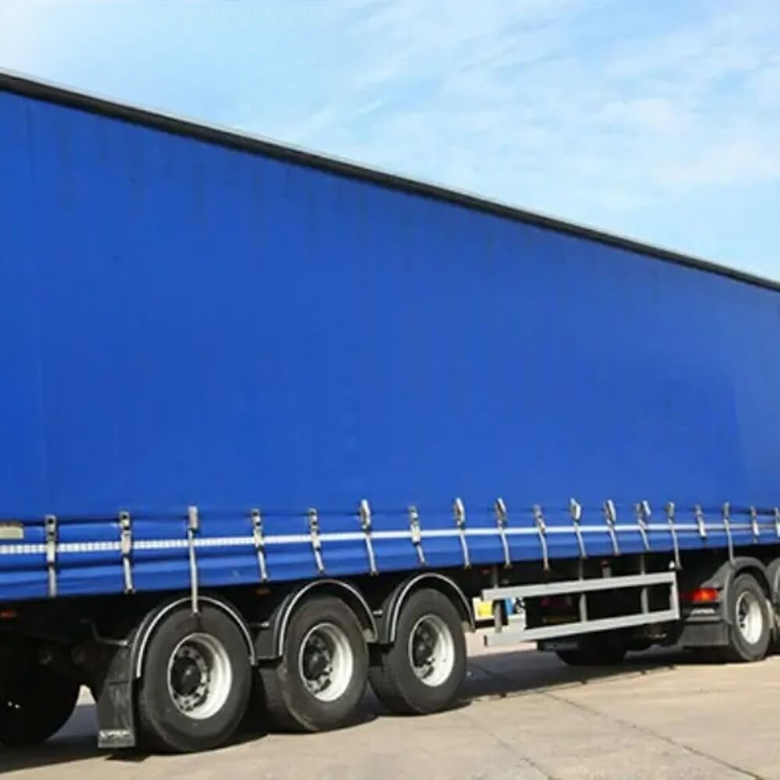
Inspection should follow the agreed specification and end use. The points below are practical checks buyers can include in an approval plan.
Confirm fabric code, nominal weight, color, surface, coating direction and any agreed weather or flame-retardant requirement against the approved sample/data sheet.
Verify finished dimensions, panel orientation and critical seam positions. Weld quality should be assessed with production methods suitable for the selected material.
Check eyelet position, webbing, hem construction, corner patches, strap lengths and any abrasion-protection zones against the drawing.
Where practical, confirm a prototype on the actual container or a verified drawing before bulk production, especially for non-standard corners or modified roofs.
Standardize fold direction, lab, els, SKU identification and package dimensions so large tarps can be unpacked and installed efficiently at destination.
If TIR, customs sealing, fire performance or another regulated requirement applies, provide the exact target standard and construction details for project-specific confirmation.
DERFLEX can support buyers who need a repeatable product specification rather than a one-off retail cover.
Replacement roof tarps, fitted rain covers and private-label service parts for common container sizes and modified units.
Open-top cargo cover programs with controlled dimensions, attachment layouts, identification marks and repeat procurement.
Container tarpaulin wholesale programs with selected colors, packaging, labels and standard product codes for local resale.
Custom covers for site storage containers, modular units, equipment containers and project cargo requiring non-standard geometry.
Six closely related DERFLEX pages for material selection, finished-cover design and procurement planning.
Answers to common purchasing questions from container operators, importers, distributors and industrial project buyers.
PVC coated polyester is commonly used for reusable heavy-duty container covers because it combines a waterproof coated surface with woven tensile reinforcement and can be welded into large custom panels. The final GSM and base-cloth specification should be selected from the container size, tie-down tension, climate, abrasion and expected handling frequency.
DERFLEX can discuss 20ft, 40ft and special-size programs. For a finished custom cover, measured roof opening, overlap, side drop, corner geometry, attachment points and any roof bows or cargo protrusion should be confirmed rather than relying only on nominal container length.
The PVC coated surface is designed to provide a waterproof barrier. Finished weather protection also depends on seam welding, edge overlap, drainage, attachment tension and the condition of the container. A strong fabric alone cannot compensate for poor cover geometry or standing water.
A 650 gsm direction can balance strength, folding and handling for many fitted covers. A 900 gsm direction is heavier and may be selected for more demanding repeated-use, abrasion or tie-down conditions. The polyester structure, coating quality and reinforcement should be evaluated together with GSM.
Yes, OEM/wholesale discussions can include color, logo or identification printing, labels, eyelet layout, webbing, straps, folding method and private-label packaging. Minimum order and feasibility depend on the selected material, color, fabrication details and product mix.
No. If a project must satisfy TIR, customs sealing, fire performance or another regulated requirement, the exact standard, eyelet/cable arrangement, overlap and construction details should be supplied for project-specific confirmation. A generic waterproof cover should not be assumed compliant.
Send the container drawing or measured dimensions and the DERFLEX team can review a practical material and fabrication direction for your project, wholesale range or replacement program.