Coating Adhesion
Good bonding between PVC and polyester supports durable welded seams and helps reduce coating separation during repeated flexing.



 PVC Coated Transport Fabric
DERFLEX supplies PVC coated polyester curtain material for curtain-side trailers where the sidewall must do several jobs at once: shield freight from road weather, slide repeatedly without becoming difficult to handle, accept welded reinforcements, hold lower-edge tension and present a clean surface for fleet graphics. Custom roll material, cut panels and OEM curtain programs can be matched to trailer geometry, climate, fabrication method and purchasing volume.
A curtain side trailer tarp is not simply a waterproof sheet tied over cargo. It becomes the flexible sidewall of the trailer. During daily service it is pulled open, gathered, tensioned, closed, cleaned and exposed to road vibration, wind pressure, sunlight, rain, dust and contact with hardware. That repeated movement changes how the fabric should be specified.
For a trailer manufacturer or replacement curtain fabricator, the useful specification is therefore a system: polyester yarn construction, PVC coating adhesion, fabric weight, surface treatment, welding behavior, lower-edge reinforcement, print compatibility and low-temperature flexibility. A heavy duty curtain side trailer tarp may need a denser base cloth or heavier coating, but adding weight without checking weldability and curtain movement can create a sidewall that is strong yet inconvenient to operate.

A practical curtain specification should recognize that different parts of the same sidewall see different mechanical stress.
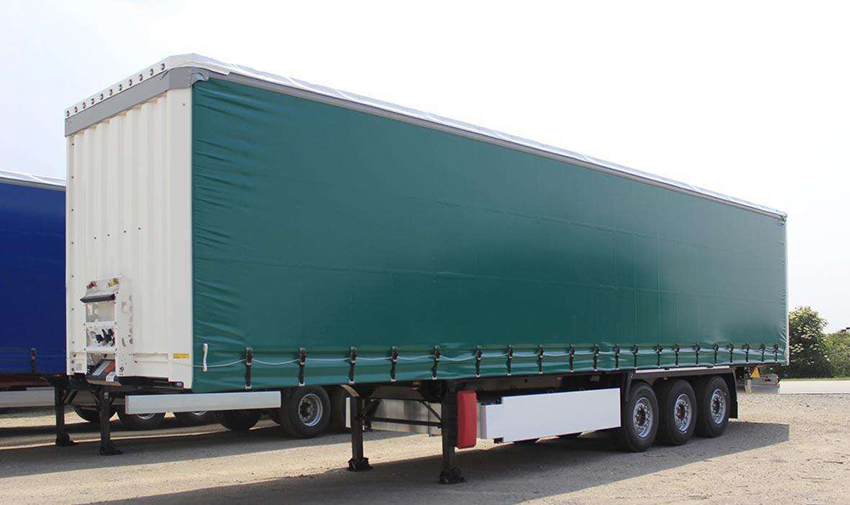
The large center field needs dimensional stability and weather protection; the bottom edge receives frequent buckle and tensioning loads; front and rear edges see repeated closing force; welded patches and strap areas create concentrated stress. Custom curtain side trailer tarp design should address these zones before hardware spacing is finalized.
Repeated sliding and bunching make flexibility, surface durability and controlled stiffness important.
Buckles, straps and tensioners create localized loads; reinforcement layout matters as much as base GSM.
Repeated pulling and closing require stable welding, reinforced edges and good dimensional control.
Fleet branding favors a smooth, consistent surface matched to the chosen printing process and cleaning routine.
The table below is a sourcing reference. Final values should be confirmed against curtain size, route, welding method, print process and target-market requirements.
| Specification Item | Typical DERFLEX Direction | Why It Matters on a Curtain-Side Trailer |
|---|---|---|
| Material | PVC coated high-tenacity polyester | Combines flexible handling, coating protection, weldability and structural reinforcement. |
| Fabric Weight | 650, 750, 850, 900gsm or custom | Helps balance curtain mass, handling, abrasion margin and service intensity. |
| Base Yarn | 1000D × 1000D options; weave adjusted by grade | Yarn and weave influence tensile strength, tear propagation and dimensional stability. |
| Width | Common roll widths from about 1.02m to 3.20m; project widths available | Roll width affects seam planning, material yield and fabrication efficiency. |
| Surface | Gloss, matte, lacquered, printable or custom topcoat | Influences cleaning, graphic appearance, blocking behavior and outdoor aging. |
| Temperature Direction | Reference options around -30°C to +70°C | Cold flexibility is especially important where curtains are folded or slid in winter. |
| Fabrication | Hot-air / hot-wedge / HF welding compatibility by selected grade | Reliable seams are required for panel joining, hems, strap zones and reinforcement patches. |
| Optional Treatments | UV, anti-mildew, low-temperature, flame-retardant, lacquer and anti-wicking directions | Options should be selected according to climate, compliance and fleet maintenance needs. |
| Supply Form | Roll goods, cut panels, welded panels or custom finished curtain projects | Lets trailer builders, fabricators, repair networks and distributors buy at the stage that fits their workflow. |
Technical data shown here is a reference range rather than a universal guarantee. Testing method and final specification should be agreed before bulk production.
There is no single GSM that fits every trailer. The right choice depends on curtain dimensions, duty cycle, climate, tensioning system and replacement strategy.
DERFLEX can support different purchasing models instead of forcing every buyer into the same supply format.
A custom curtain side trailer tarp can be developed from the existing curtain size, hardware layout and photos. Buyers should provide finished length and height, top attachment style, bottom buckle spacing, front/rear closure details, logo artwork and color reference. This helps reduce fit problems before a replacement batch is produced.
Wholesale programs usually depend on repeatable specifications more than a one-time low price. DERFLEX can discuss standardized SKU structures, private-label roll packing, mixed color planning, technical data sheets, sample sets and container shipment coordination for regional distributors and tarp converters.
When the trailer side also works as a mobile brand surface, print technology should be confirmed early. Ink system, topcoat, color reference, artwork scale, welded reinforcement position and cleaning procedure can all influence the final graphic result.
A waterproof curtain side trailer tarp still needs to perform as a moving, fabricated and tensioned sidewall.
Good bonding between PVC and polyester supports durable welded seams and helps reduce coating separation during repeated flexing.
Small cuts can become larger under road movement. Base fabric structure and local reinforcement should work together to control damage growth.
Cold curtains can become harder to fold and slide. A market-specific formulation may be more valuable than simply choosing a heavier material.
Road film, mud and handling marks affect fleet appearance. Lacquer and surface finish options can be selected around cleaning and branding needs.
Material should be validated with the fabricator's actual welding equipment because temperature, dwell time and pressure influence seam results.
For fleets and wholesale buyers, repeat orders benefit from controlled color, thickness, roll width, surface and packing references.
The same PVC coated polyester platform can be adjusted for different curtain-side transport and industrial access systems.
Flexible sidewalls for palletized freight and general logistics where side access improves loading efficiency.
Custom panels for worn, damaged or rebranded curtains with dimensions matched to existing hardware.
Roll goods or processed panels supplied for commercial vehicle body builders and curtain system integrators.
Printable trailer side panels for logistics branding, retail distribution fleets and campaign graphics.
Heavy-duty coated fabric for movable trailer protection systems requiring repeated folding and track movement.
Flexible weather barriers where access, side closure and vehicle-specific panel geometry are important.
Related flexible access panels for loading areas, temporary partitions and industrial weather screening.
Standardized color and GSM combinations for local fabrication, trailer repair and transport cover markets.
A defined approval sequence can reduce misunderstandings between material supplier, curtain fabricator, trailer builder and fleet buyer.
Confirm trailer type, finished curtain size, climate, route, duty cycle, hardware spacing, printing and compliance requirements.
Select base yarn, GSM, coating, topcoat, color, width and optional performance direction around the actual operating condition.
Review color, thickness, welding, print compatibility and agreed physical test items before releasing bulk production.
Control approved specification, roll marking, packing and shipment reference so future orders can follow the same purchasing basis.
A useful RFQ gives the supplier enough information to quote the correct material and supply form. Sending only “900gsm blue tarp” often leaves critical fabrication details unresolved.
For B2B buyers, the sourcing value often lies in specification control and repeatability rather than in a one-time stock purchase.
GSM, base fabric, width, color, topcoat, surface finish, low-temperature direction and optional treatments can be discussed before the curtain is fabricated.
DERFLEX can review whether the material will be welded, printed, reinforced or supplied as roll goods, reducing the gap between fabric specification and finished curtain production.
Private label, roll identification, packing, sample approval and production reference can be coordinated for distributors, OEM buyers and curtain side trailer tarp wholesale programs.
These six DERFLEX pages connect the curtain-side application with heavier fabric grades, truck cover materials and the coated-fabric manufacturing base.
Answers for trailer manufacturers, fleet maintenance teams, tarp fabricators, distributors and OEM sourcing departments.
PVC coated polyester is commonly used because it combines structural reinforcement, waterproof protection, flexibility, weldability and printable surface options. The exact yarn, weave, coating weight and topcoat should be selected for the trailer's service condition.
Yes. For a custom curtain side trailer tarp, provide finished length and height, top attachment, lower buckle spacing, front/rear closure details, photos of the existing curtain, material weight if known, color and logo artwork. DERFLEX can then discuss roll material, semi-finished panel or finished curtain supply.
Not automatically. 900gsm can provide additional material mass and mechanical margin, but curtain movement, total panel weight, welding behavior, reinforcement design and low-temperature flexibility should also be reviewed. Some standard fleet applications are better served by a lighter structure with appropriate reinforcement.
Yes. Printable PVC coated polyester surfaces can support fleet branding, but the ink system and surface finish should be confirmed before production. Printing areas should also be coordinated with welded reinforcement, straps and hardware locations.
DERFLEX can discuss wholesale roll supply, standard GSM/color combinations, custom packing, private-label identification and repeat-order planning for distributors, converters and regional repair networks. MOQ depends on specification and customization scope.
Confirm base fabric, GSM, coating structure, width, surface finish, welding compatibility, print process, low-temperature requirement, optional UV/FR treatment, packing, testing method and how approved samples will be referenced for repeat orders.
DERFLEX can review material weight, surface finish, welding direction, color, print requirement, reinforcement needs and supply form for your curtain-side trailer project.