Bottom & Deck Contact
Boat decks, concrete ramps and vehicle floors create repeated abrasion. Consider a denser surface, suitable coating thickness and, where needed, a separate reinforced base panel.




Build tackle duffels, boat-deck utility bags, fish carry bags and welded marine storage with a PVC fabric specification selected around load, abrasion, cleaning and fabrication—not weight alone.
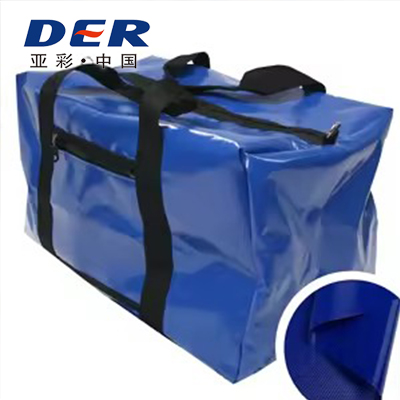
A thicker fabric can improve robustness, but bag durability is determined by the complete material and construction system. The polyester reinforcement carries tensile loads, the PVC layer blocks water and protects the surface, and the welding or sewing method transfers force through the finished bag.
For commercial fishing bags, the highest-risk areas are normally the bottom panel, folded corners, handle anchors, zipper ends and welded overlap zones. DERFLEX helps buyers define the material around these locations so a product is not under-specified in critical areas or unnecessarily heavy everywhere else.
This approach is especially relevant to OEM fishing bag factories, marine equipment brands, tackle distributors and outdoor product developers building repeat-order programs rather than one-off samples.
Instead of selecting “heavy duty” from a single GSM number, review where the bag touches rough surfaces, carries concentrated loads and repeatedly flexes during opening, transport and storage.
Boat decks, concrete ramps and vehicle floors create repeated abrasion. Consider a denser surface, suitable coating thickness and, where needed, a separate reinforced base panel.
Sharp folding and compressed corners can concentrate stress. Hand feel, low-temperature flexibility and coating adhesion should be checked during sample folding and welding trials.
Webbing attachments transfer high loads into a small area. Confirm reinforcement patches, stitch or weld patterns and base-fabric tensile direction before scaling production.
Roll-top creases, zipper ends and flap edges flex repeatedly. The chosen PVC compound and surface finish should work with the intended closure and branding process.
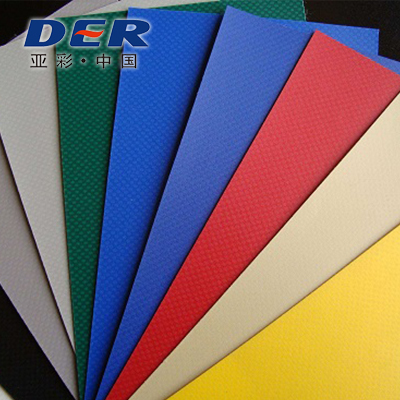
Performance comes from the interaction of reinforcement, coating formulation and surface design. Each can be adjusted to suit a different bag program.
Provides tensile strength, tear support and dimensional stability. Yarn denier and weave density should match bag size, payload and reinforcement layout.
Creates the water barrier and contributes to abrasion, flexing, weldability and weather resistance. Formulation options are discussed according to use environment.
Matte, glossy or embossed finishes influence appearance, cleaning, handling and logo presentation. Color and print compatibility can be reviewed during sampling.
The ranges below are purchasing reference points, not a universal specification. Final values should be confirmed through material samples, welding trials and finished-bag testing.
| Specification Item | Project Direction | Why It Matters |
|---|---|---|
| Material | PVC coated polyester fabric | Combines a reinforced textile core with a waterproof, cleanable surface. |
| Base Fabric | 500D, 840D, 1000D or custom woven structure | Influences tensile strength, tear behavior, flexibility and weight. |
| Weight | Approx. 450–900 gsm, customizable | Lighter grades suit portable tackle products; heavier grades suit deck and utility bags. |
| Thickness | Approx. 0.40–1.00 mm | Affects stiffness, abrasion reserve, folding behavior and welding setup. |
| Width | 1.02 m, 1.37 m, 1.50 m or project width | Should be selected around cutting efficiency and panel layout. |
| Surface | Matte, glossy, embossed or textured | Changes appearance, cleanability, anti-slip feel and printing direction. |
| Processing | HF welding, hot-air welding, sewing or combined construction | Material and production equipment must be tested together. |
| Optional Discussion | UV, anti-mildew, cold-flex, FR or compliance documentation | Availability and target standards should be confirmed for each order and market. |
Rugged PVC structures are generally chosen where the bag is frequently wet, dirty, dragged, stacked or loaded with dense fishing equipment.
For tools, ropes, safety accessories and wet gear exposed to splash, mud and rough deck contact. Reinforced bottoms and easy-clean surfaces are common priorities.
For multi-tray systems, reels and dense accessories. Material selection should account for handle loads, zipper zones and repeated vehicle transport.
For cleanable outer shells paired with insulation, liners and drainage components. Compatibility with the full composite construction should be evaluated.
For roll-top packs, seat storage and gear bags used around water. Balance abrasion resistance with foldability and compact storage.
A successful factory trial should evaluate weld appearance, peel behavior, heat window, overlap width, corner geometry and post-weld flexibility—not only whether two pieces can be joined.
Common for repeatable PVC panel seams and shaped components. Electrode design, dwell time and pressure need to match coating thickness and bag geometry.
Useful for long seams and flexible production layouts. Temperature, speed, nozzle setup and roller pressure should be established through controlled trials.
Suitable for webbing, zipper assemblies and complex pockets, but stitch holes require a deliberate sealing strategy where water protection is needed.
The right answer depends on user behavior and product positioning. A heavy grade is useful only when its added structure and abrasion reserve solve a real design requirement.
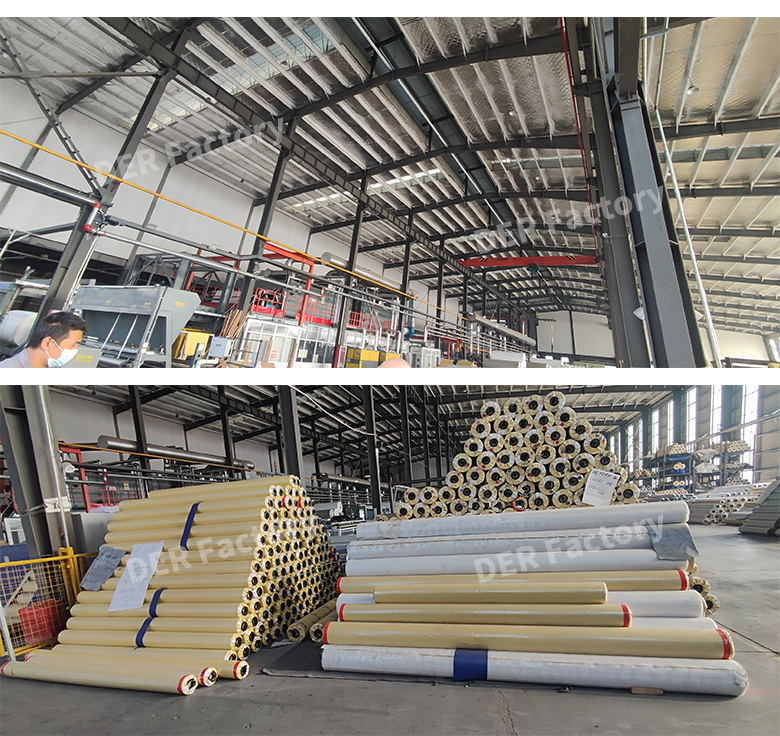
DERFLEX manufactures coated fabrics and flexible industrial materials for global B2B buyers. For fishing bag projects, the support process can begin with a target bag, current sample or application brief and then move through material selection, trial processing and bulk roll control.
The commercial objective is not to prescribe the heaviest fabric. It is to establish a repeatable specification that fits the finished product, factory equipment, target market and expected order cycle.
Clarify bag use, load, dimensions, target price level, processing method and market documentation.
Compare suitable base cloth, coating, thickness, surface and welding behavior using representative samples.
Confirm color, weight, thickness, surface, roll packing and agreed inspection points before shipment.
Maintain the approved specification and review any material or design changes before the next production cycle.
These six related pages cover broader material choices, dry-bag construction and factory-level PVC coated fabric sourcing.
Answers focus on specification decisions that affect real bag production and procurement.
It is a reinforced polyester tex, tile coated with PVC and configured for rugged fishing bag applications such as tackle duffels, boat-deck bags, fish carry bags and marine utility storage. The “heavy duty” level should be defined by base-cloth strength, coating thickness, abrasion exposure, bag load and processing method rather than GSM alone.
Many rugged PVC bag projects begin around 450–900 gsm, but the suitable weight depends on bag dimensions, payload, panel structure, reinforcement and required hand feel. A sample trial is recommended before confirming a bulk specification.
Many PVC coated polyester structures are suitable for HF welding. The exact result depends on coating composition, thickness, electrode shape, pressure, dwell time and seam design. DERFLEX can provide material for welding trials before bulk production.
No. Thickness can add abrasion reserve and structure, but durability also depends on polyester yarn strength, weave density, coating adhesion, corner design, handle reinforcement and seam quality. Excess thickness can also increase stiffness and finished-bag weight.
Custom color, matte or glossy appearance, embossed texture, thickness, weight, roll width and packaging can be discussed according to production feasibility, sample approval and order requirements.
The fabric can provide a waterproof barrier, but finished-bag protection also depends on welded or sealed seams, zipper or roll-top closure, drainage details, attachments and final assembly. The complete bag should be tested under its intended use conditions.
Recommended checks include weight and thickness, tensile and tear behavior, coating adhesion, surface abrasion, low-temperature folding where relevant, color, welding window, peel behavior, printing and finished-bag loading. Required tests should be agreed in the purchase specification.
Send the bag type, dimensions, expected load, use environment, desired fabric weight or thickness, color, texture, roll width, production method, test requirements and estimated quantity. A drawing, photo or current fabric sample will help the recommendation process.
Send DERFLEX your application, load, dimensions, welding method and target weight. The team can discuss a PVC coated polyester direction for sample evaluation and commercial quotation.