01
Barrier layer
TPU provides the functional waterproof and heat-sealable surface. The TPU type, thickness, hardness and coating side affect flexibility, hydrolysis resistance, bonding behavior and finished appearance.



 Coated textile material for OEM fishing gear
 Develop fishing dry bags, tackle backpacks and kayak storage gear around the way the product is actually used: wet decks, repeated folding, abrasive contact, salt exposure and welded construction.
DERFLEX supplies TPU coated nylon and polyester roll goods for manufacturers that need a practical balance of waterproof barrier, flexibility, surface durability, processing compatibility and repeat-order consistency.
TPU provides the functional waterproof and heat-sealable surface. The TPU type, thickness, hardness and coating side affect flexibility, hydrolysis resistance, bonding behavior and finished appearance.
Nylon supports lightweight strength and a premium hand feel; polyester can support dimensional stability and cost control. Denier and weave should reflect load, abrasion zones and bag size.
Hot-air, high-frequency, ultrasonic or other thermal processes may be used depending on material grade and equipment. Roll-top closures, waterproof zippers and accessory welds require their own validation.
Welding trials, seam peel checks, folding tests, abrasion tests and water exposure tests should be completed on the actual bag construction before commercial production.
A useful specification separates the functional coating, woven reinforcement and optional reverse-side treatment so each layer can be adjusted for the intended product.

Selected for water barrier, cleaning, surface feel, abrasion exposure, color and logo-processing direction. Matte, glossy and textured options can be discussed by project.
Provides tensile and tear support. A lighter base can improve carrying comfort, while a heavier woven core can support larger bags, loaded tackle systems and high-wear deck use.
Single-side TPU can suit selected lightweight bag designs. Double-side TPU offers another functional surface for welding, patching, cleaning and moisture protection where the construction requires it.
A premium bag can be engineered by zone instead of making every panel equally heavy. This approach helps control weight while reinforcing the surfaces that receive the most wear.
For roll-top dry bags and waterproof tackle packs, the main shell needs a clean sealing surface, repeated folding tolerance and sufficient structure to keep the intended bag shape.
Boat decks, rocks, sand and vehicle storage create concentrated wear. A heavier TPU grade or reinforced panel can be considered for the base without increasing the weight of the entire bag.
Corner geometry, overlap width, heat, pressure and dwell time affect seam reliability. The selected fabric should be tested with the production line and reinforcement method.
Handle and shoulder-strap areas need compatible patches, webbing anchors or sewn-and-sealed reinforcement so concentrated loads do not damage the coated textile.
Screen printing, heat transfer, welded badge or other logo methods should be considered when choosing surface finish and pretreatment. Production trials are recommended.
Fishing gear can introduce salt, mud, bait residue and wet clothing. A smooth, cleanable internal surface may be useful for selected dry bags, deck bags and wet-gear carriers.
The ranges below are intended for early B2B discussion. Final construction should be confirmed through samples and finished-product testing.
| Fishing bag program | Possible material direction | Development focus | Processing notes |
|---|---|---|---|
| Lightweight tackle backpack | TPU coated or laminated nylon/polyester, often in a lighter to medium construction | Soft hand feel, lower carrying weight, color consistency and clean surface appearance | Confirm zipper integration, curved seams, back-panel construction and strap reinforcement |
| Roll-top fishing dry bag | Single-side or double-side TPU coated fabric selected around the seam method | Fold recovery, welded seam strength, water barrier and closure geometry | Test repeated rolling, buckle tension, bottom seam and corner overlap |
| Kayak deck bag | Medium-duty TPU coated nylon or polyester with abrasion-oriented surface | Splash exposure, UV contact, tie-down points, surface grip and frequent folding | Check lash-point patches, zipper or roll-top design and deck-contact zones |
| Marine duffel / wet-gear bag | Medium to heavy TPU structure, potentially with reinforced bottom panels | Load capacity, cleaning, puncture resistance, handle zones and dimensional stability | Validate long seams, carry-handle reinforcement and drainage or vent design if included |
| Fishing cooler outer shell | TPU coated fabric paired with insulation, lining and closure components | Cleanable surface, shape, weldability, cold flex and compatibility with the full composite | Food-contact, insulation and liner requirements must be evaluated separately |
| OEM multi-SKU collection | Coordinated TPU grades using shared colors and finishes across different weights | Brand consistency, SKU differentiation, production efficiency and repeat-order control | Build a sample library and approved master standard for each fabric code |
Common discussion variables include base textile, denier, coating side, TPU chemistry, total weight, thickness, width, surface finish, color, roll length and packing method.
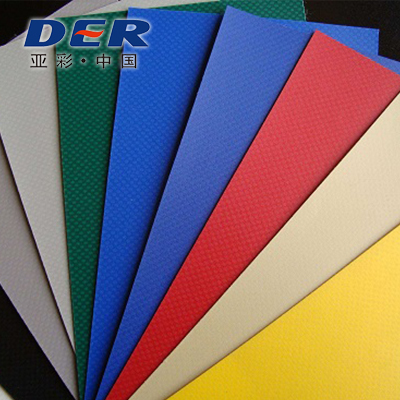
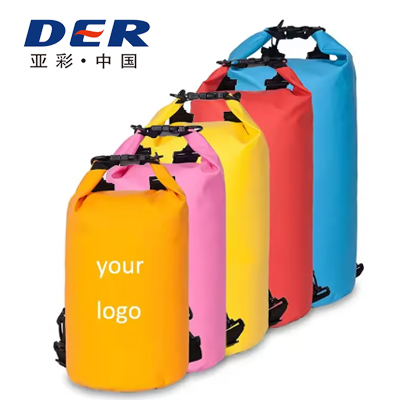
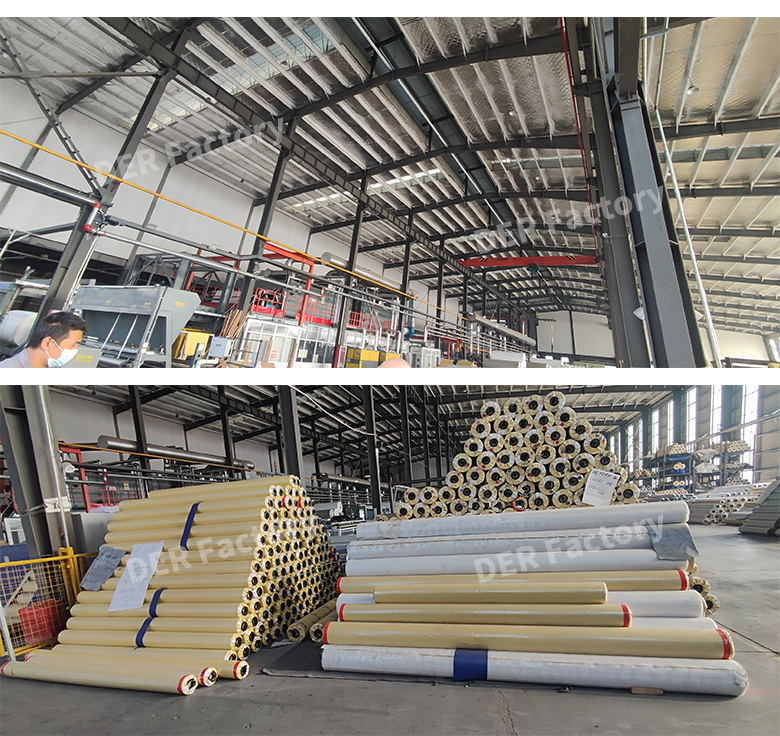
These DERFLEX visuals show fabric color directions, welded dry-bag applications and coated roll-goods production support.
TPU textiles are selected for thermal processing, but no single parameter applies to every coating, thickness, machine or seam design.
Useful for many dry-bag and outdoor product constructions. Temperature, speed, pressure, overlap and nozzle setup should be optimized on the selected grade.
Compatibility depends on TPU structure, coating thickness, tooling and machine settings. A seam peel and water-exposure trial should be included in approval.
Can suit selected components and lighter constructions. Joint geometry, horn design and localized heat should be evaluated before scale-up.
Some backpacks use sewn structural areas with seam tape or secondary sealing. Needle holes and tape bonding remain critical validation points.
TPU is often chosen for premium waterproof fishing gear, but the correct decision still depends on product positioning, processing equipment and target cost.
A structured approval path helps reduce avoidable changes after cutting, welding and accessory assembly have begun.
Share capacity, pattern, use environment, target market, load, waterproof expectation and intended retail positioning.
Identify welding or sewing equipment, seam width, zipper type, closure design, logo method and reinforcement plan.
Discuss nylon or polyester, TPU chemistry, coating side, denier, thickness, weight, surface and color direction.
Evaluate the material on actual tooling and construct a functional bag sample rather than approving appearance alone.
Approve the reference sample, roll packing, labels, color tolerance, inspection points and reorder specification.
“TPU fabric for fishing bags” is a useful starting point, but it does not define the correct roll standard. A concise project brief allows DERFLEX to discuss a more relevant sample direction.
Use these six DERFLEX resources to compare application routes, coating structures and dry-bag material choices.
Practical answers for fishing bag factories, outdoor brands, sourcing teams and product developers.
TPU coated fabric can provide a waterproof barrier and a thermally sealable surface. The finished bag’s waterproof performance also depends on the selected seam process, closure, zipper, reinforcement, accessories and final testing. Material approval should therefore include a functional bag sample.
Nylon is often considered when lightweight strength, flexibility and premium hand feel are priorities. Polyester can support dimensional stability and a different cost-performance balance. The choice should be based on bag size, load, abrasion exposure, coating structure and processing method.
Projects may use lighter, medium or heavy woven bases depending on the product. 210D, 420D, 840D, 1000D and other constructions can be discussed, but denier alone does not define performance. Weave, yarn quality, coating weight and panel reinforcement also matter.
Single-sided TPU may suit selected lightweight products where one sealing surface is sufficient. Double-sided TPU can provide more processing flexibility for welded patches, internal cleaning and moisture protection. The pattern and seam design should determine the choice.
Selected TPU fabric grades may be suitable for high-frequency welding, hot-air welding, heat sealing or ultrasonic processing. Compatibility must be confirmed with the chosen fabric, machine, tooling, seam width and production parameters before bulk manufacture.
Polyether TPU is commonly discussed for hydrolysis resistance and repeated wet exposure, while polyester TPU may be considered for other mechanical and abrasion priorities. Final selection should reflect temperature, water exposure, chemical contact and expected service conditions.
DERFLEX can discuss custom color, matte or glossy finish, texture, coating structure, width, roll length, roll labels and packing according to material feasibility and project quantity. A signed reference sample is recommended for repeat orders.
Buyers should consider welding behavior, seam peel strength, waterproof exposure, abrasion, folding recovery, cold flexibility, color and finish, logo adhesion, accessory reinforcement and complete finished-bag performance under the intended use conditions.
Send DERFLEX your pattern, use environment, processing method, target weight, finish and quantity. The team can discuss a TPU coated fabric direction for sampling and production review.