



Material Selection Guide for Professional Buyers
Vinyl Tarpaulin vs Canvas Tarpaulin: Material Comparison
Vinyl is usually the stronger choice when complete waterproofing, weldable seams and demanding outdoor service lead the specification. Canvas is often the better fit when breathability, a softer textile surface and moisture release matter more.
The right answer depends on exposure time, condensation risk, abrasion, temperature, handling frequency, fabrication method and the value of what is being protected. This guide turns those variables into a practical buying decision.
The practical answer in 20 seconds
Choose vinyl tarpaulin when...
Rain sealing, repeated outdoor exposure, road transport, chemical splash resistance, easy cleaning or welded fabrication are central requirements.
Choose canvas tarpaulin when...
Airflow, reduced condensation, surface protection, quieter handling or covering heat-sensitive equipment are more important than complete water sealing.
Start with construction
Two Tarps Can Look Similar Yet Behave Very Differently
Tarpaulin performance begins with the material structure. The coating, weave, fiber, treatment and fabrication method determine how the cover responds to water, pulling force, heat, dirt, storage and repeated use.
What Is Vinyl Tarpaulin?
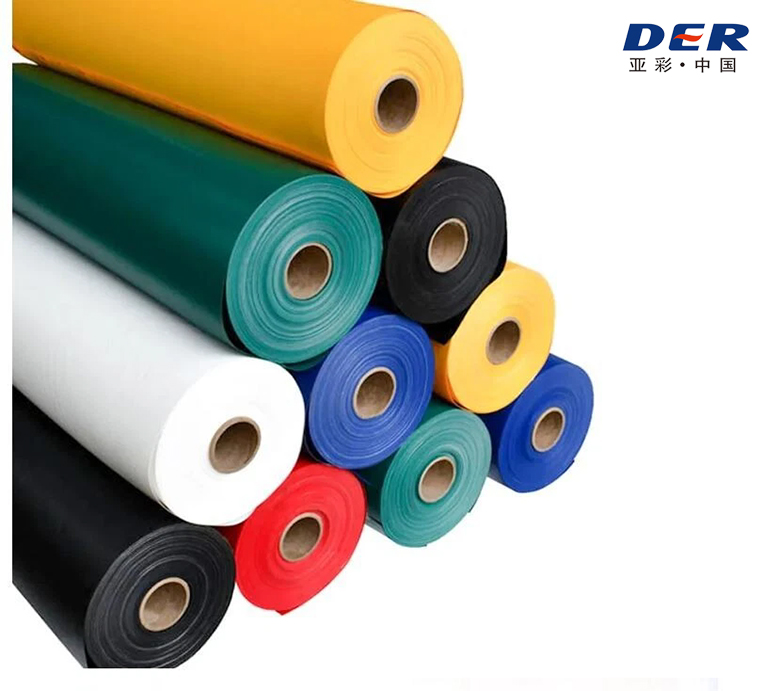
Industrial vinyl tarpaulin is typically made with a woven polyester reinforcement coated or laminated with PVC on one or both sides. The polyester scrim carries tensile and tear loads, while the PVC surface provides a continuous barrier against rain, moisture and dirt.
Formulation and construction can be adjusted for UV exposure, cold flexibility, flame-retardant requirements, mildew resistance, abrasion, surface gloss, color and welding behavior. Because the surface is thermoplastic, many vinyl tarp structures can be joined by hot-air or high-frequency welding to create strong seams.
Waterproof barrier
Polyester reinforcement
Weldable options
Easy-clean surface
What Is Canvas Tarpaulin?
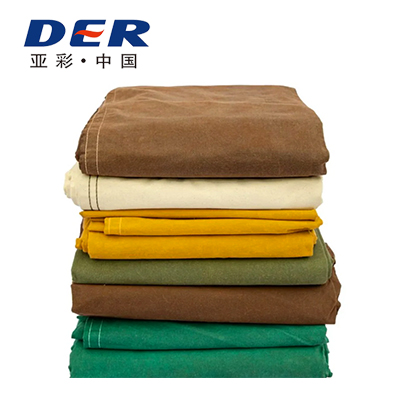
Canvas tarpaulin is a densely woven textile cover made from cotton, polyester or blended yarns. Cotton duck canvas is valued for its natural feel and ability to release humidity. Polyester canvas can offer improved dimensional stability, while treatments can add water repellency, mildew resistance or flame performance when specified.
Traditional canvas remains porous compared with a continuous PVC film. That controlled airflow can be an advantage around machinery, lumber, metal components or other loads where trapped moisture may create condensation. Water-repellent canvas can handle intermittent rain, but prolonged ponding or pressure may eventually allow moisture through.
Breathable weave
Soft textile contact
Quieter handling
Treatment options
Side-by-side decision table
Vinyl Tarp vs Canvas Tarp: Ten Factors That Change the Choice
Use the table as a screening tool, not as a substitute for a full specification. Actual performance varies with fabric weight, yarn structure, coating or treatment, seam design and service conditions.
| Decision factor | Vinyl tarpaulin | Canvas tarpaulin |
|---|---|---|
| Water protection | Usually the stronger choice. A continuous PVC coating is designed to block water; welded seams can further improve finished-cover sealing. | Treated canvas is generally water-repellent or water-resistant. It is not normally selected for prolonged ponding or pressure-driven water exposure. |
| Breathability | Low. Moisture and heat can remain trapped if the cover is tightly fitted without ventilation. | Usually the stronger choice. The woven textile structure allows vapor and heat to escape more readily. |
| Durability under weather | Well suited to repeated rain, sunlight, road dirt and outdoor handling when the correct UV and coating grade is specified. | Durable for many covers, but extended wet storage, mildew risk and treatment loss should be considered in maintenance planning. |
| Abrasion and surface contact | A heavy coating can resist scraping and can be cleaned easily, but trapped grit may mark sensitive surfaces. | The softer textile face can be useful over finished machinery or painted items; the fabric itself can wear through at repeated contact points. |
| Fabrication | Efficient for sealed assemblies. Suitable structures can be heat welded, sewn, hemmed, reinforced and fitted with hardware. | Commonly sewn and hemmed. Stitching is practical, although seams remain more permeable unless a coated or specially sealed construction is used. |
| Cleaning | Easy-clean surface. Dirt, oil film and road residue are generally easier to wash from a smooth PVC face. | The textured weave can hold dust and stains. Cleaning and drying should be controlled to reduce shrinkage, odor or mildew. |
| Handling and noise | Can feel denser and stiffer, especially in heavy or cold-weather grades. Wind flap may be more noticeable. | Often quieter and more textile-like. It drapes naturally and may be preferred where handling comfort matters. |
| Temperature and hot surfaces | Service temperature depends on formulation. Direct contact with very hot equipment should be assessed before use. | Canvas is often chosen around warm equipment because it breathes and does not have a thermoplastic coating, but fire and heat performance still require the correct grade. |
| Weight | Commercial grades range widely. A high-strength PVC tarp can be heavy, but weight should be compared by gsm or oz rather than material name alone. | Heavy cotton duck can also be substantial. Finished weight changes with weave, treatment, moisture content and reinforcement. |
| Total cost of ownership | Often has a higher initial cost, but may reduce replacement frequency in wet, dirty or heavy-duty environments. | Can be economical where breathability prevents damage to the covered item. Maintenance, drying and re-treatment should be included in the lifecycle calculation. |
Procurement note: “vinyl” is a market term that commonly refers to PVC-coated polyester tarp material. “Canvas” may refer to cotton canvas, polyester canvas, blended canvas or coated canvas. Always compare the actual construction and test values, not only the category name.
A better decision sequence
Do Not Start with Price—Start with the Failure You Need to Prevent
The lowest purchase price can become expensive when the cover traps condensation, leaks during long rain exposure, tears at tie-down points or cannot be repaired in the field. A useful specification begins with the operating risk.
Define the exposure
Record rain duration, UV exposure, wind load, temperature range, chemicals, dirt, road speed and whether water can pond on the cover.
Identify moisture behavior
Decide whether outside water entry or inside condensation is the greater risk. This single question often separates vinyl from canvas.
Map mechanical stress
Locate drag zones, sharp corners, tension points, grommet loads, folds and repeated abrasion so reinforcement can be designed into the tarp.
Choose the seam system
Welded PVC seams favor water sealing. Sewn canvas seams favor conventional textile fabrication but should not be assumed waterproof.
Plan cleaning and storage
Vinyl generally washes and dries quickly. Canvas needs sufficient drying before storage to reduce odor and mildew risk.
Compare lifecycle value
Include replacement interval, labor, downtime, damage to the protected goods and the cost of handling—not only the price per tarp.
The core engineering trade-off
Waterproofing and Breathability Solve Different Problems
A fully sealed cover limits rain entry, but it can also limit vapor release. A breathable cover releases humidity, but it does not create the same barrier against long, wind-driven rain. Choosing the wrong side of this trade-off can damage the load even when the tarp itself remains intact.
For machinery stored outdoors, a practical design may use a waterproof vinyl outer cover with planned vents or a breathable inner layer. For lumber, hot equipment or moisture-sensitive stock, treated canvas may be selected to reduce trapped humidity, provided the exposure is compatible with its water resistance.
Relative Material Tendencies
These bars show typical tendencies only. Final performance depends on the specific grade and fabrication.
Water barrier
Vapor release
Easy cleaning
Textile drape
Welded seam potential
Vinyl tarpaulin tendency
Canvas tarpaulin tendency
Application matching
Which Tarpaulin Material Fits the Job?
The following recommendations are starting points. Wind, fastening, cover geometry, local regulations and exact service conditions still need to be reviewed before production.
Truck, Trailer and Cargo Covers
Road spray, rain, UV, flapping, tie-down stress and frequent cleaning normally favor a reinforced PVC vinyl tarpaulin with welded seams and engineered edge reinforcement.
Typical direction: Vinyl tarpaulinMachinery in Sheltered Storage
Where condensation and surface scuffing are greater concerns than direct rain, breathable canvas can provide softer contact and moisture release.
Typical direction: Canvas tarpaulinConstruction Site Protection
Vinyl suits rain barriers, temporary enclosures and easy-clean covers. Canvas suits drop-cloth style protection and situations where airflow or heat tolerance is useful.
Typical direction: Depends on functionAgriculture and Lumber
Canvas can help reduce condensation around breathable loads. Vinyl is preferred when prolonged rain sealing and washability outweigh vapor release.
Typical direction: Exposure-led selectionWarehouse Partitions and Curtains
PVC vinyl is practical for washable dividers, dust control and flexible partitions. Canvas can be useful where softness and acoustic damping are valued.
Typical direction: Vinyl for washable barriersWarm Equipment and Hot-Work Areas
Ordinary vinyl should not be placed against high-temperature surfaces without review. Treated canvas or purpose-made fire-resistant fabrics may be more appropriate.
Typical direction: Specialized grade required
Procurement and specification
What Professional Buyers Should Confirm Before Ordering
A material name is not a complete specification. Provide the supplier with a clear use case and measurable requirements so the proposed structure can be checked against the job.
Useful DERFLEX Selection Ranges
Indicative options are shown below. Final specifications depend on application, production structure, test method and project requirements.
- PVC vinyl baseHigh-tenacity polyester scrim with coated or laminated PVC construction.
- Vinyl weightCommon custom directions from approximately 450 to 1300 gsm, with heavier structures available for selected projects.
- Vinyl widthCustom roll widths can be discussed; some structures may be produced up to approximately 3.4 m seamless.
- Vinyl finishesGlossy, matte, semi-matte, embossed, lacquered and application-specific surface options.
- Canvas constructionCotton canvas, cotton-polyester blend, polyester canvas or PVC-coated canvas.
- Canvas weightTypical custom directions can include approximately 350 to 800 gsm, subject to weave and treatment.
- Canvas treatmentWater-repellent, mildew-resistant, UV-stabilized or flame-retardant treatment where required.
- Finished fabricationHems, grommets, webbing, D-rings, reinforcement, printing, labels and export packaging.
Waterproof outer + ventilation
A vinyl cover can include designed vents or spacing to reduce trapped humidity while retaining strong rain protection.
Canvas contact layer + vinyl shell
A soft inner textile layer can protect surfaces, while an outer vinyl layer handles rain and dirt.
PVC-coated canvas direction
For buyers seeking a textile-reinforced feel with improved waterproof performance, coated canvas constructions may bridge the two categories.
DERFLEX manufacturing support
From Material Comparison to a Repeatable Tarp Program
DERFLEX supports distributors, converters, importers, truck-body suppliers, industrial cover manufacturers and project buyers with PVC-coated tarpaulin, canvas tarps and custom finished-cover directions.
Rather than selecting only by material name, our team can review application, climate, fabrication, reinforcement and packaging requirements. This helps establish a specification that is easier to sample, test, reproduce and reorder.
Application-led selection
Material direction is matched to rain, condensation, abrasion, temperature and handling conditions.
Custom construction
Weight, yarn, coating, treatment, color, finish, width and roll length can be discussed.
Fabrication support
Roll supply or finished tarp details such as welding, sewing, hems, grommets and webbing.
Repeat-order control
Specification records, color matching and quality checks support commercial consistency.
OEM programs
Private-label packaging, printed marks, labels and multi-size programs for distributors and brands.
Export coordination
Packaging, documentation and production communication for international B2B projects.
Continue your research
Related DERFLEX Tarpaulin Resources
These six pages connect material choice with product structure, heavy-duty grades, finished tarp supply and transport applications.
Internal resource 01
Vinyl Tarps Supplier
Explore waterproof PVC vinyl tarp solutions for industrial, transport and OEM applications.
Internal resource 02
Canvas Tarps
Review breathable treated canvas, cotton canvas and coated canvas tarp options.
Internal resource 03
PVC Tarp Material
Understand PVC-coated polyester structure, weight, width, surface and performance options.
Internal resource 04
PVC Coated Tarp
See custom waterproof tarp material for truck, industrial and outdoor covering systems.
Internal resource 05
Heavy Duty Tarpaulin Fabric
Compare commercial heavy-duty grades, reinforcement and roll or finished-tarp supply.
Internal resource 06
Truck Tarp Manufacturer
Connect material selection with cargo protection, fleet use and custom transport covers.
Frequently asked questions
Vinyl Tarpaulin vs Canvas Tarpaulin FAQ
Clear answers for buyers comparing waterproof protection, breathability, durability and custom tarp specifications.
Is vinyl tarpaulin more waterproof than canvas tarpaulin?
In general, yes. PVC vinyl tarpaulin uses a continuous coated surface designed to block water. Treated canvas is usually water-repellent or water-resistant rather than fully waterproof. Finished-cover seams and fabrication still affect real-world water protection.
Which lasts longer: vinyl tarp or canvas tarp?
Service life depends on grade and use. Vinyl often performs longer in persistent rain, road transport, dirty environments and repeated washing. Canvas can deliver long service where breathability, softer handling and controlled storage are more important. A poorly matched material can fail early regardless of category.
Is canvas better for covering machinery?
Canvas can be useful for machinery because it breathes and has a softer textile surface, which may help reduce condensation and scuffing. For machinery exposed to prolonged outdoor rain, a ventilated vinyl cover or a layered cover system may be more appropriate.
Can vinyl tarpaulin trap condensation?
Yes. Because vinyl has low breathability, humidity can remain under a tightly fitted cover. Ventilation, cover geometry, air gaps or a breathable inner layer should be considered when condensation could damage the protected item.
Can canvas tarps be made waterproof?
Canvas can be treated to improve water repellency, and PVC-coated canvas can provide stronger waterproof performance. Traditional breathable canvas should not be assumed completely waterproof under prolonged ponding or wind-driven rain.
Which tarp is better for trucks and trailers?
PVC vinyl tarpaulin is usually preferred for truck and trailer covers because it combines waterproofing, tear resistance, easy cleaning and weldable fabrication. The correct weight, base fabric, reinforcement and fastening design should be matched to road speed and load conditions.
Is vinyl tarpaulin always heavier than canvas?
No. Both materials are available in many weights. Heavy cotton canvas can weigh as much as or more than some vinyl grades. Compare gsm or oz, finished dimensions, treatment, reinforcement and moisture absorption rather than relying on the material name.
What information does DERFLEX need to recommend a tarp material?
Provide the application, dimensions, expected weather, temperature range, abrasion and tie-down conditions, waterproofing or breathability priority, target weight, color, quantity, seam and reinforcement details, compliance needs, packaging and destination market.
Need Vinyl, Canvas or a Hybrid Cover Specification?
Send DERFLEX the protected item, working environment, finished size, quantity and performance priorities. We will review the application and discuss a practical material, construction and fabrication direction for sampling and quotation.