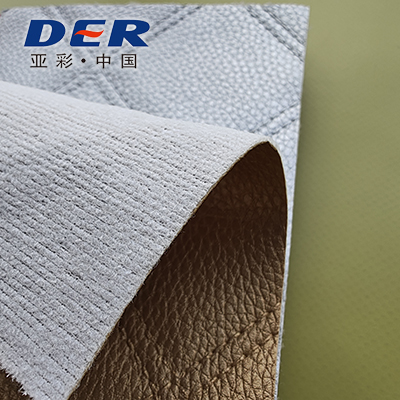
TPU coated nylon
Often preferred for foldable premium bags where softness, tear strength and compact packing are important.



 Technical Coated Fabric Supply
Material matching · Sample development · Bulk roll supply
Build fishing bags that carry less material weight without ignoring the realities of wet decks, sharp tackle, repeated folding and welded-seam production. DERFLEX supplies TPU coated nylon and polyester directions for lightweight tackle backpacks, kayak bags, roll-top dry bags and private-label marine gear.
A more useful definition
A fishing bag can feel light in the hand yet fail early if the base cloth, coating, seam geometry and abrasion zones are not designed together. The practical goal is to remove unnecessary mass while keeping enough structure for the load and handling pattern.
Lightweight TPU fishing bag fabric is generally a woven nylon or polyester textile combined with a thermoplastic polyurethane layer. The textile contributes tensile and tear performance; the TPU layer supports a waterproof barrier, flexible handling and thermal welding. The finished bag still depends on closure design, weld parameters, panel geometry, reinforcements and quality control.
For a wearable tackle backpack or chest pack, a softer and lower-mass shell can reduce fatigue during long shoreline walks. For a kayak deck bag, compact folding and splash protection may matter more than a rigid appearance. For a boat-deck duffel, the main shell can stay comparatively light while the base and contact points receive heavier reinforcement.
Material architecture
Competitive fabric pages often list only denier and coating. OEM bag development is more reliable when buyers examine the full construction: carrier textile, TPU barrier and surface behavior.
Often preferred for foldable premium bags where softness, tear strength and compact packing are important.
A practical direction when stable dimensions, controlled stretch and repeatable panel handling are priorities.
Use a lighter main body with reinforced bottom, corners, attachment points or tool-contact zones to manage weight intelligently.
Specification guide
The ranges below are procurement starting points rather than guaranteed stock specifications. Final structure should be confirmed through samples, welding trials and finished-bag testing.
| Development direction | Typical base range | Bag feel | Suitable fishing products | Buyer focus |
|---|---|---|---|---|
| Ultralight accessory shell | 70D–210D nylon direction | Soft, packable, low bulk | Small organizer, map pouch, inner dry liner, compact deck accessory | Seam design, puncture risk, coating continuity |
| Lightweight wearable bag | 210D–420D nylon or polyester direction | Flexible with more body | Fishing backpack, chest pack, sling bag, kayak day bag | Load comfort, tear resistance, strap anchoring |
| Balanced fishing dry bag | 420D–600D direction | Structured but still foldable | Roll-top tackle bag, medium marine duffel, boat storage bag | Abrasion, welding window, bottom reinforcement |
| Reinforcement panel | 600D–840D or project-specific | Firm and protection-oriented | Base, corner, lash point, tool pocket or high-wear panel | Peel strength, flex fatigue, panel transition |
Available base denier, coating weight, thickness, width and finish depend on the selected construction and order program. Confirm all performance data on the approved sample or technical data sheet.
Use the lightest validated structure that still handles the expected load, folding and seam pattern.
Consider a heavier grade, double layer or replaceable skid panel for rough boat and shoreline surfaces.
Strap, buckle and D-ring zones need local reinforcement rather than simply increasing the whole bag weight.
Hooks, pliers and tackle-box corners may require protective pockets, liners or abrasion patches.
Application fit
“Fishing bag” covers products with very different load patterns. The material brief should identify where the bag is carried, how it closes, what it holds and how often it contacts water or abrasive surfaces.
Light main shells can improve carry comfort; welded construction, strap reinforcement and closure geometry need joint validation.
Prioritize splash exposure, compact folding, tie-down points and abrasion from deck fittings or paddle contact.
Soft drape and low bulk matter around the body, while tool pockets and buckle zones need localized protection.
Balance a lighter sidewall with a stronger base and handles designed for repeated loading from dock to boat.
Material selection should account for cushioning, rigid inserts, cable exits and the required level of water protection.
Coordinate color, texture, logo process, roll width and packaging so the material supports a repeatable product family.
Production validation
Material data is useful, but production risk often appears at welds, fold lines, hardware interfaces and reinforced transitions. DERFLEX recommends project-specific sample evaluation before bulk roll approval.
Capacity, load, closure, panel map, carry method and intended fishing environment.
Nylon or polyester base, denier, coating side, finish, color, width and weight direction.
Confirm machine type, temperature or frequency settings, dwell time and seam geometry.
Check folding, loading, hardware pull, bottom wear and closure performance in the actual design.
Lock the sample, technical requirements, color tolerance, roll format and inspection method.
Test the approved construction on the buyer’s intended machine and seam width rather than relying only on generic weldability.
Evaluate bonding under relevant heat, moisture, folding and storage conditions for the planned product life cycle.
For winter fishing or cold transport, confirm flexibility and surface stability at the project’s required temperature.
Test both the base material and the reinforced zones against deck contact, tackle boxes and common fishing tools.
Finished-bag performance depends on closures, weld continuity and assembly. Define the required test method and acceptance level.
Approve a physical standard and discuss acceptable variation, texture, gloss and print compatibility before mass production.
Why DERFLEX
DERFLEX approaches the project as a coated-fabric program rather than a one-line product listing. The goal is to align material structure with production method and finished-bag positioning.
Discuss bag geometry, load, environment and welding rather than selecting by price or GSM alone.
Base cloth, coating direction, color, texture, width and roll packaging can be discussed for OEM programs.
Use approved samples and defined inspection points to reduce avoidable variation between development and repeat orders.
Continue material research
Use these pages to compare broader fishing-bag materials, TPU structures, dry-bag applications and practical selection criteria.
Frequently asked questions
It is a woven nylon or polyester textile combined with a thermoplastic polyurethane layer and developed for lower-mass waterproof bag constructions. The final suitability depends on base denier, coating structure, seam method, reinforcements and the bag’s actual load and exposure.
TPU coated nylon is often selected for softness, folding and tear performance. TPU coated polyester is often selected for dimensional stability and controlled stretch. Neither is universally better; the choice should follow the bag design, target weight, handling and production method.
Many projects begin evaluation around 210D to 420D for a light wearable shell, but the correct denier depends on bag capacity, load, coating, panel geometry, strap anchoring and reinforcement. Prototype testing is recommended before bulk approval.
TPU coated fabric can be developed for HF welding, hot-air welding or heat sealing. The usable process window varies with polymer formulation, coating thickness, base cloth and machine settings, so a welding trial on the selected material is necessary.
The TPU layer can provide a waterproof material barrier, but finished-bag waterproof performance also depends on seam continuity, closure design, valves or cable ports, hardware interfaces and assembly quality. Define the required test method for the completed bag.
Use a validated lightweight main shell and add heavier reinforcement only where needed—such as the bottom, corners, strap anchors and tool-contact zones. Good panel design can reduce total mass more effectively than using one heavy fabric for the whole bag.
DERFLEX can discuss custom base cloth, coating direction, color, surface finish, width, roll length and packaging for OEM programs. Availability and minimum quantity depend on the requested construction.
Share the bag type, target weight or current specification, preferred base fabric, coating side, welding method, width, color, finish, required tests and estimated quantity. A reference sample or drawing helps narrow the recommendation.
Send DERFLEX your bag style, target weight, welding method, color, width and quantity. The team can discuss a TPU coated nylon or polyester direction for sampling and finished-bag validation.