Top panel & runoff
Use a supported shape that sheds water beyond the logs. Confirm seam positions and edge overhang; a loose tarp can sag into a water pocket.



Firewood rack covers need to shed rain without closing off the air that helps wood dry. Plan a protected top, practical side ventilation and an access panel that works as the stack gets smaller.
DERFLEX supports drawing-based PVC tarpaulin cover development for rack brands, distributors and project buyers. Share your rack dimensions, wood storage conditions and order quantity to review the material, seams, fastening and packaging.
Custom development subject to drawing and sample approval. Rack hardware and firewood are outside the cover specification.
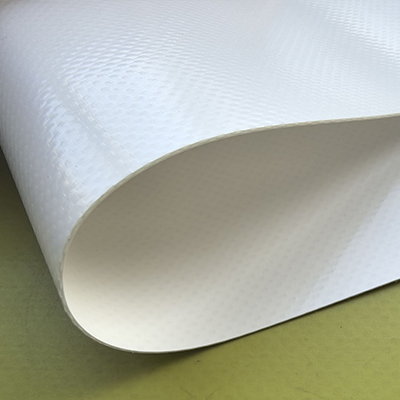
Solid PVC coating provides the rain barrier. Open sides and specified vents provide the airflow.
Seasoning wood needs generous side exposure.
Waterproof PVC itself is not breathable.
Measure protruding logs and access clearance.
For wood that is still seasoning, start with top coverage and open sides. A full drop cover needs a separate ventilation review.
A firewood rack tarp cover protects the upper stack from direct precipitation. Its side configuration determines how easily air can move through the wood.
For already seasoned wood exposed to driving rain, a deeper drop with sheltered openings may be considered. Keep those openings clear and inspect the stack for condensation. A vented cover cannot guarantee drying in humid, still conditions.
Use a raised rack so the bottom logs stay clear of wet ground. Keep the cover clear of hot appliances, chimneys and embers.
Storage baseline: EPA Burn Wise guidance recommends raised outdoor storage with the top covered and the sides open. The program page is an archived resource. The cover details below are specification planning guidance.
Review these details together. Adding mesh to an otherwise tight cover does not establish a verified ventilation rate or make every opening rainproof.
Use a supported shape that sheds water beyond the logs. Confirm seam positions and edge overhang; a loose tarp can sag into a water pocket.
Prioritize open sides for seasoning. Where deeper drops are needed, review opposing openings, mesh area and downward-facing weather flaps.
Specify a lift-up or roll-up front panel, retention straps and closure position. Keep an opened flap secured and clear of the ground.
Leave the planned lower opening unobstructed. Position tie-downs on sound rack members so closing the cover does not pull the fabric against log ends.
Choose by drying condition, exposure and handling frequency before selecting fabric weight.
| Storage situation | Cover direction | Detail to review | Main trade-off |
|---|---|---|---|
| Freshly split / seasoning wood | Top cover with open sides | Rain runoff, exposed side area and raised stack | More airflow; less protection against sideways rain |
| Seasoned wood, exposed location | Vented drop cover for review | Sheltered openings, accessible front and condensation checks | More side protection; greater need to preserve airflow |
| Frequent access at cabins or lodges | Top cover with lift-up front option | Glove-friendly closures, flap retention and abrasion at edges | Convenient access; moving parts need periodic inspection |
| Rack brand / wholesale range | Drawing-based cover family | Actual dimensions for each rack SKU, labels and pack format | Repeatable fit requires controlled drawings and samples |
Waterproof is a material property. Ventilation is a cover design choice. Solid PVC-coated fabric blocks rain through the intact panel; air moves through the openings around it. Mesh allows airflow but is not a waterproof roof.
Review solid coated fabric for the top, breathable openings for the sides and reinforcement where the cover is handled. Fabric weight alone does not define the finished cover’s suitability.
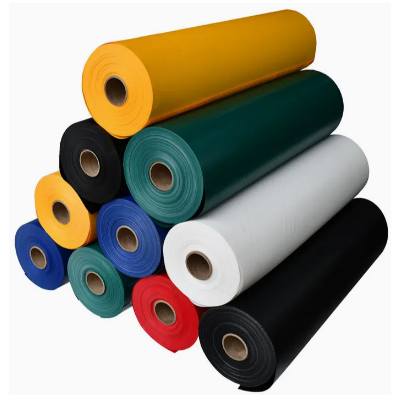 SOLID PANEL
The woven base supports the panel; PVC coating provides a water barrier and a weldable surface. Confirm GSM, flexibility and outdoor formulation against the approved sample.
Explore coated fabric →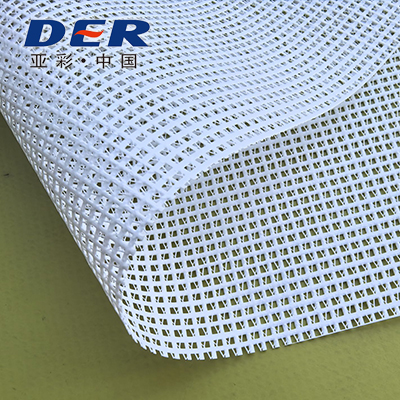 AIRFLOW DETAIL
Mesh can be reviewed for a sheltered ventilation zone. Assess its open area, attachment and exposure to wind-driven rain. It does not guarantee insect exclusion or condensation prevention.
Review mesh materials →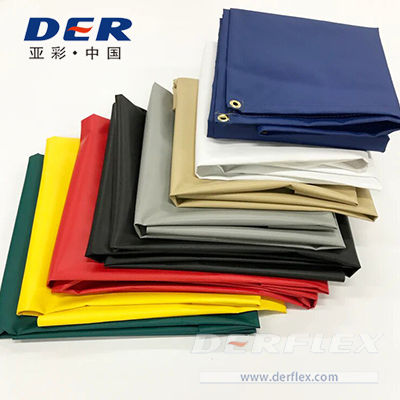 CUSTOM FINISHING
Reinforced hems, webbing, eyelets, straps and closure details connect the fabric to the rack. Review position and strength together, including contact with sharp frame ends.
See custom tarp finishing →All photographs are existing DERFLEX material or fabrication references. They show neither a finished firewood rack cover nor a verified project installation. Final appearance and construction require sample approval.
Use this as a specification framework for custom log rack covers, not as a stock product data sheet.
MOQ, price, sample availability and production schedule depend on the approved construction, order quantity and packaging. Request confirmation with your drawing.
For fabric platform options, review DERFLEX PVC tarpaulin.
| Supply format | Drawing-based finished cover development; material supply for fabricators can also be discussed. |
|---|---|
| Main fabric | PVC-coated polyester direction; exact grade, GSM and thickness confirmed during review. |
| Finished fit | Rack length × overall depth × highest point; agreed fit allowance, side drop and lower clearance. |
| Ventilation | Open sides or specified mesh / sheltered vents. Location, usable opening area and flap overlap to be agreed. |
| Seams & access | Welded solid panels where suitable; review stitched components, closures, weather flaps and leak paths. |
| Reinforcement | Hems, corner patches, rack contact zones and attachment points according to the approved drawing. |
| Outdoor requirements | Specify UV exposure and minimum handling temperature. Confirm grade and required test evidence. |
| Branding & pack | Color, logo, size labels, fitting instructions, retail pack or bulk carton by order agreement. |
| Acceptance criteria | Dimensions, vent construction, closure operation, seam integrity, appearance and packaging agreed before production. |
Send actual measurements without adding an assumed allowance. Agree the finished cover dimensions and tolerance separately. A nominal 4 ft or 8 ft rack label is not enough.
Keep a dated drawing for each rack and cover size. Mark the access face and record whether the specification refers to rack measurements or finished cover dimensions.
Material, vent layout, closures and reinforcement should be reviewed together. Any test method, sample quantity and pass criteria must be agreed rather than assumed.
Record the approved sample, color, labels and packaging. Review DERFLEX OEM tarp supply for private-label programs.
It may reduce side rain entry while also trapping moisture. Revisit the drop and open area before increasing coverage.
Water can collect in a low spot. Plan support and runoff, and remove accumulated debris or snow as conditions require.
Closely spaced eyelets alone do not establish wind capacity. The rack, anchors, hems and exposure need review together.
No wind or snow load rating is implied. The cover is not a structural roof. Do not pull sharply on frozen fabric; confirm low-temperature handling requirements with the selected grade.
For a new firewood rack cover range or a bulk replacement program, send the details that affect fit, ventilation and manufacturing cost.
Prefer email? sales@derflex.com
Include your drawing or rack photos with the request.
MOQ, samples, lead time and pricing are confirmed after specification review. No fixed service life or certification is assumed for an unapproved cover design.
Create a brief to copy or open in your email app. * Required.
Practical answers on airflow, weather protection and custom sourcing.
For wood still seasoning, favor a covered top and open sides. For seasoned wood, deeper side protection may be considered where rain exposure warrants it, but preserve ventilation and inspect for trapped moisture. A fully enclosed PVC cover is not a drying system.
Solid PVC-coated tarpaulin is not breathable. A ventilated cover moves air through open sides, lower clearance or specified vent zones. The intact solid panel can shed water while the cover’s openings still allow rain entry under some conditions.
Yes, a secured tarp can provide top coverage when it sheds water and leaves the sides open. A fitted cover helps define side drop, fastening and access more consistently. Avoid loose material that forms water pockets or wraps the stack tightly.
Measure the actual outside length, full depth including projecting logs, and highest loaded point. Include holders and protrusions, then agree side drop, clearance and fit allowance separately. Nominal rack length does not determine the finished cover size.
No cover can guarantee that result. Openings can support air movement, but wood moisture, local humidity, blocked vents and weather all matter. Keep seasoning wood exposed at the sides and inspect the underside of the cover and the stack.
Select the fabric grade against handling, outdoor exposure, flexibility and contact wear. A heavier cover adds handling weight and does not improve ventilation. Confirm GSM, thickness, reinforcement and low-temperature behavior through specification and sample review.
DERFLEX supports custom tarpaulin dimensions, colors, reinforcement, finishing and OEM packaging. Submit the rack drawing, ventilation concept and quantities for a firewood cover feasibility review. MOQ, sample availability, price and lead time are confirmed for the agreed construction.
Use a soft brush and mild cleaning solution compatible with the selected coating, rinse and dry before folding. Clear blocked vents and inspect closures and wear points. Avoid abrasive cleaners or forcing a stiff, frozen cover; follow the approved material care instructions.
Share the rack, the wood condition and the way people need to use it.