Bows travel along the body
Record how the fabric attaches to each bow and how the bow ends are guided. Confirm pocket orientation, attachment sequence and the space available for the gathered cover.



Replace worn fabric on your existing truck or trailer system with a cover specified around its working interfaces. For cable tarp replacement, the critical details are finished size, bow pockets, side attachment positions and front/rear fixing—not body length alone.
DERFLEX supports custom PVC tarpaulin fabrication, reinforced edges and drawing-based finishing for fleet, distributor and OEM requirements. Send system photos, dimensions and an old-cover reference for technical review.
Cover-only scope. Fit and material approval are required before production.
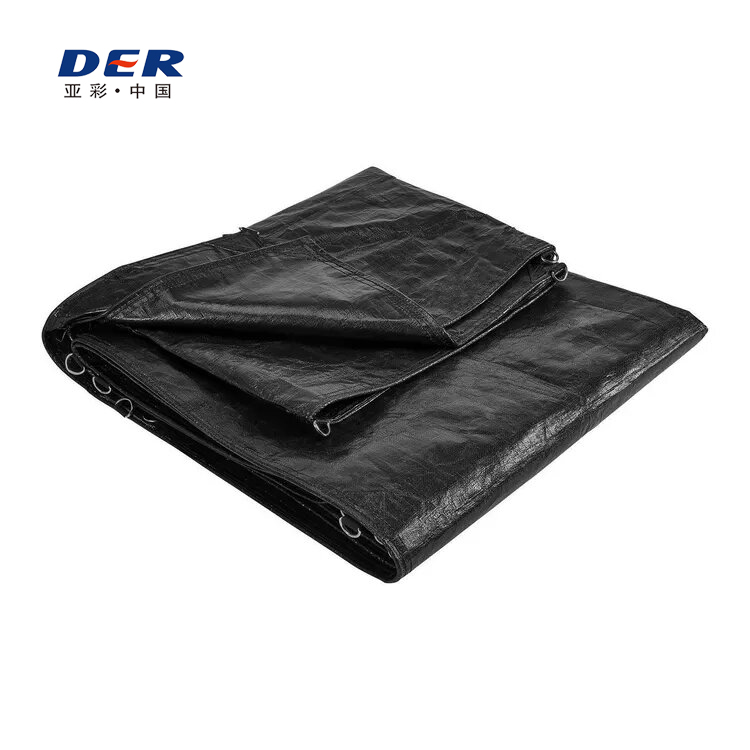
A cable tarp replacement cover is the fabric component fitted to an existing cable-driven tarp assembly. On front-to-back sliding systems, bows support the cover as it gathers and extends. The replacement must match the bow interfaces, side attachment pattern and end fixings. Cables, pulleys, bows, glides and drive equipment remain separate mechanical components.
This page focuses on replacement fabric for front-to-back cable-operated covers. The word “cable” also appears in other tarp systems, so identify the mechanism before requesting a pattern.
Record how the fabric attaches to each bow and how the bow ends are guided. Confirm pocket orientation, attachment sequence and the space available for the gathered cover.
An arm-driven flip tarp uses a different movement and attachment arrangement. A similar rectangular outline does not mean a cable-system cover will fit.
A side-roll system may use cable-related tension hardware but still needs a roll-tube attachment pattern. Supply a full-system photo to establish the correct replacement route.
For the wider finished-cover range, see DERFLEX truck tarpaulin solutions.
Side connections are system-specific. A grommet may secure the fabric to a bow end while a separate slider runs on the cable. Photograph both interfaces rather than assuming the cable passes directly through the fabric.
| Existing interface | What to record | What the replacement must preserve |
|---|---|---|
| Grommet-to-bow fixing | Hole inside diameter, center position, washer/contact area and the original reinforcement. | Alignment with the bow-end fixing and adequate reinforced fabric around the hole. Do not substitute perimeter spacing for the original pattern. |
| Ring, glide or slider interface | Which part runs on the cable, which part carries the fabric, and how they connect. | The existing load path and movement clearance. Mechanical fittings are reviewed separately from fabric fabrication. |
| Tabs or webbing loops | Finished loop opening, projection, orientation, stitch/weld area and each position. | The approved tab geometry and reinforcement. Discuss only where the original hardware accepts this type of connection. |
| Bow pockets / sleeves | Bow profile, pocket count, usable opening, location and open or closed ends. | Clear insertion and correct pocket-side orientation. Extra layers must still allow the tarp to gather. |
| Drop sides and hold-down contact | Drop depth, rail clearance, wind-clip contact and any local wear marks. | Coverage without fouling the cable path, pulleys, tailgate or retention hardware. |
A trailer model and nominal body length are useful references. Production needs finished-cover dimensions and a defined datum. Worn fabric can be stretched, torn or distorted, so compare it with the hardware and any original drawing.
| Specification item | Information to approve | Why it changes the result |
|---|---|---|
| Finished pattern | Length, developed width, drop depth and defined front/rear allowances. | Establishes coverage and prevents confusion between body dimensions, cut size and finished size. |
| Attachment coordinates | Center positions from one datum, side offsets, hole/loop dimensions and reinforcement footprint. | Controls interface alignment. A consistent drawing datum avoids accumulated spacing errors. |
| Pocket construction | Count, usable internal opening, bow shape, pocket side and end treatment. | A flat pocket width is not its usable opening; bow profile and seam bulk affect fit. |
| Material grade | Solid or mesh, fabric mass, coating construction, climate and cargo exposure. | Controls barrier performance, flexibility, handling weight and folding behavior. |
| Front & rear details | Clamp, sleeve or other existing interface; rear travel and closure requirements. | Different systems use different end fixings even when their side hardware looks similar. |
| Acceptance criteria | Dimension tolerances, attachment checks, seam criteria, fit trial and labeling. | Defines a reviewable sample and a consistent reference for bulk production. |
For substrate and coating options, review truck tarpaulin fabric with your finished-cover drawing.
Higher fabric weight is not a fit specification. Added coating, pockets and reinforcing layers change the finished mass and gathered stack. Confirm the system's approved material requirements before upgrading a cover.
A practical starting point where the fabric must block rain. Specify coating grade, reinforcement and seam construction, then evaluate flexibility with the complete pocket and hem build.
Confirm: the whole assembly's closure details. Waterproof fabric does not make open ends, rails or attachment penetrations watertight.
Consider a system-approved mesh when ventilation and covering loose loads take priority over a water barrier. Mesh is not waterproof; openness also affects what particles can pass through.
Confirm: cargo particle size, local covering requirements, attachment reinforcement and available material.
Provide cargo contact temperature, exposure duration, cleaning chemicals and minimum operating temperature. These conditions require material-specific assessment.
Confirm: grade-specific evidence. Generic PVC tarpaulin should not be assumed suitable for direct hot-asphalt contact or aggressive chemicals.
Explore the PVC tarpaulin material range; final cable-cover grade and performance targets are confirmed during quotation.
These DERFLEX photos show relevant tarp products, PVC-coated material and truck-cover applications. They are reference images, not evidence of a completed cable-system installation.
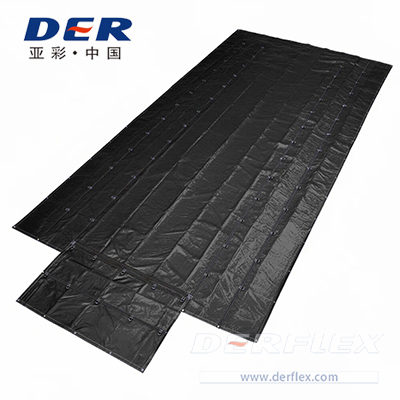
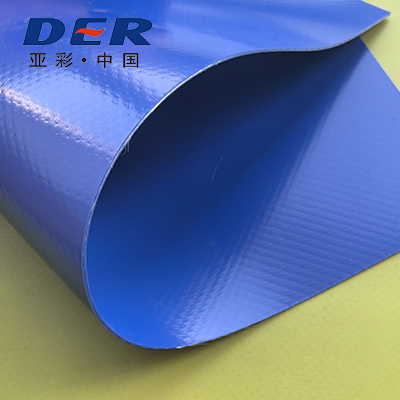

For a custom replacement, agree an inspection plan that checks the finished cover as an assembly. Material strength alone cannot confirm that pockets, attachments and folds will work with your hardware.
The broader truck tarp reinforcement guide explains why seams and edges matter alongside the base fabric.
These are inspection prompts, not diagnoses. Fabric damage can involve the cover, its geometry or the mechanical system. Keep the old tarp long enough to document the failure location.
| Observed symptom | Questions to check | Useful quotation evidence |
|---|---|---|
| Tear at one side fixing | Is the attachment aligned? Is there a sharp edge, damaged fitting or missing reinforcement? | A close-up with scale, hardware photo and location marked on the full-cover drawing. |
| Abrasion along pocket ends | Does the bow fit the opening? Is the contact surface damaged? Is local seam bulk interfering? | Bow section, pocket opening, wear side and an original sample if available. |
| Cover gathers unevenly | Are the fabric pattern and bow arrangement correct? Does the mechanism need alignment or service? | Open/closed photos, pocket schedule and an installer assessment of the hardware. |
| Tarp rubs rails or rear hardware | Is the drop too deep? Is there adequate clearance through the full travel and tailgate movement? | Contact-point photos, drop depth and the relevant rail or rear-end dimensions. |
DERFLEX's published capabilities include custom tarpaulins, PVC-coated fabric, reinforced hems, pockets, webbing, eyelets, welding and OEM branding. Specialized cable-system layouts are reviewed against your requirements.
Discuss the cover shape, seam layout, reinforcement and finishing through DERFLEX's custom tarp manufacturing service. Agree which mechanical parts remain outside the supply scope.
For a fleet or dealer program, request a retained material reference, approved pattern revision, side identification and packing labels that distinguish different body and system configurations.
Review logo, labeling, packaging and reorder specifications through OEM tarp supply. Sampling, MOQ and production scheduling are quoted for the agreed construction.
Share what you know and mark any dimensions that still need confirmation. A clear attachment schedule helps DERFLEX review the fabric construction and custom finishing with fewer assumptions.
Price, MOQ, samples and lead time are confirmed after specification review. Mechanical hardware is excluded unless separately agreed.
Practical answers for buyers replacing the fabric on an existing truck or trailer cover system.
Yes, if the existing system remains serviceable and the replacement fabric matches its interfaces. Confirm the system model, cover dimensions, bow-pocket arrangement, side attachments and front/rear details. Worn cables, damaged sliders or bent bows need separate inspection.
No. Similar body lengths can use different bow profiles, pocket patterns, cable guides and end fixings. A nominal truck size or a brand name alone does not establish compatibility. Use a confirmed drawing, reliable original specification or an evaluated sample.
Provide finished length and developed width, bow profile, pocket count and usable opening, each attachment center position from a common datum, side-edge offsets, drop depth and front/rear details. State units and measurement conditions, and mark driver and passenger sides.
Solid PVC-coated polyester is a starting point when a water-blocking fabric is required. Mesh prioritizes airflow and load coverage and is not waterproof. Confirm the cargo, system-approved fabric, finished mass and local covering requirements. A waterproof sheet does not make the complete assembly watertight.
DERFLEX supports custom tarp fabrication. Send close-up photos, dimensions and a drawing of the required interfaces for technical review. Pocket openings, reinforcement zones, grommet locations or approved tab details must be checked against the existing hardware before production.
They are confirmed after reviewing the material grade, finished dimensions, attachment design, quantity, sample requirements, packaging and delivery destination. Request a project-specific quotation; this page does not list stock pricing or a standard production schedule.
Have an old tarp, drawing or system photos?
Use them to start the replacement-cover review.