


 Industrial Shelter Cover Programs
Heavy Duty Shelter Tarps for Industrial Storage & Equipment Protection
PVC coated shelter tarp materials and custom cover programs for warehouse overflow, machinery storage, agricultural shelters, construction work zones, vehicle bays and OEM replacement covers.
DERFLEX supplies coated fabric, cut panels and project-based fabricated covers. Structural frame design, anchoring and site load verification remain part of the complete shelter system and should be confirmed separately.
What Buyers Usually Mean by “Heavy Duty Shelter Tarps”
The phrase can describe several related products: a roof skin for a framed storage shelter, sidewall panels for an industrial tent, a complete replacement cover for an existing shelter frame, or heavy duty shelter tarp material supplied in rolls for local fabrication.
Those projects may look similar in a search result, but they do not share one universal specification. A compact equipment shelter with frequent door movement places different stress on the fabric than a long warehouse enclosure exposed to constant roof tension. A replacement cover also has a different priority: it must reproduce the geometry and fastening layout of the existing frame closely enough to install without uncontrolled slack or excessive tension.
One Product Family, Four Common Sourcing Needs
DERFLEX can discuss material and fabrication around the commercial role the shelter cover needs to perform.
New Shelter Cover
Roof and wall cover material developed around a new frame drawing, shelter size, fastening method and end-use environment.
Replacement Shelter Tarp
Reverse-engineered from a drawing, original cover measurements, installation photos or a physical sample when an existing cover reaches replacement stage.
Roll Fabric for Fabricators
PVC coated polyester supplied as roll goods for shelter manufacturers, converters and regional fabricators with their own cutting and welding capacity.
OEM Cover Program
Repeat sizes, colors, labels and packing for distributors or shelter brands building a defined replacement-cover product line.
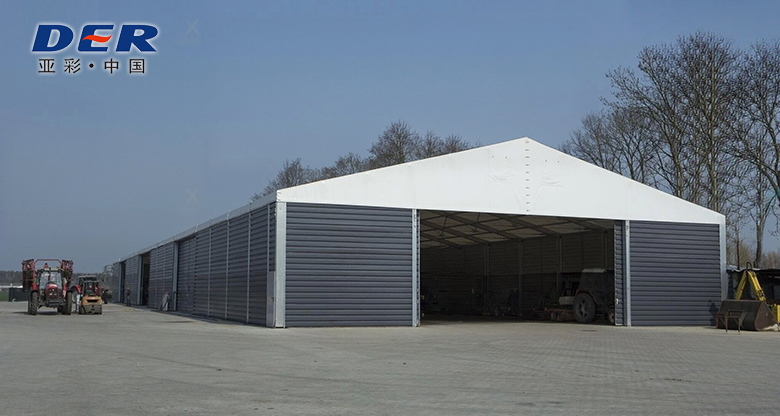
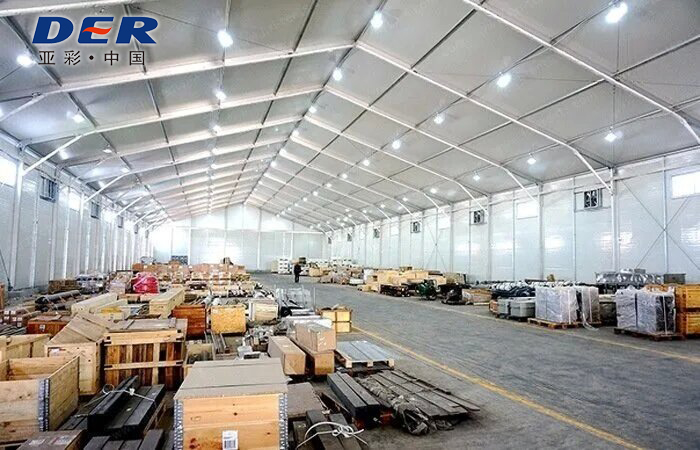
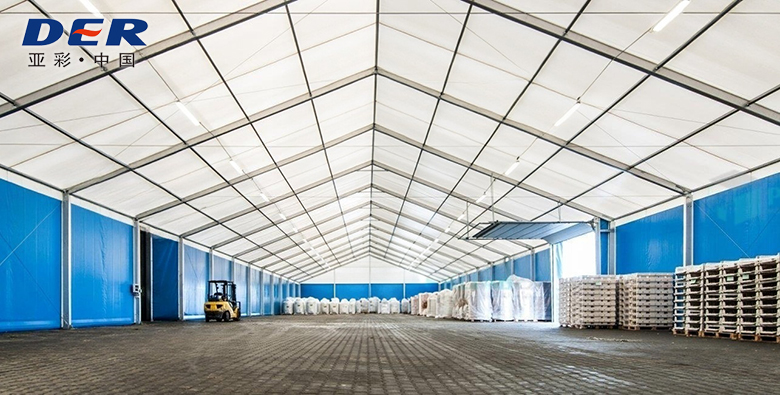
DERFLEX Shelter & Industrial Fabric Application References
Representative DERFLEX site images showing warehouse-tent structures and heavy duty coated fabric direction.
Heavy Duty Shelter Performance Comes from the Whole Cover System
Fabric weight matters, but the finished cover is more reliable when coating, reinforcement, seams and attachment details are planned together.
Surface & Coating Package
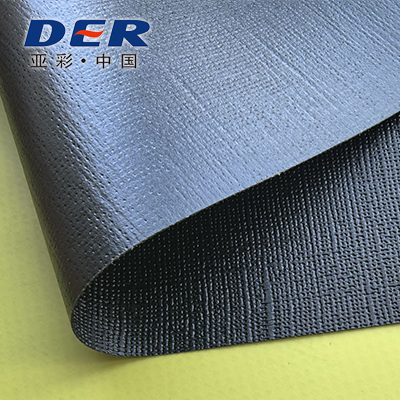
PVC coating provides the water-shedding surface, color and welding compatibility. UV, anti-mildew, cold-weather, lacquer or flame-performance options can be discussed by market.
Polyester Reinforcement
The woven base textile carries tensile and tear loads. Yarn density and fabric construction should match span, tension, handling and expected abuse rather than a generic “heavy duty” label.
Panel & Seam Design
Large covers typically require joined panels. Weld layout, overlap, direction and sample validation influence water resistance and long-term seam behavior.
Edge Load Management
Webbing, double-layer patches, rope hems, pockets, straps, grommets and lacing points distribute installation loads into the cover and deserve separate specification.
Typical Heavy Duty Shelter Tarp Options
These are configurable directions for discussion, not a one-size-fits-all shelter rating. Final values should be confirmed against the frame, climate and intended service conditions.
| Specification | DERFLEX Discussion Range | Buyer Decision Point |
|---|---|---|
| Material | PVC coated polyester, PVC laminated fabric or project-selected coated textile | PVC coated construction is often preferred when weldability, reusable outdoor service and stronger finishing options are required. |
| Weight | Common shelter inquiries may use 650, 750, 850, 900 gsm or custom heavy duty grades | Higher GSM is not automatically better; frame capacity, folding, installation labor and reinforcement design also matter. |
| Width | Standard and wide-roll options; up to about 5.1 m can be discussed depending on construction | Wider rolls can reduce seam count, but usable width should be coordinated with panel layout and welding equipment. |
| Color | White, gray, green, blue, black, beige and custom colors | Color influences appearance, light transmission, heat gain and product-line consistency. |
| Surface | Matte, semi-matte, glossy, lacquered, embossed or printable options | Select based on cleaning, branding, dirt visibility and target market appearance. |
| Performance Options | Waterproof coated surface, UV resistance, anti-mildew, cold resistance, abrasion resistance, flame-retardant direction | Required test method and destination market should be stated before sampling where compliance documents are needed. |
| Fabrication | HF/RF or hot-air welded panels, sewn details where appropriate, reinforced hems, webbing, eyelets, pockets, straps and zipper interfaces | Attachment method should match the frame and expected wind-induced movement. |
| Supply Format | Roll goods, cut panels, finished cover assemblies, replacement cover programs | Choose based on whether the buyer fabricates locally or needs a ready-to-install cover. |
| Quality Checks | GSM, width, color, coating appearance, tensile/tear direction, weldability, panel dimensions and packing checks by agreed plan | For repeat programs, lock approved specifications and reference samples before bulk production. |
Where Heavy Duty Shelter Tarp Covers Are Commonly Specified
The cover should be selected around what the shelter protects, how often it is accessed and how exposed the site is.
Machinery & Equipment Shelters
Cover systems for parked machinery, maintenance equipment, spare parts and outdoor industrial assets requiring repeat access.
Warehouse Overflow
Temporary or semi-permanent covered areas for pallets, raw materials, seasonal stock, staging zones and logistics expansion.
Vehicle & Trailer Bays
Framed shelters for commercial vehicles, trailers, boats, service equipment or project fleets where roof clearance and door geometry matter.
Farm Storage Shelters
Protection for farm machinery, feed-handling equipment, seasonal materials and other agricultural storage programs.
Site Storage & Work Zones
Weather-protected areas for tools, consumables, material staging and temporary maintenance operations.
Replacement Cover Product Lines
Defined cover sizes for shelter distributors and brands that need repeat geometry, consistent color, labels and export packing.
Replacing a Shelter Tarp? Fit Is a Specification.
Many replacement-cover failures begin before production: the inquiry contains only the shelter’s nominal footprint, while the original cover geometry includes ridge length, eave drop, end-wall shape, door opening, tension allowance and fastening positions.
For a custom replacement shelter cover, DERFLEX can review a technical drawing, a dimension sheet, installation photos, an existing cover sample or a combination of these inputs.
Specify Against the Failure Mode You Actually Need to Prevent
This approach is more useful than choosing a shelter tarp by thickness alone.
Tearing at Lacing or Eyelets
Often linked to concentrated loads, insufficient reinforcement, poor spacing or cover movement.
Specification response: reinforce load paths and review fastening layout.Excessive Flapping
Loose fit can accelerate coating wear, edge fatigue and noise around a shelter frame.
Specification response: confirm finished geometry and tensioning method.Seam Leakage
Large roof panels depend on the compatibility of coating, seam method and welding parameters.
Specification response: validate sample welding and seam layout.UV Surface Degradation
Long outdoor exposure can affect color, flexibility and coating integrity when the formulation is not matched to climate.
Specification response: state destination climate and outdoor exposure target.Corner & Door Fatigue
Openings and corners see repeated movement and local stress that differs from the middle of a roof panel.
Specification response: add local patches, webbing or interface reinforcement.Condensation Complaints
A waterproof cover stops rain penetration but does not by itself control internal humidity or condensation.
Specification response: address ventilation and building operation at system level.PVC Shelter Tarps vs PE Shelter Covers
Both materials can serve shelter markets. The practical choice depends on lifespan target, fabrication method, product positioning and budget.
PVC Coated Polyester
- Suitable for reusable commercial and industrial shelter-cover programs.
- Good compatibility with welded seams and reinforced fabrication.
- Broad options for color, surface finish, UV package and flame-performance direction.
- Useful when buyers need consistent repeat specifications and OEM appearance.
- Typically higher material cost than basic PE, so specification should match the application.
PE / Poly Cover
- Common for economy-oriented, lighter or shorter-term shelter covers.
- Lower weight can simplify handling on some portable products.
- Material grades vary substantially in weave, thickness and UV treatment.
- Useful when cost and replacement-cycle expectations favor a simpler cover.
- May offer fewer premium welding, surface and heavy-reinforcement options than PVC programs.
From Shelter Requirement to Repeatable Cover Supply
DERFLEX can coordinate material and cover development around a documented approval path.
Application Review
Frame type, dimensions, cover role, climate, handling and quantity.
Material Match
Base fabric, PVC weight, finish, color and optional performance package.
Fabrication Detail
Panel map, seams, edge reinforcement, eyelets, straps, pockets and openings.
Sample Approval
Color, hand feel, weld behavior, dimensions or first-article cover as appropriate.
Bulk & Repeat Orders
Agreed QC checkpoints, labeling, packing and documented repeat specification.
A Material Manufacturer for Shelter Brands, Fabricators & Project Buyers
DERFLEX’s company profile describes an integrated coated-fabric production base with calendering, coating and lamination capability, supported by engineering and export teams. For heavy duty shelter tarp programs, that matters because material consistency, weldability, surface finish and repeat color need to remain controlled across future orders.
Buyers can discuss roll goods, cut panels or finished cover directions depending on their own fabrication model and the complexity of the shelter geometry.
Explore Shelter Tarp Materials & Adjacent Solutions
Six closely related pages for material selection, shelter fabrication and industrial tarp procurement.
Tent Tarpaulin
Heavy duty PVC tent tarpaulin material for industrial tents, carports and outdoor structures.
View page →Tent Fabric
Waterproof PVC coated tent fabric for roofs, sidewalls, warehouse shelters and OEM systems.
View page →Industrial Tarps
Heavy duty PVC tarps for equipment, construction, storage and industrial protection.
View page →Waterproof Tarps
Coated tarp materials and finished covers for long-term outdoor protection projects.
View page →Flame Retardant Tarpaulin
Fire-performance tarp directions for projects where specified testing or documentation is required.
View page →Custom Tarp Manufacturer
Made-to-measure tarp development for drawings, special fastening layouts and OEM repeat programs.
View page →Frequently Asked Questions About Heavy Duty Shelter Tarps
Practical answers for shelter manufacturers, distributors, industrial buyers and replacement-cover procurement teams.
What material is commonly used for heavy duty shelter tarps?
PVC coated polyester is commonly selected for reusable commercial and industrial shelter covers because it combines a reinforced textile base with a waterproof, weldable coating. PE covers are also common for lighter or economy-oriented shelter products. The right choice depends on the frame, outdoor exposure, service cycle, fabrication method and target cost.
What GSM should I choose for an industrial shelter tarp?
There is no single GSM that fits every shelter. Heavy duty shelter projects may discuss 650, 750, 850, 900 gsm or custom grades, but the correct value should be matched to frame span, tension, local climate, handling frequency, attachment design and whether the cover needs repeated installation.
Can DERFLEX make a custom replacement shelter cover?
DERFLEX can discuss custom replacement-cover fabrication when the buyer can provide reliable geometry and attachment information. Useful inputs include a dimensioned drawing, original cover measurements, installation photographs, fastening details and, where available, a physical sample of the old cover.
Are heavy duty shelter tarps waterproof?
PVC coated fabric can provide a waterproof surface. Finished shelter performance also depends on seams, penetrations, roof slope, drainage, edge details and installation. For large roof systems, seam welding and panel layout should be treated as part of the waterproofing specification.
Can shelter tarp material be flame retardant?
Flame-retardant constructions can be discussed for shelter projects. Buyers should state the destination market, required test method or certificate scope, and whether the requirement applies to roof material, sidewalls or the complete shelter system before production.
Can a tarp supplier provide wind- or snow-load certification for the shelter?
The cover fabric is only one component of the structure. Wind and snow capacity depends on frame engineering, span, geometry, anchoring, connections, installation and local design criteria. Structural certification should therefore come from the responsible complete-shelter system provider or qualified engineer, not from the fabric specification alone.
What information should I send for a heavy duty shelter tarp quote?
Provide the shelter application, frame width and length, roof profile, finished cover dimensions or drawing, roof/sidewall/end-wall requirements, target GSM if known, color, UV or flame-performance needs, attachment method, reinforcement details, quantity, packing requirement and destination. Photos are especially useful for replacement-cover inquiries.
Send the Shelter Geometry — Not Just “Need a Heavy Duty Tarp”
A more complete RFQ helps DERFLEX recommend material, reinforcement and fabrication details with fewer assumptions.
- Frame size & roof profile
- Finished cover dimensions
- Roof / sidewall / end-wall scope
- Attachment & tensioning method
- Color & surface finish
- UV / FR / climate requirements
- Quantity & repeat-order plan
- Destination & packing needs
Send drawings, dimensions, photos or an old-cover reference. DERFLEX can review the coated-fabric and fabrication direction for sampling and quotation.