


 Material intelligence
for OEM buyers
PU Leather vs Microfiber Leather
A better comparison starts beneath the visible grain. Understand conventional PU-coated fabrics and microfiber-based PU synthetics by their backing architecture, handling, durability tests and qualified cost. This guide helps bag makers, footwear brands, furniture manufacturers and automotive trim buyers define a useful sample request—without treating either material name as a performance guarantee.
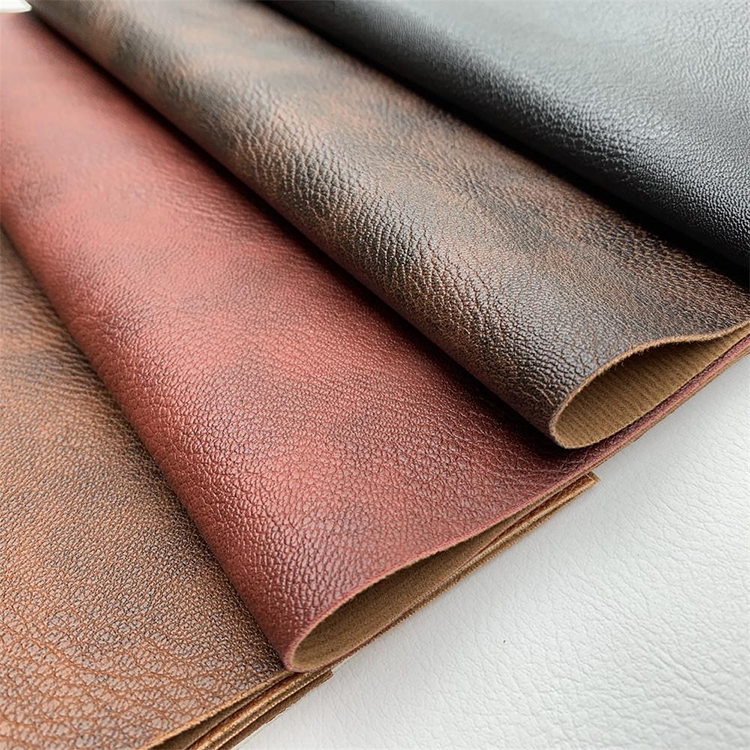
Microfiber leather is often a type of PU synthetic leather, not an entirely separate chemistry. Conventional “PU leather” in B2B quotations commonly means a polyurethane surface on a woven, knitted or standard nonwoven textile. “Microfiber leather” usually specifies an engineered ultrafine-fiber substrate combined with a PU matrix and an appropriate finish. A microfiber base may offer a denser, more leather-like platform for selected applications; a conventional PU-coated textile can be lighter, softer or more economical. Neither category is automatically stronger, more breathable, waterproof or longer lasting. Compare the actual construction, test results and finished-component performance.
What is the real difference?
Two swatches can share a similar grain yet behave differently during cutting, sewing, folding or long-term use. The substrate, PU system and finishing layers all matter.
Conventional PU-coated fabric
Polyurethane coating or film applied to a conventional textile backing. The backing may be knitted, woven or nonwoven; the coating may be engineered for a particular touch, embossing or wear direction.
Schematic only. Not a micrograph or claim about a particular DERFLEX grade.
Microfiber-based PU leather
An engineered network of very fine fibers, commonly in a nonwoven structure, combined with a PU matrix and possibly a finished face. Actual fiber content, impregnation and layer sequence differ by grade.
Schematic only. Layer height does not represent actual thickness.
PU leather vs microfiber leather: buyer comparison
These are typical construction tendencies, not universal performance rankings. The final choice belongs to the named grade, component design and agreed tests.
| Buyer factor | Conventional PU-coated textile | Microfiber-based PU synthetic |
|---|---|---|
| Core identity | PU surface bonded to a conventional knitted, woven or other selected backing. | Ultrafine-fiber network with a PU matrix and grade-specific finishing layers. |
| Hand feel and body | Broad range from thin, drapey and supple to firmer upholstery structures. | Can have a substantial, compact or suede-like hand, depending on finish and density. |
| Flex and creasing | Depends on PU formulation, backing stretch, coating adhesion and thickness. | Fiber network may be useful for repeated bending; surface and matrix still need proof. |
| Tear and dimensional behavior | Can vary significantly by backing construction and fabric directions. | May provide a stable engineered base; require directional test values. |
| Abrasion and aging | Topcoat and exposure conditions are decisive. High-wear grades do exist. | Not automatically abrasion-, hydrolysis- or scratch-proof; test the actual finish. |
| Cutting and sewing | Often familiar handling for apparel, upholstery and bag conversion. | May change skiving, needle choice, seam bulk, yield and edge finish. |
| Price logic | Can offer wider entry-to-midrange construction choices. | Complex substrate can increase cost, but accepted yield and quality decide value. |
| Best reason to shortlist | Surface design, flexibility, production fit and controlled cost. | When the component benefits from the defined microfiber base and verified behavior. |
Do not compare tensile, tear, abrasion or flex numbers across different methods, specimen directions or failure endpoints. “Higher cycles” is meaningful only with a stated test setup and pass criterion.
Which one should you choose for your product?
Begin with the finished part—not a generic claim that microfiber is “premium” or PU is “basic.” The same surface may be suitable in a decorative panel and fail at a tight fold or repeated contact edge.
Structure vs drape
For a shaped bag, evaluate microfiber when body, edge treatment and controlled panel movement are important. Conventional PU may suit flexible fashion panels and linings. Inspect stitch holes, edge paint, adhesive compatibility, backing fray, fold whitening and repeated handling on a finished prototype.
Flex without surface failure
For uppers, compare bend behavior, shape recovery, tear at stitch lines and peel after conditioning. Microfiber may be a useful candidate for demanding structural parts. Lighter PU constructions may be appropriate for less loaded areas. Test the actual upper pattern, reinforcement and bonding system.
Touch, cleaning and wear
Choose around foam, seat geometry, cleaning products and exposure to skin oils. Conventional upholstery PU can provide a soft, consistent hand; microfiber PU may suit a more substantial feel. For both, require abrasion, cleanability, hydrolysis and seam evaluations suited to the intended market.
Location-specific validation
A steering wheel, seat bolster and door insert do not experience the same friction, heat or forming stress. Compare PU and microfiber candidates against the automotive OEM's component specification, including color change, fogging or emissions where required, aging, abrasion, grip and assembly behavior.
The tests worth requesting before bulk orders
A credible comparison uses the same relevant method, conditions and acceptance definition. Ask the supplier which tests apply to the substrate and finish; some textile or leather standards are not suitable for every synthetic composite.
State the tester, abradant, load, number of cycles and endpoint. Record color/gloss change, exposure of backing and surface damage, not just a cycle number.
Specify bend/flex procedure, temperature, dry or wet conditioning, cycles and crack definition. Test a realistic folded or stitched component when critical.
Ask for method, specimen dimensions and machine/roll directions. Compare material behavior with panel loads, reinforcement and seam position.
Check face-to-base separation before and after relevant aging. Agree whether a coated-fabric adhesion method is suitable for the proposed grade.
Define exposure duration, temperature, humidity and pass/fail criteria. A “hydrolysis-resistant” label without test evidence is insufficient.
Check dry/wet rub-off, color transfer, cleaners and body oils as relevant. Record both appearance and structural changes after cleaning.
Method references to discuss with the test laboratory, where applicable: ISO 1421:2016 for coated-fabric tensile strength; ISO 2411:2024 for coating adhesion; ISO 105-X12:2016 for rubbing colorfastness. Test selection and edition should be confirmed for the specific composite and destination market.
Turn a visual sample into a repeatable material specification
A good first swatch is only the beginning. Align design, engineering, quality and purchasing before you treat two quotes as comparable.
Define the use
Identify the exact component, contact conditions, cut/sew/bond process, geographic market and likely failure risks. Share drawings or an existing approved sample.
Specify the structure
State microfiber or conventional backing, surface chemistry, target thickness and measuring method, color, grain, hand, roll width and packing requirements.
Approve and control
Agree physical sample ID, test protocols, acceptance limits, color standard, tolerances and change notification for first bulk and repeat production.
What to include in your RFQ
- End product, component and destination market
- Conventional PU or microfiber PU preference—or request both
- Backing/fiber description and desired surface finish
- Total thickness, target hand and usable roll width
- Quantity, color variants and expected repeat frequency
- Cutting, sewing, bonding, skiving or forming process
- Priority tests and required documentation
- Sample photograph, existing benchmark and approval timeline
How to compare qualified cost
Compare quotations in the same unit, quality scope and delivery basis. Then include usable cutting yield, process losses, testing, color development, rejected panels and repeat-lot consistency. A cheaper roll that fails the component can be more expensive overall; an upgraded substrate is not cost-effective if the project never needs its specific behavior.
Supply-scope reminder: DERFLEX's existing synthetic-leather program describes roll materials and OEM customization directions. Confirm the availability of a specific microfiber construction, finished cut parts, test reports, MOQ and lead time for your actual enquiry; none is automatically included.
Material surfaces, rolls and handling references
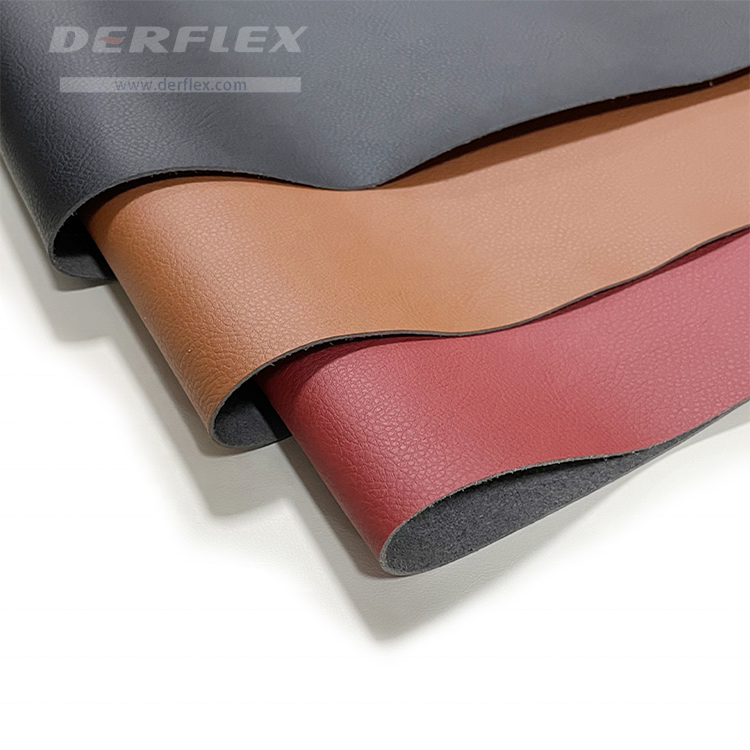
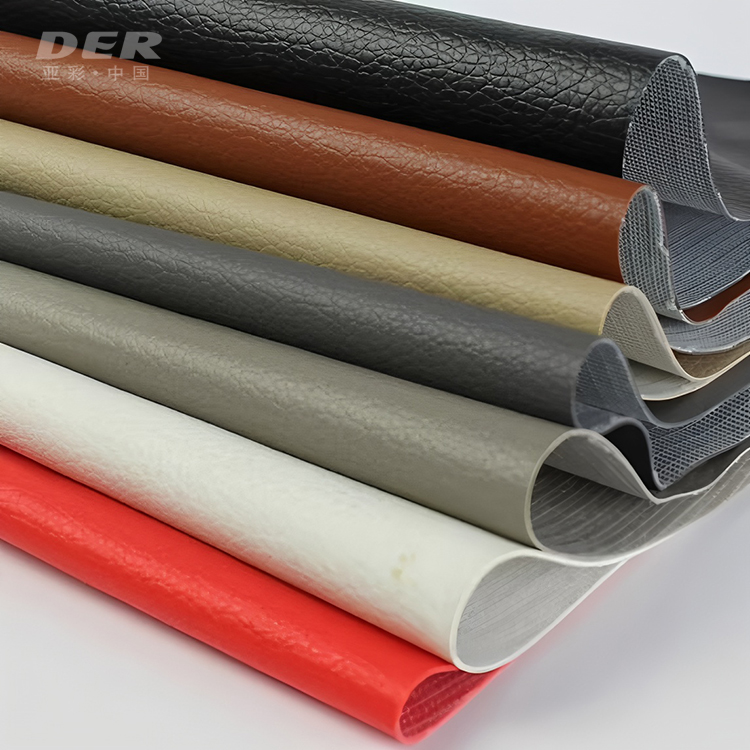
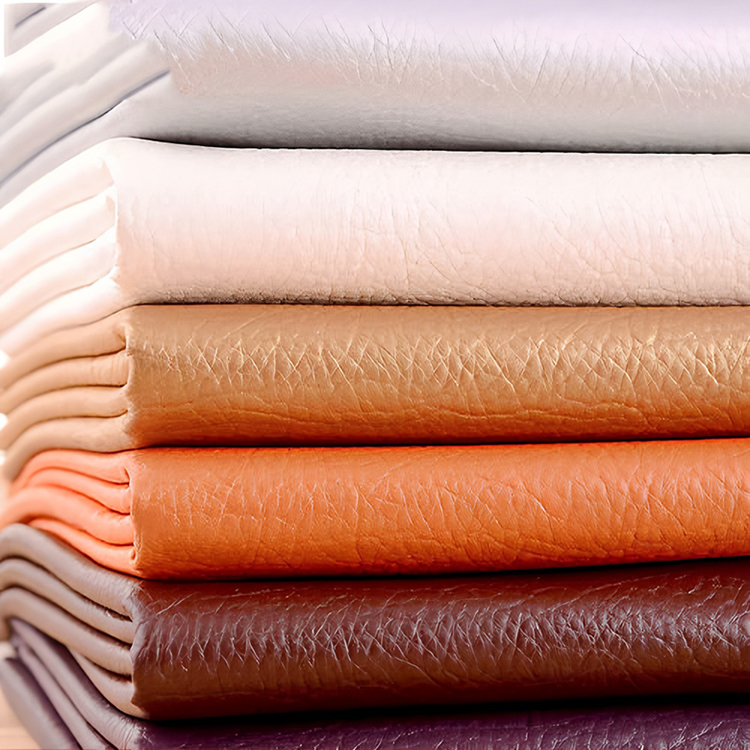
These photographs come from existing DERFLEX material pages. They show PU or synthetic leather references, not certified examples of a particular microfiber grade, test report or customer project.
Frequently asked questions
Short answers to the issues most likely to change your material choice or sample plan.
Is microfiber leather the same as PU leather?
Not exactly, but the categories overlap. Many microfiber synthetic leathers use a polyurethane matrix or surface system. “Microfiber” mainly identifies an engineered ultrafine-fiber base, while “PU” identifies polyurethane chemistry. Request the full layer and substrate specification.
Is microfiber leather always more durable than ordinary PU leather?
No. Its engineered base can be advantageous for some structural, tear or flex requirements, but actual wear also depends on the PU chemistry, finish, bonding, thickness, exposure and workmanship. Compare the two proposed grades using identical relevant tests.
Which is better for handbags and wallets?
Choose by design. Microfiber PU may be considered for shaped panels, edge work and structure. A conventional PU-coated textile may suit softer, drapier or cost-controlled bags. Sew, skive, fold and edge-finish a real prototype before approval.
Which material is more suitable for sofas or automotive seats?
Neither label settles the question. Review seat geometry, expected abrasion, cleaning agents, body oils, heat, hydrolysis, seam loads and any applicable assembly requirements. Use an application-matched physical sample and documented acceptance tests.
Is microfiber leather waterproof and breathable?
Not by name alone. Liquid resistance and vapor transport depend on coating, pores, backings, perforations, finished seams and test conditions. Request defined measurements if either property is central to your product.
What must I send to receive a comparable OEM quotation?
Send the component and target market, target thickness, backing or fiber type, finish, color, roll width, quantity, fabrication method, priority tests and any reference swatch or drawing. Ask suppliers to identify the exact sample and specify what remains subject to verification.
Choose by construction. Validate by performance.
Share an application photo or drawing, target feel, thickness, color, backing, estimated quantity and destination market. DERFLEX can review your brief and confirm which PU or microfiber-based material directions are available for sample evaluation.
DERFLEX • Technical buying guide. Performance statements are grade- and test-dependent. Material photos are product references, not comparative laboratory evidence.