


 Coated technical textiles Industrial solutions
Home / Extra-thick knife-coated fabric
2–3 mm Knife-Coated PVC Polyester Fabric
When conventional tarpaulin is not enough, the material specification must go deeper than weight alone. This extra-thick PVC-coated polyester concept targets 2.0–3.0 mm finished thickness for demanding industrial conversion projects. DERFLEX can review the required construction, coating build, reinforcement, seam method and roll format against the actual end use. Feasibility, tolerances, test results and supply scope for these exceptional thicknesses require project-level confirmation.
For OEM fabricators, industrial converters, equipment manufacturers and technical project buyers.
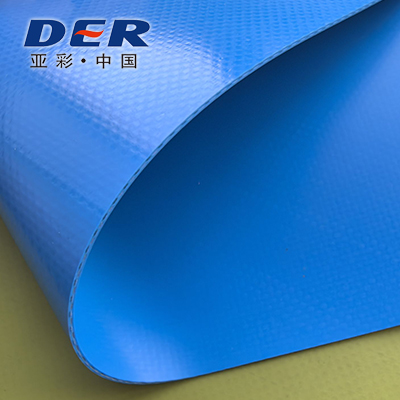
≈ 79–118 mil · confirm with measured samples
What does a 2–3 mm knife-coated polyester membrane actually mean?
It means a woven polyester reinforcement combined with PVC coating layers, with the finished composite targeted to measure between 2 and 3 mm under an agreed measurement method. It does not mean that every knife-coated roll is already available at this thickness.
Build the reinforcement first
Yarn size, weave density and dimensional stability affect strength and coating stability. A thick polymer skin cannot substitute for adequate fabric reinforcement.
Control the PVC build
Coating passes, layer fusion and the interface to the substrate must be reviewed. More coating is not automatically better adhesion or better repeated-flex performance.
Design around the join
Seam geometry, reinforcement, welding or sewing equipment and bending radius can become limiting factors as the composite becomes thicker.
Approve a measurable grade
Thickness, tolerance, mass, roll width, warp/weft properties and coating adhesion should be written into the approved specification before repeat production.
Quick purchasing answer: A 2 mm or 3 mm coated textile is not equivalent to a solid PVC sheet of the same thickness. The polyester base fabric changes tensile behavior, tear propagation, dimension stability and fabrication requirements. If you need a seamless rigid sheet, a highly flexible roll or a certified liquid-contact liner, state that separately—those are different engineering questions.
A reinforced composite engineered as a complete system
For very thick coated fabrics, the important question is how the coating, textile and adhesion interface behave together—not only how the finished cross-section looks.
Conceptual section, not to scale. Actual layer count, coat balance and finished thickness must be verified on the approved construction.
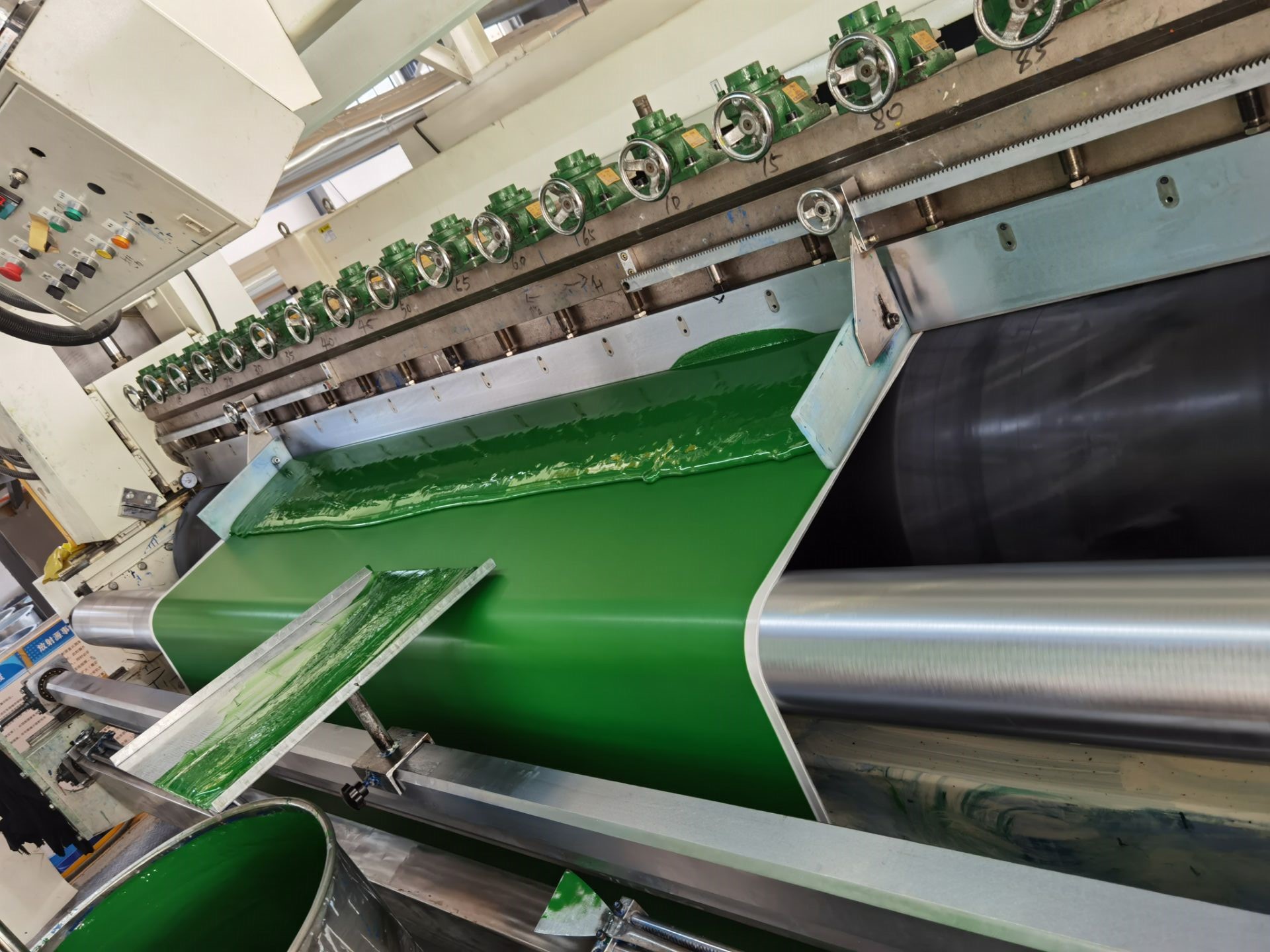
The polyester substrate is selected for the mechanical demands of the final article. PVC compound provides a continuous coated surface and influences flexibility, abrasion behavior, surface finish and joining compatibility. A heavier build may need several controlled passes; each pass and the final thermal history affect the integrity of the composite. For background on how the process works, see DERFLEX’s knife-coating process guide.
For buyers comparing coating technologies, standard knife-coated tarpaulin rolls form a useful reference point, but their published specifications should not be treated as evidence of this proposed extra-thick construction.
Agree on the measurable specification before quoting
These are RFQ fields and engineering decisions—not a claimed stock SKU or a factory-certified data sheet. The final numeric limits should be confirmed from a physical sample and test report.
| Field | Initial request | What must be confirmed |
|---|---|---|
| Finished thickness | 2.0, 2.5 or 3.0 mm target | Method, contact pressure, tolerance, number of roll positions and batch acceptance |
| Material construction | PVC knife-coated polyester | Woven base type, yarn specification, weave, coat balance and coating interface |
| Mass per area | To be measured in g/m² | Finished fabric GSM independent of thickness; coating and textile masses if relevant |
| Usable roll width | Project requirement | Maximum qualified width at requested build, edge trim and tolerances |
| Surface finish | Matte / gloss / texture review | Coefficient of friction, cleanability, welding face and finish compatibility |
| Color / opacity | Buyer color reference | Color tolerance, possible two-side appearance and light-blocking requirement |
| Joining route | HF, hot-air, wedge or mechanical | Machine capacity, test coupon, seam design and repeatability of joint properties |
| Environmental exposure | Temperature, UV, wear, chemical contact | Specific test conditions and compatibility; no general-use certification assumed |
| Packaging / delivery | Rolls or pre-cut pieces for review | Roll diameter, core, shipment handling, cut accuracy and processing scope |
Thickness is not GSM. Thickness is measured in millimeters or mils; GSM is mass per square meter. For reference, 2.0 mm ≈ 78.7 mil and 3.0 mm ≈ 118.1 mil. You cannot reliably convert a 2–3 mm coated fabric into GSM without the actual textile construction, material densities and coating distribution. The comparison in DERFLEX’s heavy-duty tarpaulin guide explains conventional mass classes but is not a verified datasheet for this target thickness.
Target for buyers aiming to limit bulk while increasing coating build. Verify bending, seam strength, rollability and actual mass before specification approval.
Intermediate development target, useful when an application has a thickness window. Feasibility and repeatability must be assessed on a sample, not inferred by interpolation.
Exceptional heavy build that may materially affect coating, winding, cutting and welding. Treat as a special engineering inquiry until manufacturing capability is confirmed.
Where an extra-thick PVC-coated textile may make sense
The following are evaluation scenarios, not claims that a particular DERFLEX 2–3 mm product has already been tested or supplied for each application.
Industrial abrasion curtains and protective skirts
When a hanging or flexible barrier experiences regular contact with equipment or conveyed material, buyers should define the contact surface, cleaning cycle, load direction and how panels are replaced.
Confirm: Abrasion method, flex cycles, wear points and whether a thinner reinforced design would perform better.
Equipment impact shields and protective coverings
For protective outer layers around stationary machines or structures, a thick surface can be evaluated alongside reinforcement, fixing loads and access points. The assembly design controls overall performance.
Confirm: Energy and geometry of contact, attachment method and machine-safety requirements.
Heavy-duty liner and containment components
Multi-layer PVC-coated polyester may be considered where a fabricated membrane is mechanically stressed. However, a liner’s suitability is defined by seam tests, chemical compatibility and the complete containment design.
Confirm: Liquid composition, contact duration, temperature, pressure and third-party requirements.
Custom OEM sheets, pads and formed panels
Converters may require pre-cut sheets or thick flexible panels for an unusual mechanical geometry. Cutting tolerances, edge handling, large-radius bends and batch color can matter as much as the coating itself.
Confirm: Drawings, panel shape, cut tooling, joining method, finished weight and assembly testing.
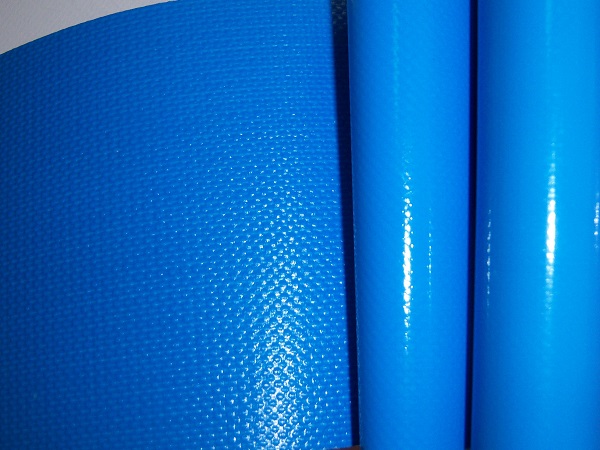
For everyday covers, see the wider PVC tarpaulin material range; for flexible heavy-duty product selection, compare industrial PVC coated fabric. A structural tensile fabric has a separate design and certification path—see tensile membrane materials. Thickness alone should not be used to specify wind load, lifting capacity, flame resistance or potable-water contact.
Thicker material changes the fabrication window
A roll that passes a flat-material test can still fail at a seam, fold, edge or fixing point. Plan the finished article while selecting the fabric.
Examine drawings, application, roll handling and connection details.
Confirm thickness, appearance, flex and weight on the proposed build.
Trial the specific welding or mechanical attachment route.
Check seam and edge behavior after relevant movement or exposure.
Approve QC criteria and retain a reference for repeat orders.
Welding considerations
High-frequency and thermal welding are common routes for suitable PVC-coated fabrics, but extremely thick constructions may demand different power, pressure, dwell, contact area and cooling behavior. The machine, electrode or nozzle geometry, coating formula and seam layout should be qualified together. A visually continuous seam does not establish strength or liquid-tightness.
Cutting, folding and transport
The buyer should determine the largest acceptable roll diameter, core type, handling equipment, cutting tolerance and smallest in-service bend. A nominal 3 mm target may make tight folding, compact packaging or conventional hot-knife cutting impractical. Consult DERFLEX’s PVC fabric cutting guide when preparing conversion trials.
Do not approve on flat-sheet thickness alone
Request at least one fabricated test coupon representing the real overlap, edge reinforcement, penetration, fixing or fold. Confirm that the agreed test is performed on the final composite and that the coupon uses production-relevant settings. If the application involves pressure, load-bearing, chemical or human safety, separate system-level qualification may be mandatory.
Specify the evidence you want to receive with the material
These published methods are examples of appropriate measurement categories. Listing them does not mean a DERFLEX 2–3 mm grade has passed these tests, or that any particular result is guaranteed.
| What to verify | Reference method | Buyer acceptance decision |
|---|---|---|
| Finished thickness | ISO 2286-3:2016 | Measurement pressure, locations, tolerance and roll-to-roll consistency |
| Mass per area | ISO 2286-2:2016 | Finished GSM and, if needed, coating/substrate mass breakdown |
| Tensile strength | ISO 1421:2016 | Warp/weft results and test configuration appropriate to use |
| Tear resistance | ISO 4674-1:2016 | Tear method and both fabric directions, with agreed limits |
| Coating adhesion | ISO 2411:2024 | Coating-to-fabric adhesion in relevant directions/conditions |
| Seam and fatigue behavior | Project-specific agreed test | Actual joint configuration, conditioning and criteria |
| UV, chemical and abrasion exposure | Application-specific method | Correct medium, cycles, temperatures and pass/fail threshold |
Standards should be purchased or accessed through their official publishers. Test method selection, laboratory scope and edition must be agreed for the intended product. A certificate for a thinner standard material does not certify a newly developed thick construction.
Recommended approval record: One signed or otherwise approved reference sample, full material construction, tolerance table, test method and conditioning details, accepted seam coupon, delivery format, labeling rules and a defined process for handling nonconforming rolls. This gives purchasing teams a stronger basis for repeat orders than a single nominal thickness value.
What DERFLEX needs for an actionable technical quotation
The quickest starting point is an application drawing or photo with the target thickness and order volume. More technical details can be clarified during sample review.
Supply-scope boundary
This page addresses evaluation of extra-thick coated polyester material. Whether DERFLEX can supply this specific thickness as a production roll, pre-cut section or fabricated part must be confirmed in writing. No frame, installation, certified containment assembly, accessories or structural engineering service is implied.
Quotation variables include coating and reinforcement selection, achievable width, production qualification, number of coating passes, cutting/joining work, order quantity, packing and transport. No unverified MOQ, lead time or price is presented.
If your application uses a more conventional flexible covering grade, explore DERFLEX’s industrial tarpaulin and coated-fabric overview to avoid overspecifying a heavy, hard-to-convert material. Buyers evaluating manufacturing capability can also review coated fabric production and supplier selection.
Frequently asked questions
Straight answers to the questions that most often determine whether an extra-thick coated textile is an appropriate specification.
Is 2–3 mm knife-coated PVC polyester fabric a standard stocked DERFLEX grade?
The target range is presented here for custom engineering review, not as a confirmed stock item. DERFLEX should first verify whether the requested thickness, width, reinforcement and coating performance are technically and commercially achievable.
What is the difference between 2 mm thickness and 2,000 GSM?
Two millimeters describes finished thickness, while 2,000 g/m² describes mass per area. They are not interchangeable. A conversion requires knowing the material densities, textile structure and coating distribution; both values should be measured on the actual sample.
Can a 3 mm PVC-coated polyester membrane be heat welded?
Possibly, but weldability must be demonstrated with the chosen PVC formula, thickness, equipment and seam design. Request production-relevant welded coupons and suitable joint tests before approving fabrication or waterproof claims.
Which reinforcement should be used under a very thick PVC coating?
Choose the polyester yarn and weave from required tensile, tear, deformation and flex behavior. Higher denier alone does not define the finished fabric. Share load directions and operating conditions so the whole composite can be evaluated.
Is this material suitable for chemical containment, drinking water or structural loads?
Not on thickness information alone. Chemical compatibility, migration or potable-water requirements, seam sealing and system-level design require separate application-specific evidence. The material should not be treated as certified for these uses without that evidence.
What should I send to request a 2–3 mm coated fabric quotation?
Send the target thickness and tolerance, application, dimensions or roll width, approximate quantity, joining method, operating environment, required tests and destination. A drawing, reference sample or short application video can help define the feasibility review.
Define the thickness. Validate the entire material.
Share your target 2–3 mm build, environment, conversion method and expected quantity. We can review the required specification and clarify feasibility, sample verification and the appropriate quotation route.