White marquee roofs
Prioritize a consistent white appearance, suitable opacity, cleaning compatibility and welding behavior. Evaluate handling weight against the crew's regular installation cycle.




Keep a commercial tent fleet ready for its next booking. DERFLEX works with rental operators, marquee fabricators and distributors on PVC-coated tent materials and project-defined roof or wall cover programs. Specify existing frames, repeatable panel sizes, fabric appearance and replacement quantities together—then plan samples, peak-season replenishment and future orders against one approved reference.
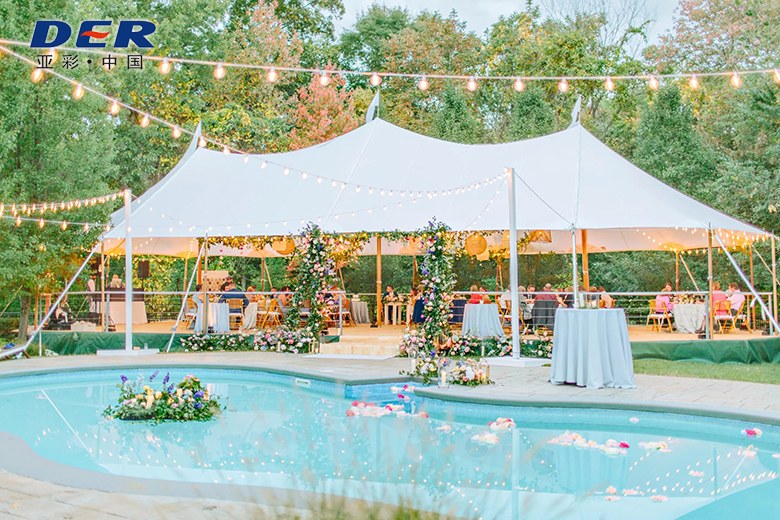
Quick answer: For event rental companies, an effective tent-cover buying specification links the existing frame system to an approved material grade, fitted roof and wall patterns, color reference, attachment details, packing ID and repeat-order controls. PVC-coated polyester is a common candidate for commercial covers because it can be fabricated into weather-resistant, cleanable panels, but fabric weight alone cannot establish service life or fit. Trial the finished component before committing to a fleet-wide purchase.
A single business may run several frame families, bay lengths, roof profiles and wall interfaces. Standardizing does not mean forcing every tent into one pattern: it means recording what stays common and identifying the exceptions clearly.
Log the maker or model, structural style, span, bay geometry and existing connection hardware. Keep hardware differences visible even when nominal tent sizes match.
Group roof bays, end gables, solid walls, clear-window walls and special doors according to material, attachment and folding requirements.
Use an internal code, drawing revision, approved sample, shade reference and packaging label for each finished cover or fabric-roll grade.
| Fleet master data | What to record | Why it matters on reorder |
|---|---|---|
| Frame and bay ID | System, bay position, roof form, interface photographs | Prevents a nominally similar but incompatible cover being dispatched. |
| Approved material | Coating type, grade reference, nominal GSM, surface and opacity | Limits unapproved substitutions between purchase batches. |
| Finished pattern | Drawing revision, datums, seam placement, orientation and tolerances | Preserves fit while panels from different dates are mixed in the fleet. |
| Color / white reference | Physical swatch, agreed light conditions, color tolerance and lot log | Controls visible differences between replacement pieces and existing roofs. |
| Edge and joining system | Rail/keder, eyelets, zips, hems, welds and reinforcement | Addresses the interfaces most likely to stop installation. |
| Pack and identity | SKU, dimensions, external label, fold plan, carton or bag specification | Helps warehouse teams pick the right cover during peak event periods. |
For material selection before component specification, see DERFLEX's event tent fabric overview and PVC tent material manufacturing guide.
Use one decision framework for the fleet without assuming every roof, wall or specialty enclosure should use the same coating and weight.
Prioritize a consistent white appearance, suitable opacity, cleaning compatibility and welding behavior. Evaluate handling weight against the crew's regular installation cycle.
Keep finished patterns, panel orientation, keder interfaces and ridge or gutter transitions controlled for interchangeable replacement stocks.
Manage clear panels, openings, zips and skirt details separately from roof material. A sidewall cannot be specified accurately using roof GSM alone.
Approve the color and artwork reference, coating compatibility, printed finish and cleaning practice. Reordering only by a digital color code may be insufficient.
Compare documented tensile and tear performance, coating adhesion, flexibility, weld behavior, stain resistance, climate exposure and any required material-level flame test for the exact proposed grade. The frame designer and event operator remain responsible for structural limits, anchorage, safe assembly and venue approvals. See the marquee tent construction overview for the roof-and-wall system context.
A rental cover spends time being dismantled, transported, cleaned, folded, stored and erected again. Ask how those cycles affect the coating and completed seams—not only how a new panel performs in the first installation.
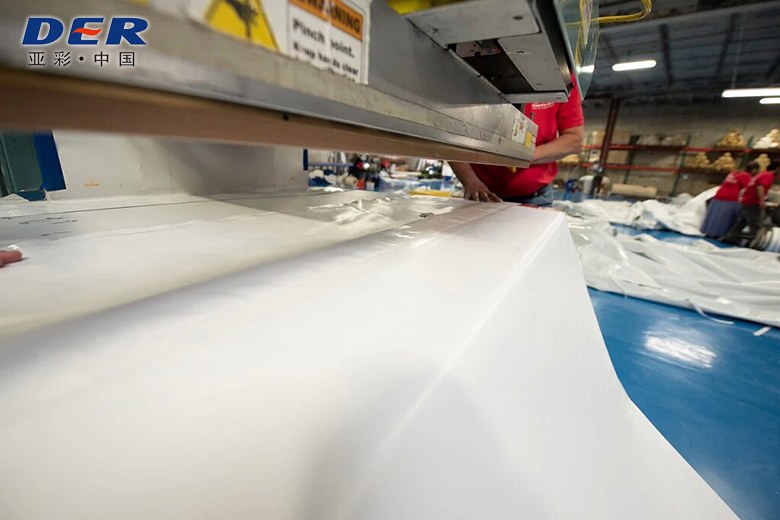
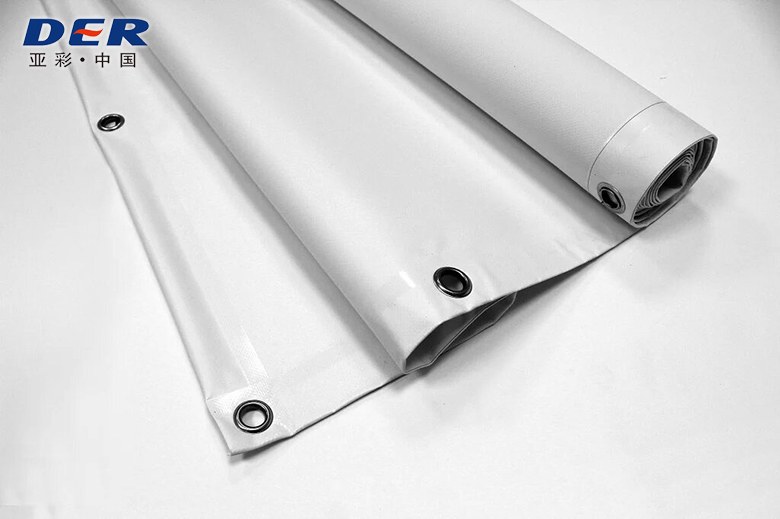
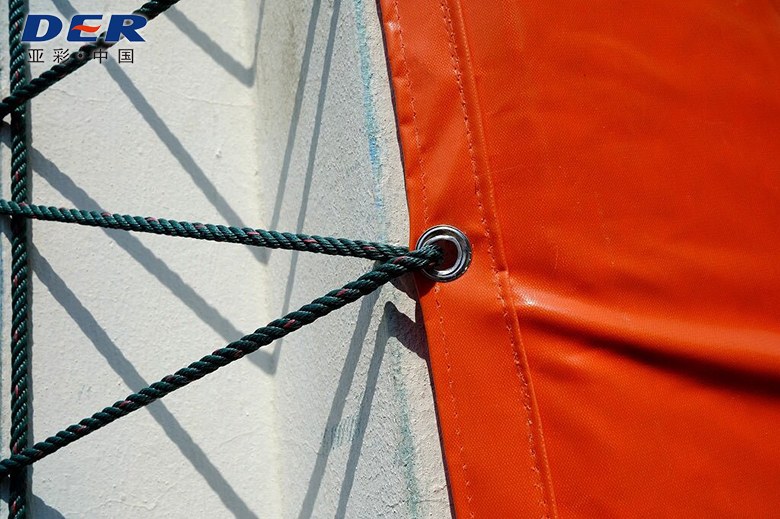
Agree the cleaning chemistry, dilution, contact time, rinse and drying procedure with the material supplier. Test new products on a small area before fleet-wide use. A surface treatment described as easy-clean is not permission to use aggressive solvents, abrasives or hot folding.
For clear PVC, protective interleaving and a suitable folding or rolling method may need their own approval. Record damage type and panel code when a cover is removed from service, so the same failure does not quietly recur in the next batch.
Roof and structural enclosure conditions vary; repair, tensioning and installation instructions must come from the relevant approved fabricator or system owner.
Keep roof bays, sidewalls and specialty pieces on separate inventory lines. A missing window wall should not trigger a complete roof order, while a damaged structural interface should not be treated as a simple cosmetic repair.
| Observed condition | Procurement direction | Approval required before reuse |
|---|---|---|
| Surface dirt or removable mark with intact coating | Clean under the approved procedure; retain the identified SKU | Visual and serviceability inspection after drying. |
| Localized puncture away from critical connection | Ask the approved fabricator whether repair is suitable | Document the repair method and acceptance criteria. |
| Failed seam, corner reinforcement or rail edge | Quarantine; evaluate specialist repair or a replacement panel | Fit, workmanship and loading review by responsible parties. |
| Strong whitening difference on a high-visibility facade | Compare a physical replacement sample against adjacent aged panels | Agree an appearance threshold or grouped panel replacement. |
| Repeated faults across multiple identical SKUs | Pause simple reorder; review geometry, cleaning, grade and handling | Revised master specification and trial sample. |
List active roof bays and wall pieces by model, then estimate expected replacements and growth stock separately.
Set the latest acceptable delivery date backwards from event commitments, allowing for sample approval and transit.
Choose stock levels for high-failure or high-consequence SKUs, accounting for interchangeable pieces and usable on-hand inventory.
Planned purchase quantity = forecast replacement demand + growth or contingency stock − verified usable inventory. Calculate separately for each approved SKU, then adjust for contractual minimums, packing multiples, seasonality and the actual quotation scope. This is an inventory-planning method, not a DERFLEX stock or lead-time promise.
For exact interfaces, use the keder replacement panel guide. For wall geometry, closures and window layouts, refer to the tent sidewall replacement guide.
Bright white is one of the most visible features of an event tent—and also one of the least reliable things to specify from a website photo alone. New coating and an aged adjacent panel may look different even when the original grade is identical.
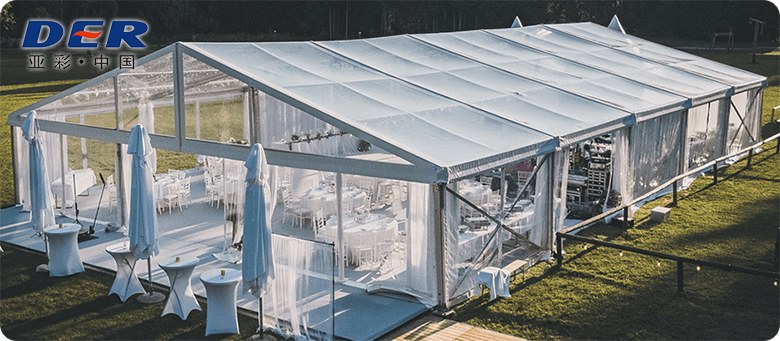
A structured trial is valuable because a small pattern discrepancy or mismatched white shade becomes expensive when repeated across dozens of panels.
Send frame families, usable drawings, roof and wall counts, installed photos, damaged sample pieces and current annual consumption.
Compare fabric rolls, cut blanks and finished cover requests. Review material grade, profiles, packing, testing and quotation boundaries.
Check swatch and representative fabricated piece for actual fit, surface appearance, welding, installation direction and labeling.
Freeze drawing revision, sample ID, tolerance and acceptance record; use controlled change approval before subsequent purchase orders.
DERFLEX's relevant scope includes PVC-coated tent fabric supply and discussion of project-specific fabricated cover requirements. Roll goods, cut blanks, finished roof or wall panels, sewn/welded edges, keder, fixing accessories and packing must be itemized and confirmed in the quotation. Tent frames, rails, foundations, anchors, engineering certification, installation and rental services are not automatically included.
You do not need a finished technical drawing to start. An inventory sheet, photographs of the current frame, one old cover or swatch, and an estimated demand plan allow a useful first discussion.
| Buyer input | Practical detail to provide |
|---|---|
| Fleet platform | Frame make/model, roof form, spans, bay lengths and existing rail/attachment photos. |
| Annual quantity | Roof and wall pieces or m² by grade, current fleet size, planned growth and replacement ratio. |
| Peak season | Required replenishment date, planned call-off schedule and destination/Incoterm requested. |
| Fabric selection | Current sample/grade, shade or color, opacity, desired finish and exposure/cleaning conditions. |
| Panel geometry | Part numbers, drawings or old cover sample, orientation, seams, edges and tolerances. |
| Quality evidence | Required test standards by destination, swatch approval and finished-component fit checks. |
| Label and pack | SKU numbering, lot marking, fold/roll orientation, protective layers and packing units. |
A useful price comparison must also reflect usable roll width, cutting waste, seam count, reinforcement, order scale and shipping terms. See the PVC tarpaulin bulk pricing guide for quote-factor context.
These are DERFLEX website image references illustrating relevant material and tent applications. Individual images do not certify a supplied system, test value or project contract.
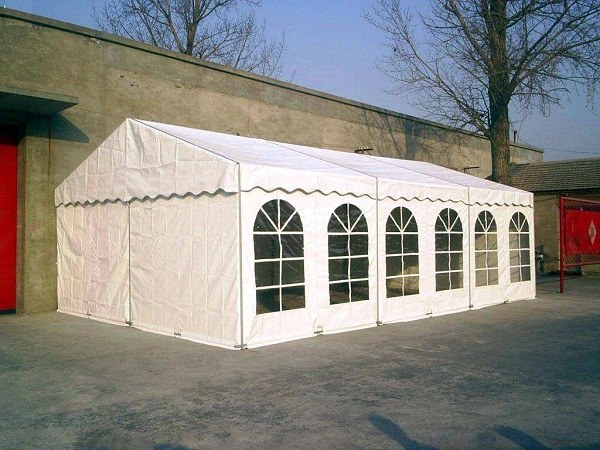

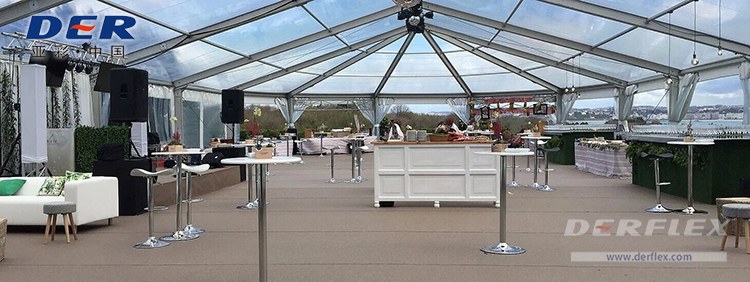
Use the fleet program page to set quantities and repeat-order controls. The related pages below go deeper into the fabric itself, tent configurations or a specific replacement component.
Direct answers for fleet owners, tent fabricators and commercial buyers managing replacement-cover purchasing programs.
PVC-coated polyester, is a common commercial option for weather-facing tent roofs and walls because of its coating, fabrication and cleanability potential. The suitable grade depends on frame geometry, handling frequency, verified material performance, opacity, cleaning practice and local fire-test requirements. Select the construction against an approved sample rather than GSM alone.
They may, but compatibility must be checked against the actual frame, panel geometry and attachments. Provide the tent maker/model, drawing or old cover, exact finished measurements and rail or fixing details. Approve a representative fitting trial before a larger repeat order; nominal tent dimensions are not enough.
Yes, a buyer can request a roof-only, wall-only or mixed material and panel quotation. Feasibility depends on the existing system, patterns and the requested finishing level. Separate roof sections from sidewalls with windows, doors, zippers or special edge details in the inventory and quotation.
Approve a physical material swatch and compare it with cleaned, dry adjacent fleet panels under agreed lighting. New fabric may still look visibly different from weathered or stained older covers. A full-bay or grouped replacement can sometimes provide a more consistent event appearance than a single isolated panel.
Forecast demand separately by approved part number using active inventory, expected replacements, planned fleet growth and usable spare stock. Send required receipt dates early enough for specification, sample approval, production and transport discussions. Any minimum quantities and lead times must be confirmed in the actual quote.
Keep the approved fabric grade and finish, physical color reference, finished pattern and drawing revision, tolerances, seam and edge details, attachment compatibility, panel numbering, packing method and agreed inspection records. Review any substitution before production rather than assuming that the same descriptive product name ensures identical fit.
This page concerns PVC-coated tent materials and project-specific cover enquiries. Fabric rolls, cut parts, finished roof or wall panels, accessories and packaging are separate scope items to confirm in writing. Frame structures, engineering calculations, anchoring, on-site installation and venue permits are not automatically part of a tent-cover quotation.
Provide the existing frame system, panel type and quantity breakdown, annual demand, replacement share, peak-season schedule, a material or white shade reference, drawings or photos, numbering requirements, destination and testing expectations. An old cover sample is useful when drawings are incomplete.
Share your frame models, annual volume, peak-season schedule and reference cover. DERFLEX can review material options and clarify the scope of a sample or repeat-order quotation.