News
Company News

Heavy Duty Tarpaulin Tanks Manufacturer | PVC Water & Liquid Storage Tanks | DERFLEX

Update:2026/9/16 16:26:44 Views:
Factory-Direct Flexible Containment Solutions

Heavy Duty Tarpaulin Tanks for Water & Industrial Liquid Storage

DERFLEX supplies heavy duty tarpaulin tanks and reinforced PVC coated fabric solutions for portable water storage, irrigation, construction, emergency response, aquaculture and selected industrial liquid-containment projects. Tank capacity, fabric weight, thickness, fittings, color and fabrication details can be matched to the real operating conditions of the project.

PVC Coated Polyester Pillow / Bladder Tanks Onion & Frame Tanks Custom Capacity OEM / Project Supply
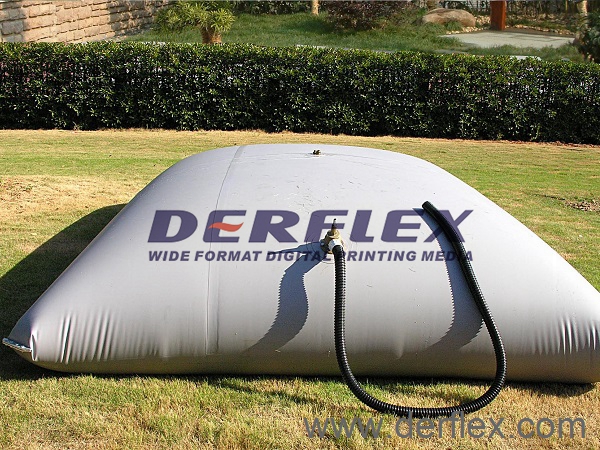
DERFLEX heavy duty flexible PVC tarpaulin water bladder tank

Designed Around the Project, Not One Generic Tank

Capacity, liquid type, ground condition, filling method, valve layout, climate, deployment frequency and service cycle should be confirmed before material and tank construction are finalized.

500–500,000 LExisting DERFLEX flexible-tank capacity reference; final size by engineering review.
0.75–1.20 mmCommon existing flexible-tank thickness direction; other structures can be discussed.
HF / Hot-AirWelded seam routes selected according to coated fabric and tank design.
Custom FittingsInlet, outlet, vent, flange, valve position and groundsheet can be project-matched.
Quick Answer

What Is a Heavy Duty Tarpaulin Tank?

Heavy duty tarpaulin tanks are flexible liquid-containment systems made from reinforced coated textile rather than rigid steel or molded plastic.

The load-bearing polyester fabric provides tensile and tear strength, while the PVC coating creates the waterproof and weldable barrier. Depending on the application, the finished system can be fabricated as a closed pillow or bladder tank, a self-supporting onion tank, a frame-supported open tank or an aquaculture tank. For reliable performance, buyers should match the coated fabric, seam design, fittings, capacity and ground protection to the stored liquid and actual site conditions.

Why Buyers Use Flexible Tarpaulin Tanks

Rigid tanks are useful for permanent installations, but they can be expensive or difficult to transport into temporary, remote or changing worksites. A collapsible tarpaulin tank is compact when empty and can be deployed close to the point of use.

Portable: folds down for transport and storage.
Fast deployment: suitable for temporary site requirements.
Custom capacity: dimensions can be designed around volume and footprint.
Welded construction: seam layout can be designed around hydrostatic load.
Custom fittings: inlet, outlet and vent locations can be specified.
OEM supply: color, branding, packing and repeat-order specifications can be discussed.
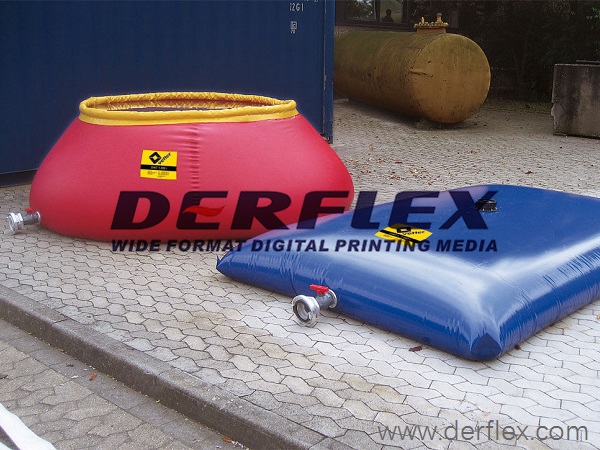
DERFLEX pillow tank and onion tank made from PVC coated tarpaulin
DERFLEX flexible tank examples: self-supporting and pillow-style containment made from coated technical fabric.
Tank Types

Choose the Tank Structure Before You Choose the GSM

A good procurement specification starts with how the tank will be filled, emptied, accessed, moved and supported. Material weight alone does not determine whether a tank is suitable.

01

Pillow / Bladder Tank

A closed flexible tank that expands as it fills. Often selected for compact transport, temporary bulk water storage, irrigation, remote sites and projects where contamination control is important.

  • Low-profile footprint
  • Closed liquid containment
  • Compact when empty
  • Custom valve and vent layout
02

Onion / Self-Supporting Tank

An open-top or covered self-rising tank designed for fast filling and quick field access. Common project directions include emergency water, firefighting reserve, wash-down and temporary site supply.

  • Rapid deployment
  • Easy top access
  • Fast fill and drain
  • Optional cover and groundsheet
03

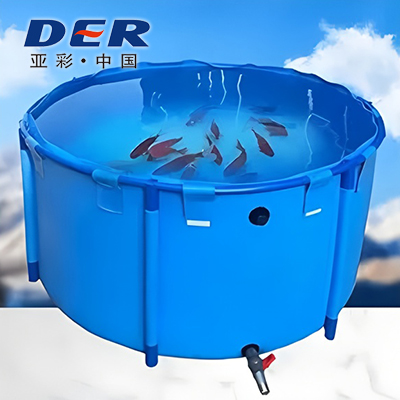
Frame-Supported Tarpaulin Tank

A coated-fabric liner supported by a steel or tubular frame. It is useful when an open working tank, predictable shape or repeated access is required.

  • Stable open-tank geometry
  • Easy inspection and cleaning
  • Suitable for aquaculture and process water
  • Replaceable flexible liner concept
04

Aquaculture Tank

Circular or custom tanks for fish farming, shrimp farming, RAS, quarantine and temporary water management. Fabric selection should reflect water chemistry, outdoor exposure and cleaning cycles.

05

Custom-Shaped Flexible Tank

When footprint, transport space or equipment layout is limited, tank geometry can be developed around the project drawing rather than a standard catalog size.

06

Material-Only OEM Supply

DERFLEX also supplies weldable PVC or TPU coated fabric to tank fabricators that need roll goods, custom width, coating direction, color and repeatable production specifications.

Specification Guide

Heavy Duty Tarpaulin Tank Specification Framework

These ranges are practical starting points drawn from existing DERFLEX flexible-tank and water-tank fabric directions. Final values should be confirmed for each order because capacity, tank geometry, liquid compatibility, climate and service cycle change the required structure.

ItemDERFLEX Project DirectionBuyer Selection Note
Tank MaterialReinforced PVC coated polyester; TPU coated fabric also available for selected projectsChoose coating chemistry according to liquid contact, folding demand, service environment and compliance requirements.
Tank StylePillow / bladder, self-supporting onion, frame-supported, aquaculture, custom geometryTank structure changes load path, access, footprint and filling behavior.
CapacityExisting DERFLEX reference: approximately 500–500,000 L for flexible bladder productsLarge capacities require footprint, filled height, ground loading and seam design review.
Fabric WeightProject discussion commonly spans medium to heavy coated-fabric constructions; 650–1200 gsm is used in existing DERFLEX tank-related product directionsDo not select by GSM alone. Base-fabric density, coating adhesion, tensile and tear strength matter.
ThicknessExisting flexible-tank directions include approximately 0.75–1.20 mm; other structures can be discussedThickness must be balanced with flexibility, weldability, abrasion resistance and total tank stress.
Fabric ReinforcementHigh-tenacity polyester base cloth; 1000D-class structures are available in DERFLEX water-containment material linesYarn denier and thread density influence tensile, tear and dimensional behavior.
Seam MethodHigh-frequency / RF welding or hot-air welding where appropriateWeld width and process parameters should be validated on the selected coated fabric.
FittingsInlet, outlet, air vent, flange, threaded fitting, custom valve locationFitting reinforcement is a high-stress area and should be designed before fabrication.
GroundsheetOptional / recommended depending on site conditionGround protection reduces abrasion and puncture risk from stones, concrete edges or debris.
ColorBlue, grey, green, orange and custom colors by projectColor can support branding, heat-management strategy and site identification.
Temperature DirectionMaterial systems on DERFLEX tank pages include project directions around -30°C to +70°CConfirm finished-tank suitability at the actual minimum / maximum temperature and with the stored liquid.
Branding / OEMCustom logo, marking, packing and private-label discussionConfirm print location and folding method so marks do not interfere with seams or fittings.

Important: the table is a sourcing framework, not a universal engineering specification. Every finished tank should be approved against the intended liquid, capacity, site and operating conditions.

Material Engineering

Why Heavy Duty Tanks Need More Than “Thicker PVC”

Hydrostatic load increases as the tank fills. A reliable design therefore depends on the entire material-and-fabrication system, not one headline thickness number.

  • Base-fabric strength: the polyester reinforcement carries much of the mechanical load.
  • Coating adhesion: poor bonding can undermine weld quality and repeated flexing performance.
  • Tear resistance: local damage near fittings, folds or ground contact must not propagate easily.
  • Seam design: seam width, overlap, process temperature and weld consistency must match the fabric.
  • Valve reinforcement: fittings concentrate stress and need dedicated reinforcement geometry.
  • Ground protection: a strong fabric can still be damaged by sharp stones, metal fragments or rough concrete.

Buyer Rule of Thumb

Do not ask only: “What GSM is this tank?”

Ask instead: What capacity, filled height, base-fabric construction, tensile / tear performance, weld method, fitting reinforcement and ground-protection system is the tank designed around?

This produces a much more useful technical comparison between suppliers.

Image Gallery

DERFLEX Flexible Tank & Water-Containment Examples

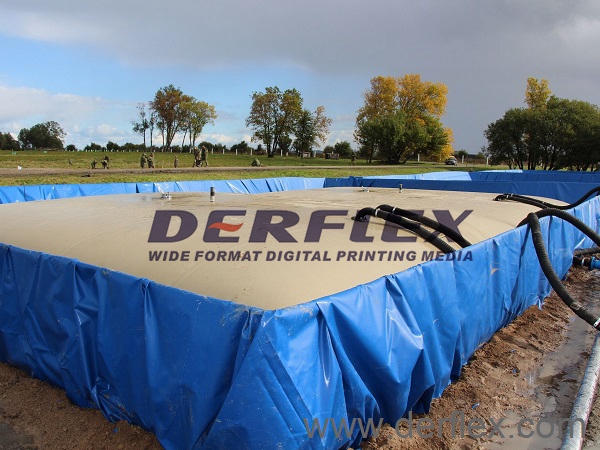
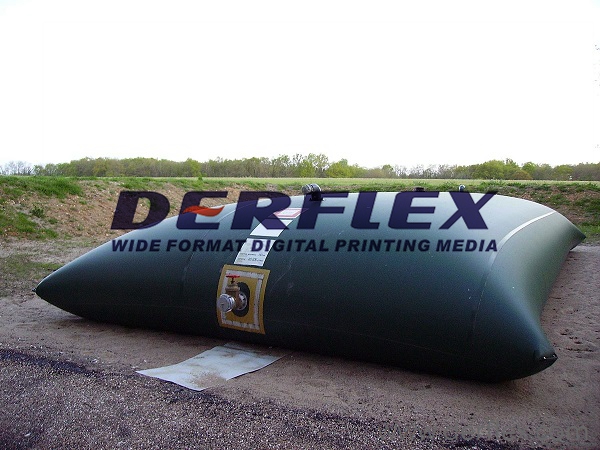
Existing DERFLEX product images show several containment directions that can be used as visual reference during project discussion.

Capacity Selection

How to Choose Tank Capacity & Material Direction

Capacity is a starting point, not the complete specification. As tank volume rises, filled footprint, height, seam load, valve size, drainage time and ground preparation become increasingly important.

Capacity DirectionTypical Project UseWhat to Confirm
500–5,000 LSmall farm supply, backup water, cleaning, field work, compact emergency storagePortability, valve size, lifting / handling, deployment space.
5,000–20,000 LIrrigation, construction site water, livestock, temporary process waterGroundsheet, seam layout, filling rate, discharge connection.
20,000–50,000 LIndustrial site supply, emergency reserve, agriculture, remote project storageGround loading, access, tank footprint, reinforced fittings and operating cycle.
50,000–100,000 LLarge temporary storage, infrastructure, project reserve, bulk water managementSite engineering, deployment area, drainage planning, heavy-duty fabric construction.
100,000 L+Engineered large-volume containmentProject drawing, filled dimensions, substrate, safety margin, handling, site-specific fabrication review.
Application Matching

Where Heavy Duty Tarpaulin Tanks Are Used

A

Agriculture & Irrigation

Temporary irrigation storage, farm water reserve, livestock water, drought response and remote field supply where transportable capacity is valuable.

B

Construction & Civil Works

Construction-site water, dust suppression, concrete-related operations, remote worksites and temporary utility water where rigid tanks are difficult to mobilize.

C

Emergency & Disaster Response

Rapid-deployment water reserve for temporary camps, relief operations and disrupted infrastructure. Tank style should match fill speed, hygiene plan and local handling conditions.

D

Firefighting Reserve

Onion tanks and flexible bladders can support temporary fire-water staging. Coupling size, discharge rate, deployment area and local fire-service requirements must be confirmed.

E

Aquaculture

Fish farming, shrimp farming, RAS, hatchery, quarantine and temporary water holding using frame-supported or custom coated-fabric tanks.

F

Selected Industrial Liquids

Temporary process water, wash water, wastewater and other selected liquids can be evaluated. Chemical compatibility must be confirmed before approving PVC or TPU contact material.

Structure Comparison

Pillow Tank vs Onion Tank vs Frame Tank

These three structures solve different operating problems. The best choice depends on access, contamination control, deployment speed and how the tank must be supported.

Fast Access

Onion Tank

  • Self-supporting / self-rising style
  • Fast field deployment
  • Easy top filling and visual inspection
  • Suitable for emergency / firefighting reserve directions
  • Cover may be added for contamination control
Stable Open Geometry

Frame-Supported Tank

  • Predictable circular or rectangular shape
  • Frequent access and cleaning
  • Useful for aquaculture and work tanks
  • Frame adds structure and installation steps
  • Liner can be developed as a replaceable component
PVC or TPU?

Choose the Coating System by the Liquid and Service Cycle

PVC coated polyester is widely used for economical, durable flexible containment and offers good weldability, waterproofing and outdoor performance when the formulation is matched to the application.

TPU coated fabric may be preferred for projects requiring a different flexibility profile, repeated folding behavior, selected water-contact requirements or specialized chemical / abrasion performance.

Neither material should be approved from the material name alone. The stored liquid, contact duration, temperature, cleaning method, required certification and welding process must be reviewed.

View TPU Water Tank Fabric
Compatibility Notice

Industrial Liquid Storage Requires Compatibility Confirmation

Do not assume a standard PVC tank is suitable for every fuel, chemical, fertilizer, solvent, wastewater stream or potable-water requirement.

  • Identify the exact liquid or chemical composition.
  • Confirm concentration, pH and operating temperature.
  • Confirm continuous vs temporary contact time.
  • State whether food-contact / potable-water certification is required.
  • Confirm cleaning chemicals and sanitation method.
  • Approve material samples and technical data before bulk production.
Manufacturing Control

How a Heavy Duty Flexible Tank Should Be Built

Tank reliability comes from controlling material, welding, fittings and final inspection as one system.

1

Application Review

Confirm liquid, capacity, footprint, operating temperature, deployment cycle, transportation and connection requirements.

2

Fabric Selection

Match base-fabric construction, coating type, weight, thickness, surface performance and weldability to the application.

3

Pattern & Load Layout

Develop panels, corners, weld overlaps and fitting zones around the filled shape and expected stress path.

4

Welding & Reinforcement

Use controlled HF / RF or hot-air welding where appropriate, with reinforcement around high-stress fittings and transitions.

5

Leak & Workmanship Inspection

Inspect seams, fitting attachment, surface condition, dimensions and overall workmanship before packing.

6

Export Packing & Documentation

Fold and protect the tank to reduce transport damage; match labels, accessories, repair items and documentation to the order.

Installation

Ground Preparation Is Part of Tank Performance

A heavy duty bladder can still fail if it is placed on an unsuitable surface. The filled liquid creates substantial weight and continuous contact pressure against the ground.

  • Select a level, stable area sized for the fully filled footprint.
  • Remove stones, metal fragments, roots, sharp edges and construction debris.
  • Use an appropriate groundsheet or protective layer where abrasion is possible.
  • Keep the tank away from vehicle traffic and uncontrolled rolling / sliding loads.
  • Do not drag a filled or partially filled tank.
  • Support hoses so their weight does not pull continuously on tank fittings.
  • Follow the project-specific filling limit and valve procedure.
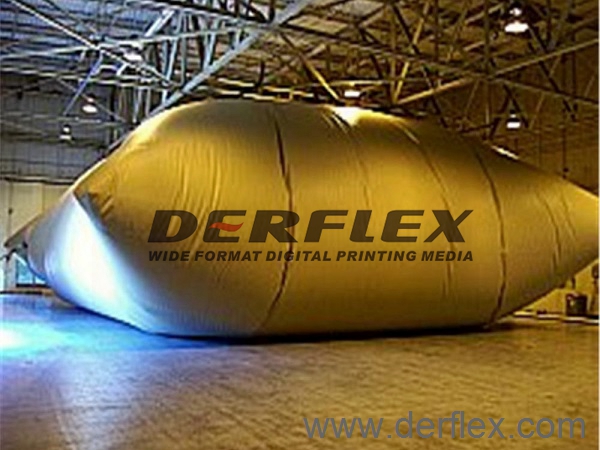
large DERFLEX flexible bladder tank installed on indoor floor
Large flexible bladder tank. Filled footprint, substrate quality and fitting support should be considered before deployment.
Quotation Checklist

What to Send DERFLEX for a Custom Tank Quotation

A complete RFQ allows the material and finished-tank specification to be matched faster and reduces unnecessary sampling rounds.

1. Stored LiquidWater type, wastewater, fertilizer solution or exact industrial liquid / composition.
2. Required CapacityLiters, cubic meters or US gallons; include target usable volume.
3. Preferred Tank TypePillow / bladder, onion, frame-supported or request a recommendation.
4. Site FootprintAvailable length × width, ground type, slope and indoor / outdoor use.
5. TemperatureMinimum and maximum ambient / liquid temperature.
6. FittingsInlet, outlet, air vent, valve size, flange standard, hose / coupling requirement.
7. Material RequirementPVC or TPU preference, target GSM / thickness if already specified, compliance requirement.
8. Deployment CycleOne-time emergency use, seasonal use, repeated relocation or semi-permanent storage.
9. Branding & PackingLogo, color, label, repair kit, groundsheet, individual bag or export-carton requirement.
10. Order InformationQuantity, destination country / port, sample requirement and target delivery schedule.

Why DERFLEX

From Coated Fabric to Finished Flexible Tank

DERFLEX's advantage in this product category is the connection between coated-fabric knowledge and finished-product fabrication. Existing DERFLEX tank pages show in-house PVC coated material supply, high-frequency welding capability and project-based material testing.

Coated Fabric Manufacturing

Material construction can be discussed from base fabric, coating weight, surface function, thickness and welding behavior instead of treating the tank as a generic finished bag.

Finished Tank Fabrication

DERFLEX supplies both coated-fabric material and custom flexible tank products, supporting buyers that want one source for material matching and fabrication discussion.

OEM / Custom Program Support

Tank capacity, shape, fitting position, color, brand marking, accessories and export packing can be discussed for project and repeat-order programs.

Frequently Asked Questions

Heavy Duty Tarpaulin Tank FAQ

What material is used for heavy duty tarpaulin tanks?

Many heavy duty flexible tanks use reinforced polyester fabric coated with PVC. The polyester reinforcement provides mechanical strength, while the PVC coating provides waterproofness, surface protection and weldability. TPU coated fabric is another option for selected projects. The final material should be selected according to the stored liquid, capacity, operating temperature, folding cycle and compliance requirements.

What GSM is best for a heavy duty water tank?

There is no single best GSM. Higher fabric weight can be useful, but tank reliability also depends on yarn denier, thread density, tensile strength, tear strength, coating adhesion, seam design, tank height, fitting reinforcement and ground condition. DERFLEX uses application-based specification matching rather than approving a tank by GSM alone.

What is the difference between a pillow tank and an onion tank?

A pillow tank is a closed flexible bladder that expands into a low-profile shape when filled. It is useful when the liquid should remain enclosed. An onion tank is generally self-supporting and open at the top or fitted with a cover, making it fast to deploy, fill and access in the field.

How large can a flexible tarpaulin tank be?

DERFLEX has existing flexible bladder product references from approximately 500 L to 500,000 L. Very large capacities should be treated as engineered projects because tank footprint, filled height, ground loading, seam stress, filling rate and drainage planning become critical.

Can heavy duty tarpaulin tanks be used outdoors?

Yes, coated technical fabrics can be developed for outdoor use. The required UV resistance, temperature range, abrasion protection and expected service cycle should be stated at the quotation stage. Groundsheet use and site preparation are also important for outdoor durability.

Can a PVC tarpaulin tank store drinking water?

Only when the selected material and finished system meet the required potable-water or food-contact standard for the destination market and project. Do not assume that a standard industrial PVC tank is automatically approved for drinking water. Tell DERFLEX the certification and contact requirements before material selection.

Can tarpaulin tanks store chemicals, fuel or industrial liquids?

Some coated fabrics can be developed for selected industrial liquids, but compatibility must be evaluated case by case. Provide the exact liquid composition, concentration, temperature, contact time and required standard before approval. A generic PVC tank should not be assumed suitable for all chemicals, fuels or solvents.

How are flexible tarpaulin tanks joined?

Depending on the coated fabric and tank structure, high-frequency / RF welding or hot-air welding can be used to create sealed seams. The correct weld width, overlap and process settings should be validated on the selected material, especially around corners and fittings.

Do I need a groundsheet under a water bladder?

A protective groundsheet is strongly recommended whenever the surface may contain stones, sharp edges, rough concrete or abrasive debris. The deployment area should be level, clean and stable before the tank is filled.

What information should I send for a custom quotation?

Send the stored liquid, required capacity, preferred tank type, available footprint, minimum and maximum temperature, inlet / outlet details, required material or compliance standard, quantity, branding requirements and destination. This allows DERFLEX to recommend a more suitable material and construction direction.

Request a Custom Heavy Duty Tarpaulin Tank

Send DERFLEX your required capacity, liquid type, tank structure, site footprint, valve / fitting details, operating temperature, quantity and destination. We can review PVC or TPU material direction, fabrication details and OEM requirements before quotation.

Consulting Services
+86-021-54361792 / 54361798
Email
sales@derflex.com