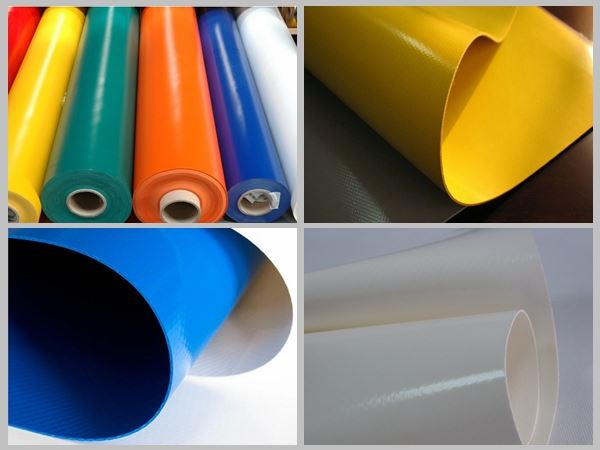
| Tarred / treated cloth |
Heavy woven cloth with tar or other early water-resistant treatment |
Improved weather protection for maritime cargo and shipboard use |
Heavy, messy, odor, limited consistency and difficult maintenance |
Mainly historical; concept survives in coated-textile thinking |
| Canvas tarp |
Cotton, cotton-blend or polyester canvas, sometimes treated |
Strong woven body, repairable, breathable, useful for transport and equipment |
Can absorb water; treatment and drying matter; not ideal for fully sealed welded covers |
Breathable protection, painting, selected equipment and storage uses |
| PE / poly tarp |
Woven polyethylene tape with PE film or laminated surface |
Lightweight, economical, easy to fold, scalable for large-volume general use |
Performance varies by grade; lower-duty products may age or tear faster under repeated stress |
Temporary covers, general storage, agriculture, jobsite and emergency use |
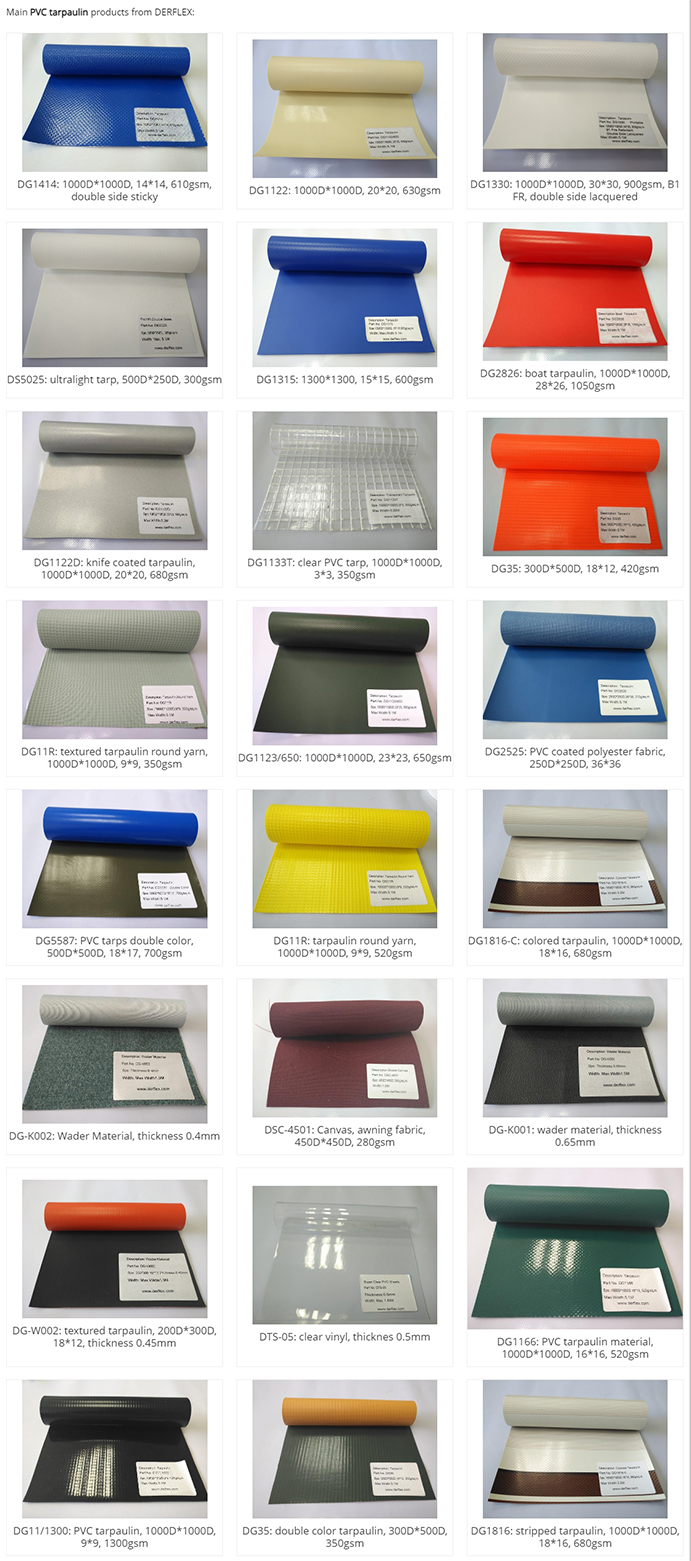
| PVC / vinyl tarp |
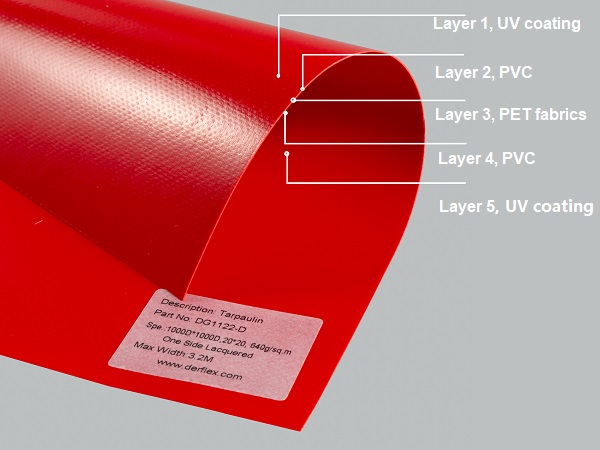
Polyester scrim coated or laminated with flexible PVC |
Waterproof surface, stronger reinforcement, weldability, cleanability and repeat-use potential |
Heavier than basic PE; correct formulation and reinforcement must match the job |
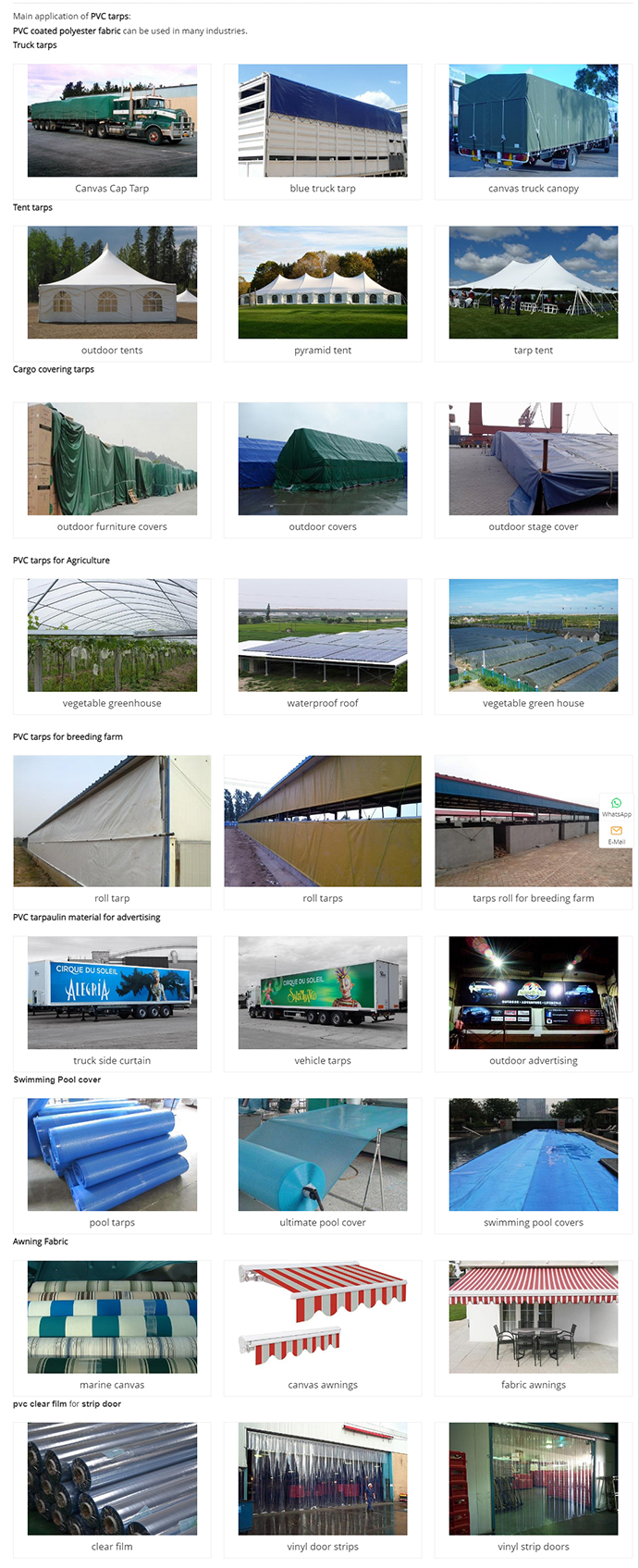
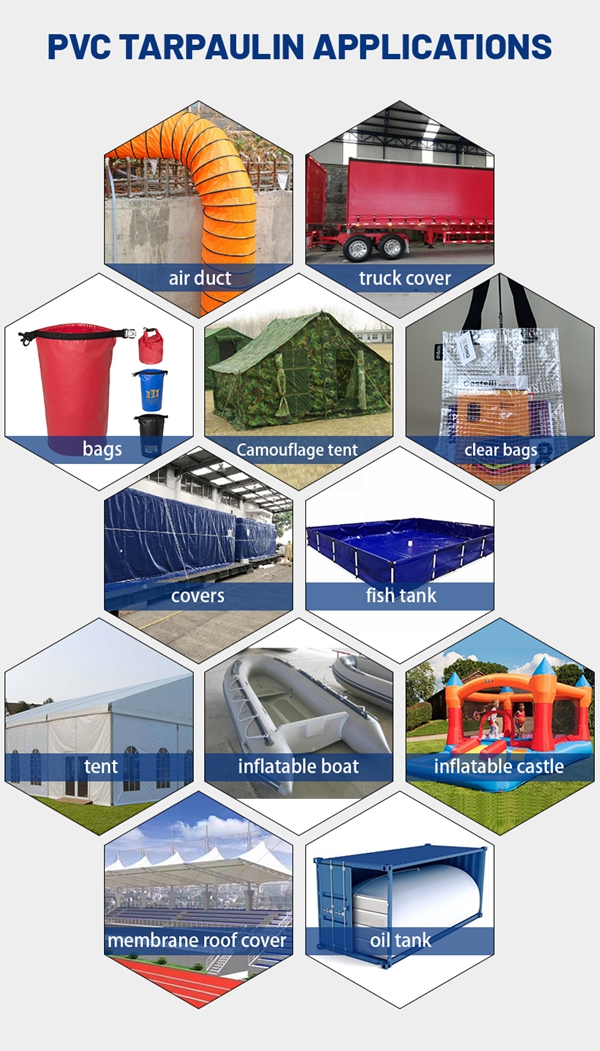
Truck tarps, industrial covers, curtains, tents, OEM tarps and repeated outdoor use |
| Specialty technical fabrics |
Mesh, PU-coated textiles, TPU, silicone/fiberglass and application-specific composites |
Solves specialized needs such as airflow, low weight, high temperature or air-tightness |
Higher specification complexity; not interchangeable with general tarp materials |
Application-specific engineered protection systems |