


 Technical textiles · OEM material sourcing
Grade, evidence & specification control
Spill Containment Fabric Technical Data Sheets & OEM Specifications
Start with the exact grade. Then connect its data to your application. A spill containment fabric technical data sheet should identify one material construction, explain how its values were obtained and point to the evidence relevant to your liquid-contact duty.
Use this guide to align the proposed coated-fabric roll, contact reports, welding trials and OEM acceptance requirements before placing an order with DERFLEX.
What makes a containment fabric TDS useful?
A useful TDS describes one identifiable grade, with units, test methods, value definitions and a document revision. Match it to the proposed roll construction and supporting liquid-contact evidence. Agree order limits separately, then qualify the seams and finished containment product. A general tarpaulin specification range cannot perform this job.
Choose a grade by service duty
Describe what the fabric will contact and how the finished product will be used before comparing coatings or weights. DERFLEX supplies coated textile roll materials; the OEM brief must distinguish a splash barrier, an open secondary-containment liner and a closed storage product.
| Service duty | Define the contact | Prioritize in the technical file |
|---|---|---|
| Incidental maintenance splash | Liquid identity, wetted face, short contact and cleaning method. | Grade construction, contact observations, coating adhesion and relevant cleanability evidence. |
| Temporary spill tray or supported berm | Credible spill duration, temperature, liquid depth and supporting surface. | Liquid-barrier assessment, mechanical properties, seam qualification and corner / fitting checks. |
| Repeated deployment and washdown | Folding frequency, abrasion locations, wash fluid and wash temperature. | Conditioned material and seam checks matched to the agreed cleaning and deployment sequence. |
| Fuel blends or extended liquid contact | Complete fuel composition where available, additives, blend changes and exposure conditions. | Evidence for that formulation and duty; review transmission or permeation requirements separately when relevant. |
On a phone, scroll each table sideways to compare all columns.
Read coating, substrate and usable-width data
The following is a review checklist, not a DERFLEX product data table. Request the actual entries for the proposed grade; do not combine the lightest weight, strongest test result and widest roll from different constructions.
| Field | Unit / identification | What the OEM should resolve |
|---|---|---|
| Grade and revision | Grade code, construction revision, TDS revision and issue date | Link the proposed material, retained sample, test references and quotation. A color name is not a grade identity. |
| Coating and substrate | Polymer on each face; substrate fibre, yarn and textile construction as applicable | Identify the liquid-facing surface, backing, relevant finish and any face-to-face differences. |
| Finished mass and thickness | g/m²; mm, optionally mil | State total composite mass and thickness separately, with test basis and declared tolerances. GSM cannot establish barrier-layer thickness. |
| Usable width and roll format | mm or m; roll length in m | Distinguish overall width from usable width and edge exclusions. Agree winding, core and roll identification. |
| Tensile, tear and coating adhesion | Force units plus specimen basis; warp / weft or MD / CD where applicable | Record the exact method and variant. Compare results only when specimen geometry, conditioning and test conditions match. |
| Flexing, abrasion and temperature claims | Method, conditions and evaluation criteria | Separate storage, handling and liquid-contact temperature limits. Request evidence relevant to the selected construction. |
| Liquid contact and fabrication | Report ID, grade / sample ID; weld procedure reference | Identify the liquid, exposed face, duration and temperature; trace the proposed weld construction to its own qualification. |
Usable width drives your panel layout
Ask whether the declared width excludes selvedges, uncoated edges or other agreed edge zones. Allow separately for trimming and the qualified seam overlap. Do not deduct an edge exclusion twice.
A wide nominal roll does not necessarily produce a seamless finished floor at the required width.
Keep conversions on the right property
1 mil = 0.0254 mm.
1 oz/yd² ≈ 33.906 g/m².
These convert units within thickness or mass per area. They do not convert fabric GSM into mil, or reveal coating thickness on the wetted face.
Inspect the surfaces; retain a sample identity
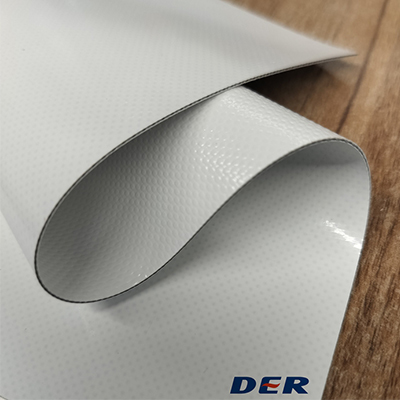
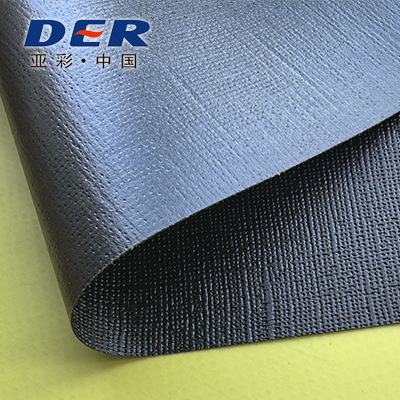
These site photographs show material appearance only. For approval, label a sample of the nominated construction and identify which face will contact the liquid.
Separate typical values from order acceptance limits
A representative catalog result, a contractual limit and a measured lot result answer different questions. Keep their labels visible on the TDS, purchase specification and inspection record.
Typical or nominal
A typical value describes representative performance; a nominal value identifies a designated target. Neither becomes a shipment acceptance limit without an explicit agreement.
Acceptance limit
Specify the minimum, maximum or tolerance and its test basis. Define the sample selection, directions, conditioning and rule used to accept a lot.
Actual lot result
A measured result belongs to identified samples and a lot or roll. It does not change the agreed limit or establish the performance of every future shipment.
Put the complete acceptance rule in writing
For each critical property, connect property → unit → method and variant → conditions and direction → limit → sampling and decision rule. Agree how retests, deviations and nonconforming rolls will be handled.
Match liquid-contact reports to the exact grade
An oil resistant fabric TDS or chemical resistant coated fabric data sheet needs evidence that matches the nominated construction and actual exposure. Water-barrier results alone do not establish resistance to a particular oil, fuel blend or cleaning fluid.
Check the exposure record
- Identify the liquid by product / formulation, with an available SDS and additional composition information when needed.
- State the concentration or fuel blend and relevant additives; “oil” is not a complete description.
- Confirm total immersion or one-face contact, exposed face, duration, temperature and post-exposure treatment.
- Review the actual observations and measured changes against agreed criteria, including any departures from the stated method.
Qualify the converted construction
- Use the nominated grade and correct face orientation on the intended welding equipment.
- Record joint geometry, overlap, tooling and the settings qualified for that setup.
- Assess mechanical performance and seal continuity separately, including after relevant exposure, cleaning or folding.
- Include corners, transitions, drains and fittings in the finished-product approval plan.
Absence of visible damage does not by itself answer a transmission or permeation requirement. Where that matters to the project, agree a relevant assessment rather than inferring a barrier rating from appearance.
Method references to discuss with the laboratory
ISO 6450:2021 — resistance to liquids describes evaluation before and after liquid exposure, with total-immersion and one-face methods. ISO 1421:2016 — tensile strength and elongation distinguishes strip and grab methods. Select the applicable method and conditions with the laboratory; listing a standard is not a claim that a DERFLEX grade has passed it.
Request the current controlled technical file
Ask DERFLEX to nominate the grade and identify which supporting documents are available and applicable. Keep the approved file with the quotation and purchase order, then check that later document changes and material substitutions receive the agreed review.
| Document | Identification to retain | Decision it supports |
|---|---|---|
| Controlled TDS | Grade, document number, revision, issue date, issuer and declared value basis. | Material selection and specification review; not a substitute for the order acceptance agreement. |
| Liquid-contact report | Report reference, sample construction / lot, liquid identity and conditions. | Whether the evidence is relevant to your exposure; include limitations and observed changes. |
| Welding / fabrication guidance | Grade, face orientation, joint drawing, process and applicable equipment / tooling. | A starting point for converter trials. Machine settings require qualification on the intended setup. |
| Order acceptance and lot record | Approved specification revision, inspection plan, lot / roll IDs and agreed results. | Repeat-order control and inspection against the written limits; request a lot report or CoA only if agreed. |
Use one identity across the file. The quotation, TDS, approved sample, contact report and fabrication record should identify the same construction, or explain any documented difference. Ask whether an older report still applies after a coating, substrate or finish change.
Prepare an OEM specification that can be reviewed
If you do not yet have a grade code, begin with the application brief. A drawing, photograph and liquid description can make the first review useful without inventing a material specification.
Send the application inputs
- Spill tray, berm, removable liner or other product; drawing and required finished dimensions.
- Liquid identity, available SDS, blend / concentration and credible mixtures or residues.
- Contact and cleaning temperatures, maximum exposure, deployment and storage conditions.
- Floor support, local abrasion, folding, fittings and the intended fabrication process.
Define the supply and approval scope
- Roll material requirement, usable width, roll format, target quantity and destination.
- Grade / sample reference if known; project test methods and required acceptance limits.
- Documents and sample formats needed before qualification and before bulk release.
- Who approves the material, weld procedure and completed containment assembly.
Spill containment fabric TDS FAQ
What should a spill containment fabric technical data sheet include?
It should identify the exact grade, construction, revision and issue date, then state units, test methods and conditions. Mass, thickness, usable width and relevant mechanical properties need a declared basis: nominal, typical or guaranteed. Liquid-contact limitations and references to supporting reports should be traceable to that same grade.
Can an oil resistant fabric TDS confirm fuel compatibility?
An oil-resistance description alone cannot confirm a fuel application. Match the grade to the actual fuel blend, additives, concentration where relevant, contact temperature and duration. Check the supporting report and qualify the welded assembly; do not transfer a result for one liquid to another.
Are typical values the acceptance limits for my order?
Only if the purchase specification explicitly adopts them as limits with an agreed method and inspection rule. Typical values describe representative performance. An order needs its own minimum, maximum or tolerance, sampling basis and disposition for nonconforming results.
Can I convert fabric GSM directly into thickness in mil?
No. GSM measures mass per unit area; mil measures thickness. Reinforcement, coating distribution and material density affect their relationship. Request both properties separately. One mil equals 0.0254 mm; one oz/yd² is approximately 33.906 g/m².
Does a fabric liquid-contact report also approve the seams?
No. A fabric specimen and a welded joint are different test items. Identify the actual grade, faces, seam geometry, equipment and settings, then agree checks for seal continuity and mechanical performance before and after the relevant exposure. Include corners and fittings when qualifying the finished tray.
How do I request the current controlled technical file?
Send DERFLEX your grade or sample reference, liquid identity and available SDS, concentration or fuel blend, exposure time and temperature, product drawing, welding process and order requirements. Ask for the current TDS revision, applicable report references, fabrication guidance and written acceptance proposal. Confirm availability and applicability for the nominated grade.
Continue the specification review
Use these guides to refine the product duty before requesting grade-specific documentation.
Connect your application to the right technical file.
Request the current TDS and available evidence for your application.
Include your liquid, exposure conditions, product drawing, welding process and grade or sample reference if available. Ask DERFLEX to confirm the nominated construction and the documents relevant to it.