


 Coated textiles
Testing guide
Oil & Chemical Resistance Testing for Coated Containment Fabrics
Plan coated fabric chemical resistance testing around a named grade, an identified liquid and a measurable outcome. Review ISO 6450 exposure options, retained properties and report limitations before approving material for containment.
DERFLEX supplies PVC and TPU coated textile material directions. Share your liquid list to discuss the candidate construction, sample identity and evidence needed for your application.
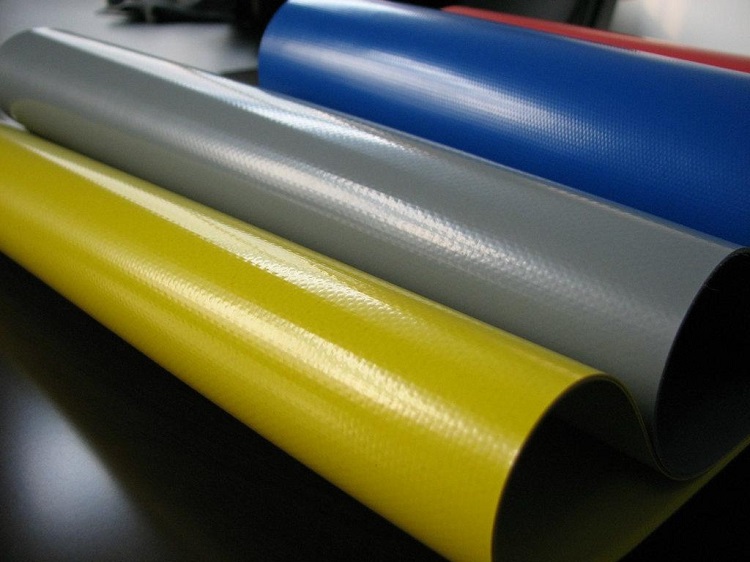
Define a meaningful liquid-resistance claim
A meaningful claim identifies the exact fabric grade, liquid or mixture, concentration, exposure temperature and duration, then states which properties were measured and which acceptance criteria applied.
“Oil resistant” is a starting description, not a complete purchasing requirement. A coated textile includes the coating formulation, reinforcement, bonding layers and surface finish. Evidence for a neat resin or a different fabric construction cannot qualify the proposed roll material.
This guide explains test planning and report interpretation. It does not publish a DERFLEX grade approval, a completed oil resistant fabric test report, or a chemical rating. For material selection, see chemical resistant PVC coated fabric and oil resistant TPU coated fabric.
Select total or one-side exposure with the laboratory
ISO 6450:2021 addresses liquid resistance of rubber- or plastics-coated fabrics through comparison of selected material properties before and after exposure. Method A immerses the test piece; Method B exposes one surface side. The laboratory should use the complete standard for the procedure.
Discuss exposure of both faces
When the intended duty can wet both faces, discuss total immersion. Ask how cut edges and the reinforcement are exposed, and how that relates to the fabricated component.
Identify the liquid-contact face
For duty where liquid acts on one face, identify that face and discuss a suitable fixture. Record edge control and any contact outside the intended area.
Original schematics illustrate exposure direction only; they are not apparatus drawings or instructions for performing the standard. Method choice is not a universal severity ranking. A modified edge treatment or fixture must be disclosed and its effect considered.
Agree the method before cutting samples. For repeated splash, cleaning, folded storage or loaded seams, ask whether an additional application-specific program is needed. Describe its relationship to the standard and label modifications clearly.
Record grade, liquid, temperature, duration and replicates
Use the fields below to agree a containment fabric immersion test brief. They are a procurement worksheet, not a reproduction of the standard’s report clause. Record actual laboratory conditions in the final report rather than copying the requested settings.
On a small screen, scroll the table horizontally to see all fields.
| Field | What to identify or agree | Record |
|---|---|---|
| Fabric identity | Grade and revision; batch / roll; coating faces; reinforcement; nominal construction; sampling date. | To be completed |
| Sampling & controls | Sample locations; orientation; independent exposed and unexposed sets; specimen IDs and count for each property / direction. | To be completed |
| Liquid identity | Product name and supplier; liquid batch; SDS revision; composition / concentration; CAS identifiers where applicable and available; mixture details. | To be completed |
| Contact conditions | Method and edition; face; fixture and edge treatment; liquid temperature and duration; liquid changes or composition control. | To be completed |
| Conditioning & recovery | Preconditioning; surface-liquid removal; cleaning if any; wet or recovered state; recovery environment and time; delay before measurement. | To be completed |
| Measurements | Property methods and units; individual values, direction and summary; before / after reference; observations and image IDs. | To be completed |
| Decision & deviations | Acceptance limits agreed in advance; decision rule where relevant; deviations, exclusions, laboratory identity and report reference. | To be completed |
Replicates must be independent and identifiable
Separate specimens from repeat readings on the same specimen. Agree the required numbers with the laboratory for every liquid, condition, property and fabric direction; do not impose one generic count across different tests. Destructive strength tests need comparable unexposed and exposed specimen sets because the same broken specimen cannot be tested again.
For blends, an SDS may not disclose every constituent. Resolve the missing composition with the liquid supplier and laboratory. A reference oil is useful only for the question it represents; it does not automatically stand for all commercial oils or fuels.
Measure changes beyond visual appearance
Choose properties that explain how the material must function after contact. A clean-looking surface can still hide loss of strength or adhesion.
| Check | Request in the report | Interpretation limit |
|---|---|---|
| Surface & flexibility | Consistent photographs and observations: tack, softening, cracking, blistering, delamination and handling changes. | Visual stability alone cannot establish mechanical or barrier performance. |
| Mass & dimensions | Before / after values, units, specimen basis and handling state; thickness or dimensional change where relevant. | Liquid uptake and constituent loss can occur together. A small net change may hide competing effects. |
| Tensile & elongation | Comparable methods, unexposed controls and exposed values in each required direction. | Retention depends on the baseline, test setup and conditioning. Directional results should remain separate. |
| Tear & coating adhesion | Agreed methods, exposed face, individual results and failure mode. | Higher fabric mass does not by itself establish adhesion or resistance to chemical damage. |
| Welds & interfaces | Separate representative joints or fittings with traceable fabrication details and post-contact evaluation. | Unwelded fabric results cannot qualify a welded basin, seam, drain or repair patch. |
| Barrier function | A separately specified leakage, penetration or permeation evaluation when the duty requires it. | Exposure and retained-property data do not automatically answer these different barrier questions. |
Keep the baseline and the calculation visible
These are calculation definitions, not measured DERFLEX results or acceptance thresholds. Use a documented, comparable reference and an appropriate nonzero baseline. For destructive tests, state how the control-set reference is calculated. Define the sign convention and summary statistic.
Read retention together with the absolute values and the individual-specimen spread. A favorable average can hide a weak specimen, and an increased value is not automatically an improvement. Wet-state and recovered-state results describe different conditions; do not combine them under one “after exposure” label.

Distinguish degradation, leakage and permeation
| Question | What it means | Evidence to agree |
|---|---|---|
| Degradation | Does liquid contact change the material’s physical or mechanical condition? | Defined exposure, before / after properties and documented handling state. |
| Leakage / penetration | Can liquid move in bulk through a defect, joint or interface under the tested conditions? | Specified liquid, pressure or head, duration, specimen / assembly and detection approach. |
| Permeation | Can a chemical travel through the material at molecular scale, even without a visible hole? | Suitable analytical method; collection arrangement, sensitivity, duration, rate and breakthrough definition. |
ASTM F903-24 addresses liquid penetration of protective-clothing material specimens and certain assemblies; ASTM F739-20 addresses chemical permeation under continuous contact. Their scopes concern protective clothing. Any use for containment development needs a laboratory justification and does not certify a berm or tank.
No visible leak does not mean no permeation. A water test cannot establish compatibility with a different liquid. A “not detected” result is bounded by the analytical sensitivity and test duration; it is not proof of zero transfer for an unlimited period.
Use the finished geometry when reviewing containment performance: welds, corners, supported floor, drains and repair details. Read spill containment berm fabric requirements for the relationship between roll material and a fabricated basin.
Read a report before accepting the claim
- 1. Match the sample to the order. Check grade revision, batch, construction and contact face. A supplier name or a generic “TPU fabric” description is insufficient.
- 2. Match the exposure to the job. Compare the actual liquid, blend, temperature, duration and contact arrangement. Record any service condition that was not represented.
- 3. Compare like with like. Check the property method, units, direction, control set and post-exposure state. Look at individual results and the reported variation.
- 4. Read the exceptions. Locate deviations, early termination, damaged or excluded specimens, missing measurements and recovery conditions. Do not summarize an incomplete result as an unqualified pass.
- 5. Apply the agreed criteria. Identify the specification revision and decision rule. A test method alone does not set your project’s acceptance limits.
- 6. Limit the approval. Record what is qualified, what still needs assembly evaluation and what changes trigger a review: grade, supplier, liquid blend, cleaner, welding process or service conditions.
For independently issued evidence, verify the report reference with the issuing laboratory where appropriate and confirm whether the relevant work is within its accredited scope. An accreditation logo alone does not establish that every listed measurement is accredited.
Before you order: connect the report to repeat supply
Agree how the approved construction, sample reference and report will be connected to purchase documents and roll identification. Ask which changes require review and what routine batch checks are included. Keep candidate screening, qualification and order acceptance as distinct decisions.
Submit your liquid list and agree a grade-specific test brief
Start with the application and liquid information you have. DERFLEX’s role here is coated material supply and specification discussion; this page does not offer an accredited testing service. Agree laboratory selection, sample quantities, test scope, report deliverables and commercial terms separately.
The following optional worksheet formats a discussion brief in your browser. It does not submit an inquiry or issue a test result. Copy the text into your message through the DERFLEX inquiry page.
The download is an uncompleted discussion worksheet, not a test report, TDS, certificate or approval.
Oil & chemical resistance testing FAQ
Does ISO 6450 mean a fabric is certified for every chemical?
No. ISO 6450:2021 provides liquid-exposure methods for coated fabrics. A useful conclusion is limited to the identified grade, test liquid, exposure conditions and properties actually evaluated. It does not establish universal chemical compatibility or certify a finished containment system.
Should I request total immersion or one-side exposure?
Agree the exposure arrangement with the laboratory after describing which fabric face, edges and joints can contact liquid in service. Total immersion and one-side exposure answer different questions. Neither result should be transferred to the other arrangement without a technical justification.
Can an oil resistant fabric test report establish fuel compatibility?
Only when the report covers the actual fuel or a justified representative liquid under the required conditions. Lubricating oil, diesel, gasoline and fuel blends have different compositions. Additives, blend changes and cleaning fluids need their own review.
Is an unchanged appearance or a water-tightness test enough?
No. Appearance does not quantify retained strength or coating adhesion, and water-tightness does not demonstrate chemical compatibility or molecular permeation resistance. Specify the relevant material and barrier measurements separately.
How many specimens and what recovery time should the report use?
The laboratory must select and document specimen numbers and post-exposure handling under the applicable method and agreed brief. Identify independent replicates for each liquid, condition, property and direction. Disclose deviations, conditioning, recovery duration and the time between exposure and measurement.
What should I send DERFLEX to start a test discussion?
Send the liquid list and available SDS, composition or concentration details, service and cleaning temperatures, maximum contact time, intended contact face, component drawing, candidate grade if known, and the required report and acceptance criteria. Agree the laboratory scope and sample identification before testing.
Method references & reading scope
The exposure overview refers to ISO 6450:2021. Barrier distinctions refer to the published scopes of ASTM F903-24 and ASTM F739-20. Intertek’s chemical-resistance testing overview provides further context on exposure and post-contact evaluation. These references do not establish a DERFLEX test result or laboratory relationship.
This is a method overview and procurement guide. Detailed specimen preparation, apparatus, timing and reporting requirements belong in the laboratory’s controlled procedure using the complete applicable standards. The worksheet and review checklist are discussion aids.
Tell us which liquid the fabric must face.
Send your liquid list, service conditions and component details. Agree the candidate fabric, identifiable samples and evidence required before moving to approval and bulk supply.