Longitudinal streaks
Possible contributors include contamination at the coating head, uneven metering, local rheology differences or blade condition. Confirm with production records before assigning cause.



Knife coating turns a woven polyester reinforcement into a PVC-coated technical textile by metering a viscous PVC plastisol directly onto the fabric, thermally gelling and fusing the layer, then cooling, finishing and inspecting the roll.
For buyers, the critical point is not the word “knife coated” by itself. Coating weight, knife gap, line tension, plastisol rheology, heat history, base-fabric stability and final QC all determine whether the finished tarpaulin is repeatable in welding, folding and outdoor use.
A polyester base fabric is stabilized and tensioned, a formulated PVC plastisol is applied to its surface, and a coating knife meters the wet layer to the required build. The coated textile then passes through controlled heating so the plastisol gels and fuses into a continuous PVC coating. Depending on the product design, additional passes or reverse-side coating may follow before surface finishing, cooling, trimming, winding and quality inspection.
The finished PVC tarpaulin behaves as one engineered structure. The polyester reinforcement carries much of the tensile load; the PVC coating supplies the barrier, surface protection, color and conversion characteristics; the interface between them must survive flexing and fabrication.
Yarn denier, weave density, weave geometry, shrinkage and dimensional stability influence tensile strength, tear behavior and how evenly the substrate travels through the coating line.
DERFLEX’s broader PVC coated fabric page shows how coated textile construction changes by end use.
PVC plastisol is a dispersion of PVC resin particles in a liquid plasticizer phase, with stabilizers, pigments and functional additives selected for the required product. Heating causes gelation and fusion, turning the wet coating into a continuous flexible PVC layer.
The exact recipe and process window are grade-specific. A buyer should approve the finished construction and test results rather than assume one universal coating formula.
These are DERFLEX-hosted production and inspection images, used here to connect the process explanation with real manufacturing equipment and material appearance.
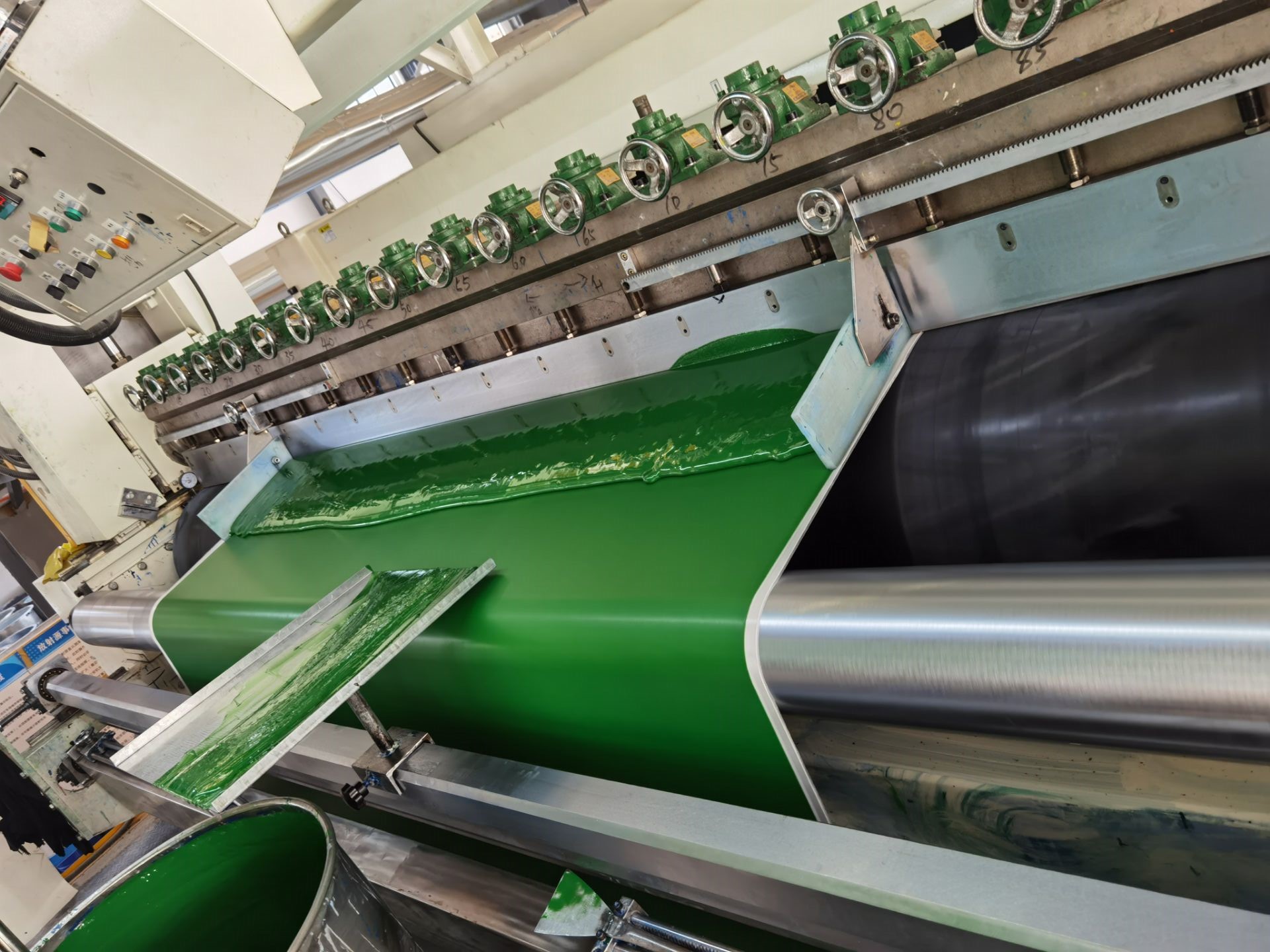
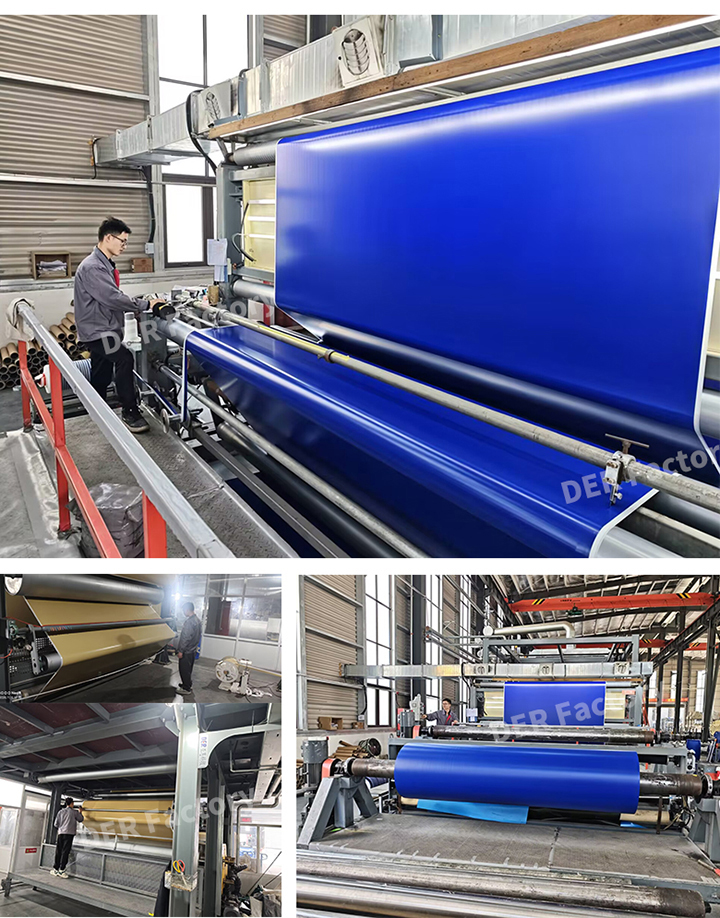

This sequence describes the logic of direct knife coating. Actual machine layout, number of passes and process settings vary by product construction and production line.
Before coating, the factory must know what the finished tarpaulin is expected to do: truck cover, industrial curtain, tent, equipment cover, storage tarp or another application. That determines the reinforcement direction, target total weight, surface finish, weathering package, weldability and other requirements.
A broad material family is not enough. Buyers comparing roll goods can review DERFLEX’s PVC tarpaulin material page for published construction examples.
The woven polyester substrate must enter the coating section flat and dimensionally stable. Wrinkles, skew, edge curl or unstable web tension can translate into uneven coating and roll appearance.
The coating is not simply “melted PVC poured on fabric.” In typical plastisol coating, PVC resin particles are dispersed in plasticizer with stabilizers, pigments and other application-specific components. The resulting viscosity and flow behavior must suit the coating head and required coat build.
Excess plastisol is presented to the moving textile and the doctor blade meters the wet coating. Depending on the coater design, the fabric may be supported by a roll or controlled through tension around the knife zone.
The key concept is metering: the knife geometry, gap, web speed, substrate behavior and coating viscosity together influence how much material remains on the fabric and how uniform the layer is across the width.
The wet plastisol enters controlled heating. During gelation, plasticizer penetrates and swells the PVC particles; with further heat, the system fuses into a continuous flexible PVC phase. The useful process window depends on the formula, coat build, textile and line design.
Under-processing can leave an incompletely fused coating. Excessive thermal history can also harm color, polymer stability or the reinforcing textile. That is why oven temperature alone is not enough—the combination of temperature, dwell time and web speed matters.
Some PVC tarpaulin constructions require coating on both sides or multiple coating passes. Additional passes can be used to build total coating mass, cover the reinforcement, tune surface characteristics or create different face/back functions.
For a broader view of where knife coating sits inside the full factory flow, see DERFLEX’s tarpaulin manufacturing process guide.
After the main PVC layers are formed, the surface may receive an application-specific lacquer or finish. The material is then cooled so the coating solidifies and the composite becomes stable enough for trimming and winding.
Surface finish can influence gloss, cleanability, print behavior, blocking resistance and welding setup, so converters should test the exact supplied grade rather than reuse one welding recipe across every PVC roll.
Final QC should connect visible appearance with measured properties and the buyer’s approved specification. Relevant checks may include width, total mass per unit area, surface defects, color, coating adhesion, tensile and tear behavior, welding trials and roll packing—depending on the program.
DERFLEX’s PVC tarpaulin fabric roll page provides additional context for converters sourcing roll goods for downstream fabrication.
Two rolls can both be called “knife coated PVC tarpaulin” and still behave differently. These variables explain why.
| Process variable | What it influences | What a buyer may notice | Practical buyer check |
|---|---|---|---|
| Base-fabric stability | Flatness, dimensional control, strength distribution, coating support | Wrinkles, skew, edge instability, variable mechanical behavior | Approve yarn / weave construction and verify warp-weft values on the finished fabric. |
| Plastisol rheology | Flow, leveling, penetration into textile surface, metering behavior | Streaks, uneven appearance, inconsistent coating build | Judge the finished roll and repeatability; do not specify viscosity without a defined factory method. |
| Knife geometry & gap | Wet coat mass and cross-web uniformity | Thickness or GSM variation, visible bands | Ask how coating weight / thickness is checked across the web and across the roll. |
| Line speed & tension | Dwell time, metering behavior, dimensional stability | Variable surface, stretching, curl or inconsistent heat history | Review roll appearance and batch QC rather than treating line speed as a stand-alone quality number. |
| Thermal history | Gelation, fusion, coating integrity and polymer/textile stability | Weak fusion, brittleness, discoloration or changing weld response | Approve performance on the finished material, including conversion trials where relevant. |
| Number / sequence of passes | Total coating build, face/back balance, surface coverage | Different hand feel, surface coverage, total weight and interface behavior | Ask for the actual layer construction of the quoted grade. |
| Surface treatment & cooling | Gloss, dirt release, printability, blocking, welding setup, roll stability | Unexpected print or weld behavior, surface sticking, finish variation | Test the real material with the converter’s production equipment before bulk approval. |
Visual defects are useful clues, but they are not a complete root-cause diagnosis. The same appearance can come from several interacting variables.
Possible contributors include contamination at the coating head, uneven metering, local rheology differences or blade condition. Confirm with production records before assigning cause.
Can point to coating distribution, knife setup, substrate thickness variation or web behavior. Measure multiple points rather than relying on one cut sample.
May be linked to base-fabric preparation, tension, alignment, shrinkage or winding. Mechanical properties should be checked in both directions.
Interface preparation, textile condition, coating formulation and thermal processing can all matter. A process label alone does not guarantee peel performance.
Topcoat, PVC formulation, thickness, surface contamination and equipment settings can shift the usable welding window. Always run the intended conversion method.
Coverage can be affected by coating build, substrate geometry and process stability. For barrier applications, visual inspection should be supplemented by the relevant leakage or pressure test.
A serious factory review should connect process control to the properties you actually buy—not just show a machine running.
Knife coating and film lamination build the PVC textile differently. The better route depends on the approved construction, intended conversion process, required performance and cost target.
A truck cover, tent, flexible curtain and static storage cover do not fail in the same way. The test plan should reflect the actual load path and fabrication method.
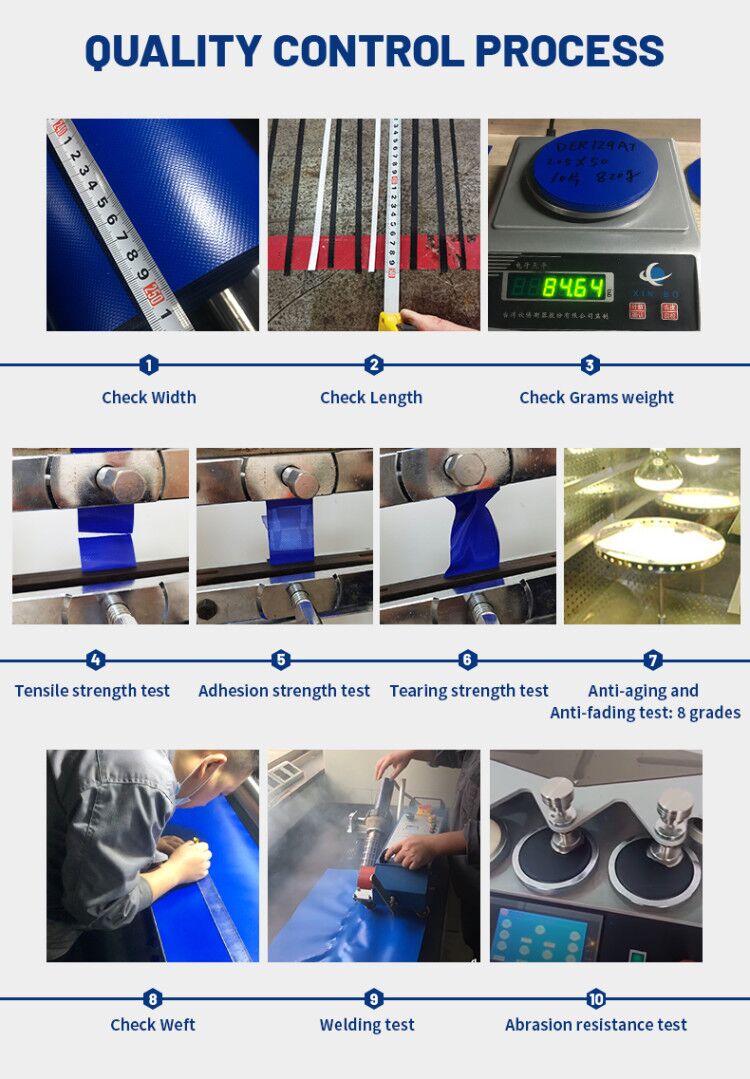
Prioritize traceability, width, total mass, visible surface quality, color consistency, mechanical data and coating adhesion. Add project-specific barrier, low-temperature, weathering or flame requirements only when they are genuinely needed.
Run the real welding, sewing or finishing process on the supplied sample. A material can look excellent as a roll but still require different heat, pressure, speed or electrode settings in production.
Knife coating is useful when buyers need a controlled PVC-coated construction for fabrication and outdoor service, but the required grade should still be matched to the application.
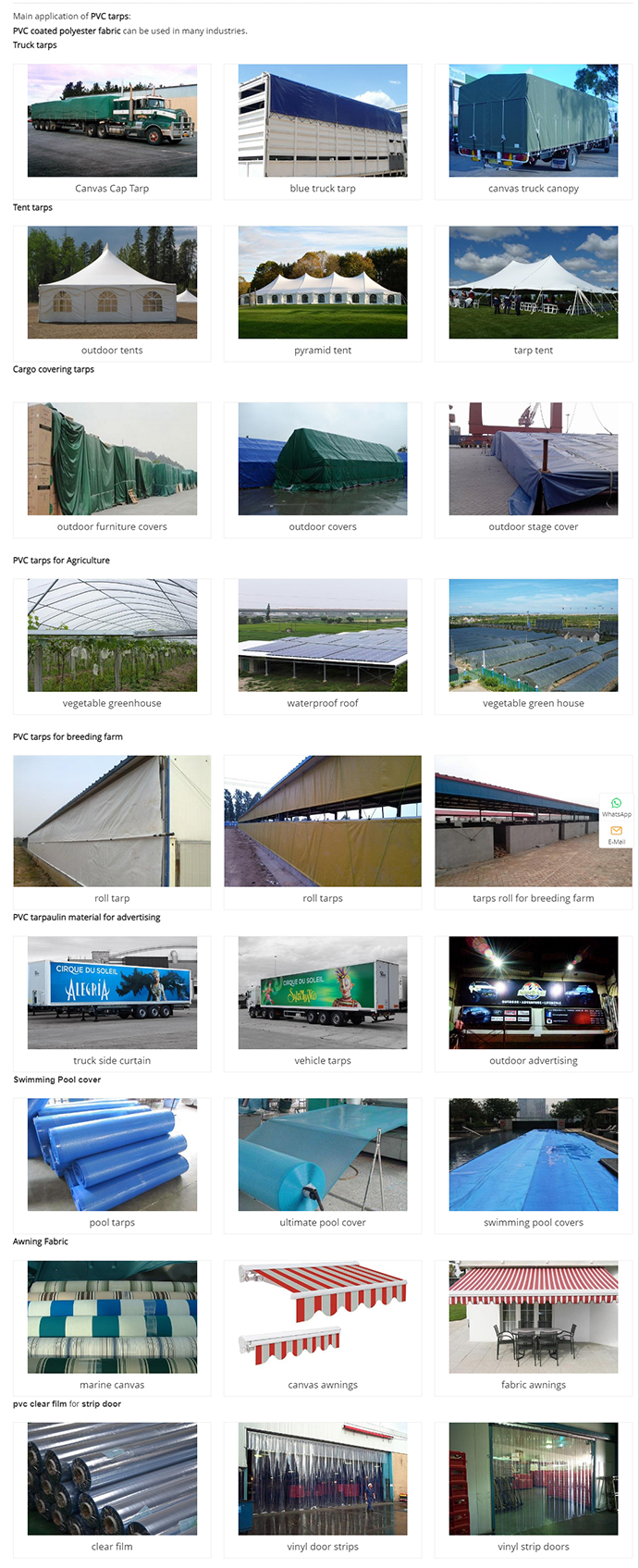
A useful RFQ describes the finished job first, then the material. That makes it easier to align reinforcement, coating build, surface finish and conversion method.
No fixed MOQ, lead time, certification or performance value is claimed on this page because those items should be confirmed for the actual product grade, order and destination requirement.
Short answers first, followed by the engineering qualifier that matters in procurement.
It means the PVC coating is applied directly to a textile substrate and metered with a blade or knife before thermal gelation and fusion. The term describes the manufacturing route; it does not by itself define the final GSM, strength, outdoor life or quality level.
For typical plastisol coating, the wet material is more accurately described as PVC plastisol: PVC resin particles dispersed in a plasticizer phase with stabilizers, pigments and other additives. The coated layer is then heated so it gels and fuses into continuous flexible PVC.
The knife meters the wet coating layer. Final coat weight and uniformity are also influenced by coating rheology, substrate geometry, blade configuration, web speed and tension, so the gap alone is not the whole process.
No. Tensile and tear strength are strongly influenced by the polyester reinforcement. Knife coating can help build a robust coating-to-textile interface and controlled surface, but the finished performance comes from the whole construction and process.
No. Knife coating is often a strong fit for demanding coated-textile applications, but a well-engineered laminate can be the better choice for a specific cost, barrier, appearance or production target. Buyers should compare the exact construction and measured performance.
Confirm the exact product code and sample, then test the properties that match your failure risks. Common checks include total mass, width, surface quality, tensile, tear, coating adhesion and the real welding process used by the converter. Add barrier, low-temperature, weathering or flame tests only when relevant.
DERFLEX publishes knife-coated PVC tarpaulin roll options for truck covers, industrial tarps, tents, outdoor covers and OEM fabrication. Final weight, width, color, finish and performance should be confirmed for the specific project and production program.
A reliable PVC tarpaulin program links application, reinforcement, coating route, surface finish, test method, conversion trial and approved sample. That gives procurement a clearer basis for repeat orders than “knife coated” alone.
PVC coated fabric construction
Tarpaulin manufacturing process