


 TECHNICAL TEXTILES · MATERIAL SELECTION
OEM BUYER GUIDE
TPU vs PU coated fabric
Choose a fabric by its construction, joining method and evidence under your service conditions. This guide compares TPU-coated and film-laminated textiles with conventional PU coatings for manufacturers of bags, covers, outdoor equipment and flexible sealed products.
THE SHORT ANSWER
TPU is a type of PU. The full construction decides the choice.
TPU means thermoplastic polyurethane. In textile purchasing, “PU coated fabric” often describes a liquid-applied polyurethane coating, while TPU may be melt-coated onto fabric or bonded as a film. PU coatings are not all the same, and some systems are crosslinked.
- For a welded design: evaluate a compatible TPU surface and qualify the actual seam.
- For a sewn, soft-hand textile: evaluate a specified PU coating alongside any laminate alternative.
- For wet storage or outdoor exposure: compare aging results for the complete assembly.
A material name does not establish waterproofness, breathability, service life or compliance.
Published 1 November 2026 · Prepared by DERFLEX · Scope: fabric and film selection for OEM development
01 / MATERIAL IDENTITY
What is the difference between TPU and PU coated fabric?
Separate the polymer family from the way it is applied. “TPU vs PU” is useful purchasing shorthand, but it is not a comparison between unrelated chemistries.
A coated fabric is an assembly: a textile substrate, a functional polymer layer and sometimes a primer, adhesive, topcoat or backing. Each layer can affect how the material folds, bonds and performs. A nylon or polyester description identifies the textile; it does not identify the coating.
TPU can be processed as a thermoplastic coating or film. Conventional PU textile coatings may be formed from waterborne dispersions or solvent-based systems, with formulation-dependent crosslinking. Drying a coating is not, by itself, proof that it has become a thermoset. Ask for the actual polymer and process description.[1] [9]
Route A: TPU film lamination
A separately formed film is bonded to the textile. The bond may use an adhesive or a suitable thermal process.
Schematic only; not to scale. Backings and additional layers are omitted.
Route B: applied PU coating
A formulated polyurethane layer is formed on a textile. A primer or topcoat may be part of the specified system.
Schematic only; not to scale. TPU melt coating is another route, without a separate preformed film.
For construction-specific sourcing, review TPU coated fabric and TPU laminated fabric. Ask which layer is exposed on each side and which surface will contact the seam tool.
02 / SIDE-BY-SIDE
TPU vs PU coated fabric: a practical comparison
Use the table to define questions for two candidate samples. These are selection considerations, not certified values or a ranking of every TPU and PU grade.
On small screens, scroll horizontally to read the full comparison.
| Decision point | TPU-coated or TPU-film fabric | Conventional PU-coated fabric |
|---|---|---|
| Material identity | Thermoplastic polyurethane; specify the grade and coating or film route. | A broad polyurethane description; identify the formulation, process and any crosslinking. |
| Joining | A compatible exposed TPU layer can support thermal or HF joining; qualify the chosen method. | May require sewing, tape, adhesive or a compatible heat-sealable system; the label alone is insufficient. |
| Water barrier | Film continuity, coating coverage and finished seams must meet the intended water exposure. | Coverage, coating build and seam sealing must meet the same stated acceptance requirement. |
| Breathability | Depends on membrane design and the full laminate; TPU does not automatically mean breathable. | Engineered PU systems can transmit water vapor; require assembly-specific evidence. |
| Hydrolysis | Specify chemistry and retained performance after relevant moisture/heat conditioning. | Do the same; hydrolysis-resistant PU coating formulations also exist. |
| Abrasion and flexing | Evaluate exposed face, layer thickness, substrate and repeated-fold performance. | Evaluate the same factors; a soft feel or coating name does not establish wear life. |
| Weight and drape | Measure the finished textile and assess the sample in the intended panel size. | A thin coating may preserve a textile-like feel; compare equal functional requirements. |
| Outdoor appearance | Confirm aromatic/aliphatic chemistry, stabilization and weathering evidence where relevant. | Confirm the actual coating/topcoat system and tested appearance and strength retention. |
| Cost | Compare usable area, cutting layout, sealing trials and accepted finished output. | Use the same calculation, including any seam tape, sewing or adhesive operations. |
| End of life | Thermoplastic behavior may enable reprocessing of suitable clean streams; mixed laminates need a real recovery route. | Crosslinked systems and mixed assemblies can complicate recovery; obtain a product-specific route. |
The joining and chemistry considerations above are supported by the technical references below; they do not establish DERFLEX grade-specific test performance.
03 / CONDITIONS THAT CHANGE THE ANSWER
Hydrolysis, welding and breathability need separate decisions
Specify chemistry for humid service
For wet storage, repeated cleaning or warm humid exposure, ask about the polymer backbone and the laminate bond. Polyether TPU is often a candidate for hydrolysis-sensitive service, but TPU is not immune to aging. Suitable PU dispersions can also offer strong hydrolysis resistance.[2] [3]
Assess the textile, barrier and any adhesive after the same conditioning. Accelerated aging is comparative evidence; test weeks cannot be directly converted into a guaranteed number of field years.
Qualify the actual joining surfaces
TPU films can be joined by several thermal and high-frequency processes, depending on the film and application. A coating, print or backing between the surfaces can change the result.[4]
Record the machine, tool, overlap, contacting faces and process window. Inspect the seam after cooling and after the required conditioning. A fabric strip result cannot substitute for a sealed-product leakage test.
Measure water and vapor separately
Water resistance addresses liquid penetration; moisture-vapor transmission addresses vapor movement. A textile can resist liquid water without meeting a comfort target. Engineered hydrophilic PU systems illustrate why PU should not automatically be described as non-breathable.[5]
Request the test method, temperature, humidity, specimen construction and units. Do not rank results obtained by different methods as if they were directly interchangeable.
State the exposure precisely
For oil, cleaners or other liquids, provide the substance, concentration, contact time and temperature. Chemical compatibility is grade- and exposure-dependent. Ask for evidence on the proposed assembly instead of ordering a generic “chemical-resistant TPU.”[2]
For exterior use, assess discoloration and retained function separately. Resin chemistry and stabilization affect the result; neither TPU nor PU alone specifies a weathering class.
04 / APPLICATION MATRIX
Which fabric route should you evaluate first?
Start with the product’s manufacturing route and its most consequential failure mode, then approve a sample against that brief.
Scroll the table horizontally on small screens.
| Your application | Initial evaluation route | What decides approval |
|---|---|---|
| Welded dry bag or waterproof pouch | A weldable TPU-faced construction | Seam peel, folded corners, closure design and leakage on the finished prototype. |
| Inflatable chamber or flexible air enclosure | A TPU construction with compatible joining faces | Air retention, valve/interface bonds, seam geometry and required pressure testing. |
| Sewn cover, lining or light outdoor panel | A specified PU coating; compare a laminate if needed | Target water exposure, seam sealing, drape, packing size and coating adhesion. |
| Rainwear or moisture-managing textile | An engineered PU coating or TPU membrane assembly | Water-vapor and liquid-water results for the full construction, including wash conditioning. |
| Repeatedly folded equipment cover | Compare candidates by retained function | Cold folding at the intended temperature, creasing, abrasion and coating-to-textile adhesion. |
| Humid-storage or frequently cleaned product | Hydrolysis-resistant chemistry in either route | Post-aging adhesion, tackiness, cracks, barrier performance and seam integrity. |
For application discussions, explore TPU dry bag fabric or TPU inflatable fabric. These are material sourcing routes; finished bags, valves, inflation systems and product approvals are separate scopes.
Send a product photograph or sketch, the intended environment and the way you plan to join the panels. Identify the failure you most need to avoid: leaking seams, coating peel, cracking, excess stiffness or poor moisture transfer.
05 / MATERIAL REFERENCES
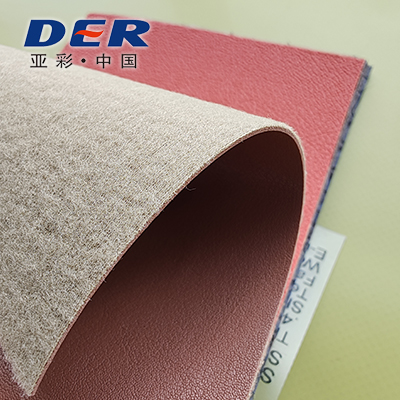
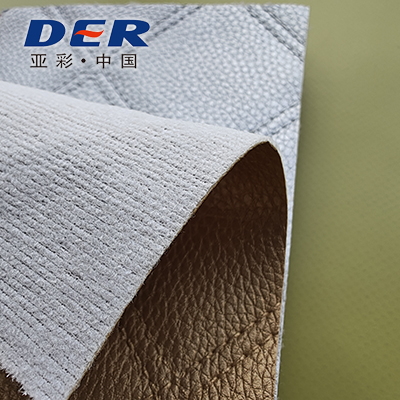
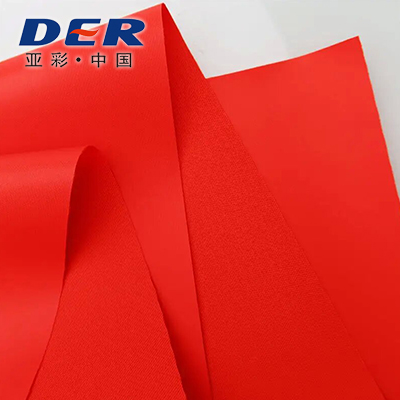
Look at the faces, backing and film
The photographs below show DERFLEX catalogue TPU material references. They are not matched TPU-versus-PU test specimens and do not prove a performance difference.
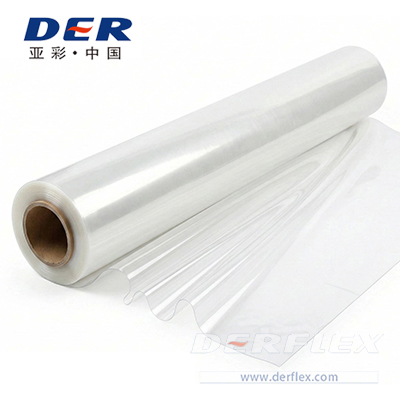
For a film-led development brief, review clear TPU film roll and the TPU film buying guide.
06 / SAMPLE APPROVAL
A fair sample comparison: keep the brief constant
Changing the base textile, coating amount and joining process at the same time makes it difficult to attribute a result to TPU or PU.
- Identify both samples. Assign a sample reference and record substrate, layer sequence, coated sides, nominal thickness, total mass per area, usable width and surface finish. Keep the supplier’s construction description with the specimen.
- Agree the acceptance criteria before testing. State the intended use, critical test method, specimen direction, conditioning and pass/fail requirement. Separate buyer targets from measured supplier results.
- Make the real seam. Use the proposed welding, tape, adhesive or sewing route. Include a corner, a folded area and any relevant attachment. Check leakage or retention on a representative prototype.
- Condition, then retest. Select exposure relevant to the use: humid aging, cleaning, folding, abrasion or weathering. Compare retained function and record the failure location, not just the initial result.
- Lock the approved construction. Retain an agreed reference sample and acceptance sheet. Record changes to resin, adhesive, backing or finish before accepting a substitution.
| Purchase question | Relevant evidence | Keep with the result |
|---|---|---|
| Does the coating stay bonded? | Coating adhesion testing; ISO 2411:2024 is a relevant method.[6] | Sample identity, tested side, conditioning and failure mode. |
| Does the fabric carry the required load? | Tensile testing; ISO 1421:2016 includes strip and grab methods.[7] | Warp/weft, method, specimen geometry, units and wet/dry condition. |
| Does water penetrate the coated fabric? | Hydrostatic resistance; ISO 1420:2016 covers coated fabrics.[8] | Pressure, duration, method, specimen face and preconditioning. |
| Does the finished product remain sealed? | An agreed seam and prototype leakage or pressure-retention protocol. | Assembly drawing, closures, temperature, test duration and allowed loss. |
Report total fabric mass in g/m² and thickness in mm, identifying whether each value describes the full assembly or only the polymer layer. Two fabrics with the same GSM can have different coating amounts and textile structures. GSM does not directly establish thickness or water-barrier performance.
07 / QUOTATION & PROCUREMENT
Compare cost per accepted component, then prepare the RFQ
A lower price per linear metre can become a higher component cost when usable width, cutting layout or seam operations differ.
Ask suppliers to quote the same construction brief, usable width, quantity basis and delivery terms. Compare fabric consumption from your cutting layout, joining consumables, processing time, inspection, rejected components and packaging. Use measured trial yields when available; keep estimates clearly labelled.
A useful costing basis
Fabric cost per accepted component = fabric spend for the trial batch ÷ accepted components from that batch.
Add joining, consumables, inspection, packaging and the agreed delivery costs on the same basis. This is a costing method, not a forecast of savings from either coating.
Before you order
- Specify usable width rather than relying only on nominal roll width.
- Identify which side faces outward and which side must seal.
- Include seam allowances and any orientation requirement on the drawing.
- Approve storage and cleaning instructions for the selected construction.
- Confirm sample identification, tolerances and acceptance records.
- Request applicable compliance documents for the actual material and market.
“PVC-free,” waterborne processing or thermoplastic behavior does not alone establish recyclability or environmental superiority. Assess the complete assembly, production information and a feasible end-of-life route.
RFQ brief to send with your inquiry
Application: product type, service environment and critical failure concern.
Construction: reference sample, textile preference, coating faces, finish and target weight or thickness.
Manufacturing: welding, taping, adhesive or sewing route; usable width and panel drawing.
Validation: target methods, conditioning and required documents.
Commercial scope: quantity, roll format, colour, packaging, destination and required schedule.
DERFLEX’s TPU coating material range provides a starting point for discussing textile reinforcement, coating faces, finish and OEM roll requirements. This guide is not a SKU datasheet. Supply form, MOQ, lead time and any processing services should be stated in the project quotation.
08 / BUYER QUESTIONS
TPU vs PU coated fabric FAQ
Is TPU better than PU coated fabric?
Neither label establishes a universal winner. TPU is a useful route to evaluate when thermoplastic welding is central to the design. A specified PU coating can suit sewn products or a particular hand feel. Compare the complete fabric, seam system and retained performance after relevant aging.
Are TPU coated fabric and TPU laminated fabric the same?
Both can contain thermoplastic polyurethane, but the construction route differs. Coating forms a polymer layer on the textile; lamination bonds a separately formed film or layer to it. Ask whether an adhesive is present, which faces carry TPU and which surface will be sealed.
Can PU coated fabric be heat welded?
Some polyurethane systems can be heat sealed, while crosslinked or incompatible coatings may not fuse as required. The word PU alone is insufficient. Qualify the exact coating, any topcoat, the contacting surfaces and the intended machine using seam trials.
Which coating is more resistant to hydrolysis?
Hydrolysis resistance depends on polymer chemistry and the full assembly. Polyether TPU is often evaluated for wet and humid service, but suitable PU dispersions can also provide strong hydrolysis resistance. Request aging conditions and retained fabric and seam results for the proposed construction.
Is TPU fabric automatically waterproof and breathable?
No. Water resistance and water-vapor transmission are separate properties. Both depend on the barrier structure, thickness, textile layers and bonding system. Require results for the finished assembly and validate seams or closures for the intended product.
What should I send for a TPU fabric quotation?
Send the application, exposure conditions, product sketch, coated sides, fabric and weight preferences, usable width, sealing or sewing method, order quantity and destination. Include a reference sample or target test method when available. Request a quotation against an identified construction.
FROM A MATERIAL LABEL TO AN APPROVED SAMPLE
Bring your construction brief to DERFLEX
Send your product sketch, exposure conditions, joining method and quantity. Discuss the appropriate TPU fabric or film route and the sample evidence your project requires. If your specification says only “PU coating,” include the existing sample or layer description so the requirement can be reviewed accurately.