


 Industrial fabrics · Buyer resources
How to Audit a Tarpaulin Manufacturer
A tarpaulin manufacturer audit should connect the proposed order to the people, machines, materials and records that will control it. Use this guide to plan a PVC tarpaulin factory visit, challenge product claims and decide what must be closed before bulk approval. It covers both fabric rolls and finished tarps, with an evidence checklist, a buyer scorecard and a practical batch-trace exercise for importers, distributors and OEM procurement teams.

How do you audit a tarpaulin manufacturer?
Start with the product specification and the actual manufacturing site. Verify who performs each process, follow an auditor-selected order through production, witness relevant measurements, trace a finished item back to its inputs and trace an input lot forward to affected output. Review rejected material, production changes and shipment release. Base approval on recorded evidence and closure of important findings.
Keep three decisions separate: supplier capability, sample approval and acceptance of the shipped lot.
Audit the product you intend to purchase
Write a scope statement before requesting certificates or booking travel. Identify the supplier, proposed production site, product family, material construction, order volume and operations to review. A coating factory and a finished-cover fabricator have different responsibilities. An export company may coordinate both; its role should be explicit.
For tarpaulin fabric rolls
Focus on base-textile identity, coating or lamination, surface finishing, roll inspection, test control and roll labels. Define usable width, length, mass per unit area, thickness and performance requirements with their tolerances.
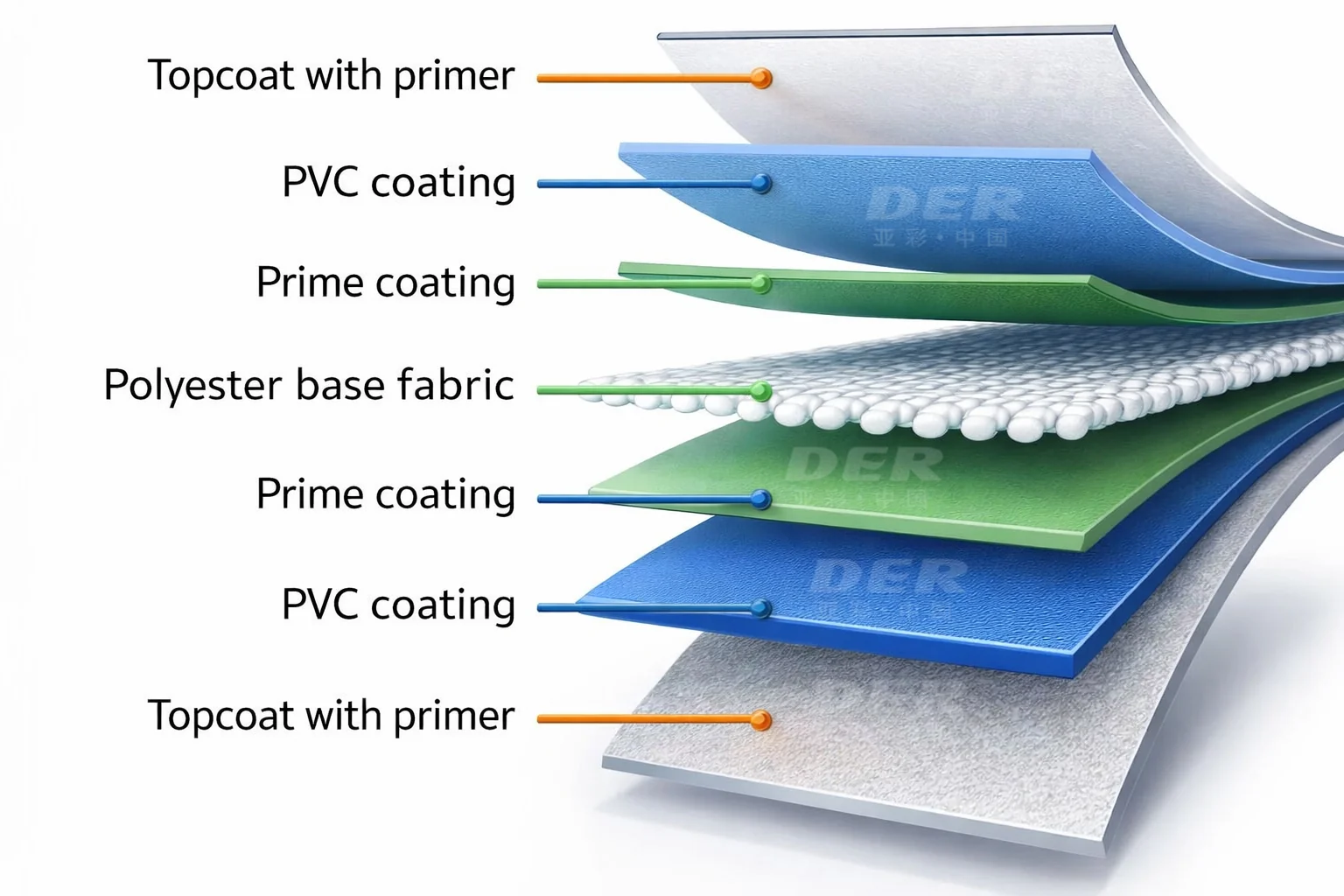
Start from the relevant PVC tarpaulin construction, then identify the controls needed to reproduce it.
For custom finished tarps
Add cutting, panel joining, seams, hems, corner patches, webbing and hardware. Use finished dimensions and a drawing revision. Clarify whether the quoted scope includes material, conversion, accessories, packaging or other components.
Review the PVC tarp seam welding guide when joining quality is central to the application.
Set the acceptance basis first. “Heavy duty,” “waterproof” and “UV resistant” are incomplete audit criteria. State what property matters, how it is assessed, what limit applies and which product configuration the requirement covers.
A quality-system audit is one part of supplier qualification. If the purchasing program requires environmental, labor or other specialist assessments, define them as separate scopes with appropriate assessors and evidence.
Request a compact document pack before the visit
Use the advance review to identify missing information and select on-site checks. Ask for controlled examples with confidential customer details redacted where appropriate. A brochure can introduce the operation; it cannot replace records created during real production.
On a phone, scroll the table horizontally to compare all columns.
| Evidence pack | Request | Verify during the audit |
|---|---|---|
| Company and site | Legal name, production address, contracting/export roles and process map. | Names and responsibilities are consistent or have a documented explanation; the audited site is the proposed production site. |
| Product definition | Current specification, drawing, material code, approved sample ID and revision history. | Sales, planning, production and QC use the same approved requirements. |
| Process and equipment | Equipment list, relevant work instructions, maintenance and setup records. | Equipment is usable and fits the construction, width and conversion operations being quoted. |
| Quality and laboratory | Inspection plan, test methods, raw results, instrument status and external laboratory reports. | Methods and sampling match the order; report identities connect to the actual construction. |
| Trace and exceptions | Lot labels, material issues, production travelers, holds, rework and corrective-action examples. | Records explain both normal production and what happens when a requirement is missed. |
| Delivery and release | Relevant output history, current commitments, packing instructions and release authorization. | Capacity assumptions include the bottleneck; accepted goods remain identifiable through dispatch. |
If a certificate is offered, check the holder, site, scope and current status through the issuer’s verification route. Treat product test reports separately: check the sample description, report identifier, method, issue date and whether subsequent material or process changes affect its relevance.
Follow material flow and challenge the handoffs
After the opening meeting, choose a live or recently completed order yourself. Compare its production route with the supplier’s process map. The tarpaulin manufacturing process helps identify stages to inspect, but the actual construction determines your audit route.
Receiving and storage
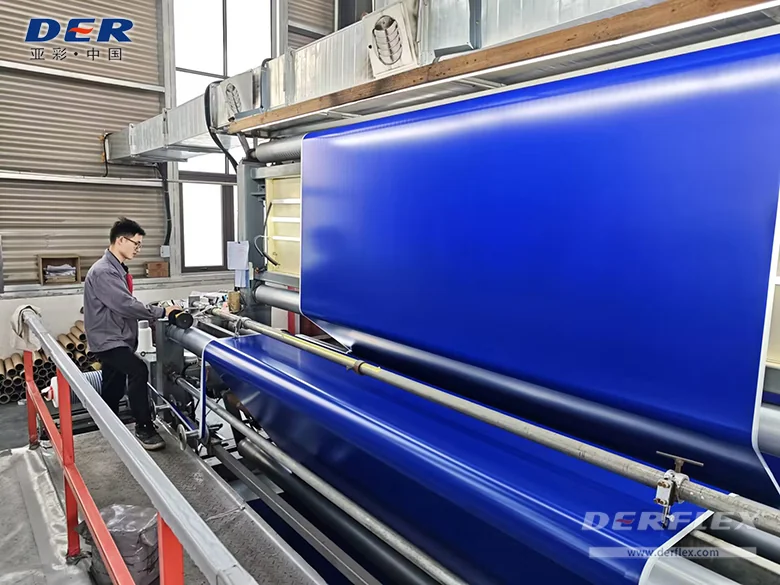
Match incoming labels to receiving and inspection records. Check how approved, pending and rejected fabric, coating inputs and hardware are distinguished. Ask an operator how material is released to production and how a mixed or damaged lot is contained.
Coating or lamination
Identify who approves the setup, which settings are recorded and how checks are linked to the roll or batch. Review a start-up result and a deviation. Do not infer a validated process window from a machine display or use a generic welding or coating temperature as the acceptance basis.
Conversion and reinforcement
For finished tarps, compare a first piece with the drawing and approved sample. Examine panel orientation, seam placement, hems, corners and hardware positions. Check that rework is identified and reinspected before it rejoins acceptable production.
Inspection and dispatch
Choose a packed item and locate its inspection status, quantity and release record. Check protection against handling damage and label mix-ups. Ask who can override a hold and what evidence is required before dispatch.
Ask the operator, then compare the record
“Which instruction applies to this order?” “What was the last out-of-tolerance result?” “Where is held material placed?” “Who may change this setup?” Answers should connect to the workstation instruction, identified material and a recent record.
Outsourcing is an auditable supply arrangement when it is disclosed and controlled. Record which stage leaves the site, which facility performs it, how the buyer approves relevant changes and how identity and inspection status survive the transfer.
Link every performance claim to a method and a batch
A laboratory tour becomes useful when the auditor can connect the measurement to the product. For each selected test, record the instrument, method revision, specimen preparation, conditions, units, acceptance limit and raw result. Check direction where relevant. A demonstration on an unidentified offcut does not establish the result for your order.
| Control | What to witness | Decision the evidence supports |
|---|---|---|
| Mass, thickness and dimensions | Sample area, measurement locations, instrument suitability and recorded results. | Whether the agreed nominal value and tolerance are checked consistently across the material. |
| Tensile and tear behavior | Applicable method, specimen direction, preparation, test setup and raw output. | Whether results are comparable with the specified method and linked to the relevant batch. |
| Coating adhesion | Specimen preparation, peel setup, recorded value and observed failure mode. | Whether the composite meets the agreed adhesion criterion for its intended handling and fabrication. |
| Water resistance and seams | Material testing plus an agreed finished-seam or cover check when required. | Which part of the product the water-resistance claim covers; sheet performance alone does not verify a complete cover. |
| UV, cold or flame performance | Report identity, method, conditions, evaluated construction and acceptance basis. | Whether application-specific evidence applies to the current grade, finish and relevant configuration. |
| Welds and hardware | First-piece release, seam specimen where specified, reinforcement position and hardware checks. | Whether the finished tarp matches the approved design and inspection plan. |
Record which measurements are performed internally and which use an external laboratory. For critical instruments, verify calibration or suitability checks and ask how suspect past measurements are reviewed if an instrument is found unsuitable. Use the tarpaulin testing and QC guide to prepare the discussion.
Compare like with like. GSM is mass per unit area; mil is thickness. One cannot establish the other without additional construction information. Test values from different methods or conditions should not be ranked as though they were directly equivalent. Accelerated exposure hours alone do not establish a guaranteed service life.
Trace one finished item backward, then one input lot forward
Let the auditor select the roll or finished tarp. Write down its visible ID before opening the records. Follow it to the production date, line, specification revision, material issues, relevant tests and shipment information. Then select one material lot and identify every affected roll, work-in-process item, reworked product and shipment.
A record chain to reconstruct
- Purchase definition: order number, product code, approved revision and sample reference.
- Material identity: supplier lot, receiving status and quantity issued to the order.
- Production: line or machine, date or shift, setup approval and any deviation.
- Inspection: raw results, acceptance decision, hold or rework disposition and final release.
- Dispatch: roll/carton IDs, packed quantity, packing list and shipment linkage.
Check quantities as well as codes. Reconciling a material issue with good output, scrap, remaining stock and rework can reveal a broken handoff that a single label cannot. Agree the necessary record-retention and sample-retention periods for your program rather than assuming a universal duration.
Backward trace: “What made this?”
Start with an item chosen in the warehouse. Can the supplier reconstruct its controlled specification, inputs, production and acceptance history without recreating the records after the audit?
Forward trace: “What else is affected?”
Start with an input lot or a suspect production period. Can the supplier identify other goods requiring a hold, investigation or customer communication, including goods made at a disclosed subcontractor?
For reorders, compare the physical retained reference with its approved record and the current production instruction. The golden-sample approval guide explains how to keep sample identity connected to repeat bulk supply.
A 100-point evidence scorecard for supplier qualification
This is a proposed buyer framework, not a standard-mandated pass mark, an ISO certification assessment or a rating of DERFLEX. Set your criteria before comparing suppliers. Rate each pillar 0: unsupported or failed; 1: partly supported; 2: verified against the agreed scope. Keep evidence references in the notes.
Each contribution equals its weight × rating ÷ 2. Only finished-tarp fabrication may be excluded here when purchasing rolls only; the remaining weights are then normalized. Unreviewed pillars remain incomplete. A total cannot override a hold gate.
| Audit pillar | Weight | Evidence needed | Your rating |
|---|---|---|---|
| 01. Identity and production scope | 8 | Company/site records; responsibility for every in-house and outsourced operation. | |
| 02. Specification and revision control | 12 | PO, approved drawing, material code and sample reference agree at the workstation. | |
| 03. Incoming materials and status | 10 | Receiving records link fabric, coating inputs and hardware to approved or held lots. | |
| 04. Coating or lamination control | 14 | Authorized setup, start-up release, process checks and a documented response to drift. | |
| 05. Testing and measurement | 14 | Suitable methods, raw results, instrument status and a witnessed relevant measurement. | |
| 06. Finished-tarp fabrication | 12 | Cut size, seams, hems, reinforcement and hardware follow the approved drawing. | |
| 07. Backward and forward traceability | 10 | One chosen item traces to inputs; one input lot traces to all affected output. | |
| 08. Nonconformance and change control | 8 | Segregation, authorized disposition, corrective action and buyer change approval. | |
| 09. Capacity and continuity | 6 | Relevant output history, bottleneck availability, existing load and backup arrangements. | |
| 10. Packing and shipment release | 6 | Correct labels, quantities and protection, with named authority to release the lot. |
Illustrative decision bands, after all gates clear: 85–100, consider scope-limited approval; 70–84, corrective-action review before approval; below 70, defer approval. Your purchasing team sets the final decision and conditions.
Entries stay in this page while it is open and are not submitted to DERFLEX. Download your notes before closing or reloading. The core checklist remains readable without JavaScript.
Turn findings into verified corrective actions
A useful finding states the requirement, what was observed, the affected scope and the resulting gap. Separate the immediate correction from the action that prevents recurrence. Record a responsible owner, due date, closure evidence and the check needed to establish effectiveness.
Illustrative finding: uncontrolled revision
The approved drawing calls for a revised reinforcement layout, but the sampled workstation uses the previous revision. Hold the affected work, identify what has already been made and inspect against the correct drawing. Replace obsolete instructions and verify that the revision-release process reaches every relevant workstation.
Illustrative finding: incomplete trace
A finished roll has a batch label, but the material-issue record cannot identify its base-fabric lot. Contain the potentially affected scope, investigate the missing handoff and establish a controlled issue record. Repeat both trace directions on subsequent production before closing the finding.
These examples describe audit scenarios; they are not claims about a DERFLEX order or a customer case.
Escalate findings that undermine approval. Unresolved site identity, unreliable records, concealed production routes, a failed required trace or missing evidence for a critical product requirement should put the affected approval on hold. Define the required verification before accepting a corrective-action promise.
For capacity, examine demonstrated output for comparable material and finishing work. Account for changeovers, yield, downtime, staffing and existing commitments. Review the constrained operation, which may be welding or packing rather than the coating line. Annual promotional output is not evidence of available capacity for your order window.
A closing checklist for the purchasing file
Use the closing meeting to state what was verified, what remains open and the exact scope of any proposed approval. A remote visit should also identify areas the camera or record access did not allow you to assess.
For your DERFLEX inquiry, send the application, roll or finished-tarp scope, drawing or dimensions, target material and performance, quantity, destination, required documents and timing. Include the audit evidence you need to review. Commercial terms, sampling, visit arrangements and availability should be agreed for the actual program.
Use the published DERFLEX quality-control workflow to structure the initial discussion. For wider supplier screening, see how to evaluate a tarp manufacturer. This audit guide concentrates on verifying the shortlisted supplier’s controls.
Tarpaulin manufacturer audit FAQ
What is the difference between a factory audit and a pre-shipment inspection?
A factory audit evaluates whether a supplier has the capability and controls to reproduce your specification. A pre-shipment inspection checks an identified finished lot against agreed acceptance criteria. Use the audit for supplier qualification and the inspection for shipment release; neither automatically replaces the other.
Can I audit a tarpaulin manufacturer remotely?
Yes, a remote review can verify documents, live production activity and selected records. Ask the auditor to choose the batches, equipment and routes shown during the call. Record areas that could not be checked. Use an on-site or independent follow-up when important identity, process or traceability questions remain unresolved.
Does an ISO 9001 certificate prove tarpaulin quality?
No. Verify the certificate holder, audited site, scope and current status with the relevant issuer. A management-system certificate does not by itself demonstrate that your chosen tarp construction, welded seams or production batch meets the purchase specification. Product-specific evidence is still needed.
Which quality tests should a PVC tarpaulin audit cover?
Select tests from the agreed product requirements. Relevant checks may include mass per unit area, thickness, width, tensile and tear properties, coating adhesion, water resistance and finished seams. UV, cold or flame-performance evidence is application-specific. Record the method, sample identity, direction, conditions, units and acceptance limit for each required property.
How should a buyer score a tarpaulin factory?
Set weights and decision rules before the audit, then rate the evidence against the intended product and order. Keep unreviewed items visible and document any justified exclusion. A high total must not override unresolved identity, traceability or critical product-conformity findings. The scorecard on this page is a buyer planning framework, not a certification result.
What should happen after the audit identifies a major problem?
Record the requirement, objective evidence and affected scope. Agree immediate containment, a responsible owner, the corrective action and a due date. Verify implementation and effectiveness before closing the finding. Limit or defer approval where the unresolved issue affects the proposed order, and retain the decision with the supplier file.
Bring your specification. Ask for the evidence that matters.
Discuss PVC tarpaulin rolls or custom tarp requirements with DERFLEX. Share the product scope, quantity and audit priorities so the technical and commercial review can focus on your order.
Method reference: ISO 19011:2026 — Guidelines for auditing management systems provides general audit guidance. The product checks, weights and decision bands on this page are a buyer planning framework; ISO 19011 does not certify a tarp or prescribe this scorecard.
DERFLEX · PVC tarpaulin and industrial fabrics · derflex.com