


 Material selection / Pool lining
PVC Pool Liner Thickness Guide
Choose a pool liner by its construction, measured thickness and installation system. This guide helps pool builders, distributors and OEM buyers compare mil with millimetres, understand preformed vinyl versus reinforced PVC membranes, and write a clearer material specification.
Start with the liner system. Made-to-measure vinyl liners commonly include 20 and 27 mil options. A common reference for a polyester-reinforced, site-welded PVC membrane is 1.5 mm, approximately 59 mil. These are different constructions: thickness alone does not establish which system fits your pool. See technical references.
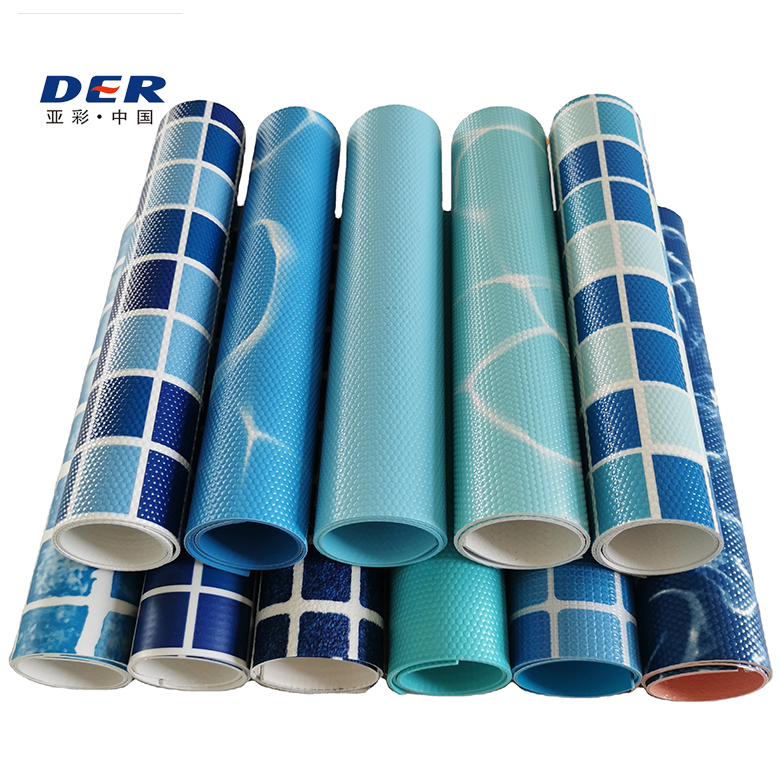
Preformed vinyl and reinforced PVC are different lining systems
Vinyl is a common name for PVC in pool lining. The useful distinction is how the material is built and installed. A thickness comparison becomes meaningful only after the quotation identifies the construction and the part of the pool being lined.
Made-to-measure vinyl liner
A flexible liner fabricated to fit measured pool dimensions. Inground replacement products commonly use thicknesses stated in mil. Confirm the attachment profile, finished dimensions and whether the floor, walls and steps use the same material.
A replacement should match the pool design and fabricator’s measuring instructions. A thicker sheet does not correct an incorrect shape or attachment detail.
Reinforced PVC-P membrane
A membrane containing internal reinforcement, commonly polyester, supplied in rolls and hot-air welded on site. The lining specification includes the membrane, seams, terminations, penetrations and compatible supporting layers.
For this route, compare reinforced PVC pool membrane materials by construction and installation requirements as well as nominal thickness.
Illustrative layer order. Actual layer thicknesses, reinforcement and surface treatment are product-specific.
Review the broader PVC pool liner material options when identifying the supply route. A general waterproof PVC tarp, pond sheet or roofing membrane is not established as a swimming pool liner merely because it has a similar thickness.
Pool liner thickness chart: mil to mm
One mil is one thousandth of an inch: 1 mil = 0.0254 mm. Multiply mil by 0.0254 to obtain millimetres; divide millimetres by 0.0254 to obtain mil. A mil is not a millimetre, and neither unit describes reinforcement or chemical resistance.
On a narrow screen, scroll the table horizontally to see every column.
| Stated thickness | Millimetres | Mil equivalent | How to read it |
|---|---|---|---|
| 20 mil | 0.5080 mm | 20.00 mil | Preformed vinyl comparison |
| 27 mil | 0.6858 mm | 27.00 mil | Preformed vinyl comparison |
| 30 mil | 0.7620 mm | 30.00 mil | Conversion reference; verify the offered product |
| 0.75 mm | 0.7500 mm | 29.53 mil | Not identical to 30 mil |
| 0.90 mm | 0.9000 mm | 35.43 mil | Construction must be identified |
| 1.20 mm | 1.2000 mm | 47.24 mil | Compare only within the specified system |
| 1.50 mm | 1.5000 mm | 59.06 mil | Often described as approximately 60 mil |
| 1.80 mm | 1.8000 mm | 70.87 mil | Surface and measurement basis matter |
| 2.00 mm | 2.0000 mm | 78.74 mil | Available in some reinforced membrane systems |
| 60 mil | 1.5240 mm | 60.00 mil | Exact conversion, not exactly 1.50 mm |
Conversions use the exact unit factor; mil results are rounded to two decimals. The table does not define a manufacturing tolerance, a minimum permissible thickness or application approval. Unit reference: NIST SP 811, Appendix B.9.
Nominal classes are not exact conversions. A 1.5 mm membrane is often described as approximately 60 mil in market literature. Exactly 60 mil is 1.524 mm. Use one governing unit and an agreed tolerance on the purchase order so rounding does not become an acceptance dispute.
Convert a thickness
Unit arithmetic only. This tool does not recommend a liner or convert gauge labels.
The static conversion table above remains available if JavaScript is disabled.
Mil vs gauge: ask for measured thickness
A pool-liner “gauge” label is not a dependable cross-brand thickness conversion. Ask the seller to state the material thickness in mil or millimetres. For example, a label containing “30 gauge” does not establish that the sheet measures 30 mil.
Also ask whether the value applies to the smooth sheet, the finished embossed material or another defined measurement basis. Raised texture can affect a reading, and a dual-thickness liner may have different floor and wall values. Record both values and the areas they cover instead of reducing the whole liner to one larger number.
Use a quotation description such as “nominal thickness in mm; tolerance and measurement method to be agreed; reinforcement and surface finish separately identified.” This makes two suppliers’ offers easier to compare without relying on “heavy duty” or “premium” labels.
Choose thickness after defining the pool and installation
There is no single best pool liner thickness for every project. The following decision matrix identifies the information needed before selecting a grade. Its starting points are comparison references, not automatic approvals.
| Project | Comparison starting point | What decides the specification |
|---|---|---|
| Residential replacement liner | Compare 20 and 27 mil within the same preformed vinyl range | Measured shape, bead or fixing profile, wall/floor combination and fabricator instructions |
| New or renovated pool with site-welded lining | Review a pool-specific reinforced system; 1.5 mm is a common market reference | Shell condition, supporting layer, weld details, terminations and compatibility with fittings |
| Public, hotel or high-use pool | Select an approved commercial lining system before comparing thickness | Operating water conditions, cleaning, surface performance, local project requirements and documented installation scope |
| Steps, benches and shallow entries | Evaluate a designated textured material for the specific walking area | Relevant wet-use slip test evidence, detailing, cleaning and material transitions |
| Above-ground or framed pool | Follow the pool system’s specified replacement material and attachment | Frame geometry, dimensions, fitting compatibility and permitted liner construction |
| OEM roll-material programme | Approve a defined construction and nominal thickness together | Roll dimensions, fabrication trials, appearance standard, sampling plan and repeat-order traceability |
For facility procurement, start with the commercial pool liner material scope. For private-label patterns and roll formats, review custom pool liner development. A shared nominal thickness does not make two products interchangeable.
Example decision: If a drawing calls for a 1.5 mm polyester-reinforced, site-welded membrane, a 27 mil preformed vinyl offer is a change of system. Flag the mismatch before comparing prices. Conversely, a roll membrane cannot be treated as a drop-in replacement for a measured beaded liner.
Is a thicker pool liner always better?
A thicker sheet contains more material through its cross-section, but that fact does not establish a proportional increase in service life. Compare material formulation, reinforcement, surface finish, seam performance and operating limits alongside thickness. “Twice as thick” cannot be translated into “twice the lifespan.”
Surface and water exposure
Ask for the grade’s permitted water conditions and care instructions. Chlorine exposure, temperature, sunlight, cleaning agents and stain resistance are separate performance questions. A photograph of a blue sheet cannot answer them.
Fit and installation details
Thickness does not remove the need for sound substrate preparation, correct attachment and validated seams. Review corners, steps, penetrations and transitions with the installer before material approval.
Wrinkles, leaks and local damage require diagnosis rather than an automatic thickness upgrade. If the substrate moves, an edge is unsupported or water acts behind the lining, a heavier sheet alone does not resolve the cause. Obtain a project-specific assessment before replacing material.
When comparing a heavy duty pool liner material, ask which construction and documented performance justify the description. Keep laboratory test results, installation workmanship and written warranty coverage as separate items in the review.
Check the face, reverse side and flexibility
Request a sample large enough to inspect the pattern, surface and reverse face, together with an identified construction. Keep the sample code and intended thickness attached to the review record. Do not identify a reinforcement material or a slip rating from surface appearance alone.
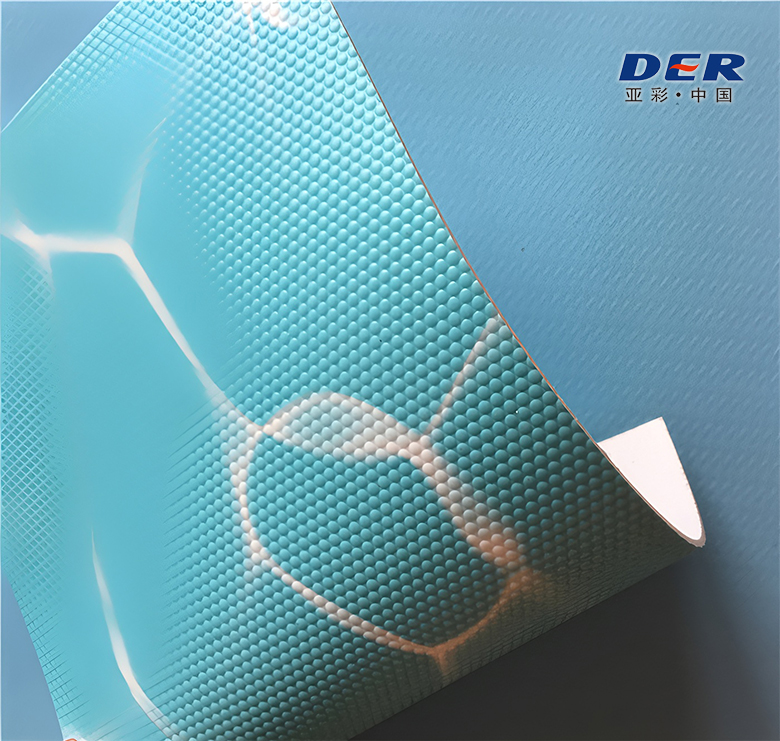
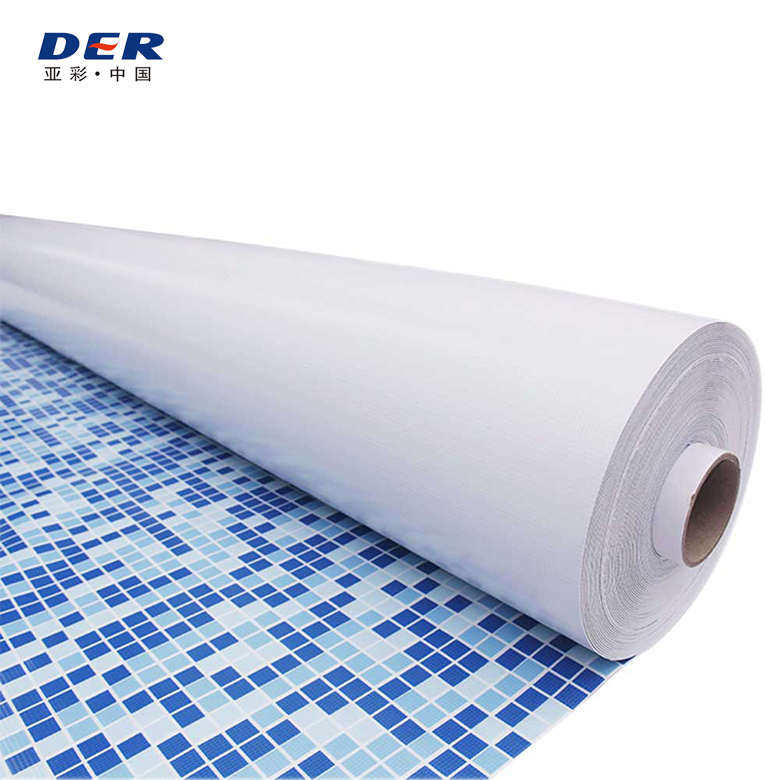
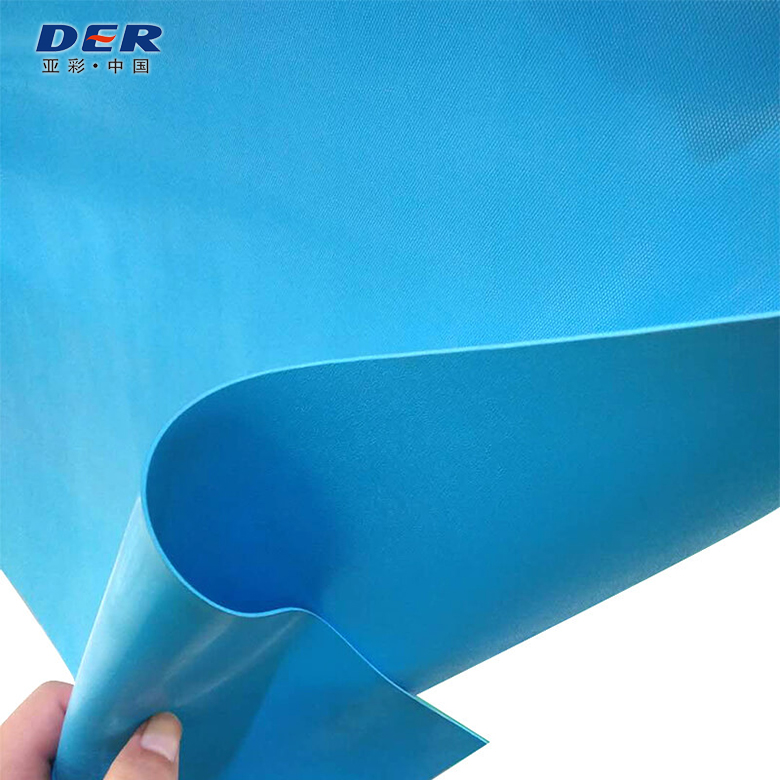
Turn sample approval into a record
- Identify the material code, surface finish and intended use.
- Check the actual measurement record against the quoted nominal thickness.
- Review face and reverse-side appearance under agreed lighting.
- For welded systems, arrange representative fabrication trials with the intended equipment.
- Record accepted appearance and performance criteria before ordering.
For development discussions, state whether you need swimming pool liner roll material or another defined supply format.
How to verify pool liner thickness before shipment
A single hand-held reading is useful for screening but is not a complete acceptance plan. Define how the supplier and buyer will measure the material so a textured surface, overlap seam or compressed sample does not create misleading results.
Define what is being measured
State whether thickness includes texture and any surface layer. Identify floor, wall and step materials separately. Avoid using an overlap weld as the base-sheet thickness reading.
Agree the instrument and conditions
Use a calibrated thickness instrument suitable for flexible material. Agree contact geometry, measuring pressure, sample conditioning and the applicable test method before comparing results.
Sample across the material
Define the number and positions of readings across roll width and along its length. Keep individual readings and their locations. The agreed specification determines whether acceptance uses individual limits, an average or both.
Link the report to the order
Record roll or batch identification, stated nominal value, tolerance, method and results. Match the inspection record to the approved sample and purchase order rather than to an unlabelled swatch.
Do not derive thickness from GSM without verified construction and density data. Reinforcement, formulation and surface structure affect mass, so two materials with the same area weight need not have the same thickness.
Build a comparable PVC pool liner material RFQ
DERFLEX supplies pool liner materials with thickness, surface, colour and roll-format options discussed against the application. Start the enquiry with a clear material scope. Do not assume that roll supply includes installation, fittings, structural assessment or a complete pool waterproofing system.
Provide the project inputs
- Pool type, destination market and indoor or outdoor exposure.
- Preformed liner material or reinforced site-welded membrane.
- Target thickness in one governing unit, with the required tolerance.
- Surface finish, colour or pattern and designated textured areas.
- Roll width, roll length, required quantity and packaging needs.
- Water operating conditions, cleaning regime and required approval documents.
- Relevant drawings, steps, fittings and intended fabrication method.
Separate material and project cost
Compare quotes on the same construction, finish, roll dimensions and delivery terms. Pattern development, surface treatment, packaging and order size can change the material quotation.
For the installed project, add substrate preparation, supporting layers, waste, welding, fittings and labour separately. Roll area is not automatically the finished lined area: overlaps, details and the cutting plan affect material consumption.
Discuss sample approval, MOQ, production timing and warranty terms against the actual order instead of assuming a universal policy.
We require PVC pool liner material for [pool type / destination]. Construction: [preformed vinyl material / reinforced site-welded membrane]. Nominal thickness: [value and unit]; tolerance and test method: [requirements]. Finish: [colour / pattern / textured zones]. Roll format and quantity: [details]. Operating water conditions and required documents: [details]. Please identify the proposed grade, supply scope and sample approval steps.
Use the pool liner manufacturer overview for supply discussions. Drawings and application photos help define the material enquiry; any fabrication or installation scope must be separately agreed.
PVC pool liner thickness FAQs
What thickness should a PVC pool liner be?
Choose the liner system first. Made-to-measure vinyl liners commonly include 20 and 27 mil options, while 1.5 mm is a common reference thickness for polyester-reinforced, site-welded PVC membranes. The correct specification also depends on the pool design, surface finish, operating conditions and installer-approved system.
Is 27 mil better than 20 mil for a pool liner?
A 27 mil sheet is physically thicker than a 20 mil sheet, but thickness alone does not establish service life or suitability. Compare the same liner construction, formulation, fit, floor and wall specification, installation requirements and written warranty before selecting either option.
Is a 30 gauge pool liner the same as 30 mil?
No reliable cross-brand conversion can be assumed for a pool-liner gauge label. Ask the supplier for an actual thickness in mil or millimetres, including its tolerance and measurement method. A true 30 mil thickness equals 0.762 mm.
Is a 1.5 mm pool membrane exactly 60 mil?
No. Using 1 mil = 0.0254 mm, 1.5 mm equals approximately 59.06 mil, while 60 mil equals 1.524 mm. A nominal 60 mil class may describe a 1.5 mm product in market literature; acceptance should follow the stated unit, tolerance and product data sheet.
Does a thicker pool liner prevent wrinkles or leaks?
Thickness alone cannot prevent either problem. Fit, substrate condition, water conditions, attachment details, fittings and seam workmanship all matter. A lining membrane also does not repair an unstable pool structure or resolve groundwater pressure behind the lining.
What should I send DERFLEX for a pool liner material quote?
Send the pool application and destination, material construction, target thickness in mm or mil, finish or pattern, roll format and quantity. Include drawings or photos of steps and fittings, operating water conditions and the documents needed for approval. Identify whether your enquiry is for roll material or a separately defined fabrication scope.
Technical references
Unit definitions and market examples below support the comparisons in this guide. Other manufacturers’ information describes their own products and is not a DERFLEX certification, warranty or product specification.
- NIST — SP 811 unit conversion factors: exact mil-to-millimetre conversion.
- GLI Pool Products — liner FAQs: mil terminology and gauge clarification.
- Latham — replacement pool liners: examples of 20 and 27 mil preformed vinyl options.
- RENOLIT — professional reinforced-liner catalogue: construction and examples of 1.5 and 2.0 mm reinforced systems; consult the current product-specific documents for a project.