


 Industrial Tarp Selection Guide
How to Choose the Best Heavy Duty Tarp for Your Application
The right heavy duty tarp is not simply the thickest sheet on the shelf. It should match the job: wind load, waterproofing, UV exposure, abrasion, edge tension, handling frequency, finished size and replacement cost.
DERFLEX helps distributors, tarp converters, truck fleets, contractors, agricultural suppliers and OEM buyers choose PVC coated polyester tarp material, welded panels or finished custom tarps based on real working conditions.
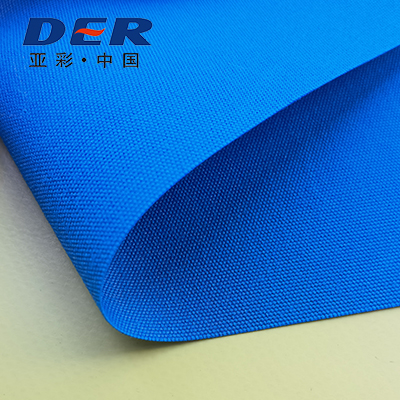
DERFLEX Heavy Duty PVC Tarp Material
Waterproof PVC coated polyester fabric for truck covers, construction tarps, equipment protection, agricultural storage, outdoor shelters and OEM tarp programs.
The best heavy duty tarp is the one specified for the risk of the job.
For short-term dust coverage, a lightweight PE tarp may be enough. For trucks, outdoor equipment, construction materials, industrial storage and repeat-use covers, buyers usually need a stronger material system such as PVC coated polyester with proper reinforcement and waterproof fabrication.
A reliable selection process should compare material type, fabric weight, coating quality, tear resistance, waterproof seams, UV package, eyelet spacing, edge reinforcement and custom size requirements before price is discussed.
Before choosing a tarp, confirm these points:
- Will the tarp be used once, seasonally or every day?
- Does the cover need full waterproof protection or airflow?
- Will it face wind load, road abrasion, sharp edges or chemical exposure?
- Is the finished size standard, oversized or irregular?
- Will the tarp be tied down with grommets, webbing, D-rings, rope edges or pockets?
- Do you need roll goods, cut panels, semi-finished covers or finished tarps?
What Makes a Tarp Heavy Duty?
A heavy duty tarp should be evaluated as a complete product system, not by one number alone.
Material Structure
PVC coated polyester, reinforced PE, canvas and mesh behave differently. For demanding waterproof industrial use, PVC coated polyester is often selected because it combines coating protection with a high-strength fabric core.
Fabric Weight & Strength
GSM, oz/yd² and mil thickness help buyers compare tarp classes, but tensile strength, tear strength and coating adhesion are also important for repeat-use covers.
Waterproof Construction
The fabric surface may be waterproof, but the finished tarp also depends on welded seams, overlap design, hems, corners, pockets and installation method.
Edge Reinforcement
Many tarp failures start at the edge. Webbing, reinforced hems, corner patches, grommet spacing, D-rings and rope edges help spread tie-down stress.
Outdoor Resistance
For long exposure, ask about UV resistance, mildew resistance, cold flexibility, abrasion resistance and optional flame-retardant or anti-static directions when required.
Repeat Supply Control
B2B buyers should confirm color tolerance, roll width, roll length, packaging, labeling and repeat-order consistency, especially for private-label or fleet replacement programs.
PVC vs Poly vs Canvas vs Mesh: Which Tarp Should You Choose?
Different tarp materials solve different problems. The right choice depends on waterproofing, service life, handling weight, breathability and budget.
| Material Type | Best Fit | Main Strengths | Limitations | DERFLEX Buying Advice |
|---|---|---|---|---|
| PVC / Vinyl Coated Polyester | Truck tarps, trailer covers, industrial covers, equipment protection, construction tarps, outdoor storage and OEM cover programs. | Waterproof, weldable, strong tear resistance, abrasion resistance, custom color and surface options. | Heavier and usually higher cost than economy PE tarps. | Choose this direction when the tarp must handle repeated outdoor use, tie-down tension and professional fabrication. |
| PE / Poly Tarp | Temporary covering, roof emergency use, seasonal storage, dust covers and budget-focused projects. | Lightweight, economical, easy to deploy and practical for high-volume temporary protection. | Usually shorter service life under abrasion, strong wind and repeated fastening compared with PVC tarps. | Use PE when low initial cost and short-term coverage are more important than long-term durability. |
| Canvas Tarp | Breathable equipment covers, firewood covers, some machinery storage and moisture-sensitive applications. | Breathability helps reduce condensation; good textile feel and abrasion behavior in selected uses. | Usually water-resistant rather than fully waterproof; can absorb moisture if water pools. | Choose canvas when ventilation matters more than welded waterproof sealing. |
| Mesh Tarp | Shade, debris control, dump truck mesh covers, construction fencing, agriculture shade and wind-exposed areas. | Allows airflow, reduces wind pressure and is useful when full waterproof coverage is not needed. | Not designed for full rain protection because of the open structure. | Specify mesh openness, shade rate, tensile strength and edge reinforcement before ordering. |
Need a deeper material comparison? Visit DERFLEX Tarp Material Guide and PVC Tarpaulin Manufacturer.
Choose the Heavy Duty Tarp by Working Environment
The same tarp should not be used for every job. Match the material and finishing details to the stress points of the application.
Truck, Trailer & Cargo Covers
Look for PVC coated polyester, welded seams, webbing, reinforced edges, strong hardware and correct finished size. Truck tarps face wind load, road abrasion, repeated folding and tie-down stress.
Construction & Outdoor Job Sites
Use PE for short-term rain and dust protection. Use PVC for longer exposure, reusable contractor programs, temporary roofing, scaffolding protection and higher-value equipment coverage.
Machinery & Equipment Protection
Confirm cover shape, condensation risk, tie-down points and abrasion surfaces. Custom PVC covers can include reinforced corners, clear window areas, pockets or logo marking.
Agriculture & Outdoor Storage
Choose based on sunlight, rain, mildew risk, animal contact, size, folding frequency and service season. PVC, PE and mesh can all be practical depending on the use case.
Waste, Mining & Rough Handling
Prioritize tear resistance, abrasion resistance, reinforced edges, chemical exposure discussion and easy cleaning. Oversized covers may need special handling and packing plans.
OEM & Private-Label Tarp Programs
Confirm repeatable GSM, color, size tolerance, logo printing, packing method, carton label, pallet plan and batch consistency before bulk production.
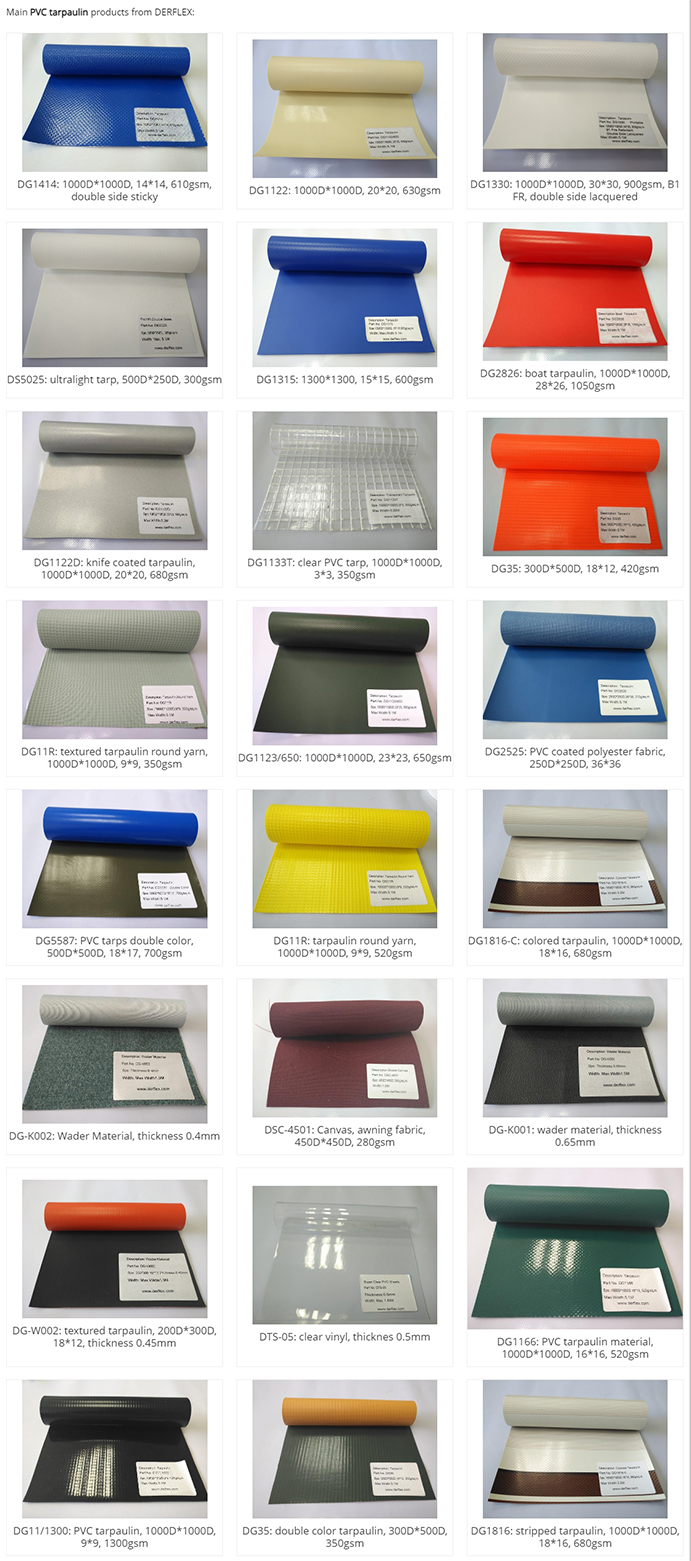
Do not buy by color and thickness only.
Many buyers compare heavy duty tarps by color, size and a single thickness number. That can be risky because the tarp may still fail if the fabric core is weak, the coating is unstable, the seams are poorly welded or the grommets are placed too far apart for the load.
For a professional order, ask for material structure, finished weight, yarn denier, coating method, coating adhesion, tensile strength, tear strength, cold flexibility, UV requirement, seam method, eyelet spacing and packing format.
For truck and industrial cover programs, DERFLEX can discuss PVC tarpaulin roll supply, cut panels, welded covers, reinforced hems, webbing, corner patches, logo printing and export-ready packaging.
Heavy Duty PVC Tarp Options for B2B Buyers
DERFLEX supplies PVC coated polyester tarpaulin materials and custom tarp solutions for buyers who need controlled specifications, repeatable supply and practical fabrication support.
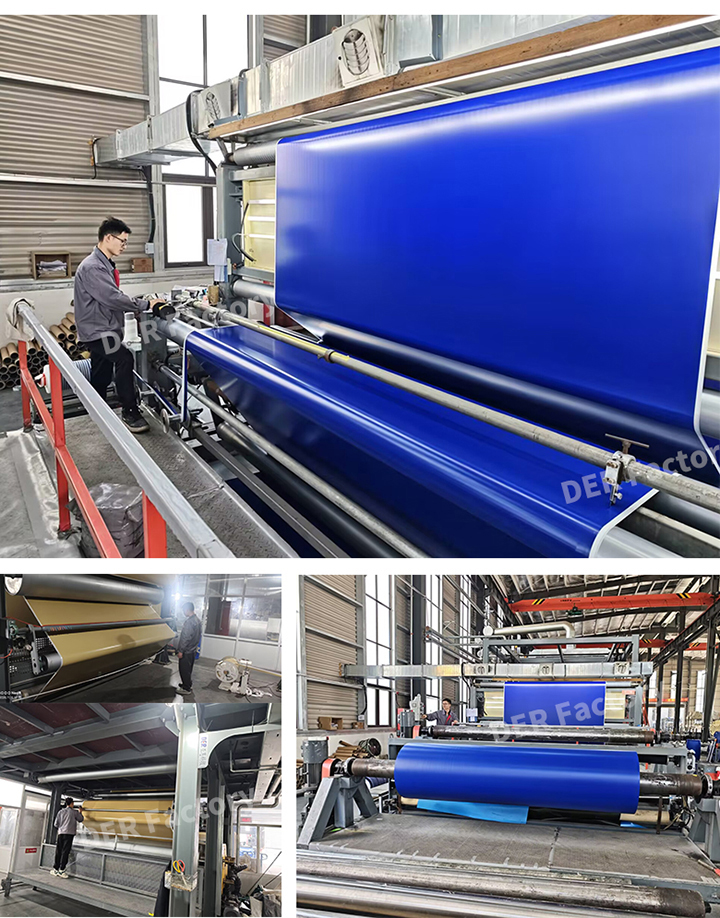
How DERFLEX Helps You Confirm the Right Tarp
For bulk orders, a clear selection process reduces sampling mistakes and avoids over-specification.
Define Application
Confirm use environment, size, tension points, waterproof needs, UV exposure and handling frequency.
Match Material
Select PVC, PE, canvas, mesh or specialty coated fabric based on performance and budget direction.
Confirm Finishing
Plan hems, welding, webbing, grommets, D-rings, pockets, corner patches and packing details.
Prepare Supply
Support roll goods, panels, finished tarps, repeat-order control, OEM labeling and export packaging.
What to Avoid When Ordering Heavy Duty Tarps
A tarp that looks strong in a photo may not perform well if the specification misses the real stress points.
Choosing the heaviest tarp automatically
Extra weight can improve durability, but it also affects handling, folding, freight cost and installation. Choose the right performance level, not only the highest weight.
Ignoring finished size
Cut size and finished size are not always the same after hemming, welding or reinforcement. Confirm tolerance before production.
Using standard grommet spacing for every job
Wind load and tie-down tension vary by application. Oversized covers and truck tarps may require closer spacing, webbing or stronger hardware.
Forgetting climate requirements
Sunlight, cold temperature, mildew, snow, dust, salt air and chemical contact can change the material recommendation.
Comparing suppliers only by unit price
For B2B buyers, repeatability, material control, packing consistency and technical response are part of the real total cost.
Skipping sample confirmation
For OEM or project orders, confirm sample color, thickness, hand feel, welding behavior, hardware and packing before bulk production.
Continue Building a Stronger Tarp Specification
Use these related pages to compare materials, applications and custom tarp solutions.
Heavy Duty Tarp Selection FAQ
Buyer-focused answers for tarp material, thickness, waterproofing and custom supply.
What is the best heavy duty tarp material?
For many industrial, truck, construction and outdoor storage applications, PVC coated polyester is a practical heavy duty choice because it offers waterproofing, weldability, tear resistance, abrasion resistance and custom fabrication options. PE, canvas and mesh are better for other use cases, so the best material depends on the job.
Is a thicker tarp always better?
No. Thickness helps, but a heavy duty tarp also depends on base fabric strength, coating quality, tensile strength, tear resistance, welded seams, reinforced edges and hardware. The heaviest tarp may be difficult to handle if the application does not require it.
How do I choose a waterproof heavy duty tarp?
Choose a waterproof fabric such as PVC coated polyester, then confirm the seam method, hem design, grommet spacing, edge reinforcement, finished size and installation direction. A waterproof surface alone does not guarantee a waterproof finished cover.
What tarp is suitable for truck and trailer covers?
Truck and trailer covers commonly use PVC coated polyester because the tarp must handle wind load, road abrasion, repeated folding and tie-down tension. Reinforced hems, webbing, strong grommets and welded seams are important finishing details.
Can DERFLEX supply custom heavy duty tarps?
Yes. DERFLEX can support PVC tarpaulin rolls, cut panels, welded panels, semi-finished covers and finished heavy duty tarps with custom GSM, width, color, surface finish, reinforced edges, grommets, logo printing and export packaging.
What information should I send for a quotation?
Please send the application, target material, GSM or thickness, finished size, color, quantity, reinforcement requirements, grommet spacing, packaging needs and any special performance requirements such as UV, flame retardancy or anti-mildew treatment.
Need help choosing the right heavy duty tarp?
Send DERFLEX your application, size, GSM target, color, finishing details and order quantity. Our team can recommend a practical PVC tarp material direction or custom tarp solution for your project.