News
Industry News

Inside a PVC Tarpaulin Factory: Yarn to Finished Roll | DERFLEX

Update:2026/9/15 16:26:56 Views:
PVC Tarpaulin Factory · Roll-Goods Manufacturing Guide

Inside a PVC Tarpaulin Factory: From Polyester Yarn to Finished Roll

A PVC tarpaulin roll is not created at one coating machine. Its final strength, waterproof surface, adhesion, flatness, weldability and batch consistency are built through a chain of textile, polymer, thermal, finishing and inspection steps. This factory-level guide shows where each property is created—and what professional buyers should verify before approving bulk production.

Updated September 15, 2026 For importers, converters, tarp makers, distributors & OEM brands Focus: roll goods, not finished-tarp fabrication
PolyesterLoad-bearing textile reinforcement
PVCProtective, flexible and weldable surface system
2 routesDirect coating or PVC film lamination
1 approved specStructure + finish + tests + roll packing
60-Second Answer

How does a PVC tarpaulin factory turn polyester yarn into a finished roll?

The short answer: polyester yarn is first converted into a controlled woven base fabric. That textile is inspected and prepared, then combined with a flexible PVC system by direct coating or by laminating pre-formed PVC film. Thermal processing develops the PVC layer and bond; surface finishing establishes gloss, matte, embossing or lacquer direction; the material is cooled, tension-controlled, trimmed, inspected and finally wound into labeled rolls for shipment or downstream fabrication.

The important procurement point is that GSM alone does not describe this process. Two rolls with the same finished weight can use different yarn denier, weave density, PVC add-on, bonding route, surface treatment and tolerance control. A repeatable B2B product therefore needs a written construction and quality specification—not only a color sample and headline weight.

Factory Process Map

10 production stages from textile reinforcement to export-ready PVC tarpaulin roll

This sequence is written for coated or laminated PVC tarpaulin roll goods. Exact machines and sub-steps vary by product construction; not every grade follows every route.

1

Define the target construction

The factory should start from application, target weight, yarn structure, width, surface, color, welding/printing need and performance direction. That prevents the line from optimizing the wrong material.

Buyer impact: the purchase specification begins before production.
2

Select and prepare polyester yarn

Yarn denier, consistency and low-shrink behavior influence the reinforcement system. The yarn must be suitable for stable weaving and for the mechanical demands of the finished coated textile.

Controls: tensile direction, tear behavior, dimensional stability.
3

Weave the base fabric

Warp and weft yarns are arranged into a defined fabric construction. Density and tension consistency matter because the textile becomes the load-bearing skeleton under the PVC layers.

Controls: load paths, openness, coating support and roll geometry.
4

Inspect and condition the greige fabric

Before coating or lamination, the base textile should be checked for width, weave defects, contamination, tension variation and other conditions that may affect bonding or surface uniformity.

Prevents: weak spots, wrinkles, uneven coating and visible defects.
5

Prepare the PVC system

The production route determines whether the plant prepares a coating compound/paste or a pre-formed PVC film. Plasticizers, stabilizers, pigments and project-specific additives influence processing and finished performance.

Controls: flexibility, color, weather direction and process compatibility.
6

Coat or laminate the textile

Direct coating applies PVC to the textile on the line; lamination combines the textile with PVC film under heat and pressure. The correct route depends on product target—not on a universal “best” method.

Controls: structure, add-on, bond formation and surface build.
7

Heat, gel, fuse and bond

Controlled thermal processing develops the PVC layer and adhesion. The temperature profile, line speed and tension must work together; under-processing and over-processing can both create later problems.

Controls: peel behavior, flexibility, surface integrity and dimensional stability.
8

Apply surface finishing

Depending on grade, the roll may receive gloss, matte, embossing, acrylic lacquer, PVDF-related finish or another application-specific top surface. This should be matched to weathering, cleaning, printing or welding requirements.

Controls: appearance, cleanability, friction and downstream compatibility.
9

Cool, trim and inspect

The material is stabilized after thermal processing, edges are managed, and the roll is checked for width, appearance, color, surface defects and agreed physical or bonding properties.

Controls: saleable width, roll flatness and batch acceptance.
10

Wind, label and pack the finished roll

Approved material is wound under controlled tension and prepared for export or downstream converting. Core, roll length, identification, wrapping, palletization and traceability should match the buyer’s handling system.

Controls: warehouse handling, identification and repeat-order traceability.
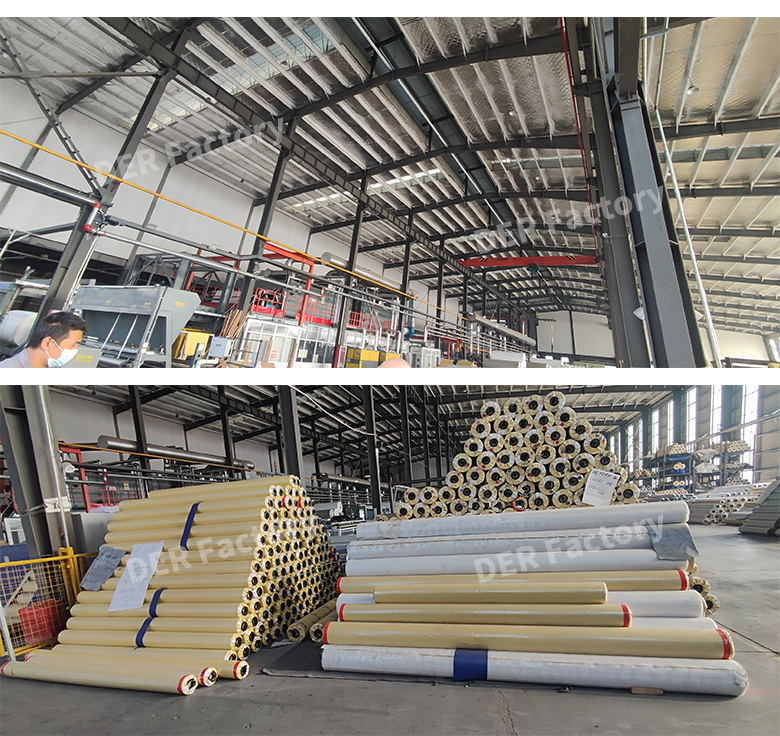
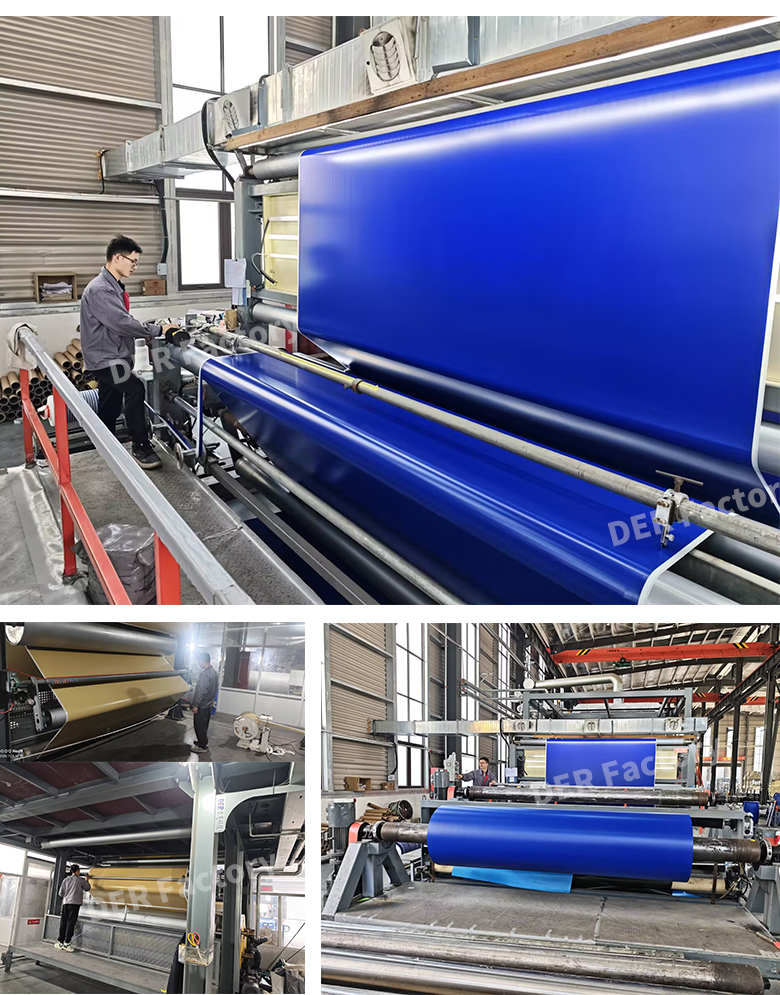
DERFLEX PVC tarpaulin factory production, roll inspection, warehouse and container loading
DERFLEX factory workflow in practice. Production equipment, roll inspection, material handling and export loading all affect whether an approved laboratory sample can become a consistent commercial shipment.
Stage 1 · Textile Engineering

The PVC layer does not create the tarp’s load-bearing skeleton—the polyester base fabric does

A strong-looking surface can hide a weak textile. Professional sourcing starts by understanding what is under the coating.

Yarn variables

Denier is only the first number

Polyester yarn size helps describe the reinforcement, but it should be read together with fabric density, weave geometry and measured tensile/tear performance. A heavier yarn does not automatically make a better tarp if the construction is poorly balanced for the real load.

  • Warp/weft yarn direction
  • Thread density and fabric openness
  • Dimensional stability and shrinkage behavior
  • Surface preparation for downstream bonding
Factory checkpoint

Why weave consistency matters to coating

If the woven substrate varies across its width, the coating or laminate must bridge different local structures. That can affect surface flatness, total weight, bond uniformity and mechanical performance. This is why a factory audit should look at base-cloth control—not only the final blue or green roll.

Procurement question: ask how the approved base fabric is identified and how changes in yarn or weave are prevented between repeat orders.

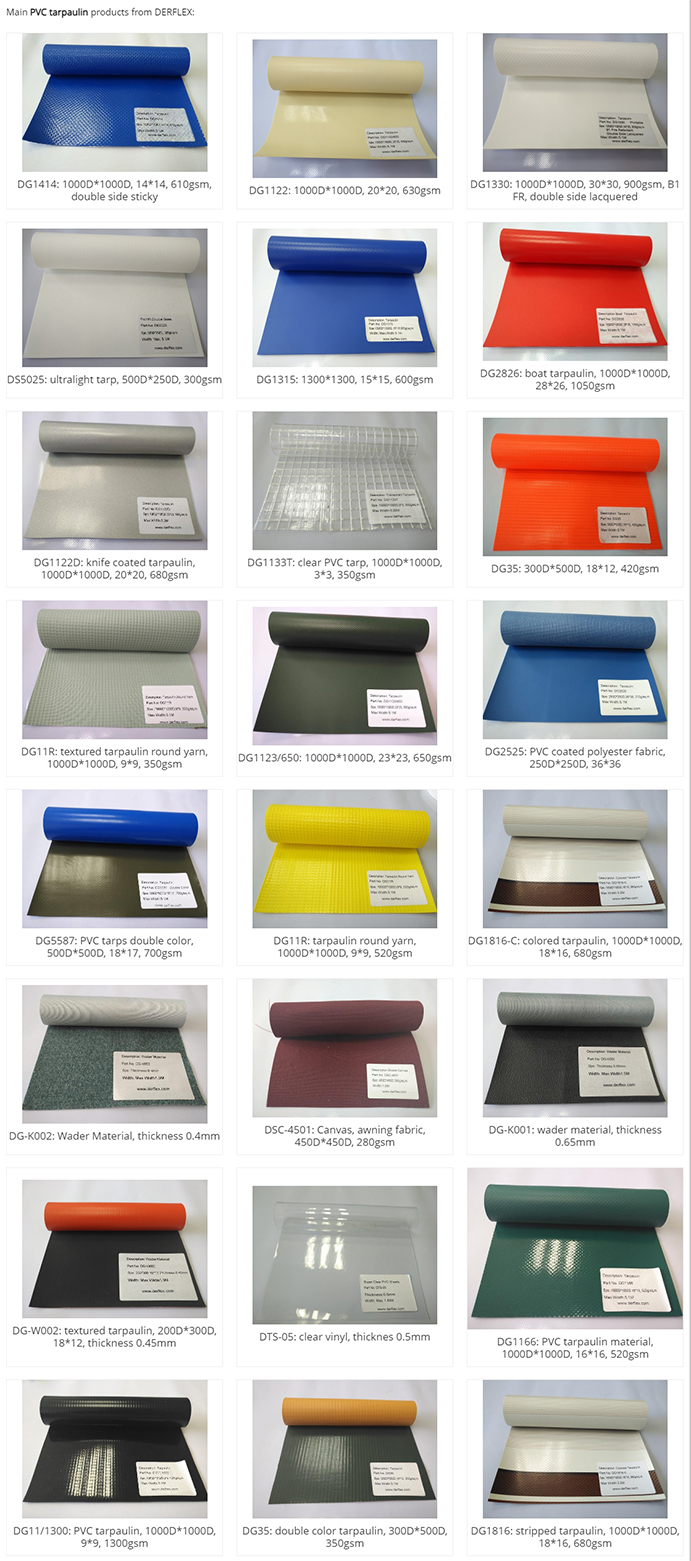
For the broader material definition and available constructions, compare this factory guide with DERFLEX's PVC coated polyester fabric page. This article intentionally focuses on manufacturing control rather than duplicating the product page.
Stage 2 · PVC Combination

Knife coating and PVC film lamination are different production routes—not quality grades by themselves

Both methods can produce useful tarpaulin materials. The correct choice depends on the required structure, surface, bond, flexibility, budget, line capability and end use.

Route A

Direct / knife-coated direction

A PVC coating system is applied directly to the polyester substrate and leveled before thermal processing establishes the continuous layer. The route is often selected when the product requires controlled coating build and strong textile-to-polymer integration.

  • Requires stable coating formulation and viscosity/processing control.
  • Knife gap, line speed, heat profile and fabric tension interact.
  • Multiple passes or different face/back constructions may be used depending on the grade.
  • Final approval should still rely on the actual test method and sample—not the process name alone.
Route B

PVC film lamination direction

Pre-formed PVC film is combined with the polyester reinforcement under controlled heat, pressure and bonding conditions. Film production and textile combination can therefore be managed as separate stages within an integrated plant.

  • Useful when film surface, color or layer construction is part of the product design.
  • Bond uniformity must be controlled across width and roll length.
  • Poor process control can later show as peeling, bubbles or delamination.
  • The buyer should confirm the approved bond/performance direction for the actual grade.
Buyer questionWhy it mattersWhat to put in the specification
How is PVC combined with the textile?The process route changes how layers are built and bonded.Coated, laminated or other approved route; face/back build; surface direction.
How is adhesion checked?Weak bonding can become peeling or delamination after flexing and weather exposure.Agreed test method, minimum/target value where required, plus approved sample.
What does finished GSM include?Total weight includes the textile plus PVC and finishing layers.Base fabric construction and finished weight should be recorded together.
Will the roll be welded, printed or sewn?Surface and formulation choices can affect downstream processing.Actual conversion method and production trial where the application is critical.
Stage 3 · Quality Control

Where a factory should control PVC tarpaulin roll quality—not just where it should inspect it

Final inspection catches visible problems. Process control is what reduces the chance of creating those problems in the first place.

Factory checkpointTypical control itemWhy buyers should carePossible field symptom if poorly controlled
Incoming / base textileYarn/fabric identity, width, weave condition, cleanlinessThe coating cannot compensate for every substrate defect.Weak zones, uneven roll, visible weave variation.
PVC preparationFormula identity, color, additive direction, process conditionFlexibility, weathering and processing depend on the polymer system.Color shift, stiffness, early aging or process instability.
Coating / lamination lineLine speed, tension, temperature/pressure, coating buildThese variables influence thickness, surface and bond consistency.Weight variation, wrinkles, poor adhesion, surface defects.
Thermal stageHeat profile and dwell/process balanceProper fusion/gelation and bonding require controlled energy input.Brittleness, under-fused surface, weak bond or deformation.
Surface finishingGloss/matte direction, embossing, lacquer/topcoat uniformityAppearance and downstream compatibility must remain stable.Uneven finish, cleaning differences, print/weld variation.
Finished rollWidth, weight, appearance, color, length, agreed mechanical/bond testsThis is the shipment the converter actually receives.Conversion waste, rejects, inconsistent repeat orders.
Packing / identificationCore, winding, labels, product code, protection, palletizationTraceability and roll condition matter after the factory gate.Crushed edges, telescoping, mix-ups, difficult claims investigation.

Weight & width

Useful basic controls, but insufficient alone to define a high-quality roll.

Tensile & tear

Connect the final coated material back to the real reinforcement system.

Adhesion / peel

Important when bond durability is critical to flexing, folding or long-term use.

Surface & color

Critical for branded products, printing, visual panels and repeat-order matching.

DERFLEX publishes a separate Quality Control System page covering incoming QC, process QC, laboratory testing, final roll inspection and traceability. Use that page when your supplier audit needs deeper QC evidence.
Buyer Selection Matrix

Translate the end use into a roll-goods manufacturing priority

Instead of asking for “a heavy PVC tarp roll,” tell the factory which failure mode matters most in your market.

Downstream useManufacturing priorityQuestions to clarify before sampling
Truck & trailer coversTear/tensile balance, abrasion direction, weldability, outdoor surface durabilityYarn/weave, finished weight, surface finish, welding method, UV exposure, color.
Tents & sheltersWaterproof layer, dimensional stability, seam compatibility, optional FR directionBlockout/translucency, FR requirement, folding, climate, printing/branding.
Industrial curtainsFlatness, repeated flexing, cleaning, welding/sewing compatibilityPanel size, temperature, chemicals, visibility/color, edge fabrication method.
Agricultural coversOutdoor weathering, puncture/tear direction, handling durabilitySun exposure, seasonal or year-round use, contact surfaces, storage method.
Inflatable / air-retaining productsBond quality, airtight construction direction, surface compatibilityAir pressure, seam method, required airtightness, cold-flex and product geometry.
Printable / branded coversSurface energy/print compatibility, color consistency, coating uniformityInk system, print side, topcoat, finish, artwork color tolerance and welding after print.

What can be customized before bulk production?

  • Polyester yarn / fabric construction direction
  • Finished GSM and width according to production feasibility
  • Color and surface appearance
  • Coated or laminated route for the approved grade
  • Gloss, matte, embossed, lacquered or application-specific finish
  • UV, anti-mildew, flame-retardant or other project-based directions where supported
  • Roll length, core, labeling, wrapping and export packing

What should never be approved from a photo?

A photo can show color and approximate surface appearance, but it cannot verify yarn denier, weave density, coating add-on, peel adhesion, low-temperature behavior, tensile strength, roll tolerance or long-term outdoor performance.

For repeat purchasing, link the approved physical sample, product code, technical data sheet, color/finish reference and packing instruction to the same specification.

DERFLEX Manufacturing Context

Why integrated factory visibility matters to a roll-goods buyer

DERFLEX's current Factory Tour presents the production base as an integrated material system covering base-fabric production, PVC film, lamination/coating, quality control and export-ready output. That matters because a repeat order can drift when critical steps are split across unknown subcontractors without a stable approved construction.

The figures below are published factory context, not a promise that every product uses every machine or achieves the same output. The correct production route still depends on the approved tarpaulin specification.

60,000㎡Published production area
450 + 25Workers + senior engineers
5 / 3 / 5Calendars / coating / lamination machines
1.5M㎡/dayPublished base-fabric output
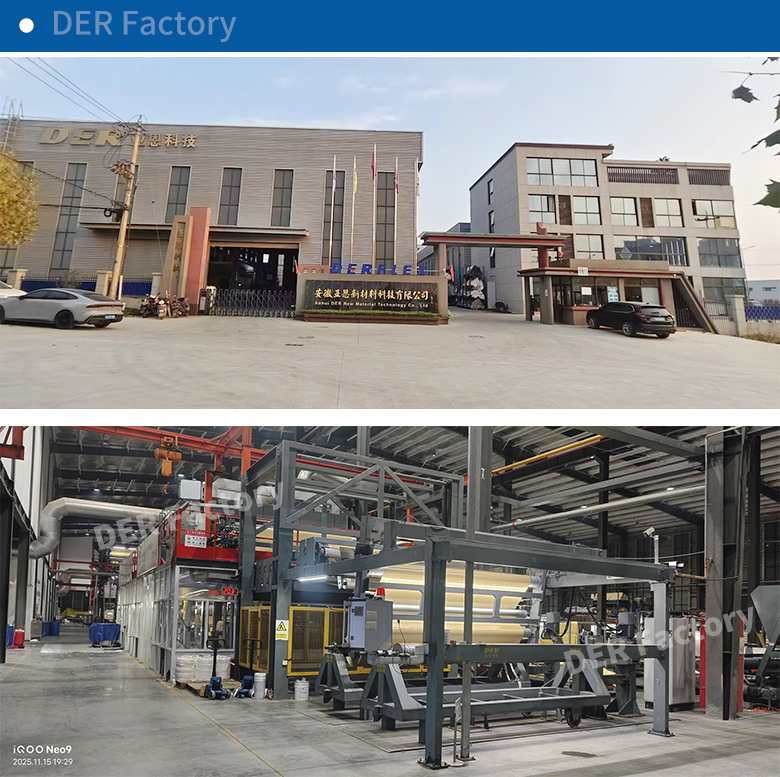
DERFLEX manufacturing base and PVC coated fabric production equipment

DERFLEX manufacturing base and production line. A plant image is useful when it is connected to process evidence, not used as a decorative factory claim.

Factory Audit

10 questions to ask a PVC tarpaulin factory before a bulk roll order

These questions help separate a strong sample from a repeatable production system.

1. What is the exact base-fabric construction?

Record yarn direction, fabric density/structure and how the substrate is identified for repeat orders.

2. Is this grade coated or laminated?

Ask for the actual approved route and surface build instead of relying on a generic product family name.

3. Which properties are checked in-process?

Final QC is useful, but process monitoring is what protects consistency over long runs.

4. How is color/finish matched?

For branded or, visible applications, define master sample, Pantone/RAL direction or other approved reference.

5. How is adhesion verified?

Where peeling risk matters, agree on the test method and acceptance logic before production.

6. What roll tolerances are controlled?

Width, length, weight, surface and winding quality can all affect the converter’s yield.

7. Can the plant reproduce the approved sample?

The sample, TDS, product code and bulk order should all refer to the same construction.

8. What downstream process must the roll support?

Welding, sewing and printing should be tested on the approved material when they are critical to your product.

9. How is each roll identified?

Batch/lot, product code, dimensions and other agreed labels make claims and repeat orders easier to trace.

10. How is the roll protected for export?

Core strength, wrapping, end protection, palletization and container loading should fit the journey and warehouse handling.

Common Procurement Mistakes

Three ways buyers accidentally approve the wrong PVC tarpaulin roll

Mistake 1: buying by GSM only

Finished weight does not reveal how much performance comes from the textile reinforcement versus the PVC system. Record construction and measured performance together.

Mistake 2: approving a color swatch as the full spec

A swatch can confirm appearance but not roll flatness, weave structure, surface treatment, welding behavior or batch consistency. Use a technical approval package.

Mistake 3: treating “coated” as automatically premium

Production-route labels are not substitutes for evidence. Compare the approved material on adhesion, mechanical performance, surface quality, process compatibility and repeatability.

Buyer Questions

PVC tarpaulin factory FAQ

Direct answers to common sourcing and manufacturing questions.

What is PVC tarpaulin made from?

Industrial PVC tarpaulin is commonly built around a polyester textile reinforcement combined with flexible PVC on one or both sides. The polyester structure carries much of the tensile and tear load, while the PVC system provides the continuous waterproof surface, weather protection, cleanability and thermoplastic behavior used in many welding processes.

What is the difference between a PVC tarpaulin factory and a finished tarp factory?

A PVC tarpaulin roll factory makes the coated or laminated technical textile in roll form. A finished tarp factory converts that roll material by cutting, welding or sewing, hemming, reinforcing and adding grommets, D-rings, straps or other hardware. Some integrated suppliers support both stages, but they are different manufacturing functions.

Is knife-coated PVC tarpaulin always better than laminated PVC tarpaulin?

No. They are different manufacturing routes. Knife coating can be useful for controlled direct coating structures; lamination can be effective when pre-formed PVC film and a defined laminate structure fit the product target. Compare the actual approved grade by performance, bond quality, fabrication compatibility and cost—not by route name alone.

Which factory tests matter most for PVC tarpaulin rolls?

The relevant tests depend on the application, but buyers commonly review finished weight, width, tensile strength, tear strength, coating adhesion or peel direction, color/surface consistency and any project-specific UV, flame-retardant, cold-flex, print or welding requirements. The test method should be agreed with the supplier instead of comparing numbers from different methods as if they were identical.

How can I reduce batch-to-batch variation?

Approve one construction through a linked product code, technical data sheet, physical sample, color/finish reference and packing instruction. For repeat orders, avoid changing yarn, base-fabric construction, coating route or surface finish without documented approval.

What information should I send DERFLEX for a PVC tarpaulin roll quote?

Send the application, target GSM or reference sample, required width and roll length, color, surface finish, coating/lamination preference if known, welding/printing method, required performance or test standards, quantity, packaging needs and destination. If you already have a technical data sheet, include it so the quotation can be compared against the same construction.

Turn the factory process into a repeatable roll specification

Send DERFLEX your application, reference sample or current technical data sheet. The useful goal is not to order “PVC tarp by weight”; it is to define the textile, PVC route, surface, quality checkpoints and packing before bulk production.

Consulting Services
+86-021-54361792 / 54361798
Email
sales@derflex.com