Water & Drainage
Define high points, roof slope, seam direction and drain paths so the cover sheds water instead of creating low pockets where rain can collect.




Protective covers developed around the machine—not forced from a generic stock size.
DERFLEX supplies PVC coated polyester material, cut panels, semi-finished components and custom industrial equipment cover tarps for machinery storage, plant shutdowns, outdoor assets, transport protection and repeat OEM programs. Cover geometry, drainage, ventilation, reinforcement and fastening can be reviewed together before sampling.
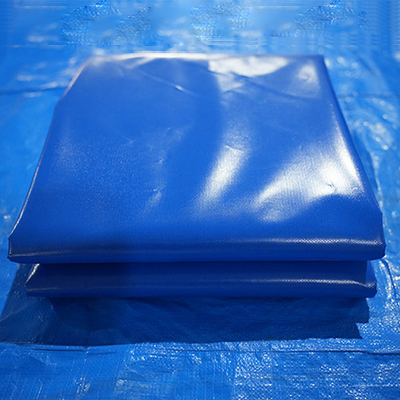
An industrial equipment cover tarp is a flexible barrier used to limit exposure to rain, dust, UV, road grime, debris and handling damage. The fabric matters, but the finished cover succeeds or fails as a system. Water must be directed away from the equipment, wind load must be distributed through reinforced points, and the fabric should not saw back and forth across painted corners or controls.
For this reason, DERFLEX starts from the asset profile and service conditions. A generator stored outdoors, a CNC machine covered during shutdown and a production module shipped on a flatbed may all use coated fabric, yet their cover shape, seam direction, access points and restraint method should be different.
A useful cover drawing does more than show overall dimensions. It identifies where water, heat, movement and operator access affect the cover in daily use.
Define high points, roof slope, seam direction and drain paths so the cover sheds water instead of creating low pockets where rain can collect.
Map protrusions and sharp transitions. Double layers, wear patches, webbing or padding can be positioned before cutting and fabrication.
For temperature swings or moisture-sensitive assets, discuss vents, air gaps, breathable zones or a removable cover schedule rather than sealing blindly.
Inspection flaps, zippers, hook-and-loop closures, straps and anchors should follow the operator sequence and the actual direction of wind or transport loads.
The ranges below are starting directions for quotation and sampling. Final values should be confirmed through an approved material specification, drawing and workmanship sample.
| Configuration Item | Typical Direction | Why It Matters | Information to Provide |
|---|---|---|---|
| Cover format | Flat sheet, five-sided box cover, split cover, fitted multi-panel cover or reusable transport enclosure | Changes fit, installation time, water shedding, fabrication complexity and repeatability | Drawings, overall dimensions, photos, opening direction and installation sequence |
| Main material | PVC coated polyester; selected projects may use TPU coated fabric, PE woven tarp or canvas | Affects handling, weldability, surface behavior, weather resistance, appearance and budget | Indoor/outdoor use, expected service duration, cleaning method and required test direction |
| Fabric weight | 450–550 gsm light/medium; 610–750 gsm industrial; 850–1100 gsm heavy-duty direction | Influences strength, stiffness, folding volume, installation weight and abrasion tolerance | Cover size, wind exposure, handling cycle, restraint method and target life |
| Panel joining | Hot-air welding, high-frequency welding, industrial sewing or hybrid construction | Controls seam profile, water path, flexibility, detail fabrication and field repair approach | Cover geometry, material grade, seam location and required opening features |
| Reinforcement | Webbing hems, corner patches, wear pads, rope hems, double layers or replaceable contact panels | Spreads local load and protects recurring friction or pulling points | Sharp areas, lift points, tie-down direction, abrasion zones and operator handling points |
| Hardware & access | Eyelets, D-rings, straps, buckles, zippers, hook-and-loop, elastic hems, vents, windows and labels | Determines installation speed, inspection access, ventilation and secure attachment | Exact positions, quantities, operating sequence, logo and identification requirements |
| OEM program | Custom color, printed logo, barcode, serial label, cartons, packing reference and replacement parts | Supports repeat ordering, dealer programs, model identification and supply consistency | Artwork, Pantone reference, SKU list, forecast quantity and packing standard |
Performance depends on the confirmed fabric grade, seam construction, finished-cover design, installation and actual exposure. Flame behavior, chemical resistance, cold flexibility or other compliance requirements should be specified with the relevant test method before production.
The most durable fabric may still be inconvenient if the cover shape does not match the way technicians store, inspect, move or service the equipment.
Flexible for irregular assets and changing sizes. Best where crews need a general-purpose sheet and can manage proper slope, padding and tie-downs on site.
Covers the top and four sides while leaving the underside open. Useful for palletized equipment, generators, cabinets and repeat rectangular assets.
Follows equipment geometry and can include shaped roofs, access flaps, vents and reinforced zones for a cleaner fit and controlled movement.
Developed for loading, vibration and repeated restraint. Review road airflow, lifting points, frame contact, straps and inspection openings separately from static storage.
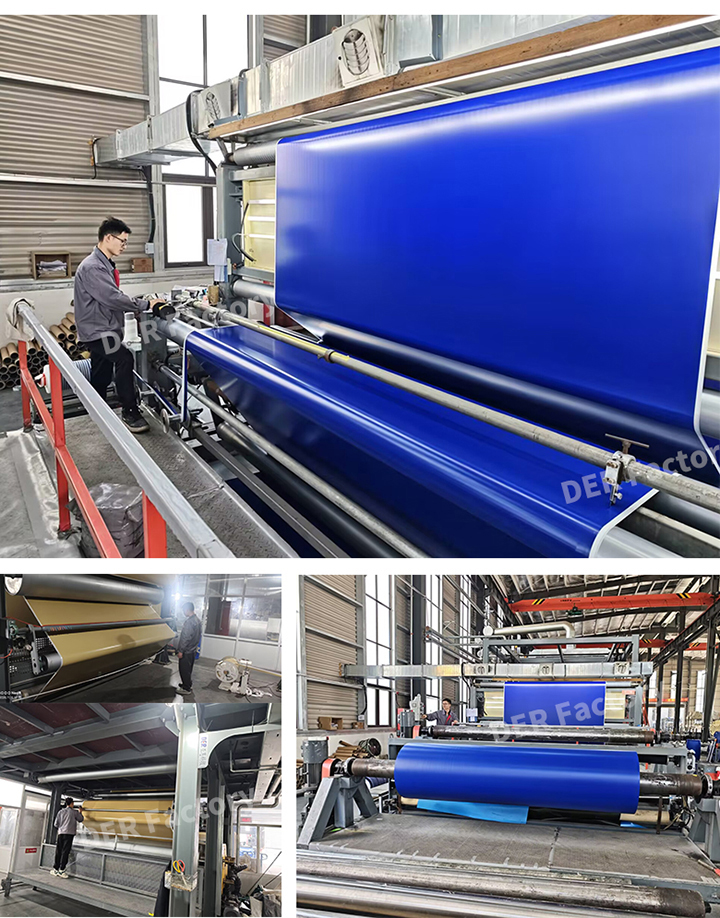
Some buyers need coated fabric rolls for local cutting and welding. Others need pre-cut panels, semi-finished components or complete covers packed by model. DERFLEX can discuss each supply route according to project volume, local fabrication capability, quality control plan and delivery schedule.
A repeatable industrial cover program is easier to manage when approved materials, drawings, accessory positions, color references, labels and packing methods are recorded as the order baseline.
Application details determine whether the priority is weather shedding, dust control, corrosion-risk reduction, clean handling or transport restraint.
Shutdown protection for machining centers, laser systems, automation modules and measuring equipment, with service-door and control-panel access.
Outdoor or standby covers with planned ventilation, hot-zone clearance, drain paths and reinforced pull areas.
Temporary protection for compact equipment, tools, attachments, engines and yard-stored project assets exposed to rain, dust and debris.
Custom box or fitted covers for packaged units, electrical cabinets, spare modules and facility equipment during storage or commissioning.
Reusable covers for factory-to-port handling, temporary warehouse storage, container staging and selected flatbed transport conditions.
Repeat sizes, model labels, printed branding, retail or industrial cartons and bulk supply for equipment manufacturers and distributors.
Accessories are most useful when their location follows the operator’s workflow. Adding more hardware without a plan can create water entry points, snag hazards or unnecessary weight.
Zippered doors, hook-and-loop flaps, clear windows and removable panels can allow routine checks without stripping the full cover from a large machine.
Mesh-backed vents, stand-off frames, air gaps and marked hot zones may be discussed for equipment affected by condensation, residual heat or airflow requirements.
Webbing, D-rings, straps, buckles, rope hems and closely reviewed anchor positions help spread load rather than pull through isolated eyelets.
High-contact corners, fork-entry points and frame interfaces can use local patches or replaceable panels so the entire cover is not sacrificed to one wear zone.
Printed logos, equipment model numbers, serial labels, orientation marks and warning text can support fleet identification and correct installation.
Lift handles, fold marks, storage bags and packing references can make large covers easier to remove, store and redeploy without twisting the panel layout.
A structured approval route helps prevent avoidable revisions and gives both buyer and manufacturer a clear production baseline.
Share dimensions, drawings, photos, protrusions, access doors, vents, hot areas and lift points.
Confirm indoor/outdoor use, rain, UV, wind, dust, oil mist, coastal exposure, transport and handling frequency.
Review material, panel layout, seams, reinforcement, closures, vents, straps, color and printed details.
Use the approved sample, drawing, specification, labels and packing reference for repeat B2B production.
Both can be appropriate. The correct choice depends on asset value, exposure duration, handling cycle and the cost of poor fit.
This example shows how the cover specification can be built from the machine’s operating risks. It is not a claim about a specific customer project.
Repeat generator models with control doors, lifting eyes, vents and exhaust-side clearance.
Outdoor standby storage with rain, UV, wind and scheduled inspection.
Fitted five-sided PVC coated polyester cover with sloped top panels and reinforced lower perimeter.
Service flap, marked orientation, controlled vents, webbing straps and model identification label.
These six internal resources connect finished-cover design with tarp materials, adjacent industrial applications and alternative coated fabrics.
Machine-focused geometry, risk mapping, fastening and cover configuration guidance.
Made-to-measure protective covers for industrial assets, OEM models and repeat programs.
Heavy-duty tarp directions for factories, construction, storage, mining and equipment protection.
Water-resistant, weldable coated polyester rolls for tarp and cover manufacturers.
Material and cover options for demanding outdoor, warehouse and logistics applications.
Flexible coated-fabric direction for reusable precision machinery and protective cover projects.
Practical answers for equipment manufacturers, factories, distributors, contractors and industrial cover fabricators.
An industrial equipment cover tarp is a flexible protective cover used over machinery, generators, production assets, HVAC units, construction equipment or project cargo. It may be a flat tarp, a box-shaped cover or a fitted multi-panel enclosure developed for storage, shutdown or transport protection.
PVC coated polyester is commonly selected because it combines a weather-facing PVC surface with a woven textile base and supports welding, sewing, reinforced hems, patches and hardware. TPU coated fabric, PE woven tarp or canvas may suit selected applications, depending on handling, budget, breathability and exposure requirements.
Yes. A project can be reviewed from dimensioned drawings, a measurement sheet, a reference cover, a sample or a structured photo set. Photos should show all sides, high points, protrusions, openings, control panels, vents, hot zones and planned fastening points.
Water pooling is mainly a geometry and installation problem. The cover should have defined high points, adequate slope, planned seam direction and a fastening layout that does not pull the roof into low pockets. Large flat spans may need support frames or shaped top panels.
Ventilation may be useful where temperature changes, trapped humidity, residual heat or moisture-sensitive metal components create condensation risk. The decision should consider the actual equipment, storage environment and whether the cover is installed over a warm or wet asset.
Send the equipment drawing or dimensions, photos, indoor or outdoor use, storage or transport condition, expected handling frequency, climate, wind exposure, required openings, fastening method, preferred material, color, logo, order quantity, packing requirements and destination. Any required test standard should be identified before sampling.
Share the equipment drawing, photos, exposure conditions, access requirements, fastening method and expected quantity. DERFLEX can help define a practical material and cover-construction direction for quotation and sampling.