News
Company News

Farming Storage and Shade Tarps | Custom Agricultural Covers | DERFLEX

Update:2026/8/9 17:29:35 Views:
Agricultural Cover & Shade Systems

Farming Storage and Shade Tarps

One farm may need a waterproof cover over hay, feed or machinery and a breathable shade panel over livestock or growing areas. Those jobs should not automatically use the same fabric.

DERFLEX supplies farming storage tarps, agricultural shade tarps and custom farm cover materials for B2B buyers. Material direction can include PVC coated polyester for reusable weather protection, reinforced PE for economical seasonal covering, or mesh structures where shade and airflow are more important than blocking rain.

Two Different Jobs

Storage Protection and Farm Shade Need Different Material Logic

A common purchasing mistake is asking for a “heavy duty farm tarp” before deciding whether the priority is to keep water out or to reduce solar exposure while preserving airflow. For farming storage and shade tarps, that functional choice should come first.

PATH 01 / WEATHER BARRIER

Farm Storage Tarps

Use a solid cover when rain, snow, dust and direct weather exposure are the main risks. PVC coated polyester is a practical direction for reusable covers that also need welded seams, reinforced edges and custom hardware.

  • Hay and straw stacks
  • Dry feed and bagged feed
  • Temporary grain storage
  • Tractors, implements and pumps
  • Outdoor farm materials and supplies
PATH 02 / SOLAR & AIRFLOW CONTROL

Agricultural Shade Tarps

Use mesh or shade fabric when reducing direct sunlight and allowing air movement matter more than complete rain exclusion. This is relevant for livestock resting areas, greenhouse sides, nursery zones and other ventilated shade structures.

  • Cattle and feedlot shade
  • Horse paddocks and holding areas
  • Poultry and livestock side shading
  • Greenhouse and nursery shade
  • Crop staging and working areas
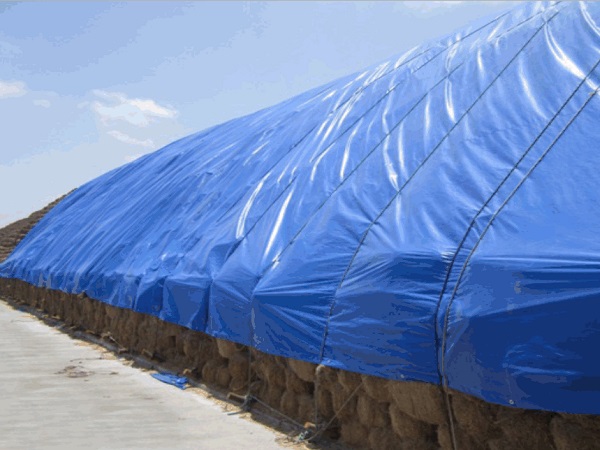
DERFLEX solid agricultural storage tarp product application
Solid agricultural tarp direction for storage and weather protection.
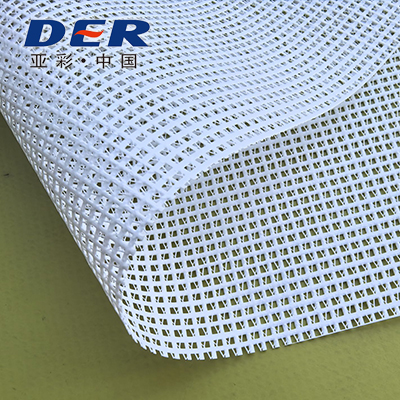
DERFLEX mesh tarp material for agricultural shade and airflow
Mesh tarp material direction for shade, ventilation and lower wind pressure.
Selection rule: breathable shade mesh is not a waterproof roof, while a solid waterproof tarp creates more wind load and can trap heat if the structure does not provide enough ventilation. In mixed-use projects, the practical solution may be a solid roof cover with separate breathable side or shade panels.
Field-First Design

Specify the Cover Around Water, Wind, Heat and Handling

Farm tarps fail at edges, fixing points and high-contact areas more often than they fail in the middle of an untouched sheet. A B2B specification should therefore connect material choice with installation geometry and daily handling.

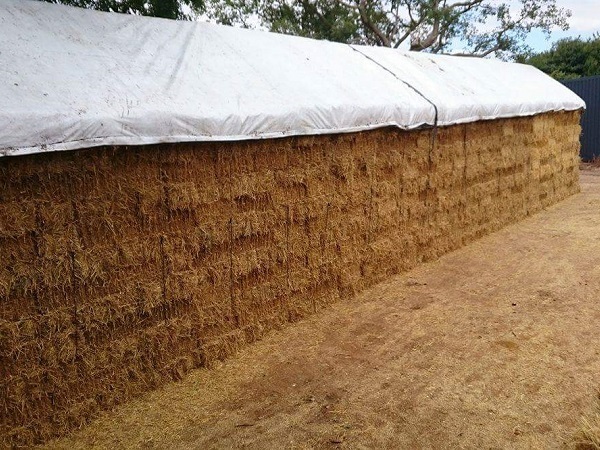
Farming storage tarp covering hay bales in outdoor agricultural storage
Product application imageSolid agricultural tarp over a hay stack. The cover should be supported and tensioned so water can shed instead of collecting in low points.
01

Control water before choosing weight

For hay, feed and machinery storage, review slope, overlap, seam direction and drainage. A waterproof material cannot compensate for installation that allows water to pond.

02

Match the edge to wind exposure

Large covers concentrate force at corners, hems and tie-down points. Webbing, rope hems, reinforced patches, D-rings or suitable grommet spacing can be specified around the anchoring method.

03

Do not solve heat with a heavier solid tarp

Where livestock or crops need ventilation, an open mesh structure may be more appropriate than simply increasing the weight of a waterproof sheet.

04

Design for real handling cycles

A cover installed once for a season has different requirements from a tarp dragged, folded and retensioned every week. Handling frequency affects weight, flexibility, reinforcement and abrasion protection.

05

Build repeat orders around a controlled specification

For distributors and OEM brands, record finished size, tolerance, material structure, color, reinforcement, hardware and packaging so repeat production can be evaluated against the same purchasing brief.

Material Decision Matrix

PVC, PE or Mesh? Select by Function Rather Than Product Name

Farm tarp” can refer to several different constructions. The table below is a quotation starting point rather than a universal specification; final material and fabrication should be confirmed against the site, cover dimensions and expected exposure.

Farm Requirement Material Direction Why Buyers Choose It Fabrication Options Typical B2B User
Reusable hay, feed or machinery storage PVC coated polyester tarpaulin Solid weather barrier, weldable surface, reinforced fabric structure and washable finish Heat-welded panels, hems, webbing, rope edge, grommets, D-rings, straps Farms, ranches, contractors, agricultural distributors
Seasonal general-purpose covering Reinforced PE agricultural tarp Lower handling weight and economical large-area coverage for applications that do not require a heavy PVC structure Reinforced perimeter, eyelets, rope hem, standard-size programs Farm supply stores, wholesalers, seasonal users
Livestock or work-area shade UV-stabilized HDPE shade cloth or PVC-coated mesh Reduces direct solar exposure while allowing air passage and lowering wind pressure compared with solid sheet Hemmed panels, grommets, webbing, pockets, custom edge layout Feedlots, dairies, ranches, poultry and equine projects
Mixed rain cover + ventilated sides Solid PVC roof with separate mesh side panels Separates water shedding from airflow management rather than forcing one fabric to do both jobs Custom panel set, keder, straps, reinforced transitions Livestock shelters, semi-open storage structures, project contractors
Distributor or private-label range Project-defined PVC, PE and mesh lineup Creates a product family for different price levels and farm applications Color system, logo, labels, cartons, bales or pallet packing Importers, farm brands, hardware and agricultural channels
Application Coverage

Where Farming Storage and Shade Tarps Are Used

The same farm can require several cover types during one season. Separating applications makes it easier to quote the correct material instead of buying a single generic tarp for every task.

??

Hay & Straw Storage

Solid covers for bale rows and temporary outdoor stacks, with attention to water shedding, edge reinforcement and secure tie-downs.

??

Feed & Grain Protection

Cover dry feed, bagged feed, grain and staging piles against direct rain, dust and sunlight. Direct feed-contact requirements should be confirmed separately when applicable.

??

Farm Machinery Covers

Custom covers for tractors, harvesters, trailers, pumps and implements where shape, sharp contact points and repeated handling affect reinforcement design.

??

Livestock Shade

Breathable panels over cattle, horse, sheep, goat or poultry areas where reducing solar exposure and maintaining airflow are important.

??

Greenhouse & Nursery Shade

Mesh or project-specific cover materials for greenhouse sides, nursery working zones and controlled-light agricultural structures.

??

Farm Supply Programs

Repeat sizes, standard color ranges, private-label packaging and mixed product families for agricultural distributors and importers.

DERFLEX Supply Approach

From Roll Material to Finished Agricultural Cover Programs

DERFLEX supports buyers that need more than a retail-size sheet. Projects can be developed around roll goods, welded finished tarps, custom shade panels or an OEM range with repeatable construction details.

Manufacturing choices that affect field performance

For farming storage tarps, material weight is only one variable. Base fabric, coating or lamination structure, welding, edge reinforcement and fixing hardware also influence how the cover behaves under tension and repeated outdoor use.

For agricultural shade tarps, the purchasing brief should also include target shade direction, mesh openness, panel span, support structure, edge tension and exposure to wind. A heavier mesh is not automatically the right answer if the frame or airflow requirement points in another direction.

Roll goods or finished tarps Custom finished dimensions Heat-welded seams Webbing reinforcement Grommets and D-rings Straps or rope hems Custom colors and printing OEM labels and packaging
Specification Starting Points

Custom Farm Tarp Options for Storage, Shade and Wholesale Supply

The values below are practical discussion ranges seen across DERFLEX agricultural tarp programs. They are not a promise that every combination is available in every construction; final specifications should be confirmed during quotation and sampling.

Solid PVC storage covers

Typical direction: approximately 450–900 gsm for many heavy-duty agricultural applications, with lighter or heavier project-defined constructions also possible. Suitable for welded panels and reinforced finished covers.

Shade & ventilation panels

Typical direction: HDPE shade cloth or PVC-coated mesh with project-defined openness, shade factor and color. Many livestock projects evaluate shade levels across a broad range rather than using one universal percentage.

Width & panel fabrication

Typical direction: roll supply or welded multi-panel covers. Selected PVC constructions can be discussed in wider material formats, which may help reduce the number of seams on large covers.

Perimeter construction

Options: welded or sewn hems, rope-in hem, webbing, reinforced corners, grommets, D-rings, straps, buckles, pockets or project-specific attachment details.

Outdoor formulation

Options: UV-stabilized material direction, color selection, mildew-resistance direction, low-temperature direction or other performance requirements subject to specification review and test criteria.

Brand & logistics program

Options: logo printing, labels, barcodes, cartons, bales, pallets and private-label packaging for agricultural tarp wholesalers, distributors and OEM brands.

Buyer Fit

Built for Agricultural Procurement, Not Only One-Time Farm Purchases

The page targets buyers who need a repeatable supply plan, custom fabrication or a product range suited to local farming conditions.

Farm & Ranch Operators

Match cover type to stored goods, livestock areas, climate and handling method before ordering.

Agricultural Distributors

Build a sellable range of storage tarps, shade mesh and related cover products with repeat sizes and packaging.

OEM & Private Label Brands

Develop controlled material, color, hardware and packing specifications for repeat production.

Project Contractors

Coordinate tarp panels with frame dimensions, fixing methods, drainage and site exposure for shelters or farm storage systems.

Request a Farming Storage or Shade Tarp Quote

Tell DERFLEX whether the project needs waterproof storage protection, breathable shade, or a combined shelter system. Include the application, dimensions, climate, fixing method and quantity so the team can organize a suitable material and fabrication proposal.

Application & cover geometry Finished size or roll requirement Waterproof or shade priority Wind and UV exposure Reinforcement & hardware Quantity & packaging
FAQ

Farming Storage and Shade Tarp Questions

Short answers to the questions farms, agricultural distributors and OEM buyers usually need to resolve before sampling or bulk quotation.

What are farming storage and shade tarps?

They are agricultural covers used either to protect stored goods and equipment from weather or to reduce direct solar exposure in livestock, greenhouse and working areas. Storage tarps are commonly solid waterproof or water-resistant covers, while shade tarps are commonly mesh structures that preserve airflow.

Should I choose a waterproof farm tarp or a shade mesh tarp?

Choose a solid waterproof cover when rain exclusion is the main requirement. Choose mesh when shade, airflow and lower wind pressure are more important. If both are needed, consider separating the functions with a solid roof and ventilated side or shade panels.

What material is suitable for hay, feed and machinery storage?

PVC coated polyester is often selected for reusable, fabricated covers because it can provide a solid weather barrier, reinforced woven structure and welded seams. Reinforced PE can be appropriate for lighter, seasonal or price-sensitive coverage. Final selection should reflect exposure, handling and required service period.

What shade percentage should be used for livestock?

There is no single percentage that fits every farm. Projects may evaluate different shade levels based on animal type, climate, solar intensity, structure height and required airflow. The shade material should also be reviewed together with frame and anchoring design.

Can DERFLEX manufacture custom farming storage and shade tarps?

DERFLEX supports roll goods and finished agricultural tarp programs with project-defined dimensions, colors, hems, webbing, grommets, D-rings, straps, pockets, printing, labels and packaging. Availability depends on the selected material and order specification.

Are agricultural shade tarps waterproof?

Breathable mesh shade tarps are not fully waterproof because their open structure allows air and some water to pass. Where rain blocking is required, a solid PVC-coated cover may be more suitable, but drainage, anchoring and ventilation must then be considered.

What information should I send for a wholesale or OEM quote?

Send the application, dimensions or drawing, target material or function, outdoor exposure, fixing method, quantity, color, branding, packaging and destination. If replacing an existing tarp, a sample or clear photos can also help organize the specification.

Product performance depends on the final material specification, fabrication, installation method, supporting structure, local climate and maintenance. Structural safety, anchoring and animal-facility design should be reviewed by the responsible project or site professionals.
Consulting Services
+86-021-54361792 / 54361798
Email
sales@derflex.com