Sand hauling is different
Why a Sand Truck Tarp Should Be Selected Differently from a General Cargo Cover
Sand behaves differently from lumber, machinery or palletized freight. It is loose, mobile and capable of shifting toward gaps in a cover. On open dump bodies, air moving across a peaked or uneven load can also lift the tarp, increase flapping and concentrate stress at pockets, hems and attachment points.
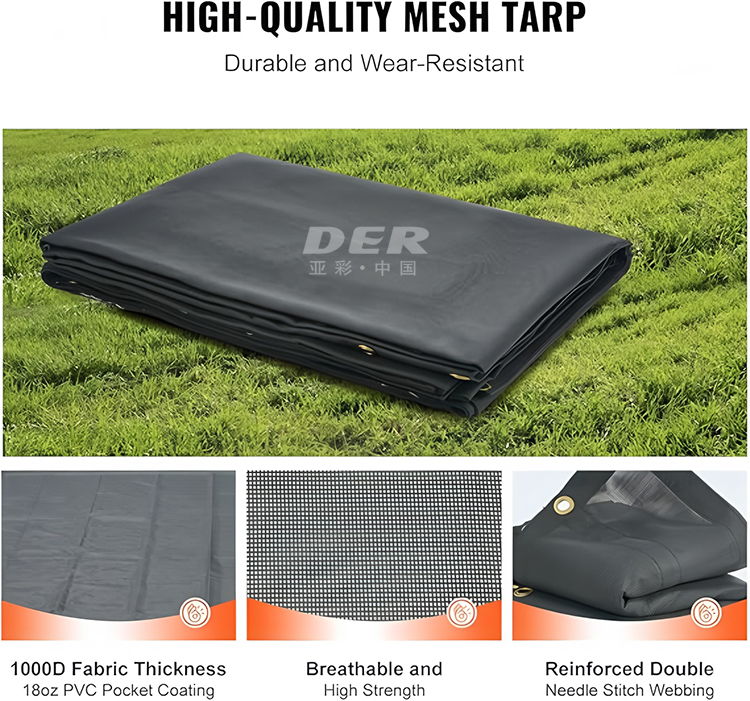
That is why buyers looking for a heavy duty sand truck tarp should first decide whether the priority is breathable containment or weather-resistant closure. A mesh tarp allows airflow and is commonly chosen for sand, gravel and aggregate hauling when reduced wind drag and easier rolling matter. A solid coated tarp creates a more closed barrier and is the more logical direction for a waterproof sand truck tarp, moisture-sensitive material or routes where rain and road spray are a larger concern.
Fit matters just as much as fabric. A tarp that is too wide can bunch, rub or interfere with arms and side rails. A tarp that is too short may not leave enough material on the roller or may expose the load at the rear. Reinforcement must also align with the real stress zones rather than being added randomly.
Practical sourcing rule: send the truck-bed dimensions, tarp-system type, existing tarp photos and the material you haul. Those four inputs usually produce a more useful starting specification than ordering by “7 ft × 20 ft” alone.