


Potable Water Tank Liner Material
Reinforced, weldable PVC coated fabric for drinking-water storage projects where liner construction, seam integrity, tank geometry and water-contact compliance must be evaluated together.
DERFLEX supports tank fabricators, installers, OEM water-storage companies, distributors and project procurement teams. Potable-water suitability is not assumed from “PVC” alone: the exact formulation and documentation must be matched to the destination market and project specification.
What to send with your RFQ
- Tank drawing, dimensions and maximum water depth
- Tank substrate: bolted steel, concrete, fiberglass or framed system
- Destination country and required potable-water standard
- Indoor/outdoor exposure and operating temperature
- HF, hot-air or hot-wedge seam process
- Pipe penetrations, drains, flanges and attachment details
“Potable” is a qualification requirement—not a color, thickness or polymer name
A liner can be waterproof and mechanically strong yet still be unsuitable for drinking-water contact. Potable water tank liner material is selected first by the applicable health-effects and water-contact requirements, then by mechanical performance, fabrication process and tank service conditions.
For North American work, buyers frequently reference NSF/ANSI/CAN 61 for materials and products that contact drinking water. Water infrastructure specifications may also reference AWWA requirements such as D130 for geomembrane materials used in potable-water applications. Other markets can require different approvals or test evidence.
That changes the buying sequence: instead of asking only for a “1.0 mm blue liner,” a useful specification should identify where the liner will be used, what water it contacts, how it will be fabricated, and what compliance evidence must accompany the shipment.
Fast answer for buyers
Which material is suitable for a potable water tank liner?
Certified or otherwise project-approved grades of reinforced PVC, reinforced polypropylene, EPDM, HDPE and other membranes can be used in drinking-water systems depending on the tank design and regional requirements. DERFLEX’s core direction is reinforced PVC coated polyester for fabricated flexible liners, selected where its weldability, flexibility and reinforcement suit the project.
The final decision should be made on the exact material formulation and supporting documentation—not on a generic claim that one polymer is always “potable grade.”
Do not substitute an industrial PVC liner for a drinking-water liner unless the ordered formulation and required certification/documentation have been confirmed for the intended use.
How to specify drinking water tank liner material without creating hidden project risk
Most sourcing mistakes happen when the purchase description is too short. These four filters turn a generic liner request into a fabrication-ready technical discussion.
Water-contact requirement
State the country, authority, project standard and required test/certification scope. A potable-water requirement should be visible in the RFQ, purchase order and approved sample record.
Hydrostatic & mechanical load
Tank height, water depth, fill-drain frequency, folds, corners and penetrations affect the stress placed on the membrane and seams. Reinforcement becomes more important as handling and localized stress increase.
Fabrication method
HF/RF welding, hot-air welding and hot-wedge welding use different processing windows. Sheet properties and seam properties should be approved together with a representative weld trial.
Tank environment
Steel bolts, rough concrete, exposed edges, UV, temperature cycling, cleaning chemicals and tank access conditions can influence the liner structure, protective underlay and installation details.
Why reinforced PVC is considered for fabricated potable-water liner projects
For a fitted tank liner, the membrane must do more than block water. It must survive fabrication, folding, installation and continuous hydrostatic loading while keeping the reinforcement protected from the stored water.
Illustrative reinforced construction
Actual formulation, coating mass, reinforcement and surface treatment are project-specific.
| Parameter | Typical discussion direction |
|---|---|
| Material | Reinforced PVC coated polyester; specific compound to be selected around the water-contact requirement. |
| Thickness | Approx. 0.7–1.5 mm as a project discussion range for DERFLEX water-tank material families; final construction depends on tank height, reinforcement and fabrication. |
| Weight | Project-defined; existing water-tank fabric examples include approximately 900–1000 g/m2 constructions. |
| Reinforcement | High-strength woven polyester; yarn and weave can be matched to tensile and tear targets. |
| Surface | Smooth, cleanable, flexible PVC surface; color and finish subject to approved formulation. |
| Fabrication | HF/RF welding or compatible thermal welding after material/process validation. |
| Supply format | Roll material for converters; welded panels or selected prefabricated liner scope can be discussed from drawings. |
| Compliance | Destination-market potable-water standard and document scope must be stated before order confirmation. Compliance is not inferred from generic PVC material. |
| QC focus | Thickness/weight, tensile, tear, coating adhesion, appearance, weld trial and requested project documentation. |
Evaluate the liner at material level before evaluating the finished tank
A drinking-water liner program should be approved from a traceable material sample and a representative seam, rather than from a product photo alone.
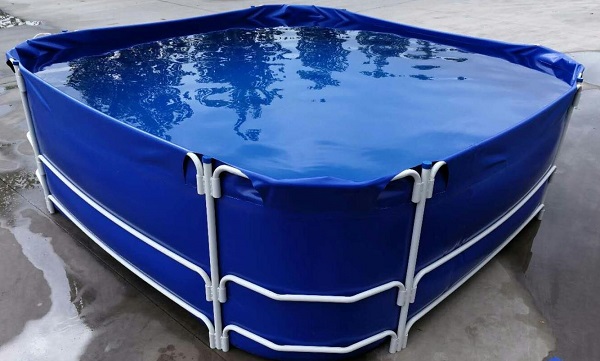
Water-containment application
DERFLEX coated fabric used in a framed flexible water tank. Potable-water projects require a specifically reviewed formulation and compliance scope.
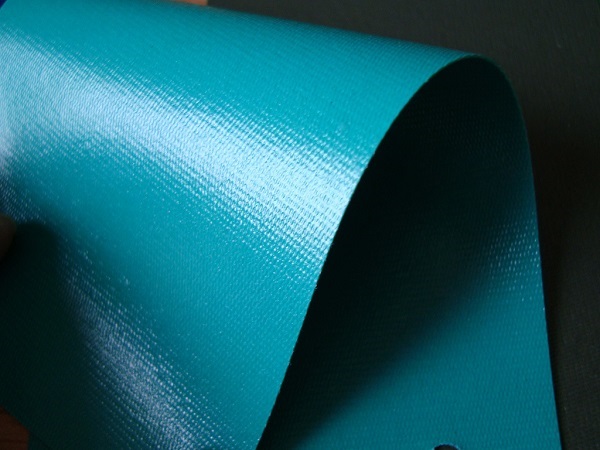
Coated textile surface
Inspect coating uniformity, reinforcement imprint, flex behavior, thickness consistency and welding response. For repeat orders, retain an approved reference sample.
Reinforced PVC vs other potable water tank liner materials
No single membrane is the correct answer for every tank. The purpose of a comparison is to narrow the engineering direction—not to turn material selection into a universal ranking.
| Decision factor | Reinforced PVC | RPP / reinforced PP | EPDM | HDPE |
|---|---|---|---|---|
| Flexibility & fitted fabrication | High; useful for foldable, fabricated textile-style liners. | Good; often used in fabricated geomembrane systems. | Very flexible rubber membrane. | Stiffer sheet; suited to geomembrane-style installation. |
| Reinforcement | Woven polyester provides structural support. | Available in reinforced constructions. | Usually relies on rubber membrane properties. | Typically unsupported sheet with polymer-specific strength. |
| Seam method | HF/RF or compatible heat welding depending on compound and equipment. | Thermal welding procedures matched to material. | Application-specific joining system. | Hot-wedge / extrusion welding commonly used. |
| Complex tank geometry | Well suited to shop fabrication when detailed drawings are available. | Suitable with professional fabrication. | Flexibility can help with irregular geometry. | Requires disciplined panel layout and field welding. |
| Potable-water use | Only with the correct approved/certified formulation and project documentation. | Only with an approved/certified grade. | Only with an approved/certified grade. | Only with an approved/certified grade. |
| Best selection basis | Required water-contact compliance + tank geometry + hydrostatic load + substrate + temperature/UV + fabrication process + maintenance strategy. | |||
Drinking-water storage projects that may require a custom flexible liner
Bolted steel water tanks
A fitted membrane can isolate stored water from steel panels, bolts and aging joints. Fastener heads and rough areas should be protected from direct liner contact.
Concrete tank rehabilitation
Where the structure remains serviceable, an independent flexible barrier can be considered. Surface roughness, cracks and penetrations require preparation and protective detailing.
Commercial & building storage
Hotels, facilities, utilities and building systems can require drinking-water tanks with documented water-contact materials and cleanable interior surfaces.
Municipal / community storage
Public-water projects usually carry explicit specification and approval requirements. Material documentation should be reviewed before samples are approved or production starts.
Remote & emergency water systems
Foldable or modular storage can benefit from reinforced flexible materials where transport, field deployment and welded fabrication are important design factors.
OEM tank & liner fabrication
Converters sourcing roll goods can standardize an approved material construction, seam window, inspection criteria and reference sample for repeat production.
Send a liner specification that can actually be engineered
“Potable water tank liner material, blue, 1 mm” is not enough to confirm a suitable product. A more complete RFQ helps DERFLEX review the formulation, reinforcement, seam process and documentation as one system.
Send Tank Drawing & RequirementsFrom first inquiry to repeat potable-water liner supply
A disciplined approval sequence is more useful than promising one stock grade for every drinking-water project.
Define the project
Review tank drawing, water-contact requirement, environment and seam process.
Select construction
Match PVC compound, reinforcement, thickness and surface to project priorities.
Confirm documents
Verify the required potable-water certification or test scope before final approval.
Approve material + seam
Evaluate the material sample and representative welded seam under agreed conditions.
Control repeat orders
Use agreed TDS, tolerances, inspection items and retained reference sample to reduce drift.
Built for buyers who need more than a generic waterproof sheet
DERFLEX works at the coated-textile level, allowing the project discussion to include reinforcement, PVC coating, surface, width, welding behavior and inspection—not just finished liner size.
Experience across PVC coated fabrics, flexible containment and fabricated waterproof applications.
Manufacturing capability supports material development, repeat programs and export orders.
Multiple process platforms support different coated and laminated flexible-material structures.
Export-oriented project communication, documentation review and OEM procurement support.
Company figures are based on DERFLEX company-profile information. Product performance and compliance scope should be confirmed against the specific ordered construction and project documentation.
Continue the material and fabrication review
These six internal pages support the next step in water-tank material selection, reinforcement, waterproof construction and flexible-container fabrication.
Potable Water Tank Liner Material FAQs
What is the best material for a potable water tank liner?
There is no single best polymer for every tank. Reinforced PVC, reinforced polypropylene, EPDM and HDPE can all be relevant when the specific grade is approved for drinking-water contact. Tank geometry, water depth, substrate, seam process, temperature, UV exposure and local compliance requirements should determine the final choice.
Can DERFLEX reinforced PVC be used for drinking water?
A DERFLEX reinforced PVC construction can be evaluated for potable-water projects, but suitability must be confirmed for the exact formulation and destination-market requirements. A general industrial PVC liner should not be assumed to carry potable-water approval.
What does NSF/ANSI/CAN 61 mean for a tank liner?
NSF/ANSI/CAN 61 addresses health-effects requirements for materials, components and products that contact drinking water. If a project specifies NSF/ANSI/CAN 61, the buyer should confirm that the ordered liner material and the applicable product/system scope are covered by the required certification or documentation.
What thickness should I specify for a drinking water tank liner?
Thickness should follow tank height, reinforcement, substrate condition, handling and seam design. DERFLEX water-tank material families include constructions in roughly the 0.7–1.5 mm range, but a taller or mechanically demanding tank is not automatically solved by increasing thickness alone.
Can the liner be supplied as roll material for our own fabrication?
Yes. DERFLEX supplies PVC coated textile roll goods and can discuss converter-oriented programs. Provide your welding process, desired width, finished liner drawing, seam geometry and approval tests so the material can be reviewed around your production method.
What should be checked before a repeat order?
Keep the approved TDS, reference sample, target thickness/weight, tensile and tear requirements, coating adhesion criteria, color/finish, weld trial conditions and required compliance documents in the purchasing specification. This gives both buyer and supplier a clearer basis for batch-to-batch control.
Need a potable water tank liner material quote?
Send DERFLEX the tank drawing, water depth, substrate, welding method, destination country, required drinking-water standard and estimated quantity. The material discussion can then start from the real project rather than a generic “potable PVC liner” description.