News
Company News

Printable Static Cling Vinyl | Clear & White Window Film Rolls | DERFLEX

Update:2026/9/20 15:39:55 Views:
Printable Window Media · Non-Adhesive PVC Film

Printable Static Cling Vinyl for Window Graphics & Reusable Decals

DERFLEX printable static cling vinyl is a non-pressure-sensitive film direction for temporary window graphics, point-of-purchase displays, promotional decals and reusable glass applications. Current DERFLEX static-cling references include white, transparent, super-clear and decorative film directions, with solvent, eco-solvent, Latex and UV printing listed for advertising use. For a useful quotation, specify the glass surface, viewing side, print system, required appearance, roll format, quantity and reuse expectation—not only “static cling film.”

No pressure-sensitive adhesive Clear & white directions 1.52 × 50 m listed roll format Solvent / Eco-solvent / Latex / UV
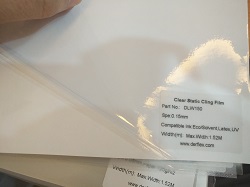
DERFLEX clear printable static cling vinyl film sample for window graphics
DERFLEX clear static cling sample. Approve the exact film model, surface appearance, print result and liner before bulk production.
0.15 mm Listed white / transparent model thickness
0.18 mm Listed super-clear / flash-point model thickness
1.52 × 50 m Listed roll size for current model references
4 print routes Solvent, eco-solvent, Latex and UV listed by DERFLEX
Direct Answer

What Is Printable Static Cling Vinyl?

Printable static cling vinyl is a flexible non-adhesive film that can receive printed graphics and hold to clean, smooth glass or other highly polished surfaces through close surface contact and electrostatic attraction rather than a conventional pressure-sensitive glue. It is commonly specified for temporary promotions, reusable window decals, POP graphics, seasonal displays and short-cycle branding where clean removal matters.

“Printable” and “static cling” solve two different parts of the job: the printable surface must work with the chosen ink and finishing workflow, while the cling side must maintain reliable contact with the actual glass after printing, cutting and handling. That is why a production sample is more useful than approving a material by name alone.

Need a broader overview of non-adhesive glass-film options? See the DERFLEX static cling window film range.
Model Reference

DERFLEX Printable Static Cling Film Specifications

The table below uses model information currently listed by DERFLEX. Final tolerances, liner construction, print profile, packing and live availability should be confirmed against the approved sample and quotation.

DERFLEX Model Film Direction Listed Thickness Listed Roll Size Good Starting Point For Pre-Production Check
DLW160 White static cling film 0.15 mm 1.52 × 50 m High-color-density promotions, opaque window decals, POP graphics Color density, liner handling, curl, cling after printing
DLW150 Transparent static cling film 0.15 mm 1.52 × 50 m Clear window graphics, transparent decals, inside-glass viewing concepts Transparency, white-ink strategy, viewing side, optical appearance on glass
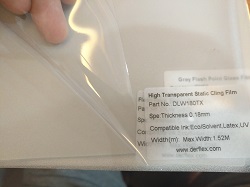
DLW160TX Super-clear static cling film 0.18 mm 1.52 × 50 m Projects where glass visibility and a clearer visual result are important Haze / clarity on real glass, print layering, surface cleanliness
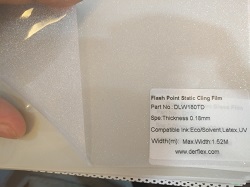
DLW180TD Flash-point decorative static cling film 0.18 mm 1.52 × 50 m Decorative glass effects and visually distinctive promotional programs Pattern appearance, batch consistency, lighting and printed overlay effect

Do not assume a generic “static cling” specification covers the liner, core, surface treatment, tolerance, reusable cycle or packaging requirement. Tie repeat orders to the approved model and sample.

Print Workflow

Choose the Film Around the Print Job

A print shop or converter should qualify the complete workflow: film, ink, curing, cutting, installation side and final glass appearance. Printer compatibility is only the first gate.

01

White Film for Direct Graphic Impact

White static cling provides an opaque base that helps printed colors read more predictably without relying on a separate white-ink layer. It is a practical direction for short-term promotions, retail notices and branded window decals.

02

Clear Film for Transparent Window Graphics

Clear printable static cling lets the glass remain part of the design. Artwork may require selective white ink, a layered print strategy or deliberately transparent areas depending on the viewing side and desired color density.

03

Inside-Glass vs Outside-Glass Orientation

If a graphic is applied inside the window and viewed from outside, the artwork and print sequence can differ from an outside-applied graphic. Confirm which surface faces the glass before approving the final production file.

04

Ink Adhesion After Finishing

A good nozzle test does not prove finished durability. Test ink anchorage after cutting, trimming, squeegee pressure and normal handling. Excessive curing heat should also be evaluated for film stability.

05

Cling Performance After Printing

Heavy ink layers, contamination and rough handling can change how a film behaves at installation. Evaluate cling on the actual cleaned glass after the full print-and-finish process, not only on unprinted media.

06

Store Reusable Graphics Correctly

Reusability depends on keeping the cling face clean, flat and protected from dust, lint, creasing and stretching. Retain the liner or another clean protective sheet when reuse is part of the commercial program.

For a general overview of media and ink-system selection, DERFLEX also publishes a basic guide to printable vinyl.

Material Decision

Static Cling vs Removable Adhesive vs Permanent Adhesive Vinyl

These products can all produce window graphics, but they solve different installation and service-life problems. “Removable” does not mean “adhesive-free.”

Printable Static Cling Vinyl

  • No conventional pressure-sensitive adhesive layer
  • Best suited to smooth, clean glass and highly polished surfaces
  • Useful for short-cycle graphics, temporary promotions and reusable decals
  • Requires cling-side cleanliness and real-surface testing

Removable Self-Adhesive Vinyl

  • Uses a removable pressure-sensitive adhesive
  • Can offer a different balance of edge hold, surface range and application behavior
  • Useful when the project needs adhesive contact but later removal
  • Removal performance depends on the exact adhesive, surface and service conditions

Permanent Adhesive Vinyl

  • Uses a stronger adhesive system intended for longer-term bonding
  • Common in signs, panels, vehicles and applications where removal is not the primary design goal
  • Surface compatibility and long-term removal consequences need to be considered
  • Not a direct substitute for reusable static cling programs

If the job needs an adhesive-backed printable material rather than non-adhesive cling, compare DERFLEX printable self-adhesive vinyl.

Application Matrix

Which Printable Static Cling Direction Fits the Job?

The strongest specification starts from the finished graphic and installation environment, not from a generic material name.

Application Film Direction to Evaluate Print / Artwork Consideration Critical Approval Check
Retail storefront promotion White or clear printable static cling Color density, campaign artwork, panel seams, viewing distance Appearance under store lighting and clean removal after the campaign
Reusable seasonal window decal White / clear film chosen by artwork opacity Cut shape, print scratch resistance, storage liner Removal, storage flatness and reapplication after a reuse cycle
Inside-glass branding viewed outside Clear or super-clear direction Reverse artwork, white-ink or layered-print strategy Correct reading direction, glass color and daylight appearance
POP / point-of-purchase graphics White static cling for stronger visual blocking; clear for transparent design Short production runs, contour cutting, package format Print, cut and application workflow using actual production equipment
Decorative glass campaign Transparent, super-clear or decorative flash-point direction Pattern scale, translucent areas, print overlay Appearance under real lighting and across the full panel size

For broader glass-film structures, finishes and adhesive/static options, see DERFLEX PVC glass film & vinyl sticker.

DERFLEX Image Pack

Material, Transparency & Window Graphic Examples

Real DERFLEX-hosted images are used below so the page can participate in image search while giving buyers visual context for material appearance and application.

large-format printed window graphic application using printable static cling vinyl
Large-format window promotion For storefront graphics, confirm panel size, installation side, print orientation, edge behavior and service period before production.
DERFLEX super clear static cling vinyl sample for transparent printable window graphics
Super-clear film direction Evaluate transparency on the actual glass and decide whether the artwork needs white ink or selective opacity.
DERFLEX decorative flash point static cling film sample for printed glass graphics
Decorative / flash-point direction Approve pattern appearance and printed overlay under the lighting where the finished graphic will be used.
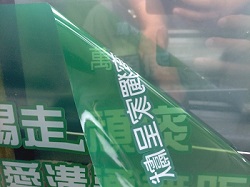
printed transparent static cling film applied to glass with green graphic
Printed transparent glass graphic Clear film can retain glass visibility while carrying branding, text and promotional graphics.
colorful printed static cling window graphic for retail beverage promotion
Color-critical promotional artwork Evaluate ink density, white underprint and final glass background because transparent substrates can change perceived color.
Production Qualification

Run a Converter Trial Before Bulk Approval

A B2B buyer should qualify the material in the same route that will be used for production. The objective is to confirm not just printable compatibility, but the final system behavior after printing, curing, cutting, application and removal.

  • Print density and color on the selected white / clear film
  • Ink adhesion after drying or UV curing
  • Dimensional behavior through the printer and finishing table
  • Contour cutting, trimming and edge quality
  • Cling to cleaned target glass after printing
  • Bubble release and repositioning during installation
  • Removal behavior at the planned campaign interval
  • Storage and reapplication if the graphic is intended to be reused
Common Sourcing Errors

Five Mistakes That Cause Avoidable Print or Installation Problems

01 · Buying by “clear” alone Transparency, super-clear appearance and artwork opacity are separate decisions. Approve the actual printed sample on glass.
02 · Treating printer compatibility as approval Printer names do not replace testing for ink anchorage, curing, scratching, cutting and finished cling.
03 · Ignoring viewing direction Inside-glass graphics viewed from outside can require reverse artwork and a different white-ink sequence.
04 · Testing on the wrong surface Static cling performs best on clean, smooth surfaces. Rough, textured or contaminated glass can reduce contact.
05 · Leaving packaging until the end For distributor or private-label programs, core, label, liner protection, carton and storage method affect repeat-order usability.
B2B Supply Direction

What DERFLEX Can Quote for a Printable Static Cling Program

DERFLEX currently lists multiple static-cling film directions and roll references. A practical sourcing discussion should connect the material to the buyer's print process, finished graphic, packing format and destination market.

A

Material Selection

Start with white, transparent, super-clear or decorative direction, then confirm thickness, surface appearance and the real substrate where the cling will be installed.

B

Printable Roll Supply

Solvent, eco-solvent, Latex and UV printing are listed by DERFLEX for vinyl cling film advertising use. Approve the exact model with your printer and ink before repeat production.

C

OEM Packaging Discussion

For converter and distributor programs, include core, label, barcode, carton, protective packing and repeat-order identification in the quotation brief.

If your project needs thicker transparent PVC for protection, flexible windows or converted products rather than cling graphics, compare the DERFLEX clear vinyl film range.

RFQ Checklist

Send These Details for a Useful Quotation

A request such as “need printable static cling vinyl, send price” leaves critical technical variables open. A more complete RFQ helps DERFLEX match a relevant model and sample.

  • Application: storefront promotion, decal, POP graphic, reusable display or other use
  • Surface: smooth glass, acrylic, polished plastic or other tested surface
  • Appearance: white, transparent, super-clear or decorative
  • Printer / ink: solvent, eco-solvent, Latex, UV or other route
  • Viewing side: inside glass, outside glass and reading direction
  • Artwork: white ink, reverse print, contour cut or transparent zones
  • Required roll width / length and quantity
  • Indoor / outdoor exposure and intended campaign duration
  • Reuse expectation and storage method
  • Core, label, carton, barcode and private-label requirements
  • Destination market and any required documentation or test criteria
Related DERFLEX Resources

Build the Right Window-Graphic Material Stack

These verified DERFLEX pages cover adjacent material choices and technical guidance without treating every window graphic as the same product.

FAQ

Printable Static Cling Vinyl Questions

Can static cling vinyl be printed?

Yes. DERFLEX lists solvent, eco-solvent, Latex and UV printing for its vinyl cling film direction. The exact film model should still be tested with the buyer's printer, ink, curing and finishing workflow before volume production.

What is the difference between printable static cling vinyl and removable adhesive vinyl?

Printable static cling vinyl does not rely on a conventional pressure-sensitive adhesive layer; it holds to clean, smooth surfaces through close surface contact and electrostatic attraction. Removable adhesive vinyl uses an adhesive formulated to be removed later. The two products can suit different surfaces, edge-hold needs and campaign durations.

Should I choose clear or white printable static cling film?

Choose white when you want a more opaque print base and predictable color impact. Choose clear when the glass should remain visible or the artwork is designed with transparent areas. Clear film may require white ink or layered printing where stronger opacity is needed.

Can printable static cling vinyl be used inside a window and viewed from outside?

It can be developed for inside-glass viewing, but the artwork and print sequence must be planned around that orientation. Transparent film may require reverse printing and a white-ink strategy. Test the final graphic on the actual glass before production.

Is static cling vinyl reusable?

Reuse is possible when the film remains clean, flat and undamaged. Dust, lint, creasing, stretching or contamination on the cling face can reduce reapplication performance, so removed graphics should be stored with a clean liner or protective sheet.

What roll size does DERFLEX list for its static cling models?

DERFLEX currently lists 1.52 × 50 m for the DLW160, DLW150, DLW160TX and DLW180TD static-cling model references shown on this page. Live availability, tolerance, liner and packing should be confirmed at quotation.

What should I test before ordering printable static cling film in bulk?

Test print quality, ink adhesion, curing, dimensional behavior, cutting, actual glass application, bubble release, edge hold, removal and—if required—storage and reapplication. Keep the approved printed sample as part of the repeat-order specification. ,

Sampling & Quotation

Specify the Print Job Before You Specify the Roll

Send DERFLEX your target glass, clear / white appearance, printer and ink, installation side, roll requirement, quantity, packaging and destination. The goal is to approve a material + print + application system that can be repeated—not simply to match a product name.

Consulting Services
+86-021-54361792 / 54361798
Email
sales@derflex.com