


 CUSTOM TRUCK TARP QUOTATION →
What Size Tarp Will Cover a Truck?
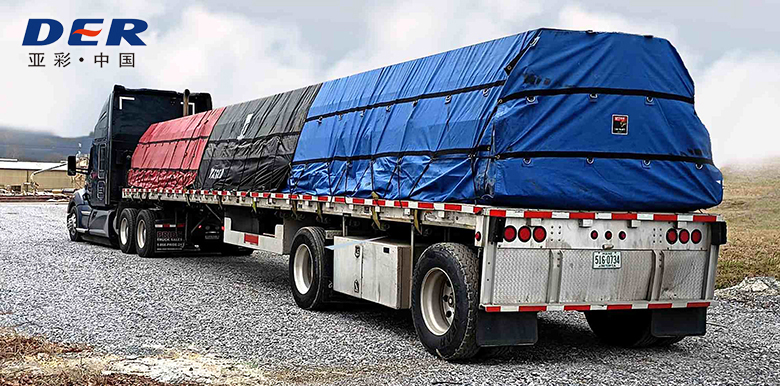
There is no single tarp size that fits every truck. The right finished dimensions depend on the loaded cargo width and length, the distance the tarp must travel down each side, front and rear coverage, and the available tie-down points. This guide helps flatbed drivers, fleet buyers, distributors and OEM purchasers calculate a practical starting size, compare steel and lumber tarp profiles, and prepare a drawing for a custom truck tarp quotation.
How Do You Measure a Truck for a Tarp?
Measure the operating load, not just the empty truck bed or trailer. A truck with the same deck dimensions can need very different tarps when its freight height, shape or fastening locations change.
Required length = covered cargo length + front coverage + rear coverage
Top dimensions
Record the cargo's maximum top width and the length that actually needs weather coverage. Include protruding corners and changes in height.
Side drop
Measure how far fabric must travel from each top edge to a secure lower fastening zone. Left and right drops need not be equal.
End and overlap
Allow for a front fold, rear closure or flap and the joining overlap between separate panels. Note which tarp lies over the next one.
Worked width example
A rectangular flatbed load is 8 ft (2.44 m) wide, with the tarp required to drop 6 ft (1.83 m) down each side.
8 + 6 + 6 = 20 ft required starting width (approximately 6.10 m).
This does not imply a stocked 20-ft tarp or specify the required flap, edge tension or finished dimensional tolerance.
Where a straight-line formula fails
Rounded cargo, crowned loads, oddly stacked lumber, curtain-side systems and powered roller systems require measurements along the actual fabric path. Use a flexible tape or profile drawing rather than projecting everything onto the deck.
For an 8 ft 6 in load, a 16-ft finished tarp gives only 3 ft 9 in of theoretical drop per side, before curvature or securing allowance.
Truck Tarp Size Chart: Match the Width to Your Side Drop
The chart below assumes a flat, 8-ft-wide rectangular top and equal left and right drops. It shows the geometry behind commonly discussed steel- and lumber-tarp widths; it is not a DERFLEX stock inventory or a statement that every truck needs this width.
Scroll horizontally to view the full table on smaller screens.
| Top load width | Drop on each side | Starting finished tarp width | Approx. metric width | Typical sizing direction |
|---|---|---|---|---|
| 8 ft | 2 ft | 12 ft | 3.66 m | Low-profile steel or compact cargo |
| 8 ft | 4 ft | 16 ft | 4.88 m | Moderate side coverage / steel-tarp pattern |
| 8 ft | 6 ft | 20 ft | 6.10 m | Deeper side coverage / lumber-style load |
| 8 ft | 8 ft | 24 ft | 7.32 m | Taller freight with deep side protection |
Measurements are illustrative and refer to the required usable finished width. Standard nominal market sizes may refer to cut size. An 8-ft-6-in cargo top needs 6 inches more overall width than the 8-ft example for the same equal drop.
Why the truck's nominal length is insufficient
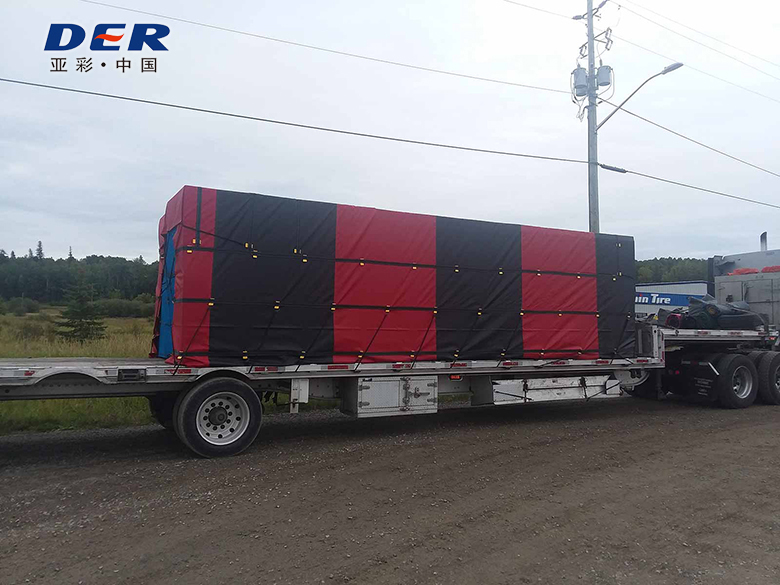
A “48-foot flatbed” describes a trailer, not the length or height of every load on it. A 30-ft cargo section with one end flap can require a different panel layout from a fully loaded 48-ft deck with two or more overlapping tarps.
Always distinguish cargo coverage length, individual tarp finished length, and combined panel coverage after overlap. For long trailers, a matched tarp set often offers a more manageable solution than one oversized piece.
Explore flatbed tarp kit planning →Truck Tarp Size Calculator
Use one unit throughout. The result is a preliminary usable rectangle measured along a simple top and the specified drops. A fabricator must still confirm hems, seams, flaps, shaped panels and actual fixing geometry.
One-panel example: 8 ft top width + 6 ft drop on each side; 24 ft covered cargo + 1 ft at each end. Press Calculate Coverage to update this estimate.
For multi-panel estimates, this tool divides the required sum of panel lengths equally after adding the specified joint overlaps; each panel must still be checked for installation direction, flap location and handling. It is not a roll tarp template and does not design a securement system.
Three Realistic Sizing Scenarios
These are mathematical planning examples, not specific DERFLEX SKUs, delivered projects or pre-approved load-securement plans.
Small open pickup load
If the area to cover is 6 ft long and 5 ft wide, with one foot of drop or fastening reach at each side and end, the simple rectangular estimate is 7 ft wide × 8 ft long.
A tonneau-style snug fit uses a different pattern. Bed liners, wheel wells, tailgates, stakes, rails and the chosen anchor locations must be measured on the actual pickup.
Medium-height freight section
A top width of 8 ft with 4-ft side drops needs about 16 ft of finished tarp width. If the cargo length is 20 ft, with 1 ft required at the front and rear, the starting finished length is 22 ft.
Verify wind exposure, attachment rows, load height changes, end folds and whether the nominal tarp size is measured before or after finishing.
Two overlapping panels
Two 24-ft-long finished panels with a 2-ft overlap give a theoretical combined span of 46 ft. If 1 ft at each external end is allocated to front/rear coverage, the remaining straight covered cargo length is approximately 44 ft.
This calculation alone does not determine where the seam should fall or whether the joint is secure for highway travel.
Cut size vs finished size
A tarp advertised as “20 × 30 ft” may be measured before sewing or welding. The dimensions needed for a fleet purchase should describe the finished usable cover, including separately dimensioned flaps, D-ring lines, pockets and tolerances.
Find the full measuring workflow in DERFLEX's custom tarp measurement guide.
Which Tarp Geometry Fits Your Truck or Cargo?
Scroll horizontally to view the full table on smaller screens.
| Truck / application | Measure first | Typical cover approach | Important difference |
|---|---|---|---|
| Pickup or small utility truck | Actual bed opening and load height | Simple sheet or fitted cover | Rails and tailgate change the usable securing area |
| Flatbed steel / machinery | Top cargo dimensions and short side drop | Steel tarp or fitted equipment cover | Protect sharp edges; avoid excess fabric |
| Flatbed lumber / tall cargo | Stack height and front/rear flap arrangement | Lumber tarp with deeper drops | Extra side coverage increases fabric area and handling weight |
| Long flatbed trailer | Cargo sections, joins, front/rear reach | Two- or multi-piece tarp kit | Overlap reduces net combined length |
| Dump truck | Body, bows, rollers, mounting geometry | Mesh/solid roll tarp or replacement sheet | Mechanical travel and pockets determine dimensions |
| Curtain-side body | Frame opening, rail/track and tension geometry | Purpose-cut side curtain panels | Not sized by draping a flat rectangular sheet |
Finished Size, Material Weight and Fastening Must Work Together
A tarp that reaches the intended cargo edges is only the beginning. Its construction determines whether the measured coverage can be fastened, handled and repeated consistently across a fleet.
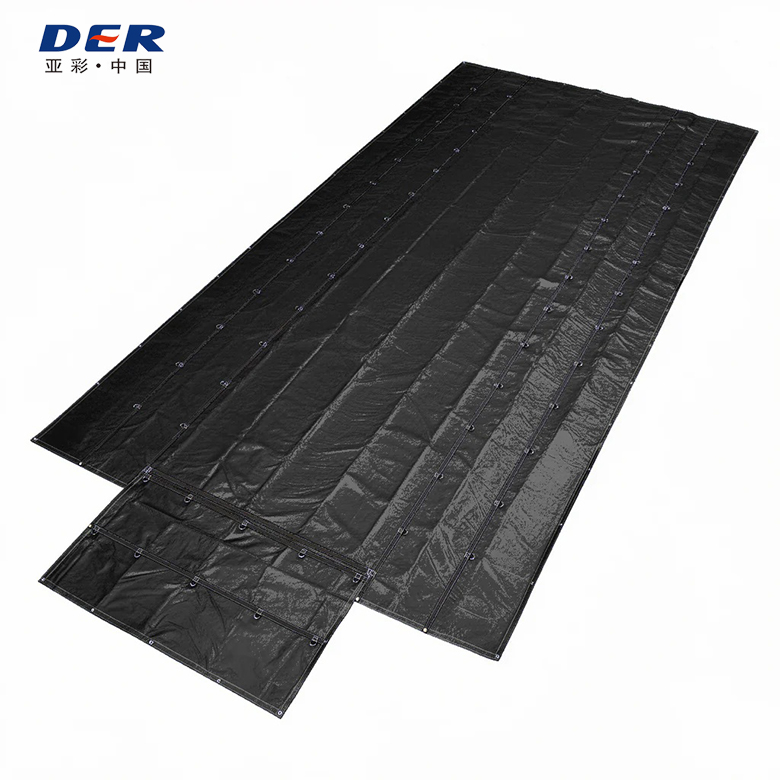
Hems, seams and flap layout
Confirm whether dimensions are taken to the outside of the finished hem or to the functional coverage edge. Mark the direction of welded or sewn panel joints, flap positions and folds so a manufacturer does not move a stress point onto a sharp cargo corner.
D-ring rows, webbing and eyelets
Identify the actual tie-down route and row locations on the drawing. D-rings and grommets are fastening interfaces, not proof that a cover itself replaces a compliant cargo restraint system.
Driver handling and tarp weight
More width and deeper drop mean more material to lift, fold, stow and secure. Specify a workable number of panels and evaluate coated-fabric weight alongside abrasion resistance and repeated handling requirements.
Solid vs mesh covers
Solid PVC-coated fabric can be specified for rain protection, subject to seams and closure details. Mesh reduces wind resistance in selected applications but is not a waterproof substitute; use it only where the cargo and operating rules permit.
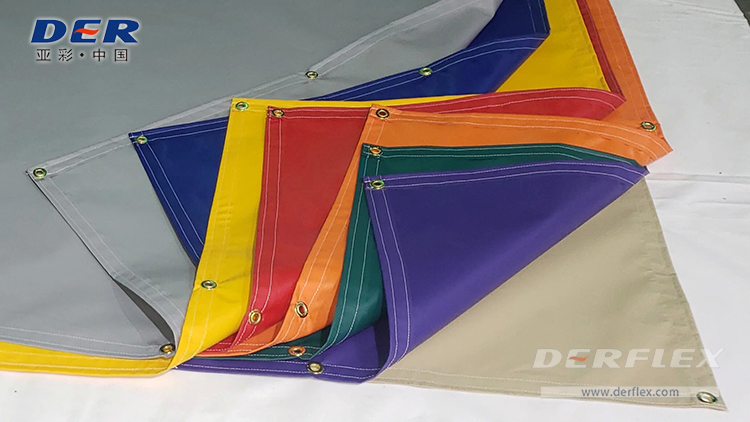
For the material decision, compare PVC tarpaulin with the application needs. See steel tarp drop geometry, dump truck tarp systems, and the broader truck tarp buying guide for adjacent questions.
Turn Your Measurements into a Repeatable OEM Tarp Specification
DERFLEX supplies truck-tarp-related PVC coated material and discusses custom fabricated cover programs according to the project. State whether you need roll goods, pre-cut panels, a replacement tarp or a finished cover. A complete roller assembly, truck body or securement system should never be assumed included in a fabric quotation.
Include these details in your RFQ
- Truck or trailer type and cargo description.
- Measured top length and width, maximum height and side profile.
- Required left/right drop, front/rear coverage, flap dimensions and panel overlap.
- Finished size versus cut size, dimension tolerances and a marked drawing.
- Desired solid/mesh construction, handling or abrasion requirements and any verifiable test needs.
- Fastening layout: grommets, D-rings, webbing, pockets, bars or other approved interfaces.
- Color, marking, packing, initial quantity and repeat-order expectations.
- Destination and intended application environment.
Truck Tarp Sizing FAQ
Answers to the sizing, overlap and cover-type questions most likely to affect a purchasing decision.
What size tarp do I need for an 8-foot-wide truck load?
An 8-foot-wide rectangular load needs about 12 feet of tarp width for a 2-foot side drop on each side, 16 feet for a 4-foot drop, 20 feet for a 6-foot drop, or 24 feet for an 8-foot drop. These are geometric starting widths, not guaranteed standard finished sizes.
Will a 20 × 30 ft tarp cover a flatbed truck?
It can cover a particular cargo section if its finished 20-foot width provides the necessary top span and side drop, and its 30-foot length includes the needed front, rear and panel overlap. It does not automatically cover an entire long flatbed trailer.
What is the difference between a steel tarp and a lumber tarp?
A steel tarp generally uses a shorter side drop for low-profile cargo, while a lumber tarp generally has a deeper drop and may include a rear flap for taller stacked freight. Choose by the loaded profile and fastening points, not by the name alone.
How much overlap should two truck tarps have?
Specify a positive overlap based on cargo profile, orientation, wind exposure and tie-down design. For planning, deduct the intended joint overlap from the combined finished lengths of the panels. Final overlap and fastening must be reviewed for the operating conditions.
Should I measure cut size or finished tarp size?
For procurement, define the required finished usable length and width, including flap and attachment details. Cut size is the fabric dimension before hems, seams or other finishing and may differ from the delivered finished dimension.
Can I use this calculator for a dump truck roll tarp?
Not as a final production dimension. Roll-tarp systems require roller or bow geometry, actual fabric travel, pocket and bar dimensions, arm or cable clearance, travel stops and mounting hardware information in addition to the body size.
Explore the Right Next Step
Each resource addresses a related but separate purchasing question: material choice, flatbed panel arrangement, freight profile or supplier capability.
Need a Truck Tarp Sized to Your Actual Load?
Share the truck model or cargo profile, coverage dimensions, fastening arrangement, material preference and quantity. DERFLEX can review your measurement brief and discuss suitable coated-fabric or custom-cover construction for quotation.