



What Do Americans Call Tarpaulin?
Americans usually call a tarpaulin a “tarp.” The plural is tarps. Both words mean a protective sheet, but “tarp” sounds more natural in everyday American speech, retail listings, jobsite conversations and many industrial product names. US buyers then add a material or job description—such as vinyl tarp, poly tarp, truck tarp or heavy-duty tarp—to make the request specific. This guide explains those terms and shows importers, contractors and OEM buyers how to turn an informal name into a clear specification.
Quick answer
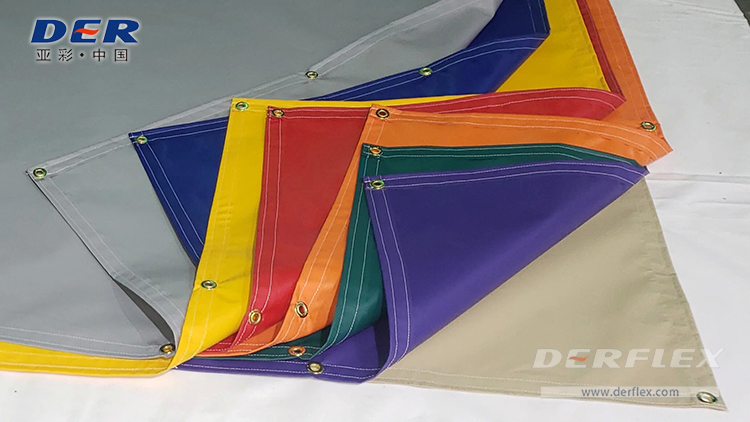
In American English, “tarp” is the usual short form of “tarpaulin.” A store may sell poly tarps or vinyl tarps, while a truck fleet may order flatbed truck tarps. The two words do not, by themselves, describe waterproofing, strength, fabric type or finished size.
“Tarp” vs “Tarpaulin” in the United States
Both words are correct. The distinction is about tone and context, not a separate technical product class. Cambridge Dictionary and Collins English Dictionary record tarp as the shortened American form; US merchants frequently use it as the lead category name. Tarpaulin remains appropriate in formal specifications and international trade documentation.
| Term | How Americans use it | Example wording | What it tells you |
|---|---|---|---|
| Tarp | Most natural everyday shorthand | “Cover the equipment with a tarp.” | Only the function; not the material or grade |
| Tarpaulin | Full word; understood but more formal | “PVC-coated tarpaulin material” | Still needs a construction and performance specification |
| Tarps | Plural used for retail categories and bulk orders | “Order 500 tarps in assorted sizes.” | A quantity of finished sheets, unless otherwise defined |
| Tarp fabric / tarp material | Often roll stock before fabrication | “We need vinyl tarp fabric by the roll.” | Possible raw-material purchase, not necessarily a finished tarp |
| Tarp cover | Protective cover, sometimes shaped or fitted | “Custom tarp cover for a generator” | A finished product that needs fit and attachment details |
A useful distinction: American buyers may call a finished cover a tarp, while an export invoice calls the material PVC tarpaulin fabric. Neither term guarantees that it is waterproof or suitable for towing, lifting or other demanding applications. For the deeper language distinction, see our tarp vs tarpaulin explanation.
What do “poly tarp,” “vinyl tarp,” “canvas tarp” and “mesh tarp” mean?
These are the four especially useful words to recognize in US catalogs. They identify broad material families, not uniform performance grades. A buyer should still check composition, size, reinforcement, seams and operating conditions.
| US product phrase | Typical material meaning | Common buying reason | What to verify |
|---|---|---|---|
| Poly tarp | Usually polyethylene (PE) woven-and-laminated sheet | Temporary or cost-conscious weather coverage | Actual thickness, weave, UV stabilization and finished size |
| Vinyl tarp / PVC tarp | Often PVC-coated polyester for industrial-grade covers | Reusable outdoor protection and welded custom fabrication | Base fabric, coating, total weight, seams and cold flexibility |
| Canvas tarp | Woven cotton or blended textile, sometimes treated | Breathable covers, equipment handling and painting protection | Fabric weight, treatment, shrinkage and moisture behavior |
| Mesh tarp | Open woven or coated mesh | Airflow, shade and certain debris-screening jobs | Open-area percentage, tear strength and containment requirements |
Materials and uses above are general industry categories, not a claim that each variety is stocked by DERFLEX. Open mesh is not a continuous rain barrier; canvas water resistance depends on its treatment; and finished seams can behave differently from the sheet material.
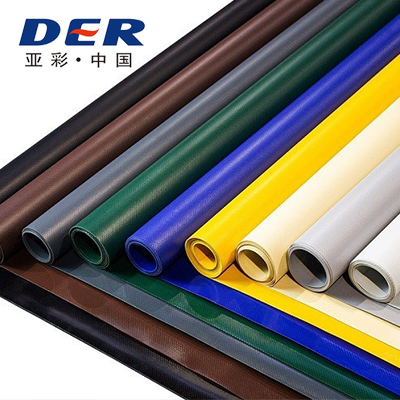
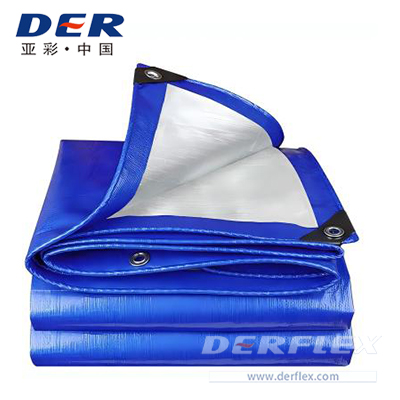
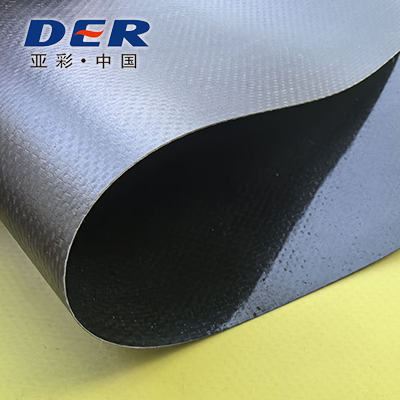
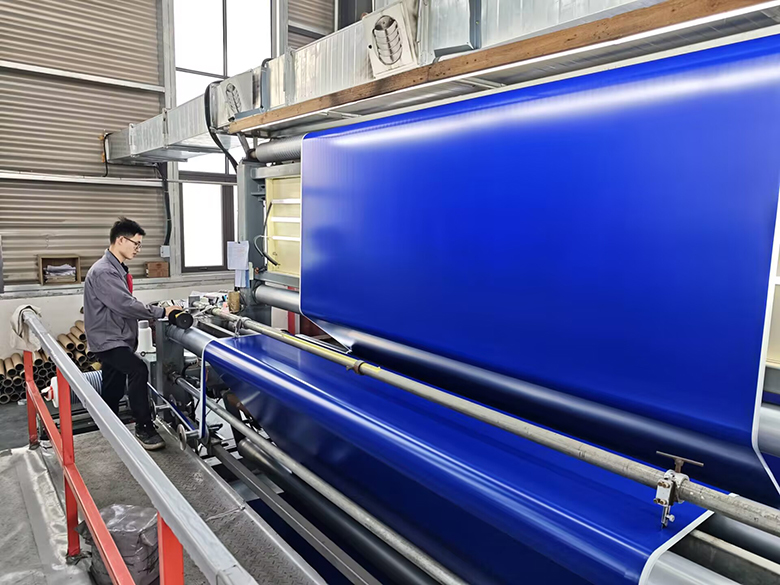
For material-level construction and tradeoffs, review what tarp material is made of and the PVC tarpaulin material guide.
Americans often name a tarp by its job
The application term can matter as much as the material word. For a US distributor catalog or an RFQ, put the job and construction together.
| US phrase | What buyers usually mean | Key design question |
|---|---|---|
| Truck tarp / flatbed tarp | Cover for road cargo, trailers or open-deck loads | Load geometry, tension points, abrasion and securement system |
| Dump truck tarp / roll-off tarp | Cover used with a particular vehicle or container mechanism | System compatibility, airflow, moving edges and containment |
| Roof tarp | Temporary weather protection over damaged roofing | Overlap, securement, wind risk and safe installation |
| Construction tarp | Material or equipment protection on jobsites | Duration, abrasion, weathering and required flame performance |
| Equipment cover | Standard or fitted cover for machinery | Shape, service openings, ventilation and tie-down locations |
| Drop cloth | Floor or furniture protection during painting | Absorbency, slip resistance and finish protection |
“Truck tarp” is not a guarantee that a cover meets every cargo-securement rule. Selection must account for vehicle design, the cargo and applicable operating requirements; tarp material alone does not replace approved load securement. For vehicle-specific construction, see DERFLEX truck tarp manufacturing. For the main range, browse our tarps product overview.
How to translate US tarp terms into technical specifications
State the job
Write “vinyl truck tarp for flatbed cargo,” not simply “large tarpaulin.” Include whether the cover is stationary, mobile, rolled or repeatedly folded.
Define the supply form
Distinguish coated-fabric rolls, cut panels, finished rectangular tarps and fitted covers. An order for tarp fabric is not automatically an order for completed covers.
Use the correct US unit
Finished tarp dimensions are often quoted in feet and inches. Weight may appear in ounces per square yard (oz/yd²), while imported technical sheets may use GSM. Thickness can be stated in mil, which is 0.001 inch.
Confirm construction and acceptance
Specify seams, hems, reinforced corners, grommets or D-rings, coating type, test documents if needed, sampling and an agreed finished-size tolerance.
Some US listings state cut size while others state finished size. Ask whether a quoted 10 × 12 ft tarp is measured before or after edge finishing; seams and hems can affect the actual cover dimensions. For a fuller selection workflow, see the DERFLEX tarp buying guide.
Examples of how an American buyer might request a tarp quote
The following example descriptions are illustrative purchasing briefs, not confirmed DERFLEX stock codes or guaranteed available specifications.
Example A — Custom vinyl truck tarps
“We need custom vinyl truck tarps for reusable flatbed cargo protection. Please quote PVC-coated polyester fabric options, finished dimensions of 12 × 18 ft, reinforced hems, specified grommet spacing, a sample for approval, and packing for our distributor program. We will provide a tie-down drawing and expected order quantities.”
12 × 18 ft is a hypothetical buyer dimension, not a standard product listing.
Example B — PVC tarp material by the roll
“We are sourcing PVC tarpaulin fabric rolls for industrial equipment covers. Please propose constructions suitable for outdoor use and heat-welded fabrication. We need to review roll width, fabric weight in GSM and oz/yd², color, coating structure, test evidence, packaging and lead-time options before approval.”
Specify roll supply explicitly when the purchaser will fabricate the finished cover.
Before you order: six details that prevent confusion
- Application and exposure: indoor or outdoor, weather, handling, abrasion and service cycle.
- Size basis: finished size, panel layout, overlap, drop and any cut-size assumption.
- Material identity: PE, PVC-coated polyester, canvas, mesh or another specified construction.
- Physical requirements: weight or thickness with units, edge finishing, seam type and attachment spacing.
- Evidence: request model-specific test methods, sample photographs or sample approval when relevant.
- Commercial scope: finished-cover quantity or roll length, colors, packaging, destination and required documents.
A waterproof coated fabric does not automatically make every finished cover waterproof; seams, openings, installation and drainage also matter. Similarly, a flame-retardant option requires evidence for the actual material or finished construction, not merely a generic description.
When “tarp supplier” means something different from “tarpaulin manufacturer”
US retail catalogs usually group products by use, color, size and ready-to-buy category. Industrial buyers often need a deeper conversation: coated textile composition, material procurement, finished dimensions, fit details, sample approval, inspection and repeat-order documentation. The purchasing term should reflect that difference.
Buying ready-made covers
Ask for finished size, corner reinforcement, grommet locations, color, material grade, packaging units and replacement fit. When the job is temporary and familiar, a well-specified standard cover may be sufficient.
Buying industrial material or OEM covers
Ask for fabric structure, coating, width and roll format first; add the fabrication drawing and fastening requirements if buying finished tarps. Samples and an agreed inspection plan help reduce ambiguity before a recurring order.
DERFLEX focuses on PVC-coated fabrics and project-specific tarp sourcing for converters, importers, wholesalers and industrial users. The right starting point may be a material roll rather than a finished sheet. Compare construction priorities in heavy-duty tarp applications and the main tarpaulin product hub.
Frequently asked questions about American tarp terminology
What is the American English word for tarpaulin?
“Tarp” is the common American English short form of “tarpaulin.” The plural is “tarps.” Both refer broadly to a protective sheet; the material and construction determine its performance.
Is “tarpaulin” a word used in the United States?
Yes. Americans understand “tarpaulin,” especially in formal specifications and product descriptions, but “tarp” is more common in everyday speech and many US product categories.
Are a tarp and a tarpaulin exactly the same thing?
In normal usage, yes. The words identify the same general product family. Neither one alone tells you whether a cover is PVC, PE, canvas or mesh, or whether it is waterproof.
What is the American name for a PVC tarpaulin?
American sellers often say “vinyl tarp” or “PVC tarp.” For industrial orders, the specification should state whether the product is PVC-coated polyester roll material or a fabricated finished tarp.
Does “heavy-duty tarp” describe a standard thickness?
No. “Heavy duty” is a broad commercial description, not one universal material standard. Check thickness or fabric weight, reinforcement, tear strength, seam design and tie-down requirements for the intended use.
What should I call tarpaulin when requesting a US-style truck cover?
Start with the application: “flatbed truck tarp,” “dump truck tarp” or “roll-off tarp.” Then provide the vehicle or cargo type, finished dimensions, material, reinforcement, fasteners and quantities.
Related tarp and tarpaulin resources
Ask for the tarp your application actually needs.
Tell DERFLEX whether you need PVC tarp fabric, cut panels or custom finished covers. Share the use, dimensions, attachments, quantity and destination for a specification-led discussion.