


 Industrial textiles / Materials explained
What Are Heavy Duty Tarps Made Of?
Heavy duty tarps are usually made from a reinforced fabric combined with a protective surface, but the ingredients depend on the job. Reusable waterproof industrial tarps commonly use woven polyester scrim coated or laminated with PVC (often called vinyl). Other heavy duty tarps use woven polyethylene (PE), treated canvas or open mesh. To compare them fairly, look beyond the label: examine the yarn, coating, seams, edge reinforcement and attachment points.
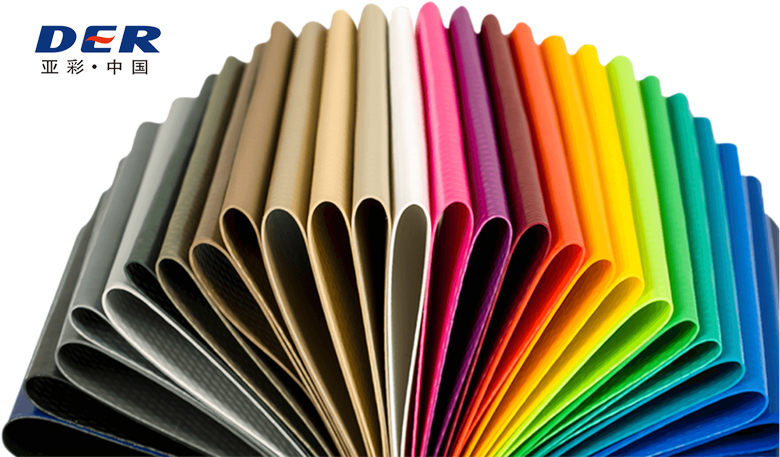
Most heavy duty tarps combine reinforcement and weather protection
Short answer: The most common heavy-duty construction choices are PVC/vinyl-coated polyester, woven PE laminated with polyethylene film, heavy woven canvas, and reinforced mesh. For repeat-use, waterproof industrial covers, PVC-coated polyester is often a practical starting point because a woven polyester core supplies strength while the PVC surface supplies water protection and can enable welded fabrication.
The term heavy duty is not a single material standard. A high-quality PE tarp can be called heavy duty within the poly category; a heavy canvas tarp behaves very differently from a welded PVC truck cover. The load-carrying yarns, coating bond, edge detail and operating environment are what make the description meaningful.
If you are specifying a repeat-use transport or factory cover, start with DERFLEX heavy duty tarp solutions and its tarp specification guide. For broader material-family comparisons, the PVC, PE, canvas and mesh material guide covers the differences outside the heavy-duty construction question.
What is inside a heavy duty PVC or vinyl tarp?
Industrial PVC tarp material is often a layered composite. Each layer has a separate job, and changing just one of them can change service behavior.
Construction schematic only; relative thickness is not to scale. Actual layer sequence and finish vary by product.
1. The woven polyester core
The textile scrim provides much of the tensile resistance and dimensional control. Yarn denier, ends and picks per inch, weave pattern, crimp and directional test results influence behavior under tension and tearing. A material marked “1000D” does not by itself specify tensile strength.
2. PVC coating or lamination
Flexible PVC is applied as a coating or laminated film. It produces a water-blocking surface when intact, influences abrasion and cleaning, and can be joined through a qualified welding process. Coating adhesion, uniformity and appropriate formulation matter as much as total weight.
3. Optional surface finishes
Selected products may use a surface finish or formulation tailored to UV exposure, soiling, flexibility or a specific compliance request. An additive name alone does not establish the weathering or flame-retardant result; the offered grade and relevant report must be checked.
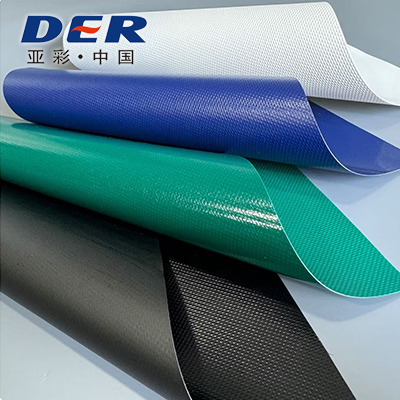
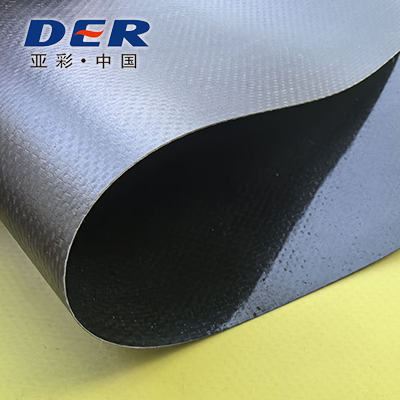
A finished tarp adds a second layer of engineering beyond the raw roll. The fabric is cut and joined into panels; seams, reinforced hems, corner patches, webbing and attachment hardware determine how loads enter the cover. That is why roll strength is not equivalent to completed-cover strength. DERFLEX's vinyl-coated tarp material page explains the coated-fabric supply side in more detail.
PVC, polyethylene, canvas or mesh: what is each one made from?
Four common constructions can all be sold as “heavy duty,” but they should not be treated as interchangeable. Choose by exposure, handling, ventilation and connection method rather than a single marketing grade.
| Material family | Typical construction | Best buying fit | Main caution |
|---|---|---|---|
| PVC / vinyl tarp | Polyester woven scrim with PVC coating or lamination on the faces | Reusable, weldable truck, equipment and industrial waterproof covers | Verify cold flex, seam strength, weight and UV exposure for the grade |
| Heavy duty poly / PE tarp | Woven polyethylene tape fabric with PE film lamination or coating | Large-area, economical weather protection and lighter handling | Review lamination, UV stabilization, tensile/tear data and hem quality |
| Canvas tarp | Heavy woven cotton or blended textile, sometimes waxed or treated | Breathable covers, selected machinery or storage protection | Water resistance, shrinkage, drying and mildew behavior vary by treatment |
| Heavy duty mesh tarp | Open-weave PE or polyester yarn, sometimes vinyl coated | Airflow, shade, screened loads and debris management | Not a full rain barrier; mesh openness and containment needs must be defined |
Comparison is qualitative guidance, not a ranking of all grades; test conditions, fabric construction and attachment design determine actual performance.
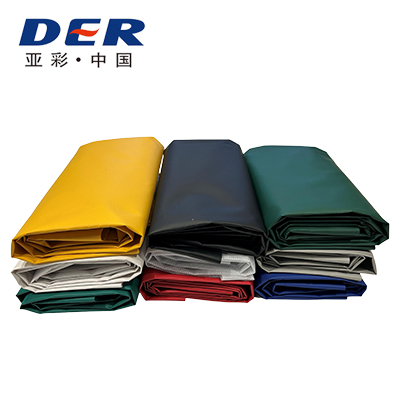
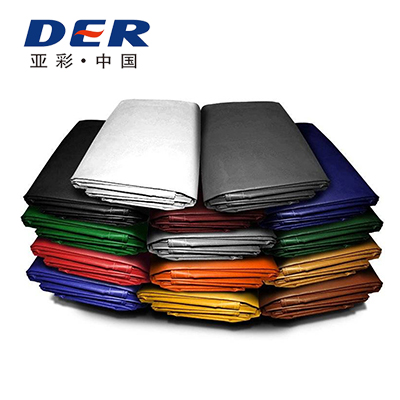
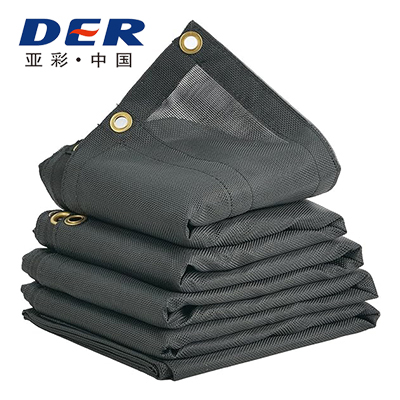
For a dedicated alternative-material discussion, see heavy duty polyethylene tarps if your project prioritizes lower carry weight, or PVC, vinyl and canvas comparison if breathability and water resistance are the primary decision. A PVC tarp and a vinyl tarp are generally terms for the same PVC-based material family in this market; poly means polyethylene, not polyester.
What actually makes a heavy duty tarp durable?
A thicker sheet may withstand different wear than a thinner one, but thickness alone cannot predict lifespan or safe loading. This checklist links common field failures to a specification buyers can ask suppliers to substantiate.
| Working risk | Construction to examine | Evidence to request |
|---|---|---|
| Tear starts at a tie-down | Scrim strength, patch area, hem stack, grommet location and tie-down direction | Warp/weft tear data; finished-edge or pull test where applicable |
| Water leaks at joining lines | Coating, overlap geometry, weld process or stitching details | Weld trial and joint inspection; finished seam water test if critical |
| Cracking after folding in winter | Resin formulation, low-temperature flexibility and fold radius | Relevant cold-flex/bend data at the planned service temperature |
| Chafing against corners | Coating abrasion, wear patches, contact geometry and padding | Comparable abrasion method and sample wear assessment |
| Early outdoor degradation | UV package, pigment, material finish and exposure intensity | Specified weathering method and post-exposure retention data |
| Premature edge deformation | Hem construction, webbing and hardware placement | Approved edge drawing and production sample verification |
For materials quoted by weight, GSM means grams per square metre; oz/yd² is another area-weight unit (1 oz/yd² ≈ 33.906 GSM). Mil is thickness (1 mil = 0.0254 mm). Neither GSM nor denier can be converted into a guaranteed thickness or tear strength without construction and test information. See tarp specs for the field definitions and what heavy duty actually means for the performance-based definition.
Choose the construction around the job, not the color
Truck and trailer covers
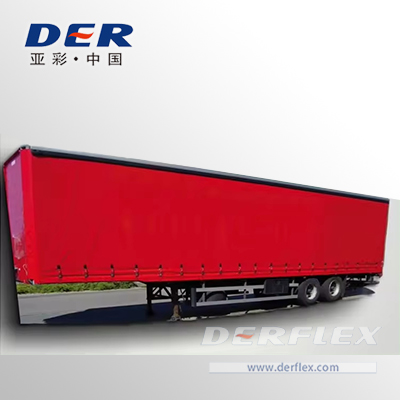
For frequently tensioned or opened truck covers, coated polyester is commonly selected where waterproof panels, fold flexibility and reinforced tie-down edges are required. Ask how seams meet the grommet and strap load paths; check wear points against trailer hardware. Learn more about truck tarp material and fabrication.
Outdoor industrial equipment
Exposed machinery may call for waterproofing, service access, wind-secure edges and abrasion protection. Confirm whether trapped condensation needs vents or another design change. A waterproof sheet alone does not ensure a condensation-free enclosure.
Temporary construction protection
For short-term and large-area covering, a well-specified woven PE tarp may be simpler and lighter to install. Outdoor roof and construction covers also require secure attachment; fabric material should not be represented as a certified temporary roof system without system-level evidence.
Shade, debris and ventilated loads
Mesh allows air movement and reduces full-sheet wind pressure, but openings can let fine particles or water through. Confirm mesh opening size, edge reinforcement and the debris size to be retained before ordering.
A six-point material specification beats a “heavy duty” label
Material identification
Specify PVC-coated polyester, laminated PE, treated canvas or mesh. Name the base fabric and whether you need full coverage or airflow.
Weight and usable width
Provide the required GSM or oz/yd² where known, plus roll width or finished size. Ask for usable width after trimming and anticipated panel joins.
Directional strength
Request matching warp and weft tensile/tear values from a defined test method. Do not compare values obtained by different methods without qualification.
Coating and outdoor behavior
Ask for coat/laminate type, adhesion, UV exposure evidence, cleaning requirements and flexibility where temperatures are extreme.
Finished construction
Define welded or sewn joins, hem width, grommets, D-rings, corner patches, access flaps and hardware spacing with a drawing.
Approval and repeat orders
Agree a sample, inspection plan, tolerances, batch identification and change-approval procedure before volume ordering.
For OEM procurement, compare suppliers against the heavy-duty tarp manufacturing process and confirm whether the quotation covers raw rolls, cut panels, fabricated covers, or any separately contracted hardware and installation.
What to send for an accurate heavy duty tarp material quotation
DERFLEX can discuss coated fabric rolls and application-specific tarp material specifications. The finished-cover scope, construction work, hardware and packaging should be confirmed separately with the quotation rather than assumed to be included.
Source the right tarp material, not just a heavier tarp
Send DERFLEX your application, size, drawing or photo, target performance and quantities. We can discuss an appropriate material construction and clarify the available roll or fabrication scope before a final specification is agreed.
Heavy duty tarp material FAQs
Are heavy duty tarps made of plastic or fabric?
They can be both. PVC tarps typically combine a woven polyester fabric core with plastic-based PVC coatings. PE tarps generally combine woven polyethylene tapes with PE film. Canvas is a woven textile, and mesh uses an open-weave structure.
Is a heavy duty vinyl tarp the same material as a PVC tarp?
Usually, yes in tarp trade terminology: vinyl commonly refers to PVC-coated or PVC-laminated polyester. Confirm the base fabric, coating method, weight and sample because commercial labels do not guarantee identical construction.
Which material is best for heavy duty waterproof tarps?
PVC-coated polyester is a common choice for reusable waterproof truck and industrial covers because the reinforced sheet can be welded. Laminated woven PE is useful for economical coverage. Complete waterproofing still depends on seams, openings, punctures and installation.
Does heavier GSM mean a stronger tarp?
Not necessarily. GSM describes area weight, not strength. The yarn, weave, coating bond, directional tear resistance, edges, seams and hardware can matter more than a heavier total weight.
Can mesh or canvas be considered heavy duty?
Yes. Heavy-duty canvas can provide tough, breathable textile coverage; heavy-duty mesh can resist handling while allowing airflow. Neither should automatically be substituted for a sealed waterproof PVC cover.
What should I ask a tarp manufacturer before a bulk order?
Ask for the material build, the specific grade, usable width, GSM or thickness, directional test data, UV and cold-flex requirements, seam/hem design, approved samples, inspection tolerances and the exact supply scope.