



What Tarps Last Longest in the Sun?
For industrial covers left outdoors, sunlight durability is a material-and-design question—not just a choice between blue, black and silver tarps. Compare UV-stabilized PVC vinyl, polyethylene, canvas and mesh by what the cover must actually do: keep rain out, tolerate heat and wind, resist strength loss, or shade a ventilated area. This guide explains what to specify, how to read weathering evidence, and how to avoid replacing a tarp too soon.
DERFLEX supplies PVC-coated tarpaulin materials and can discuss applicable custom finished-cover requirements. Performance and finished configuration require project-level confirmation.
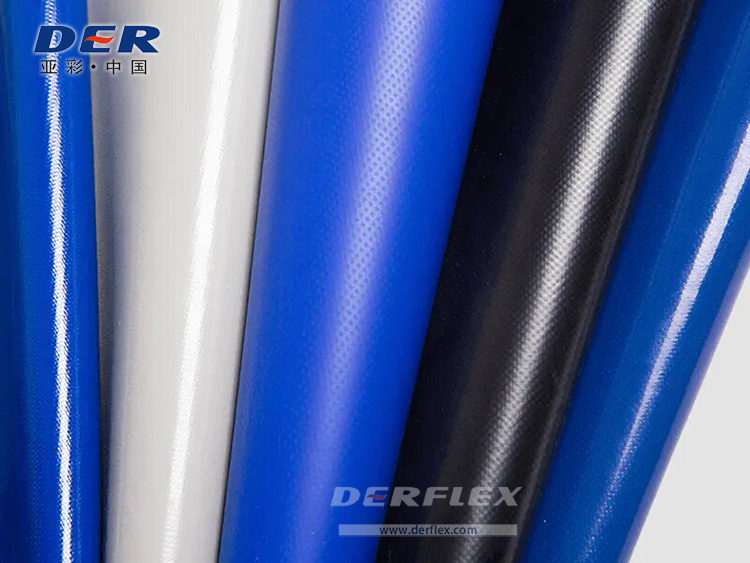
Which tarp material is most durable under constant sunlight?
A claim such as “UV resistant” only becomes meaningful when you know the construction, exposure environment and performance you want to retain. The comparisons below are directional selection advice, not a lifetime ranking of specific tested DERFLEX SKUs.
For general product families see PVC tarpaulin material, finished PVC tarps and the broader UV-resistant tarp selection guide.
For waterproofing and repeated use
Reinforced, UV-stabilized PVC-coated polyester is a sensible first specification. Ask for material details and finished-cover drawings, not just “heavy duty” on the invoice.
For shade without a sealed cover
Choose stabilized mesh or another shade textile according to airflow, screening and attachment loads. A solid waterproof sheet may trap heat or moisture that the application needs to release.
Why do tarps turn brittle, fade or tear in the sun?
Sunlight exposes polymer surfaces and pigments to ultraviolet radiation while solar heating drives repeated temperature cycles. Over time, some covers lose color, become chalky, crack at folds or lose tensile and tear performance. The same installed tarp may also be damaged by wind movement and abrasion; those are mechanical failures that UV testing alone does not predict.
Color and coating
Watch for excessive fading, chalking, tackiness or cracks. Appearance changes are useful warning signs, but color change alone is not a complete measure of remaining strength.
Strength retention
Base-fabric integrity and coating adhesion matter when the cover is repeatedly pulled, tensioned and folded. Request comparable pre- and post-weathering measurements when durability is critical.
Edges and tie-downs
Grommets, corners and hems concentrate load. A weather-stable center sheet cannot compensate for an under-reinforced edge that is allowed to flap in strong wind.
Three terms buyers should not confuse: UV resistance describes how the tarp itself resists aging; UV blocking describes how much radiation passes through it; waterproofing describes resistance to liquid-water penetration. A tarp may score well on one requirement and be unsuitable for another.
Service-life context is discussed separately in DERFLEX's tarp lifespan guide. No fixed number of “years in the sun” follows from material weight or a short accelerated-aging test.
How to compare UV-resistant tarp test reports correctly
When suppliers promise “1,000 UV hours” or “10-year outdoor life,” ask what was tested, how, and what property remained acceptable after exposure. The elapsed hours alone do not establish outdoor years.
ASTM G154 and ASTM G155 are practices for operating accelerated weathering equipment. Their use does not by itself imply that DERFLEX has tested or certified a particular product. Review actual reports and acceptance criteria for the selected grade.
Independent background: ASTM G154 standard scope and ASTM G155 exposure explanation.
Do 500, 1,000 or 1,500 UV hours prove 5–10 years?
No. Test duration depends on lamp type, irradiance, exposure cycle, temperature, moisture and the measured property. Laboratory time cannot be translated to field life using a universal multiplier. Compare like with like and ask for retained performance.
Is 900 GSM always more UV-resistant than 650 GSM?
No. GSM is mass per unit area; it does not identify UV stabilizers, pigments or the performance after aging. For buyers comparing gauges, material durability is broader than thickness.
Choose a sun-resistant tarp for the actual exposure cycle
There is no universal hot-climate tariff or standard duty grade. These three practical buying situations help set a specification brief; they are not certified UV classes.
Outdoor covers exposed to combined sunlight and rain also benefit from the all-weather tarp material guide; fleet buyers can review truck tarp manufacturing and finishing options.
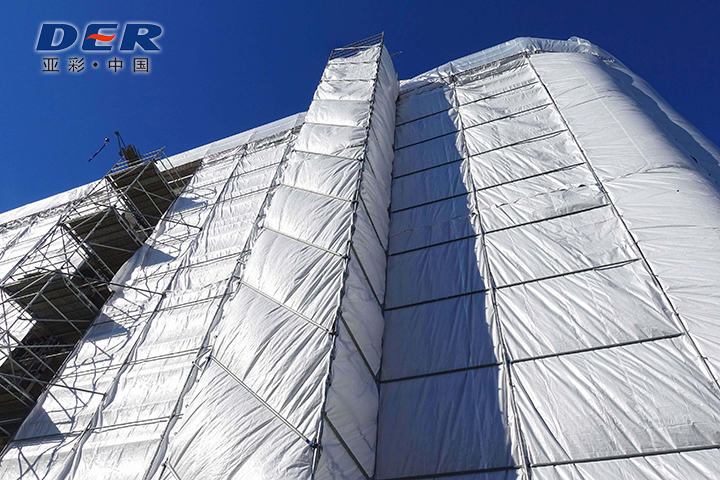
What should buyers inspect beyond the tarp's surface?
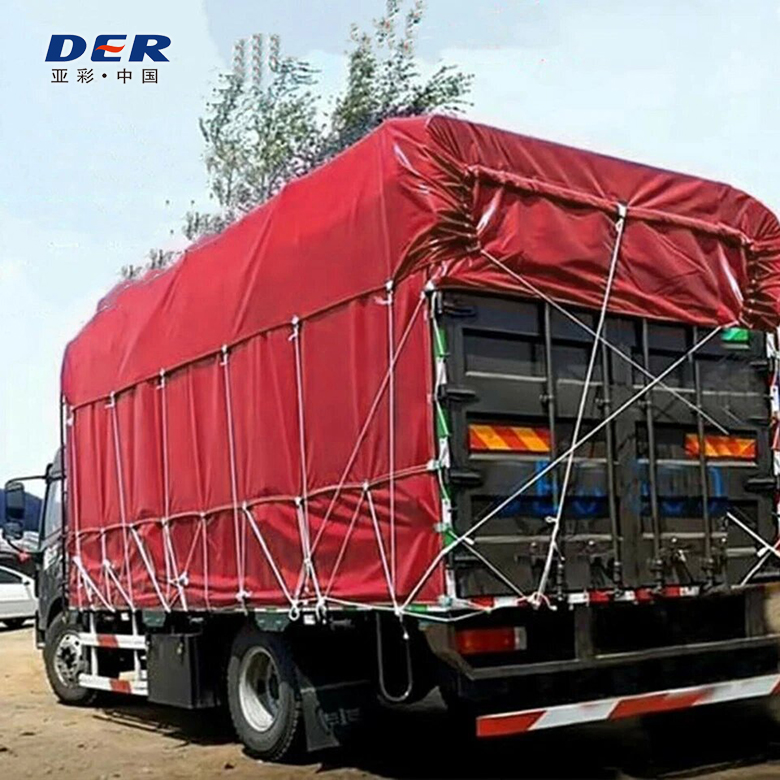
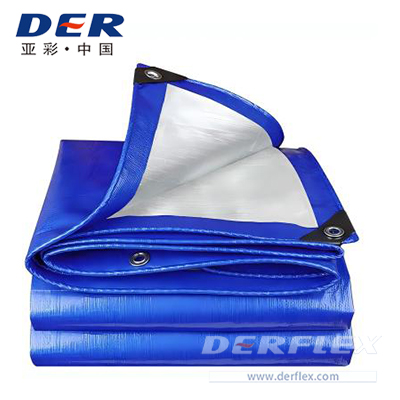
Look at the actual material roll, finishing zone and fastening system. Different product views answer different purchase questions; none of the photos below is presented as evidence of a measured UV service life.
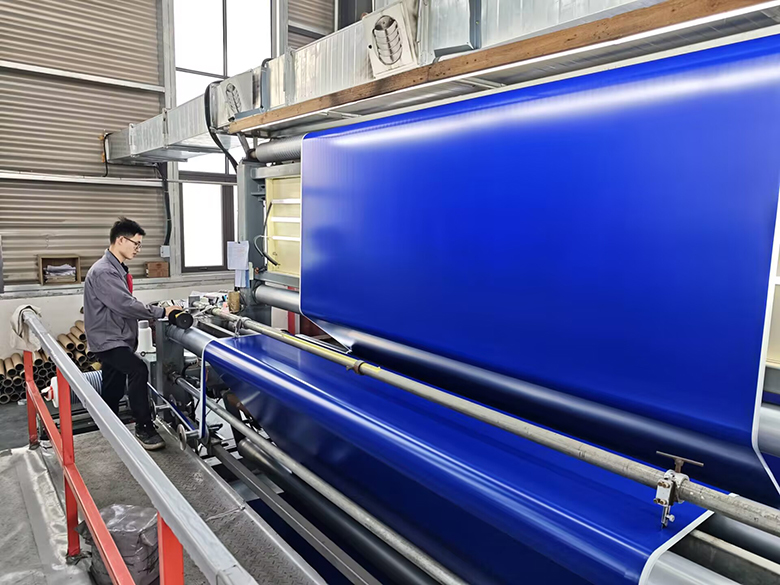
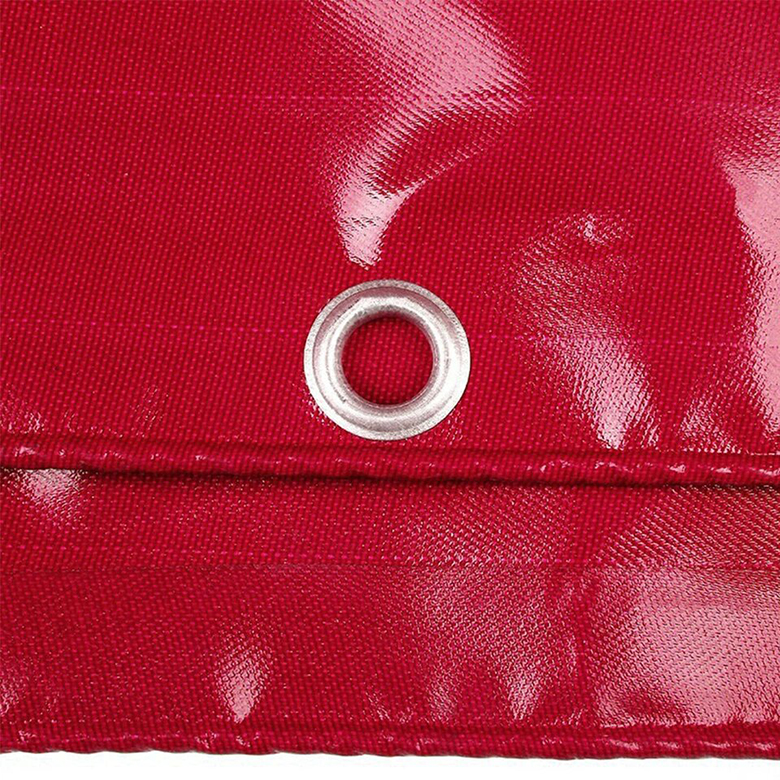
Five practical ways to prevent premature sun-exposed tarp failure
- Reduce wind whipping. Specify a fitted size, appropriate tension and enough fixing points; loose edges accelerate fatigue.
- Remove stress concentrations. Support corners and abrasion zones with patches or suitable webbing.
- Let water drain. Avoid unsupported flat spans that hold heavy pools after storms.
- Watch heat and chemical contact. Hot machinery, cleaning agents and oil can damage some coatings independently of UV exposure.
- Inspect on a fixed schedule. Check cracking, chalking, stitching, eyelets, folds and coating adhesion; repair minor defects before load reaches the weak area.
For a maintenance-focused explanation see how to make a tarp last longer outdoors. Widespread cracking, brittle folds or delamination are reasons to reassess the whole cover rather than installing more grommets into weakened fabric.
Ask for an outdoor tarp you can evaluate—not just a “UV resistant” label
A useful supplier quotation describes the exact application, the material and the performance evidence the buyer needs. The checklist below can be copied into your procurement specification or request for a sample.
What DERFLEX can review
For a coated-material sourcing project, send a sketch or existing tarp sample, the exposure conditions, target roll or finished size and quantity. DERFLEX can discuss suitable PVC tarpaulin material and relevant fabrication details, then confirm which specifications, samples and test documentation apply to the proposed product—not an assumed universal grade.
For general sourcing formats and other tarp families visit the DERFLEX tarp product overview.
Frequently asked questions about tarps in the sun
What tarp lasts the longest in direct sunlight?
For repeated heavy-duty waterproof coverage, a well-formulated UV-stabilized PVC-coated polyester tarp is commonly a strong choice. But service life must be judged against the actual UV package, weathering evidence, wind loading, fabrication and local climate; no single tarp is longest-lasting for every use.
Do black tarps last longer than silver or white tarps?
Not necessarily. Pigments affect heat absorption, light blocking and appearance, but color is not a reliable UV lifespan grade. Compare the actual resin or coating formulation and retained properties after aging tests.
How long will a heavy-duty vinyl tarp survive outside?
Heavy-duty vinyl/PVC tarps are widely chosen for multi-year outdoor service, but there is no warranted year count without a specific product, exposure climate, installation design and tested performance. Wind whipping and worn attachment points may end service sooner than sunlight aging.
Is a 20 mil tarp more sun-resistant than a 10 mil tarp?
Thickness can influence handling and wear, but it does not measure UV stabilization. Two products with different thicknesses may age very differently; compare construction, UV treatment and post-weathering properties. Mil is a thickness unit, while GSM measures area weight.
What does a 1,000-hour UV test mean for a tarp?
It describes a particular laboratory exposure only when the procedure, irradiance, cycle, temperature and observed property are known. It does not mean 1,000 hours of outdoor use or predict a universal number of service years. Ask for before/after results and comparison conditions.
Which sun-resistant tarp is best for a truck or equipment cover?
For a truck or repeatedly handled equipment cover, UV-stabilized PVC-coated polyester with suitable welded or sewn seams, reinforced hems and correctly located fasteners is often appropriate. Confirm temperature range, abrasion points, fit, drainage and tie-down loading before production.
Specify a tarp for the sun it will actually face.
Send your use environment, expected duty cycle, size, quantity and any current material or test reports. DERFLEX can review an appropriate PVC tarpaulin and finished-cover direction for a technical and commercial discussion.
No guaranteed UV service-life or laboratory certification is implied without corresponding product-specific evidence.
Technical editorial note: Material comparisons are general procurement guidance, not certified test data for an individual DERFLEX product. The photographs show actual DERFLEX-hosted samples or applications; they are not labeled as documented field case studies. Request current specifications and evidence for the selected grade.