


 Architectural Membrane Material Supply
PTFE Membrane Fabric Manufacturer for Architectural Structures
DERFLEX supplies project-oriented PTFE membrane fabric for tensile roofs, stadium canopies, transport hubs, public pavilions and long-span architectural structures where durability, clean appearance and specification control matter.
Instead of treating PTFE membrane as a simple roll material, DERFLEX helps buyers review base fabric direction, coating system, translucency target, fire-performance route, roll width, packing, documentation and fabrication compatibility before production.
Built for Architectural Procurement
For architects, membrane contractors, fabricators, project distributors and OEM buyers, the correct PTFE membrane choice depends on the building use, climate exposure, structural design and compliance pathway.
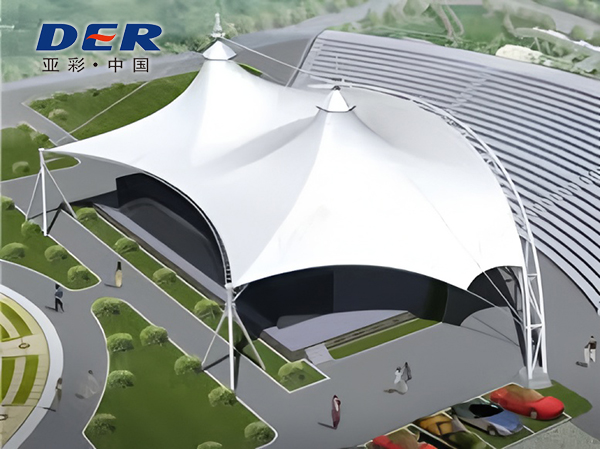
High-Performance Membrane Fabric for Permanent Architecture
PTFE membrane fabric is commonly specified as a fiberglass-based architectural textile coated with polytetrafluoroethylene. It is used when a structure needs a stable membrane skin for tensioned forms, visible roof surfaces, diffused daylight and long-term outdoor exposure.
DERFLEX positions this product for buyers who need more than basic waterproof coverage. The focus is on architectural material behavior: tensile stability, surface appearance, UV and weather exposure, cleanability, light transmission direction, fabrication handling and project documentation.
- For tensile membrane structures, long-span roofs and public architectural envelopes.
- Suitable for stadium-related roofs, commercial canopies, transport terminals and civic spaces.
- Custom specification discussion for roll width, weight, finish, translucency and packing.
- Material selection support for fabricators, contractors, distributors and OEM project buyers.
Why Architectural Buyers Search for a PTFE Membrane Fabric Manufacturer
In architectural membrane projects, material errors often appear after cutting, welding, tensioning or site installation. A manufacturer-style supplier must understand how membrane fabric interacts with structural design, panel layout, seam planning, climate exposure and local approval needs.
DERFLEX supports early-stage material discussions so buyers can compare PTFE membrane fabric with PVC/PVDF membrane and ETFE film options before selecting a procurement route.
Not Ordinary Tarpaulin, Not Generic Roofing Sheet
PTFE architectural membrane fabric is selected by engineering and appearance logic. It becomes part of the building envelope and must be considered together with steel, cables, clamps, edge details, drainage, maintenance access and local codes.
- Designed for tensioned shapes and curved roof geometry.
- Used where long-term visual stability is important.
- Often chosen for premium public and commercial architecture.
- Requires project-based grade matching rather than price-only selection.
What Matters in PTFE Membrane Fabric for Architectural Structures
A strong product page should answer the real procurement questions behind the keyword: structure type, exposure, fire route, appearance, fabrication and repeatable supply.
Dimensional Stability
Fiberglass reinforcement helps support tensioned architectural forms and reduces concerns around shape stability in large membrane panels.
Weather Exposure Direction
PTFE coated surfaces are widely valued in architectural markets for outdoor weatherability, UV exposure resistance and cleaner surface behavior.
Light & Visual Comfort
Appropriate membrane grades can help diffuse natural light for canopies, atriums, pavilions and transport structures.
Fire-Performance Discussion
Public structures often need documentation. DERFLEX can discuss the testing route according to destination market and project requirements.
Fabrication Compatibility
Cutting, seaming, clamping, panel layout, roll direction and packing should be discussed before confirming a batch for fabrication.
Supply Continuity
For phased projects and repeat OEM orders, material records, roll packing and batch communication help reduce procurement uncertainty.
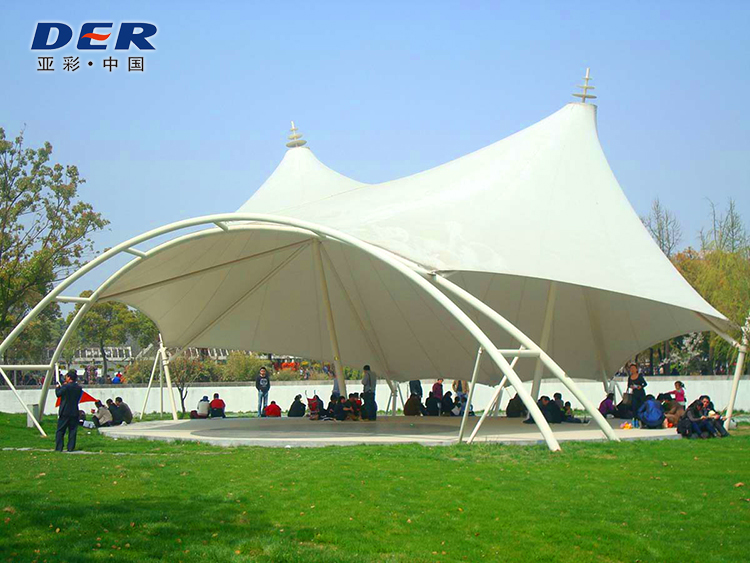
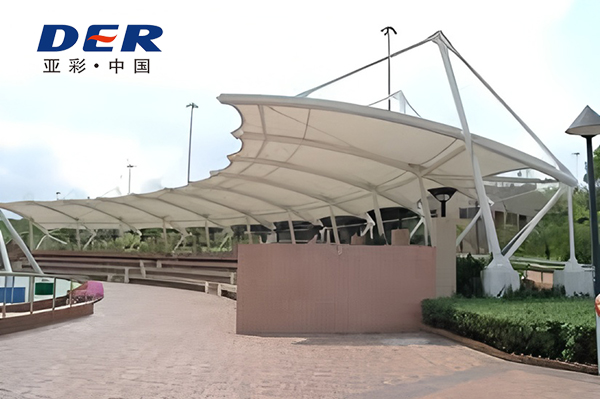
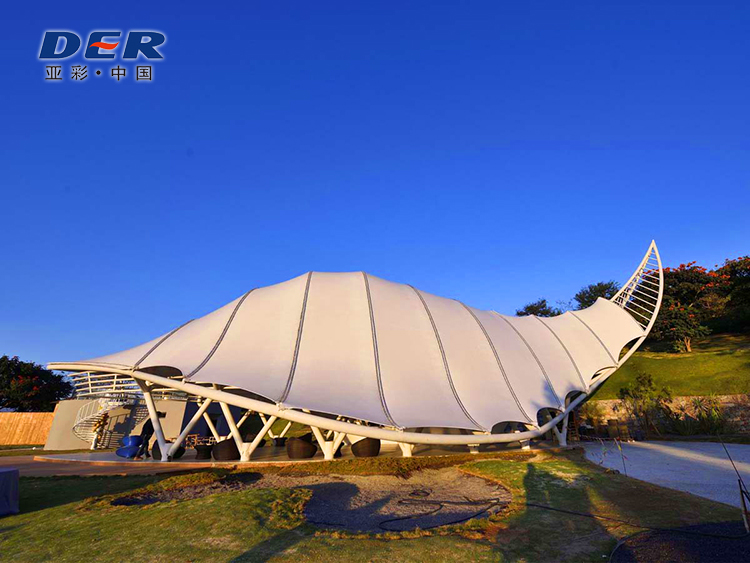
Architectural Membrane Application Display
The following images use DERFLEX website media related to membrane structures and tensile roof applications.
PTFE Membrane Fabric Specification Framework
Final values should be confirmed by sample, engineering drawing, fabrication method, destination market and applicable local standards.
| Product Type | PTFE membrane fabric / PTFE coated fiberglass architectural membrane / PTFE tensile roof membrane material |
|---|---|
| Base Fabric Direction | Woven fiberglass fabric selected for dimensional stability and tensile membrane applications |
| Coating System | PTFE coating direction for weather exposure, surface cleanability and architectural membrane use |
| Typical Weight Range | Project-based selection commonly discussed according to span, pre-tension, wind load, panel size and structure type |
| Surface Appearance | White or off-white architectural membrane appearance; translucency and finish can be discussed by project target |
| Supply Form | Roll goods for fabricators, membrane contractors, OEM buyers and building material distributors |
| Customization | Width, roll length, weight, finish, packing, label, batch records and document support can be reviewed before order |
| Application Fit | Stadium roofs, airport and station canopies, commercial atriums, public pavilions, walkways, fa?ades and long-span tensile structures |
Note: This page avoids fixed absolute claims because architectural membrane selection should be verified according to drawings, installation method, testing route and local project requirements.
Where PTFE Membrane Fabric Is Commonly Used
PTFE membrane fabric is usually selected when the project emphasizes long-term outdoor exposure, high visual value and permanent architectural use.
Stadium Roofs
Grandstand canopies, arena roofs and sports facility covers where span, daylight and appearance require early planning.
Transportation Hubs
Airport entrances, rail stations, bus shelters and covered pedestrian links exposed to frequent public use.
Commercial Architecture
Retail canopies, hotel entrances, atriums and leisure spaces requiring a clean and modern membrane surface.
Public Pavilions
Civic parks, plazas, schools and cultural venues where lightweight coverage and visual identity are important.
Landscape Structures
Resort shading, seaside pavilions, outdoor leisure areas and open-air public spaces.
Custom Tensile Forms
Project-specific shapes that require membrane material coordination with cables, masts, frames and edge fixing systems.
PTFE vs PVC/PVDF vs ETFE: Choose by Project Logic
A reliable architectural membrane supplier should help buyers choose the right material direction, not force every project into one product type.
| Selection Factor | PTFE Membrane Fabric | PVC / PVDF Membrane | ETFE Film System |
|---|---|---|---|
| Typical Project Position | Premium permanent tensile structures and high-visibility public architecture. | Cost-effective canopies, shade structures, commercial roofs and flexible architectural covers. | Transparent or highly translucent roofs, cushions, skylights and fa?ade systems. |
| Base Material Logic | Fiberglass fabric with PTFE coating direction. | High-tenacity polyester fabric with PVC coating and optional PVDF surface. | Fluoropolymer film, usually engineered as single-layer or cushion system. |
| Design Reason | Chosen when surface appearance, dimensional stability and long-term outdoor use are central. | Chosen when budget, color, flexibility and fabrication efficiency are important. | Chosen when transparency, lightness and contemporary fa?ade/roof expression are primary. |
| Procurement Focus | Confirm grade, width, translucency, fire route, coating consistency and fabrication method. | Confirm fabric weight, color, lacquer, welding, anti-wicking and UV direction. | Confirm structural engineering system, inflation/cushion design and installation requirements. |
Manufacturing-Based Support for Architectural Membrane Buyers
DERFLEX focuses on coated fabric production, project communication and export-ready supply. For PTFE membrane fabric, our value is not only in sending a roll quotation, but in helping buyers clarify the material direction before fabrication starts.
That matters for membrane contractors, architects, design-build companies and importers who need consistent roll quality, realistic lead-time planning, sample review, batch communication and procurement documents.
What DERFLEX Can Discuss Before Quotation
- Project type, span, panel size and design stage.
- Material weight, width, surface finish and translucency direction.
- Fire-performance route and documentation needs by market.
- Roll packing, label, OEM record and export shipment requirements.
- Sample preparation and specification comparison with alternative membranes.
How to Work with DERFLEX on a PTFE Membrane Project
A structured request helps shorten communication and improves the quality of the material recommendation.
Send Project Data
Share structure type, drawings, area, climate exposure, market, color target and expected order plan.
Review Material Route
DERFLEX discusses PTFE membrane direction, width, finish, fire route and comparison with PVC/PVDF or ETFE.
Confirm Sample & Specs
Samples, specification sheets, packing logic and test document requirements can be reviewed before bulk order.
Produce & Deliver
Bulk roll production, inspection, packing, labeling and export delivery are arranged according to the confirmed plan.
Explore More DERFLEX Architectural Membrane Solutions
These internal links support topical relevance and help project buyers compare related membrane materials and applications.
PTFE Membrane Fabric Questions from Project Buyers
Answers are written for architects, fabricators, membrane contractors, distributors and industrial building material purchasers.
What is PTFE membrane fabric used for in architecture?
PTFE membrane fabric is used for tensile roofs, stadium canopies, transport terminals, public pavilions, commercial atriums, fa?ade screens and other architectural structures that need a lightweight membrane skin for weather protection and visual expression.
What is PTFE membrane fabric made of?
It is commonly understood as woven fiberglass fabric coated with PTFE. The fiberglass base provides dimensional stability, while the PTFE surface helps support weather exposure and cleaner surface behavior in architectural applications.
Is PTFE membrane fabric suitable for permanent structures?
PTFE membrane fabric is often selected for permanent and high-visibility architectural structures. Final suitability should be reviewed according to structure design, expected exposure, fire route, fabrication method and local project requirements.
Can DERFLEX customize PTFE membrane fabric specifications?
Yes. DERFLEX can discuss project-based customization for width, weight, finish, translucency direction, roll length, packing, label, document support and other commercial requirements after reviewing the project information.
How should buyers compare PTFE membrane with PVC/PVDF membrane?
PTFE is usually considered for premium, long-term and high-visibility membrane architecture. PVC/PVDF membrane may be more suitable when cost, color flexibility and fabrication convenience are higher priorities. The right choice depends on project target, exposure and budget.
What information should be sent for a quote?
Please send project type, drawings, approximate area, target width, color, translucency, fire-performance route, destination market, fabrication method, packing request and estimated order quantity. Photos or reference projects are also useful.
Need PTFE Membrane Fabric for an Architectural Structure?
Send your project drawings, application, climate exposure, membrane area, required width, fire route and target material direction. DERFLEX will help review the PTFE membrane fabric option and prepare a project-oriented quotation.