
Protective Top Finish
Influences gloss, dry or soft touch, friction, cleanability direction, stain response and how quickly the visible surface changes in use.



DERFLEX supplies custom PU leather roll material for furniture upholstery, automotive interiors, office seating, bags, luggage, panels and other OEM products—where usable width, backing, winding quality, batch appearance and processing behavior can matter as much as the surface grain.
Choose the roll around what your factory will cut, sew, wrap, quilt, laminate or upholster. Color, grain, thickness, backing, width, hand feel, performance direction, labeling and export packing can be reviewed as one commercial material program rather than disconnected options.
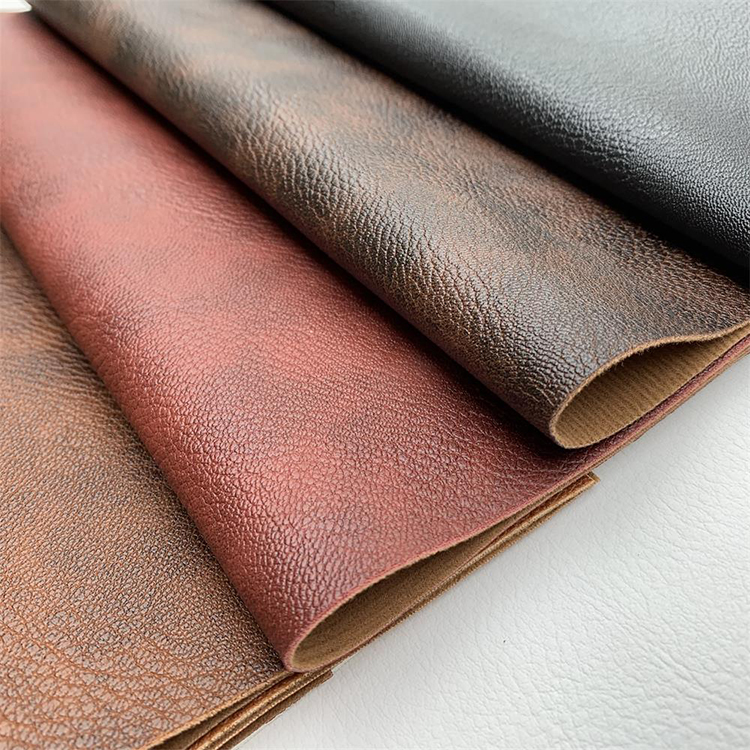
PU leather roll material is a polyurethane-based leather-look surface supplied in continuous rolls for converting into finished products. Depending on the grade, the visible PU surface may be built over knitted, woven, nonwoven, microfiber or another declared backing. The construction can be tuned for softness, body, stretch, grain definition, color, gloss, cleanability and process behavior.
For a retail craft buyer, “PU leather roll” may simply mean a convenient sheet length. For a furniture factory, bag manufacturer, automotive interior converter or commercial seating producer, the phrase carries a different meaning: repeatable roll geometry, enough usable width for nesting, predictable backing behavior, controlled appearance from roll to roll, and packaging that protects the face through international transport.
That distinction is why this page focuses on the roll as part of the production system. The target is not to label one construction as universally better. The target is to select a PU leather fabric roll that fits the finished article, the conversion method and the buyer's acceptance criteria.
The search usually comes from a commercial need: sourcing by the meter, supplying a cutting line, developing a private-label collection, replacing an existing roll, comparing bulk suppliers, or building a material specification that can be reordered later. In these cases, roll width, roll length, batch control, backing and packing are not logistics details—they directly affect yield, labor, visual consistency and downstream cost.
Two PU leather rolls can look nearly identical on the face while behaving differently in folding, sewing, upholstery, ageing or repeated contact. The reason is usually inside the construction.
Influences gloss, dry or soft touch, friction, cleanability direction, stain response and how quickly the visible surface changes in use.
Creates the leather-look face, color depth, embossing and grain identity. Surface formulation also affects flexing and visual retention.
Helps establish body, softness, thickness and adhesion between the visible surface and the backing. The correct balance depends on the product.
Knitted, woven, nonwoven or microfiber directions change stretch, sewing control, tear behavior, lamination response and finished-product feel.
The ranges below are commercial discussion references, not fixed promises for every grade. Final values, tolerances and tests should be confirmed against the selected construction and approved sample.
| Specification Point | Typical DERFLEX Development Direction | Why It Matters to a Bulk Buyer |
|---|---|---|
| Material Route | PU leather, semi-PU direction, microfiber PU direction or application-specific synthetic leather. | Changes touch, structure, processing behavior, product positioning and cost framework. |
| Surface / Grain | Smooth, matte, semi-matte, satin, lychee, napa, pebble, saffiano-style, decorative embossing or reference matching. | Defines visual identity and can influence friction, cleaning behavior and perceived quality. |
| Thickness | Approximately 0.6–1.4 mm is a common commercial discussion range; other constructions can be reviewed by project. | Affects drape, body, seam profile, folding, wrapping and machine settings. |
| Backing | Knitted, woven, nonwoven, brushed, reinforced textile or microfiber direction. | Influences stretch, dimensional stability, tear behavior, sewing and bonding. |
| Roll Width | Common directions include approximately 137 cm, 140 cm and 152 cm depending on construction and production plan. | Determines nesting efficiency, cutting yield, seam layout and waste percentage. |
| Roll Length / Core | Project-defined roll length, core size, winding and handling arrangement. | Affects warehouse handling, cutting-line setup, roll change frequency and transport stability. |
| Color Control | Standard colors, approved physical reference, collection matching or custom color development. | Supports repeat orders, multi-SKU collections and visual consistency across production batches. |
| Performance Direction | Abrasion, flexing, peel/adhesion, hydrolysis, cold flex, colorfastness, stain or cleaning review as required. | Links the material to the likely failure mode instead of relying on broad “durable” wording. |
| Supply Format | Roll protection, labels, OEM marks, outer wrapping, palletization or export-oriented packing by order plan. | Reduces surface damage, handling confusion and traceability problems during bulk logistics. |
| Sampling / MOQ | Discussed by stock status, custom color, embossing, backing, performance route and total program size. | Allows realistic planning for prototypes, launch quantities and repeat commercial orders. |
Comparing only price per meter can hide cost inside offcuts, roll changes, shade mismatch, surface damage or conversion problems. A stronger RFQ treats the roll as a manufacturing input.
Nominal width is not the whole story. Confirm edge condition, usable face width and whether the selected width fits your nesting plan. A few centimeters can change yield on repeated seat, panel or bag patterns.
Shorter rolls mean more changes; longer rolls can increase handling weight. Select roll length with storage, cutting equipment, operator workflow and shipment density in mind.
Roll winding should protect the surface without introducing avoidable impressions, telescoping or handling difficulty. Packing design should reflect the surface sensitivity of the selected grain and finish.
For sofas, seats and large visible panels, define color approval and lot management before production. Repeat orders should reference the agreed standard rather than rely only on a color name.
A backing that feels comfortable may still stretch too much, feed poorly or react differently during bonding. Share sewing, quilting, wrapping, lamination or adhesive details before selecting the final roll.
Agree appearance criteria, tolerances, relevant test methods and approved sample records. Clear acceptance language is more useful than broad terms such as “high quality” or “heavy duty.”
If a wider or better-aligned roll lets your cutting layout place more components across the usable face, the material cost per finished part may improve even when the quoted price per meter is slightly higher. For repeat production, ask your cutting team to compare yield before choosing only on unit price.
PU leather roll material should be selected around where it will be touched, bent, cleaned, stitched, exposed or photographed—not around one generic product label.
Review hand feel, stretch, seam appearance, large-panel color consistency, abrasion and cleaning route.
Balance controlled appearance, backing stability, wrapping behavior, repeated contact and ageing requirements.
Focus on repeated-contact zones, upholstery tension, flexing, cleanability and repeat production.
Consider fold recovery, edge behavior, stitch response, backing strength, surface wear and cutting yield.
Define frequent-cleaning conditions, abrasion pathway, color control and any project-specific flame test requirement.
Match the roll to lamination, adhesive, pressing, folding, panel geometry and the desired finished surface.
A controlled development sequence helps avoid the common mistake of approving the surface appearance before confirming how the material performs in actual conversion.
Send end use, component, market, process, expected quantity and destination.
Review PU route, backing, thickness, width, softness, color and grain.
Check appearance, touch, backing and trial conversion on representative material.
Agree test methods, tolerances, documentation and acceptance criteria where relevant.
Confirm roll format, labels, packing, shipment details and repeat-order reference.
The useful question is not “which material is better?” but which structure fits the desired touch, manufacturing method, environment, price band and verification plan.
The value is in combining the material choice with the practical details that make bulk production easier to control.
Start with the finished product and conversion method, then select a surface, backing and thickness direction that fits the job.
Discuss grain, embossing, color, matte level, gloss and hand feel for private-label or collection-based programs.
Width, roll length, core, winding, protective packing and labeling can be aligned with commercial handling requirements.
Abrasion, hydrolysis, flexing, adhesion, cleaning and other requirements can be discussed by named method and use case.
Approved physical references help communicate color, grain, touch and construction more clearly for bulk production and repeat orders.
Quotations, sampling, bulk packing and shipment coordination are structured for manufacturers, importers, distributors and brands.
Use these six related pages to compare general manufacturing capability, end-use requirements and performance-focused material directions.
Practical answers for furniture factories, bag makers, automotive interior suppliers, importers, wholesalers, converters and OEM sourcing teams.
PU leather roll material generally uses a polyurethane surface system over a supporting substrate such as knitted, woven, nonwoven or microfiber material. The exact layer structure varies by grade and should be confirmed from the supplier, especially when composition, animal content or restricted-substance declarations matter.
Commercial roll widths around 137 cm and 140 cm are common, and some DERFLEX programs can discuss 152 cm or other directions depending on construction and production feasibility. Buyers should confirm usable width rather than assuming the full nominal width is available for every cutting plan.
There is no single thickness for every application. A common commercial discussion range is approximately 0.6–1.4 mm, but sofa upholstery, bags, automotive trim, wrapped panels and footwear components can require different balances of softness, body, stretch and backing. Select thickness together with the complete construction.
DERFLEX can discuss custom color direction, embossing or grain, gloss level, hand feel, backing, thickness, width, roll format and packing for OEM programs. Custom development depends on selected construction, sample approval, order quantity and production feasibility.
Compare more than price per meter. Check full composition, usable width, thickness, backing, roll length, surface approval, performance tests, defect or appearance criteria, packing, quantity, lead time and repeat-order control. The lower quoted unit price may not create the lower cost per finished part if cutting yield or conversion behavior is worse.
Application-specific abrasion and hydrolysis directions can be discussed. These terms should be tied to an agreed test method, condition and acceptance criterion rather than treated as universal guarantees. Provide the end-use environment and relevant buyer standard when requesting a performance-focused grade.
A faster, more relevant quotation starts with the finished product and roll format. Share your reference sample or target specification and DERFLEX can review a suitable PU leather material direction for sampling.