News
Industry News

PVC Tarp vs Poly Tarp: Material & Cost Comparison | DERFLEX

Update:2026/7/31 16:54:57 Views:
Tarp Material Decision Guide

PVC Tarp vs Poly Tarp

Choose by working conditions—not by color, thickness labels or the lowest unit price.

This practical comparison helps distributors, contractors, fleet operators, fabricators and industrial buyers decide when a PVC coated polyester tarp is worth the additional weight and cost, and when a lightweight polyethylene tarp is the more efficient choice.

The Procurement Principle

The better tarp is the one that fails less expensively.

A low purchase price can be a good decision for a short project. The same low-cost tarp can become expensive when replacement requires shutdown time, labor, emergency freight or damaged cargo. Material choice should therefore be tied to exposure, handling frequency and the consequence of failure.

What Buyers Actually Need to Know

PVC and poly solve different protection problems.

A poly tarp—usually woven polyethylene laminated with polyethylene film—is a practical solution for short-term weather protection, light construction work, household covering, seasonal storage and projects where crews need to move the sheet frequently.

A PVC tarp—often called a vinyl tarp—is normally built from a polyester scrim coated or laminated with PVC. It is selected when the tarp must withstand repeated folding, tie-down tension, abrasion, wind movement, oil or grime exposure, welded seams, reinforced edges or a longer outdoor duty cycle.

DERFLEX focuses on B2B PVC tarps, coated fabric rolls and finished covers. The objective of this page is not to declare one material universally superior; it is to help buyers specify the material that fits the operating risk.

Quick Selection

Choose PVC or poly from the job profile

Start with the application and failure consequences. Material construction comes second.

Choose a PVC tarp when…

The cover is part of a working system rather than a disposable sheet.

  • The tarp will be installed outdoors for extended or recurring periods.
  • Wind whip, rubbing, dragging or repeated folding is expected.
  • Water-tight welded seams or large custom panels are required.
  • The cover needs reinforced hems, webbing, D-rings, straps or custom hardware.
  • Brand color, printing, surface finish or batch consistency matters.
  • Replacement labor, cargo exposure or downtime costs are significant.

Choose a poly tarp when…

The job is temporary, lightweight and easy to replace.

  • The cover is needed for days, weeks or seasonal general use.
  • One-person handling and rapid deployment are high priorities.
  • The tarp will face limited abrasion or repeated mechanical stress.
  • A low initial price is more important than long-term appearance.
  • Standard sizes and simple edge construction are acceptable.
  • Failure would be inconvenient but would not stop operations or damage valuable assets.
Head-to-Head Analysis

PVC tarp vs poly tarp comparison table

The table describes typical commercial constructions. Performance varies by scrim, coating weight, UV package, seam method and production quality.

Decision Factor PVC Tarp / Vinyl Tarp Poly Tarp / PE Tarp
Typical construction High-tenacity polyester base fabric with PVC coating or lamination on one or both sides. Woven HDPE strips with polyethylene film laminated to the surfaces.
Handling weight Heavier. Better suited to fixed, semi-fixed or professionally handled covers. Lighter. Easier to carry, unfold and install for temporary work.
Abrasion and rubbing Usually the stronger choice for truck beds, machinery, repeated folding and contact with rough surfaces. Suitable for light-duty contact, but thin grades can puncture or fray under repeated rubbing.
Wind and tie-down stress Higher weights and stronger fabric structures can better manage wind movement when correctly reinforced and tensioned. Low weight makes handling easy, but also increases movement in wind; reinforced edges and suitable anchoring remain important.
Water protection The coated surface is waterproof. Welded seam design can create highly water-tight finished covers. The laminate is waterproof when intact. Stitching, punctures, worn film and edge damage can become leak paths.
Seam fabrication Well suited to hot-air, high-frequency or thermal welding, depending on the fabric and equipment. Can be heat-sealed or sewn depending on construction, but fabrication options and seam strength may be more limited by grade.
Custom finishing Strong fit for custom size, shaped covers, reinforced hems, webbing, D-rings, windows, pockets, printing and OEM packaging. Good for standard sheets and simple custom work where low weight and price remain the main priorities.
UV and weather exposure Outdoor performance can be engineered through coating formulation, UV stabilizers and optional surface treatments. UV-treated grades are available, but thin or low-grade products can lose strength and film integrity sooner under exposure.
Cold-weather behavior Formulation dependent. Specify cold-crack or low-temperature flexibility requirements for winter or high-latitude use. Often remains easy to handle because of its low mass, but brittleness and film cracking still depend on resin, UV aging and grade.
Flame-retardant options FR formulations and tested grades may be available. The required standard must be confirmed before ordering. FR poly grades exist, but ordinary blue or silver poly tarps should never be assumed to meet a fire standard.
Chemical and oil contact PVC is commonly chosen where grease, oils or industrial grime may contact the cover, but compatibility still requires confirmation. Polyethylene has useful chemical resistance, yet the laminate, seams and surface treatment must be evaluated for the exact exposure.
Cleaning and appearance Smooth lacquered surfaces can be easier to wipe and maintain for fleet, curtain and reusable industrial programs. Suitable for general cleaning, but wrinkles, film wear and edge fraying can affect appearance in repeated use.
Initial purchase cost Normally higher because of heavier fabric, coating, reinforcement and fabrication. Normally lower and attractive for temporary, disposable or price-sensitive projects.
Total ownership logic Can be economical when fewer replacements and more reliable performance offset the higher initial cost. Can be economical when the project is short and replacement or disposal has little operational impact.
Typical applications Truck and trailer covers, side curtains, industrial equipment, construction enclosures, long-term storage, tents and custom OEM covers. Temporary roof protection, landscaping, light construction, household use, seasonal covers, ground sheets and emergency coverage.

Important: “heavy duty,” “waterproof” and “UV resistant” are broad commercial terms. Ask for material weight, base fabric, tensile/tear data, seam method, UV requirement and relevant test documents instead of relying on labels alone.

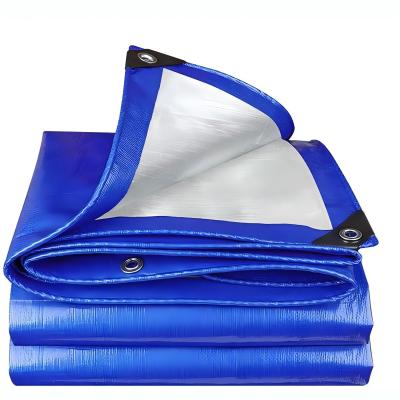
Blue heavy duty PVC tarp with reinforced hems and metal grommets
DERFLEX heavy-duty PVC tarp example. Final color, GSM, base fabric, edge reinforcement, grommet type and spacing should be confirmed for the intended application.
Why PVC Construction Is Different

A heavy-duty tarp is a material system, not just a thicker sheet.

The performance of a PVC tarp comes from the interaction between its polyester reinforcement, coating adhesion, coating thickness, surface finish, seam layout and edge design. Increasing GSM alone does not guarantee a better finished cover if the base fabric, weld quality or fastening points are poorly matched to the load.

For B2B programs, DERFLEX can support fabric rolls, cut panels and finished covers. Explore the broader tarp manufacturer category when your project includes more than one tarp type or application.

Material engineering Base fabric, coating, weight and finish matched to use.
Finished fabrication Welded panels, hems, webbing, hardware and custom shapes.
OEM development Color, logo, labels, packaging and repeat-order records.
Specification control Samples and requirements confirmed before mass production.
Discuss Your Tarp Specification
Commercial Decision

Compare total coverage cost—not only price per sheet

The correct business calculation includes replacement, labor and failure exposure.

A simple buyer formula

Use the same time horizon for both materials, then include every cost that changes when the tarp is replaced or fails.

Total Cost = Purchase + Installation + Replacement + Downtime + Failure Risk

This is a decision framework, not a claim that PVC is always cheaper. For a one-week project, poly may clearly win. For a recurring fleet or industrial cover, the answer can reverse.

Replacement frequency

Estimate realistic wear from wind, dragging, folding, UV exposure and fastening points. Do not use a generic service-life promise.

Labor and access

A tarp on ground-level materials is easy to replace. A roof, machine, large hay stack or trailer system can require crews, lifts or downtime.

Protected asset value

Higher-value cargo, machinery or stock may justify a more durable cover even when the purchase price is higher.

Customization value

A made-to-measure cover can reduce loose material, wind movement and installation time. Standard low-cost sheets may be inefficient for irregular equipment.

Brand and resale consistency

Distributors and OEM buyers should include color repeatability, packaging, labels and batch documentation in the commercial comparison.

Use-Case Recommendations

Which tarp material fits common applications?

These recommendations are starting points. Final selection should reflect exposure, expected life, fastening and local requirements.

01

Truck & trailer covers

PVC is usually preferred for repeated road use because the cover faces wind movement, tie-down stress, folding, abrasion and frequent cleaning.

Typical direction: PVC
02

Short construction projects

Poly can be efficient for temporary material protection and rapid deployment. PVC becomes more relevant for reusable enclosures, curtains or high-wear site covers.

Typical direction: Poly or PVC by duration
03

Industrial equipment

Custom PVC covers suit repeated use, shaped fabrication, reinforced edges and dirty or abrasive environments. Light poly can suit temporary dust or rain protection.

Typical direction: PVC for permanent programs
04

Agriculture & storage

Material choice depends on season length, UV exposure, handling and the value of feed, hay or equipment. Large reusable covers often benefit from reinforced PVC structures.

Typical direction: Compare cost per season
05

Emergency roof coverage

Lightweight poly is commonly practical when speed, portability and temporary weather protection matter more than repeated use.

Typical direction: Poly
06

OEM tarp product lines

PVC supports differentiated weights, colors, finishes, welding, hardware, printing and private-label packaging for professional or premium market segments.

Typical direction: PVC for engineered ranges
Five-Step Specification Method

How to specify a tarp before requesting price

A clear inquiry reduces unsuitable comparisons and helps suppliers quote the same performance target.

Define the duty cycle

State whether the tarp is temporary, seasonal, daily-use or semi-permanent. Include how often it will be folded, removed, dragged or transported.

Describe the environment

Provide rain, wind, UV, temperature, humidity, mildew, chemical, oil, dust and abrasion exposure. Mention sharp corners or contact points.

Confirm size and load paths

Use finished dimensions or drawings. Identify where tension enters the cover through grommets, webbing, D-rings, pockets, straps or rope-in-hem.

Set performance and compliance needs

List waterproof seam expectations, UV requirement, cold flexibility, flame-retardant standard, colo, r, surface treatment, printing and any required documents.

Approve a representative sample

Review color, hand feel, coating, welds, hems, hardware position, finished dimensions and packaging before production. Test data should match the quoted construction.

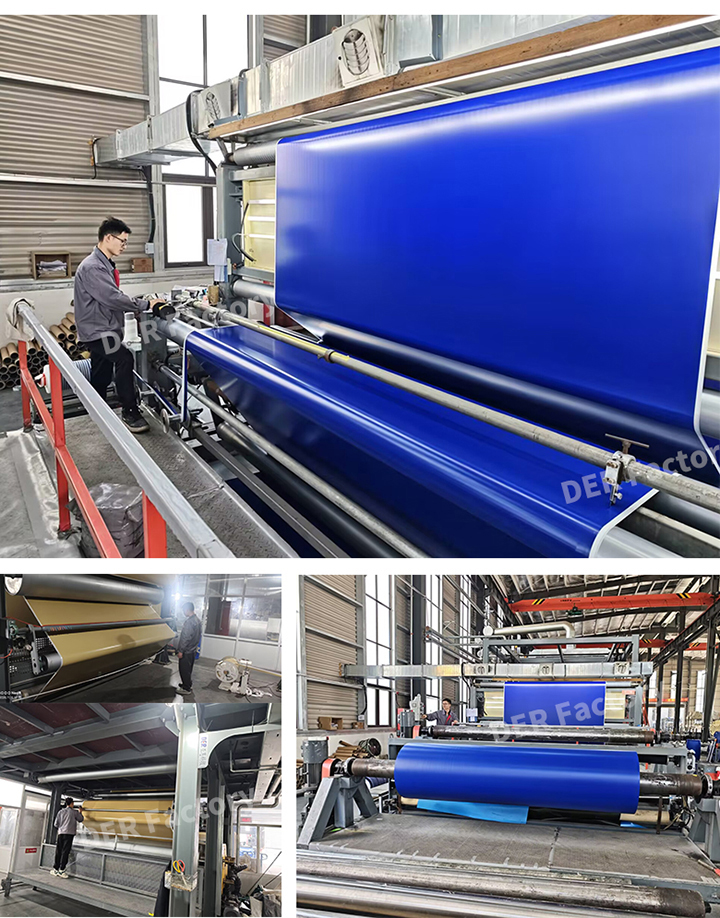
DERFLEX PVC coated fabric production line
DERFLEX Manufacturing Support

Move from a material name to a controlled specification.

DERFLEX develops PVC coated polyester tarp materials and finished covers for transport, construction, agriculture, industrial protection and OEM supply. Instead of quoting only a generic “heavy-duty tarp,” the team can review material weight, base fabric, coating, width, surface finish, welding, reinforcement and packaging requirements.

For made-to-measure equipment, distributor programs or branded product lines, see DERFLEX custom tarps. Buyers needing high-exposure covers can also review the heavy duty waterproof tarpaulin range.

Roll goods or finished covers Supply formats for converters, distributors and project buyers.
Custom fabrication Size, shape, welding, hems, hardware, straps and reinforcement.
OEM presentation Color, logo, labels, cartons and repeat-order records.
Application review Material direction based on climate, use cycle and failure risk.
Buyer FAQ

Frequently asked questions about PVC tarp vs poly tarp

Clear answers for sourcing, applications and quotation preparation.

Is PVC tarp better than poly tarp?

PVC tarp is often better for heavy-duty, repeated-use and custom-fabricated applications because it generally offers stronger abrasion resistance, weldability and structural durability. Poly tarp can be the better choice for short-term, lightweight and budget-sensitive coverage. “Better” depends on the duty cycle and the cost of failure.

Are PVC tarps and vinyl tarps the same?

In the tarp market, “vinyl tarp” commonly refers to polyester fabric coated or laminated with flexible PVC. Product names vary, so buyers should verify the base fabric, coating type, weight, thickness and performance data rather than relying on the word “vinyl” alone.

Which tarp is more waterproof?

Both intact PVC and polyethylene tarp surfaces can be waterproof. Finished-cover performance depends on seam construction, punctures, worn areas, edge design and installation. PVC has an advantage for many custom covers because compatible materials can be welded into water-tight panels.

Which tarp lasts longer outdoors?

A well-specified PVC tarp will often outlast a lightweight poly tarp in repeated outdoor use, but exact life cannot be guaranteed from material name alone. UV formulation, fabric weight, wind, abrasion, temperature, maintenance and tie-down design all affect service life.

Is poly tarp easier to install?

Usually yes. Poly tarps are lighter and easier for one person or a small crew to carry and unfold. This is a meaningful advantage for temporary projects, emergency covers and jobs where the tarp is moved frequently without mechanical assistance.

Can PVC tarps be made in custom sizes and shapes?

Yes. PVC coated polyester can be cut and welded into square, rectangular, box-shaped and drawing-based covers. Reinforced hems, webbing, grommets, D-rings, straps, pockets, windows and printed markings can be discussed according to the application.

What information should I send for a PVC tarp quotation?

Send the application, finished size or drawing, quantity, expected outdoor period, climate, preferred weight or thickness, color, grommet spacing, edge reinforcement, seam requirement, hardware, printing, packaging and any required standard or test document.

Are PVC or poly tarps environmentally friendly?

Neither should be described as environmentally preferable without considering the full product system. Material use, service life, replacement frequency, recycled content, local recycling options and disposal method all matter. A longer-lasting tarp may reduce replacement volume, while a lighter tarp uses less material per sheet; the best answer depends on the program.

Specification-Based Quotation

Not sure whether your project needs PVC or poly?

Send the working conditions—not just the requested size. DERFLEX can review whether a PVC tarp structure is appropriate and recommend a practical weight, fabrication and reinforcement direction for quotation.

  • Application and target service period
  • Finished size, drawing and quantity
  • Weather, abrasion and fastening conditions
  • Color, logo, hardware and packaging needs
Request A Quote

Material descriptions and specification ranges are general procurement guidance. Final performance, compliance, tolerances and suitability should be confirmed by approved sample, technical data and project requirements.

Consulting Services
+86-021-54361792 / 54361798
Email
sales@derflex.com