Identify the material
Confirm coated or laminated PVC, polyester construction, product code, finish, color and revision date.



 DERFLEX
PVC Tarpaulin Buyer Engineering Guide
DERFLEX
PVC Tarpaulin Buyer Engineering Guide
Read the sheet as a linked material system—not as a list of isolated numbers.
This guide shows importers, distributors, fabricators, fleet suppliers and industrial procurement teams how to interpret GSM, denier, weave density, tensile strength, tear resistance, coating adhesion, waterproof data, temperature range, functional treatments and test methods before approving a PVC tarpaulin sample or bulk order.
First identify the exact material construction. Then confirm dimensions and tolerance. Next compare directional mechanical data. After that, review environmental and functional requirements. Finish by checking test methods, whether values are typical or minimum, and which version of the sheet applies to the approved sample.
Confirm coated or laminated PVC, polyester construction, product code, finish, color and revision date.
Nominal GSM or thickness is not enough unless the acceptable production range is stated.
Compare machine/warp and cross/weft values separately for tensile, tear and dimensional behavior.
Truck covers, side curtains, tents, industrial covers and air-tight products do not prioritize the same data.
Do not compare values from different test methods as though they were directly equivalent. Ask whether the figure is typical, target, minimum or guaranteed by agreement.
A useful sheet connects the yarn, fabric, PVC layer, test result and end-use requirement. Weak sheets list attractive numbers without showing how the material was built or how the values were measured.
Polyester type, denier, tenacity and consistency establish the foundation for the reinforcing textile.
Weave or knit construction, density and MD/CD orientation shape tensile, tear and dimensional behavior.
Coating or lamination route, formulation, thickness and surface treatment affect barrier and processing performance.
Method, specimen direction, conditioning, units and acceptance status determine what the reported number means.
Welding, seams, hems, webbing, grommets, tension, abrasion, UV exposure and handling decide real field performance.
The following decoder turns common technical fields into purchasing questions. The objective is not to select the highest number—it is to select a coherent construction that can be sampled, tested and repeated.
Start with the exact model and document version. “PVC tarpaulin” is a material family, not one specification. The sheet should identify whether the material is knife coated, hot laminated, cold laminated or built by another agreed route.
GSM is the mass of one square meter of the finished coated fabric. It includes the polyester reinforcement, PVC layers and surface treatment. It is useful for duty level, handling and material-cost comparison, but it does not reveal the strength distribution inside the fabric.
Thickness describes the finished material body at the measured point. It affects handling, puncture behavior, welding setup and packaging volume, yet it is sensitive to embossing, pressure and the measurement method.
A notation such as 1000D × 1000D describes yarn linear mass in two directions. A construction such as 20 × 20 usually describes thread density in warp and weft per stated area or inch. The supplier should define its notation.
Tensile testing measures the force required to break a defined specimen under a stated method. Values are usually reported separately in the machine/warp and cross/weft directions, often in N/5 cm or another unit defined by the method.
Tear resistance estimates how the material resists propagation once a cut or tear has started. The result depends strongly on the test method, specimen shape and yarn movement, so numbers from different methods should not be compared directly.
Adhesion measures how strongly the PVC layer is bonded to the textile reinforcement under the stated peel method. It matters for repeated folding, welding, abrasion, cold conditions, water contact and long-term resistance to delamination.
A hydrostatic-head value applies to a fabric specimen under a named test. It does not automatically certify the finished cover, because seams, stitching, welds, grommets, punctures, abrasion and ponding can create leakage paths.
Temperature lines are meaningful only when the supplier explains the performance being evaluated—cold cracking, flexibility, short exposure, continuous use or another criterion. UV claims should identify the test route or project expectation where required.
Flame-retardant and chemical-compliance statements must identify the requested standard, product grade, color or construction and supporting document. Surface finish also affects cleaning, printing, friction and weldability.
The table below is a reading exercise. It shows the questions a buyer should ask when a sheet presents a familiar specification. It is not a DERFLEX offer, warranty or batch certificate.
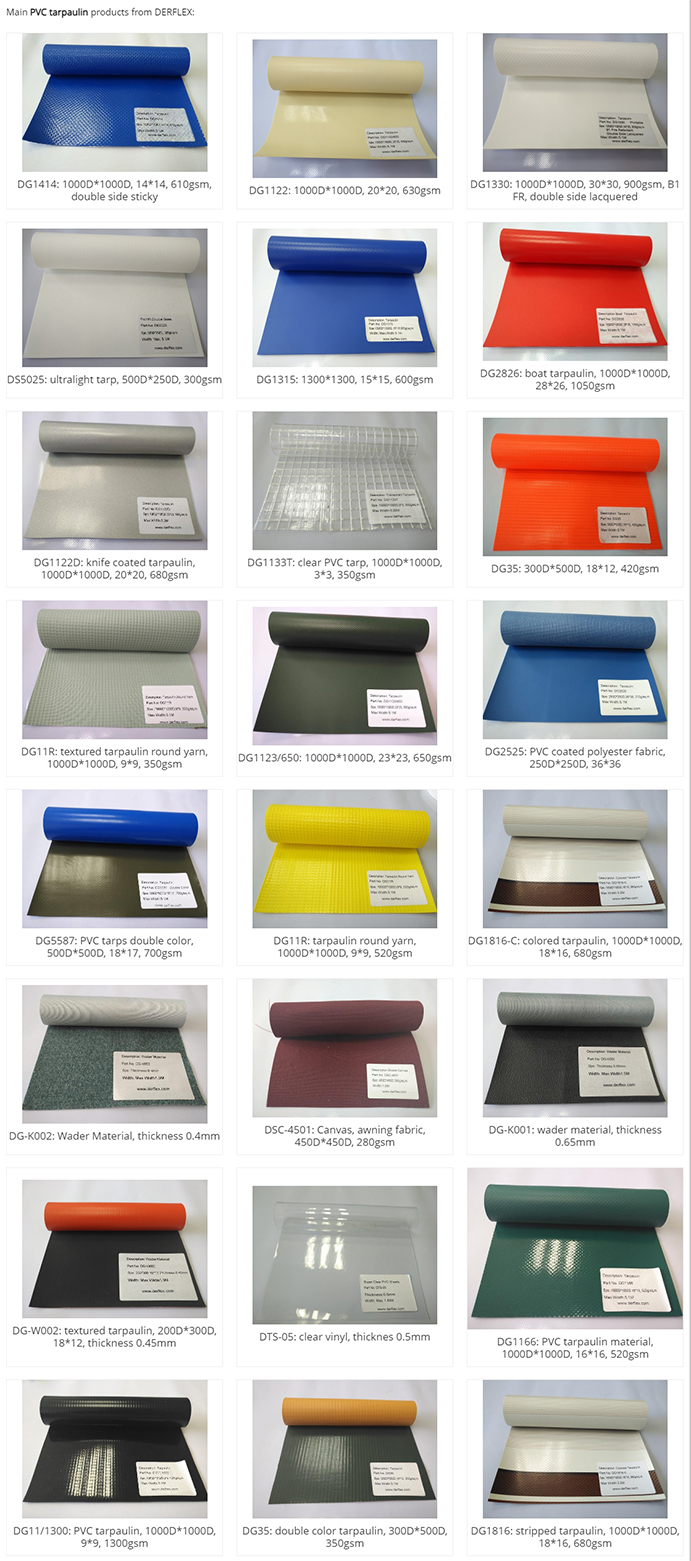
| Field | Illustrative Entry | How to Read It | Follow-Up Question |
|---|---|---|---|
| Material | PVC coated polyester |
Identifies the material family, but not the coating route, sides or formula. | Knife coated or laminated? One or both sides? Any lacquer? |
| Base Fabric | 1000D × 1000D |
Shows nominal yarn denier in two directions. | Standard or high-tenacity polyester? Which direction is listed first? |
| Construction | 20 × 20 |
Usually thread density, but the unit and direction must be defined. | Per inch or per centimeter? Plain or Panama weave? |
| Total Weight | 650 g/m² nominal |
Finished mass per area, including textile and PVC. | What production tolerance applies? Is this a minimum or target? |
| Tensile | 2500 / 2200 N/5 cm |
Two directional values. Their meaning depends on method and orientation. | Which is MD/warp and which is CD/weft? ISO 1421 or another method? |
| Tear | 300 / 250 N |
Resistance to continued tearing under a specific specimen method. | Tongue, trapezoid or another method? Initial or after ageing? |
| Adhesion | 100 N/5 cm |
Peel bond between PVC and fabric under the stated method. | Which peel direction? Is the value typical or minimum? |
| Water Resistance | Project target |
Needs a named hydrostatic or leakage method to be comparable. | Flat fabric only, or seam/finished cover test as well? |
| Temperature | Low-temperature grade |
A general statement does not define cold-crack or operating criteria. | What method, endpoint and temperature are specified? |
| Functional Options | UV / FR / anti-mildew |
Options must be tied to the ordered formulation and evidence. | Which standard, report number, color and validity scope? |
A coated textile is directional. The two reported values often differ because yarn count, tension, weave geometry and production direction are not identical. The labels should be defined on the sheet rather than assumed.
MD often refers to machine direction and generally aligns with warp or roll length. CD often refers to cross direction and generally aligns with weft or roll width. Suppliers may also use L/W or other notation, so request a legend.
ISO 1421 / DIN 53354
Commonly referenced for coated-fabric tensile testing. Confirm specimen width, jaw method, direction and whether the result is a minimum or average.
ISO 4674-1 / DIN 53363
Used for defined tear procedures. Results can vary materially by method and specimen geometry, so the method must travel with the number.
DIN 53357
Commonly referenced for peel strength between coating and reinforcing fabric. Confirm direction, specimen preparation and ageing condition.
ISO 811
Measures resistance to water penetration under increasing hydrostatic pressure. Finished seams and fittings may need separate validation.
ASTM D5035
May appear in North American textile specifications. Do not merge ASTM and ISO figures into one comparison without confirming method equivalence.
One material can be acceptable for a static cover and unsuitable for a high-cycle truck tarp. Use the application to decide which figures require minimum limits, sample trials or finished-product testing.
Repeated folding, wind movement, straps and cargo contact make mechanical balance more important than weight alone.
Large panels experience repeated tension, sliding, flexing and possible graphics or topcoat requirements.
Water shedding, welding, tension, cleaning and any project-specific flame requirement must be reviewed together.
Sharp edges, dragging, pooled water and fastening loads often cause failure before the central fabric reaches its tensile limit.
Flat-fabric strength is only one part of the system. Coating continuity, air leakage and seam compatibility become central.
Repeatability across lots, colors, widths, roll lengths and packing can matter as much as the initial laboratory sheet.
A short sheet is not automatically weak, but critical omissions should be resolved before sample approval or contract confirmation.
The document cannot be reliably linked to the sample, quotation or later repeat order.
The nominal weight gives no agreed production range or lot-acceptance rule.
Directional behavior is hidden, or MD/CD orientation has not been defined.
The number cannot be compared fairly with another supplier or checked against the purchase specification.
The statement does not show the fabric test, seam route or finished-product condition.
No formulation grade, exposure condition, ageing method or retained-property requirement is defined.
“B1,” “M2” or another term must be tied to the relevant test standard, material and report.
A typical laboratory result is not the same as a contractual minimum or batch acceptance requirement.
Send the application and the acceptance basis together. This gives the manufacturer enough information to recommend a construction, prepare a relevant sample and avoid quoting unlike materials under the same generic name.
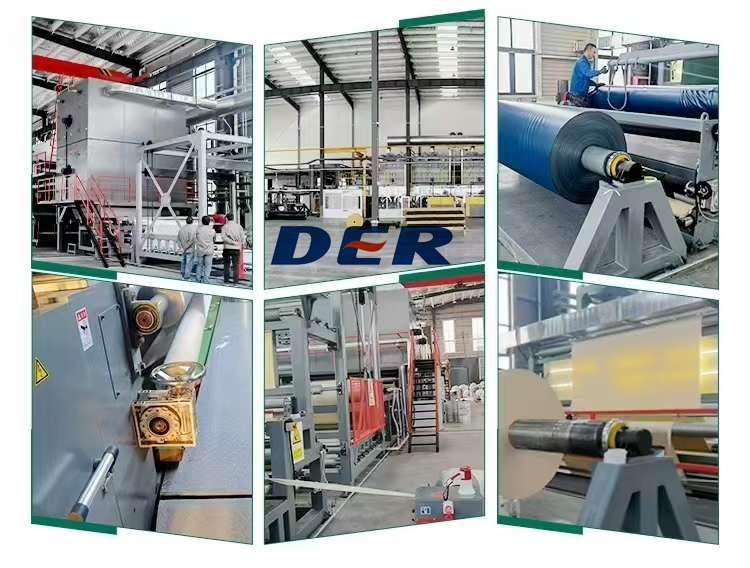
DERFLEX can discuss PVC tarpaulin roll materials and custom constructions by application, GSM, polyester base fabric, surface treatment, processing route, color, width and order requirements. Final values, tolerances and compliance scope are confirmed through quotation, sampling and the agreed specification.
A useful sourcing process links the data sheet to the sample, the intended fabrication method and the commercial order. DERFLEX supports technical discussion for buyers who need roll materials, converted panels or custom tarp programs.
Discuss yarn, weave, PVC route, weight and surface according to the actual duty level rather than selecting GSM in isolation.
Link the approved sample to a model code, technical sheet and quotation so the comparison basis remains clear.
Review hot-air welding, high-frequency welding where applicable, sewing, printing, hemming and reinforcement requirements.
Discuss widths, colors, roll lengths, packing, labels and repeat-order requirements for distributor and private-label programs.
These pages connect the technical data sheet with material construction, waterproof testing, sample comparison and weight selection.
Review the material structure, available specification directions, applications and custom supply formats.
Coated fabric PVC Coated Tarpaulin FabricUnderstand how polyester reinforcement, PVC coating and surface treatment work together.
Yarn construction What Denier Means in Tarp FabricCompare 500D, 1000D and 1680D without confusing yarn size with finished GSM or waterproofing.
Water pressure Hydrostatic Head for TarpsLearn what 2,000 mm, 8,000 mm and 10,000 mm mean—and what the numbers do not prove.
Supplier evaluation How to Compare Tarp SamplesUse one comparison brief, directional tests, fabrication trials and traceable sample coding.
Weight selection 650 GSM vs 900 GSM PVC TarpaulinCompare handling, abrasion reserve and application fit without assuming heavier always means better.
Clear answers for buyers comparing data sheets, requesting samples and preparing a repeatable purchase specification.
Start with the exact product code, revision date and material construction. Confirm whether the sheet refers to coated or laminated PVC, the polyester base-fabric notation, the surface finish and the same model shown on the sample and quotation.
No. Higher GSM means more finished mass per area, but strength also depends on the polyester yarn, weave density, PVC distribution, coating adhesion and manufacturing route. Select the construction from the application, handling cycle, abrasion and required test values.
Tensile strength measures resistance to being pulled apart across a defined specimen. Tear strength evaluates resistance to continued tearing after a cut or tear begins. Both should be read by direction and test method.
Coated fabrics are directional. One value usually represents the machine or warp direction and the other the cross or weft direction. The supplier should define the notation because some sheets use MD/CD, L/W or other abbreviations.
Only when the product condition, specimen direction, units, test method, conditioning and acceptance status are aligned. A typical value from one method should not be ranked against a minimum value from another method as though they were equivalent.
Request the current technical data sheet, identified sample, quotation, relevant test report or compliance evidence, color and finish approval, fabrication trial where needed, packing details and a written final specification with tolerances and acceptance criteria.
Send DERFLEX the application, material code, GSM, width, color, test targets, processing method, quantity and destination. The team can discuss a practical PVC tarpaulin construction and sampling route for your project.