


Safety Pool Cover Fabric — Commercial Swimming Pool Safety Cover Material
DERFLEX supplies PVC-coated polyester pool cover fabric for manufacturers, converters, distributors and commercial aquatic projects that need a strong, waterproof and weldable solid-cover material. The fabric can be developed around target weight, base cloth, coating, color, width, surface finish and fabrication requirements.
What material is used for a solid safety pool cover?
Vinyl/PVC-coated polyester is a common material route for solid pool safety covers because the woven polyester scrim provides structural reinforcement while the PVC coating creates a waterproof, cleanable and weldable surface. Commercial cover performance, however, depends on the complete assembly: fabric, seams, webbing, reinforcement, attachments, anchors, drainage or pump strategy, installation and required testing.
For B2B buyers, this means the correct purchasing question is not only “What GSM should I buy?” but “What material construction will work with my finished-cover design, load path, fabrication process and destination-market standard?”
Solid Coated Fabric vs. Drainage Mesh
Commercial pool cover programs usually start by deciding how the cover should manage water and light. DERFLEX focuses here on the solid PVC-coated polyester route; a project that specifically requires a safety mesh should be treated as a separate material specification.
| Decision factor | Solid PVC-coated polyester | Drainage-oriented safety mesh | Buyer implication |
|---|---|---|---|
| Rain / snowmelt | Water barrier; standing water must be managed | Designed to drain through the cover | Define pump, drain strip or drainage strategy before selecting a solid fabric |
| Light blocking | Can provide strong light blocking with opaque construction | Varies by mesh density and shade percentage | Specify the required light-control level instead of assuming it |
| Fine debris | Strong exclusion when seams and edges are properly designed | Fine debris exclusion depends on aperture / weave | Commercial maintenance targets should be part of the brief |
| Fabrication | Well suited to RF or hot-air welded panel construction | Often sewn and webbing-reinforced | Choose the material around the converter's production route |
| Handling weight | Usually heavier than open mesh | Typically easier to drain and handle | Large commercial covers may need sectional design or handling planning |
| Safety status | Neither material type is automatically a compliant safety cover by itself. | Finished-system testing and labeling remain essential where required | |
Illustrative construction. Actual yarn, density, coating weight, lacquer, color and functional additives must be frozen in the approved project specification.
Why Coated Polyester Works for Solid Commercial Covers
A solid pool safety cover material needs two different functions in one composite: a textile layer that resists tension and tearing, and a continuous coating that protects the textile while providing waterproofing and a weldable surface.
Structural scrim
Polyester yarn construction influences tensile behavior, tear propagation, dimensional stability and the way loads move toward seams and reinforced attachment zones.
Coating system
PVC coating contributes water resistance, cleanability, color, abrasion protection and compatibility with heat-welding processes used to create large cover panels.
Surface package
Outdoor projects may require UV, mildew, surface-cleaning or low-temperature performance directions. These should be confirmed as project requirements rather than assumed from a generic “pool fabric” label.
Repeat-order control
Converters need stable color, weight, roll width, coating adhesion and welding behavior across repeat orders so a cover line can be reproduced without redesigning the process each shipment.
Commercial Safety Pool Cover Fabric Specification
The table below separates verified DERFLEX pool-cover reference data from variables that should be confirmed for each project. Safety should never be inferred from thickness alone.
| Specification item | DERFLEX reference / option | What commercial buyers should define |
|---|---|---|
| Material | PVC-coated polyester fabric for solid waterproof cover programs | Solid cover concept, end use, climate, intended fabrication route |
| Base fabric | Existing pool-cover reference includes 1000D × 1000D, 20 × 20 | Required tensile / tear targets and load-distribution design |
| Weight | Existing pool-cover reference includes approximately 15–18 oz/yd² | Handling, durability, span, panel size and finished-cover test target |
| Thickness | Existing pool-cover reference includes approximately 0.3–0.5 mm | Do not specify thickness without weight, scrim and mechanical requirements |
| Roll format | Existing pool-cover references include 3.2 m × 50 m; other roll directions subject to grade | Converter table size, seam plan, freight, handling and cutting yield |
| Color | Blue and custom colors available by project | Top / back color, light blocking, brand palette and color matching requirement |
| Surface / finish | Custom surface and lacquer direction can be discussed | Matte / gloss, cleanability, abrasion and storage behavior |
| Outdoor performance | UV and weather-resistant formulation direction available by specification | Location, exposure months, temperature range and expected service environment |
| Fabrication | Hot-air / RF welding direction; sewing may be used in reinforced details depending on design | Weld equipment, seam width, peel / weld acceptance, webbing integration |
| Safety compliance | Material can be manufactured to an agreed technical specification | Finished-cover standard, test laboratory, labeling, installation instructions and market responsibility |
Specification references are based on existing DERFLEX pool-cover material pages. Final production data should be confirmed on an approved material sample and technical specification.
Match the Fabric Direction to the Commercial Cover Program
| Use case | Material direction | Fabrication priority | Buyer should verify |
|---|---|---|---|
| Hotel / resort seasonal pool closure | Solid coated polyester where debris exclusion and light blocking are priorities | Large-panel welding, reinforced perimeter, handling plan | Rainwater management, deck geometry, local safety requirements |
| Municipal / school / club pools | Commercial-grade specification developed from finished-cover test and installation requirements | Repeatable reinforcement details and documented revision control | Applicable authority requirements, labeling and testing responsibility |
| Pool-cover OEM brand | Controlled roll program with fixed scrim, weight, color, finish and welding behavior | Yield, seam quality, color consistency, packaging | Approved master sample and repeat-order tolerances |
| Local fabricator / converter | Roll fabric matched to welding equipment and panel width | Weld window, seam geometry, webbing and edge reinforcement | Equipment compatibility and production acceptance method |
| Large irregular commercial pool | Solid cover fabric only after geometry and load path are mapped | Panel orientation, obstacle cut-outs, wear zones, attachment transitions | CAD / template accuracy, water management and installation tension |
Six Details That Matter More Than “Heavy Duty”
Welded seam design
Panel seams should be designed for the converter's RF or hot-air process and verified for the selected coating system. A wide roll may reduce seam count, but seam quality remains part of the finished load path.
Webbing integration
Attachment loads should be transferred through planned reinforcement rather than concentrated into one small area of coated cloth. Webbing orientation, terminations and hardware zones need their own drawing details.
Perimeter reinforcement
Commercial covers see repeated tensioning, removal and storage. Corners, strap zones, drain areas and changes in geometry often need additional patches or layered construction.
Abrasion mapping
Coping, raised walls, ladders and deck transitions can rub the fabric. Mark these contact zones before cutting so wear protection can be added where it is actually needed.
Water management
A waterproof cover can accumulate rain or snowmelt. A pump, drain strip, drain panel or other designed method should be included in the product concept rather than treated as an afterthought.
Revision control
Commercial and OEM programs should freeze material code, drawing revision, color standard, seam method, reinforcement detail and packing rule so repeat orders match the approved construction.
Common Buying Mistakes — and Better Specification Practice
Buying by thickness alone
Two fabrics at a similar thickness can use different scrims, coating weights and constructions. Specify base fabric, weight and mechanical targets together.
Better: specify the material system
Freeze substrate, coating, weight, thickness, color, finish, roll width and fabrication acceptance on one technical sheet.
Calling any waterproof tarp “safety fabric”
Waterproofing is only one property. Finished-cover safety depends on the complete cover system and its required testing.
Better: start from the finished standard
Define the destination-market test and labeling route first, then reverse-engineer the material and construction requirements.
Ignoring water accumulation
A solid cover without a drainage or pump plan can take on water load that changes the system behavior.
Better: include water management in the RFQ
State whether the design uses a pump, drain panel, strip or other water-removal strategy and how it integrates with reinforcement.
Approving color but not welding
Appearance approval alone does not prove that the fabric will run reliably through the converter's production line.
Better: approve a conversion sample
Test the actual material on production equipment, confirm seam quality and record the accepted settings / method before bulk orders.
What to Send Before Requesting a Safety Pool Cover Fabric Quote
For a meaningful B2B quotation, send enough information to choose the material rather than asking only for a price per square meter.
Roll fabric, cut panels or finished-cover manufacturing support.
Solid safety cover, seasonal closure cover, automatic cover or other system.
Known denier, density, weight, thickness or reference sample.
RF welding, hot-air welding, sewing, webbing and hardware integration.
UV exposure, temperature, rainfall / snow, chemical splash and storage conditions.
Required finished-cover standard, third-party testing or market documentation.
Quantity, annual forecast, roll length, packaging, labeling and destination.
Color swatch, material sample, welded sample, trial roll or finished prototype.
Real Pool Cover & PVC-Coated Fabric References
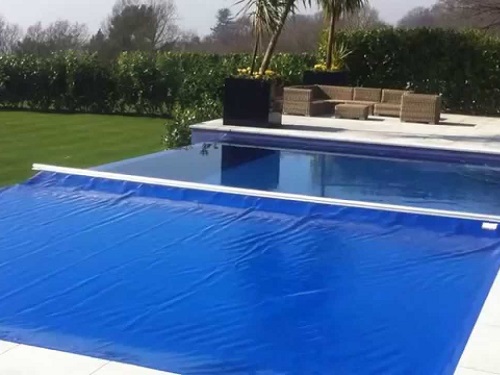
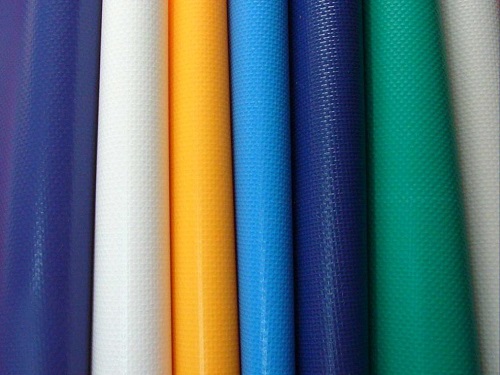
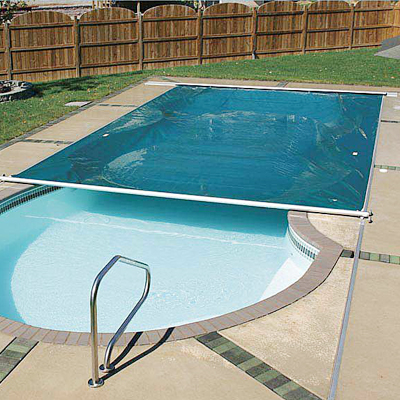
The images below use existing DERFLEX website assets and are suitable for this material-focused page. Final alt text and captions are written around the search intent instead of generic “product image” labels.
Why Material Buyers Work with DERFLEX
Material-level development
DERFLEX works with PVC-coated polyester construction, so discussions can start with base fabric, coating, weight, width, color and welding behavior instead of only finished-cover size.
Converter-aware supply
Roll width, seam count, welding method, cutting yield and packaging influence converter cost. The sourcing route can be planned around the customer's fabrication process.
OEM repeatability
Approved material code, color, surface, roll format and packing rules can be standardized for repeat-order pool cover programs, subject to the agreed technical specification.
Buyers who need a finished safety cover system rather than roll material should review DERFLEX's custom safety pool cover tarp program. Buyers comparing general pool protection applications can also review the PVC swimming pool cover tarp guide.
Technical Paths for Pool Cover Fabric Buyers
Six content links are used across this page: two pool-cover system pages above and four related material pages in this cluster. The Request A Quote link is intentionally not counted as an internal content link.
Safety Pool Cover Fabric FAQ
What is the best material for a solid safety pool cover?
PVC- or vinyl-coated polyester is a common route for solid covers because it combines a reinforced woven scrim with a waterproof and weldable surface. “Best” depends on the finished cover design, target standard, handling weight, climate, seam system, reinforcement and water-management method.
Is PVC-coated polyester fabric itself ASTM F1346 compliant?
ASTM F1346-23 is a performance and labeling specification for safety covers, not a fabric-only certification. A material roll should not be represented as a compliant safety cover by itself. The finished system—including seams, attachments, anchors, openings, installation and labeling—must follow the applicable test and compliance route.
What weight should commercial safety pool cover fabric be?
There is no universal safe weight. Existing DERFLEX pool-cover references include approximately 15–18 oz/yd², while the wider market uses different coated-fabric weights. The correct grade should be selected from the finished-cover load, panel design, reinforcement, handling and required test performance rather than weight alone.
What is the difference between coated vinyl and laminated vinyl pool cover fabric?
Both use a textile reinforcement with PVC/vinyl layers, but the manufacturing route and coating adhesion differ. Buyers should compare peel / adhesion behavior, abrasion, flexibility, weldability, outdoor exposure and repeat-order stability instead of assuming one process is automatically superior for every design.
Can safety pool cover fabric be RF welded?
PVC-coated polyester is commonly selected for RF/high-frequency and hot-air welding. Actual weld quality depends on the coating formulation, thickness, equipment, tooling, seam width and settings. A converter should approve a production-representative welded sample before bulk conversion.
Should a commercial pool use solid fabric or mesh?
Solid fabric is suited to projects prioritizing water barrier, light blocking and fine-debris exclusion, but it needs a standing-water strategy. Mesh is chosen when drainage and lighter handling are priorities. The applicable safety requirement, climate and maintenance plan should decide the route.
Can DERFLEX make custom colors and roll sizes?
DERFLEX existing pool-cover and PVC tarpaulin references support custom colors and project-specific roll directions. Final roll width, length, color tolerance, finish and packing should be confirmed for the selected fabric grade before production.
What should an OEM buyer provide for a quotation?
Provide the cover type, reference material or target construction, weight/thickness if known, roll width, color, fabrication method, UV/weather requirements, safety standard or test route, annual volume, trial order quantity, packaging and destination market. A physical sample or technical sheet can reduce specification assumptions.
Specify the Fabric Before You Specify the Price
Send DERFLEX your commercial pool-cover application, material reference, target weight/thickness, roll width, color, fabrication method, order quantity, destination and any required finished-cover safety standard. The team can review a practical PVC-coated polyester material direction for sampling and bulk supply.
Product suitability, finished-cover testing, certification and labeling must be confirmed for the intended market and final application.