Stable material for repeat production
Confirm roll width, panel layout, welding process, color, finish and structural targets before a new trailer curtain program enters production.




PVC-coated curtain panels developed for trailer builders, replacement-curtain workshops, logistics fleets and distributors that need fast side access, dependable cargo shielding, weldable fabrication and a clean surface for fleet graphics.
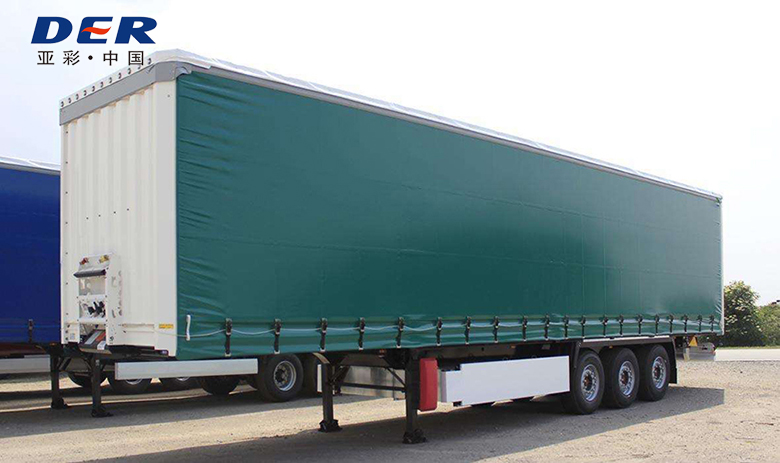
A side curtain tarp is the flexible side panel of a curtain-side truck or trailer. It slides or folds away for loading, then closes to help protect cargo from rain, road spray, dust and routine transport exposure.
Because it functions as part of a moving vehicle body system, the material must be selected for tension, wind, repeated handling, rail movement, welded seams, strap zones, cleaning and surface appearance—not only for nominal fabric weight.
Confirm roll width, panel layout, welding process, color, finish and structural targets before a new trailer curtain program enters production.
Replacement curtain projects may require measured dimensions, compatible hardware zones, color matching, reinforced edges and practical lead-time planning.
Side access can support frequent loading routes while the closed curtain provides a flexible weather barrier and a consistent fleet appearance.
Choose a specification that can be cut, welded, reinforced, printed and reordered with clear production and packaging requirements.
A productive sourcing discussion begins with the complete curtain system rather than a generic roll description.
The right construction depends on curtain size, trailer design, operating climate, print process, expected handling and local compliance needs.
| Selection item | Typical direction | Why it matters to the buyer |
|---|---|---|
| Material structure | High-tenacity polyester base fabric with PVC coating on both sides | The polyester carries mechanical load; the PVC layer provides weather protection, surface finish and welding compatibility. |
| Weight range | Approximately 650, 750, 850 or 900 g/m²; custom structures may be discussed | Lighter grades can improve handling, while heavier grades may suit larger panels or tougher fleet conditions. |
| Width direction | Common project range around 1.02–3.20 m, subject to construction and order plan | Correct width can reduce welding lines, cutting waste and production complexity for the curtain converter. |
| Surface finish | Glossy, matte, embossed, lacquered or print-oriented finish | Surface choice affects appearance, cleanability, graphics and compatibility with the intended printing method. |
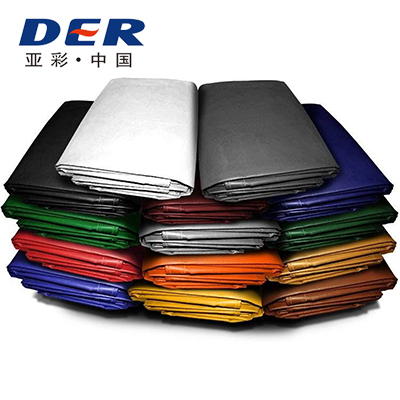
| Color | Common fleet colors or project-matched colors | Color should be confirmed by physical sample or agreed reference, especially for repeat fleet branding. |
| Performance options | UV, anti-mildew, low-temperature flexibility, anti-wicking or flame-retardant direction | Optional treatments should be selected against the destination climate, use environment and required test method. |
| Fabrication route | Hot-air welding, high-frequency welding, cutting, hems, reinforcement and strap-area processing | Sample testing helps verify weld settings and finished-panel behavior before volume production. |
| Supply format | Roll goods, cut panels or project-based converted curtain components | The format should match local fabrication capacity, shipping efficiency and installation responsibility. |
The values above are commercial reference directions, not a universal guarantee. Final construction, tolerances, test methods, treatment combinations and supply format should be recorded in the approved technical sheet and purchase agreement.
Material weight is one part of the decision. Base cloth, coating uniformity, flexibility, weldability, finish and repeat-order consistency also influence the finished curtain.
A 650–750 gsm direction is often considered when handling weight, flexibility and commercial cost need to stay balanced.
An 850–900 gsm direction may be appropriate for larger side panels, frequent operation or projects that prioritize a more robust structure.
Printed curtains require surface selection, ink compatibility and color approval in addition to mechanical performance.
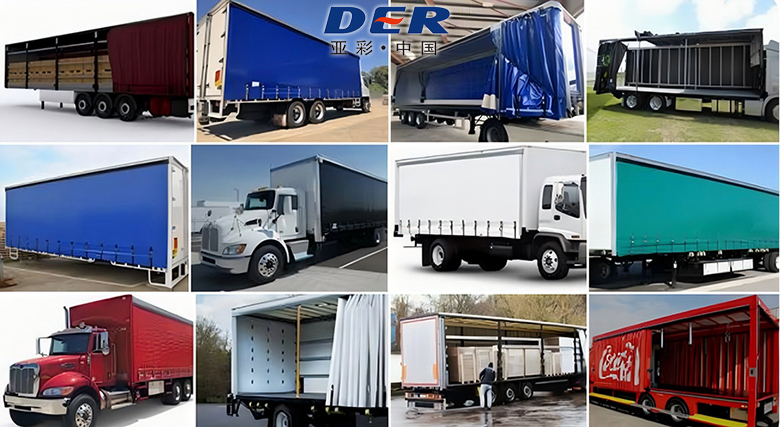
Side curtains combine flexible access with cargo shielding, but each vehicle body concept has different priorities.
DERFLEX product images show common curtain-side applications and color directions. Final appearance depends on the approved material, fabrication and trailer system.
Side curtain tarps are relevant wherever large side access, flexible enclosure and repeat operation need to work together.
Large sliding panels for long-haul and regional freight vehicles.
Measured replacement programs for worn or damaged vehicle curtains.
Material supply for builders integrating complete side curtain systems.
Transport curtains that combine cargo shielding with brand graphics.
Flexible side panels for specialized commercial vehicle configurations.
Roll goods or panel material for local curtain repair and conversion.
Repeat supply, packaging and specification management for regional channels.
Project-based flexible sidewalls for transport and industrial access systems.
A structured approval path reduces uncertainty in color, fabrication and bulk production.
Share trailer type, curtain dimensions, loading pattern, operating climate and target market.
Review gsm, base cloth, finish, printing, optional treatments and processing method.
Check color, surface, flexibility, weldability and any agreed performance tests.
Record technical sheet, quantity, roll format, packaging, marks and delivery plan.
Use the approved reference to support future fleet maintenance or OEM production cycles.
DERFLEX focuses on PVC coated fabrics and tarpaulin materials for commercial conversion. For side curtain tarp projects, the sourcing conversation can cover structure, finish, welding direction, printing, roll planning, packaging and documentation.
Recommended inquiry informationVehicle type, panel size, gsm, width, color, finish, print method, quantity, destination and required test standard.
Send Project DetailsThese six DERFLEX pages cover closely related truck tarp, trailer cover, printing and custom manufacturing requirements.
Clear answers for trailer builders, fleet operators, distributors, repair companies and tarp converters.
They are commonly made from PVC-coated polyester fabric. The woven polyester provides structural reinforcement, while the PVC coating provides a weather-resistant surface, weldability and finish options for transport use.
A common commercial range is approximately 650–900 g/m². A 650–750 gsm direction may suit balanced fleet applications, while 850–900 gsm may be considered for larger panels or more demanding service. The final choice should also consider base cloth, coating, curtain size and operating conditions.
DERFLEX can discuss replacement-curtain projects based on dimensions, color, material structure, reinforcement layout, printing and supply format. Accurate measurements and photos of the existing system are useful during evaluation.
Yes, print-oriented surface options can be discussed. The printing method, ink system, surface finish, color target and artwork layout should be confirmed during sampling because these factors affect the final result.
PVC-coated curtain fabric is commonly converted by hot-air or high-frequency welding. A production trial with the selected specification and the converter's equipment is recommended before mass processing.
Please provide trailer or truck type, required curtain dimensions, target gsm, roll width or panel format, color, finish, printing requirement, optional treatments, order quantity, destination and any required test or documentation standard.
Share the vehicle type, panel size, target weight, color, printing method, quantity and destination. DERFLEX can review the information and discuss a practical PVC curtain-side material direction for sampling and quotation.