Protective Top Finish
Influences sheen, touch, stain-release direction, visual cleanliness and surface protection. Matte and low-glare finishes are often considered for large sofa panels because reflections can magnify surface variation.




DERFLEX supplies sofa PU leather material for furniture programs that need a controlled leather-look surface, practical roll processing and repeatable visual direction. Instead of choosing upholstery only by color card, buyers can define grain, hand feel, backing, thickness, surface finish and performance priorities around the sofa design, production method and end-use environment.
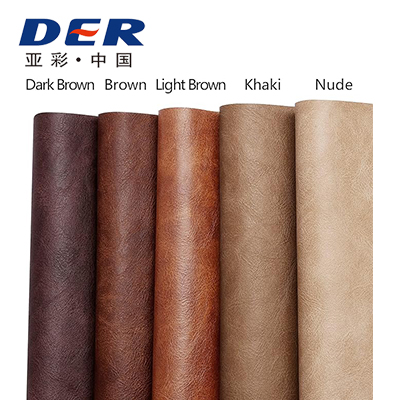
That changes how material should be selected. Surface uniformity, seam behavior, cushion stretch, touch, backing stability and repeat color matter together once the leather is cut and upholstered.
Sofa PU leather material is an engineered synthetic upholstery material that uses a polyurethane-based surface system over a textile, nonwoven or microfiber support layer. It is supplied in rolls and can be developed toward a specific leather grain, color family, sheen, softness and handling behavior.
For furniture manufacturers, the real purchasing question is not simply “PU or not PU.” A more useful specification asks how the material will behave on seat cushions, backrests, armrests, side panels, piping and stitched details. The same sofa may place different demands on stretch, recovery, abrasion direction, cleanability and visual consistency.
DERFLEX approaches sofa PU leather as a production material rather than a decorative sample alone. The development path can start from an existing swatch, an interior palette, a target hand feel, a finished sofa reference or a technical requirement list.
A leather-like grain is only the visible layer. Furniture performance also depends on the surface finish, PU body, bonding layer and supporting substrate below it.
Influences sheen, touch, stain-release direction, visual cleanliness and surface protection. Matte and low-glare finishes are often considered for large sofa panels because reflections can magnify surface variation.
Creates the leather-look face, grain depth, color and flexibility. The resin and finish direction should be discussed together with the expected use climate and cleaning routine.
Connects the visible surface to the support structure. Adhesion and compatibility are important because upholstery is repeatedly folded, stretched and compressed during use.
Knitted, woven, nonwoven or microfiber backing changes drape, dimensional support, sewing feel and the way the material conforms around foam and curved furniture parts.
The following specification framework helps furniture purchasing teams reduce ambiguity before sampling and quotation.
| Specification Item | Development Direction | Why It Matters for Sofa Production |
|---|---|---|
| Material Type | PU leather, microfiber PU leather or application-specific synthetic leather construction | Separates basic surface appearance from the support structure and target furniture grade. |
| Thickness | Common sofa sourcing discussions often reference approximately 0.8–1.5 mm; final value should follow sample and construction approval | Influences hand feel, edge bulk, sewing, folding and conformity around cushions and corners. |
| Surface Grain | Napa-style, pebbled, lychee-style, smooth, vintage, fine grain or custom embossing | Controls visual scale, perceived softness and how large sofa panels read under showroom lighting. |
| Sheen / Touch | Matte, semi-matte, low-glare, smooth or soft-touch direction | Changes perceived product positioning and contact comfort on seats and armrests. |
| Backing | Knitted, woven, nonwoven, microfiber or project-specific support | Affects stretch, stability, seam behavior, wrapping and cushion conformity. |
| Color | Standard palette, physical sample matching, collection color family or project target | Large upholstered areas make batch and panel-to-panel color variation more visible. |
| Performance Direction | Abrasion, hydrolysis, cleanability, scratch, color fastness, water-resistance or flame-retardant route as required | Requirements depend on residential, hospitality, office, rental, public-space or regional market use. |
| Roll & Packing | Width, roll length, core, labels, carton marks, pallet or container planning | Important for cutting yield, warehouse handling and repeat furniture production. |
For sofa manufacturers, performance should be defined by the furniture category, customer use pattern and the tests required for that program.
Large cushions and side panels can reveal differences in grain depth, gloss and color. Sample approval should consider the material across a realistic viewing area, not only a small swatch.
A backing that works for flat decorative panels may not be the right choice for tight cushion wrapping, quilting or curved armrests. Sewing and wrapping trials are useful before bulk production.
Seats combine compression, friction, body heat and repeated flexing. Performance discussions should include the resin system, surface protection, backing and finished sofa construction.
Residential wiping, hotel housekeeping and public-area cleaning can be very different. Cleaning expectations and chemical exposure should be clarified before choosing the finish.
Heat and humidity can influence the long-term behavior of some polyurethane systems. Buyers can discuss hydrolysis-resistance direction and verify the chosen material through project testing.
Flammability, restricted substances, abrasion, color fastness or other requirements vary by customer and destination. The test route should be agreed before order confirmation.
This zone-based approach helps product developers specify the material around use rather than assuming every furniture panel has identical requirements.
High contact, compression and rubbing. Prioritize touch, surface behavior, stretch/recovery direction and realistic wear evaluation.
Large visible area with repeated body contact. Color, grain consistency and soft hand feel can be especially noticeable.
Repeated hand contact and localized friction. Cleaning expectations and surface appearance often matter strongly here.
Lower body contact but high visual exposure. Stable color, embossing and efficient roll cutting can influence production value.
Tight folds and seams reveal thickness, backing behavior and coating flexibility. A sewing trial is useful for confirming process fit.
These materials can all create a leather-look sofa surface, but their structure, touch, processing and performance direction can differ. The final choice should be confirmed against the actual product and target market.
| Material Direction | Common Reason to Consider It | What to Check Before Ordering | Typical Sofa Program Fit |
|---|---|---|---|
| PU Leather | Soft leather-like touch, broad grain/color design and flexible upholstery processing | Hydrolysis direction, backing, coating adhesion, cleaning route and use climate | Residential furniture, lounge seating, headboards, design-led sofa collections |
| Microfiber PU Leather | More structured support with refined hand feel and a dense synthetic base | Thickness, drape, seam bulk, abrasion direction, cost target and required test route | Upgraded upholstery collections, higher-touch seating, premium-feel furniture programs |
| PVC Leather | Practical cleanability, strong water-resistance direction and cost-controlled commercial options | Hand feel, flexibility, cold behavior, odor/VOC expectations and market requirements | Commercial seating, easy-clean programs, cost-sensitive furniture and selected contract use |
Material suitability varies by construction and required performance. A physical sample, agreed technical specification and finished-product trial should be used before bulk purchasing decisions.
DERFLEX can support a sample-led workflow so design, processing and purchasing teams are aligned before commercial production.
Share the furniture type, target market, use environment, desired appearance and any performance or compliance requirements.
Discuss grain, color, gloss, touch, thickness and backing according to sewing, wrapping, quilting and cushion construction.
Evaluate the sample for visual direction and manufacturing fit. Where relevant, arrange the tests required by the buyer or destination market.
Confirm roll format, packing, labels, order quantity and repeat-order controls before production and shipment coordination.
Different furniture categories can use different PU constructions even when the finished products look visually similar.
For fixed sofas, modular sectionals, sofa beds and living-room seating where touch, color coordination and visual consistency are central to the product line.
For moving seat structures that create repeated folds and flex zones. Backing behavior and surface flexibility should be reviewed with the mechanism design.
For guest-room seating, lobby furniture and hospitality interiors where appearance, maintenance routines and repeat project supply all matter.
For office lounges, waiting areas and reception furniture where frequent use can shift the specification toward cleanability and commercial performance.
For banquettes, lounge seats and contract projects that may require buyer-defined abrasion, flame-retardant or cleaning performance routes.
For coordinated color families, repeat embossing, sample books, branded packaging and roll supply aligned with a furniture collection or regional distribution program.
Quality control becomes more useful when it is tied to the approved sample, finished-product process and agreed acceptance criteria.
Use these six related pages to compare upholstery structures, supplier capabilities and adjacent synthetic leather options.
Explore PU leather for furniture, seating, panels and commercial interior applications.
View upholstery material →Review polyurethane leather construction, backing, surface and custom roll development.
Review material options →See custom manufacturing and OEM supply support for multiple synthetic leather programs.
Review supplier capability →Compare broader faux leather fabric directions for furniture and OEM product development.
Explore synthetic leather →Consider an alternative leather-look material for cost-controlled and easy-clean programs.
Compare PVC leather →Read the buyer guide to construction, types, benefits, limits and sourcing questions.
Read the PU leather guide →Practical answers for sofa manufacturers, furniture brands, upholstery factories, importers and distributors.
Yes, PU leather is commonly used for sofa upholstery because it can provide a leather-like appearance, controllable color and grain, a soft-touch direction and practical roll processing. The construction should still be selected according to sofa type, use frequency, climate, cleaning routine and required tests.
Many market references for sofa PU leather are discussed around approximately 0.8–1.5 mm, but thickness alone does not determine suitability. Backing, surface system, softness, seam behavior, stretch and the finished sofa construction should be reviewed together. Final thickness should be confirmed through samples and upholstery trials.
Color, grain, gloss, touch, backing and thickness can be discussed against a physical sample, product photo or design target. Matching feasibility and tolerance should be confirmed during the approved sample process before bulk production.
Surface systems can be developed toward scratch-resistance and easy-clean directions, but the required level should be defined by the buyer and verified through an agreed sample or test method. No single PU construction is suitable for every environment.
Long-term behavior depends on resin system, coating adhesion, backing, flexing, heat, humidity, cleaning chemicals and product design. A lower-suitability material can fail earlier, which is why hydrolysis direction, use climate and realistic product testing should be considered during specification.
Send the sofa type, reference color or swatch, grain, touch, backing, thickness, roll requirement, required tests, estimated quantity, destination market and target schedule. This helps DERFLEX discuss a more relevant material and sampling route.
Share your sofa application, reference surface, target color, backing direction, quantity and testing requirements. DERFLEX can review a practical material route for the next sampling step.