Air or liquid leakage
Prioritize barrier continuity, coating/lamination adhesion, seam process, pinhole control and finished-product pressure or leakage testing.




DERFLEX supplies TPU technical fabric for manufacturers, converters and product teams developing welded, waterproof, airtight and flexible textile systems. Instead of starting with a generic gsm, we match the textile substrate, TPU chemistry, coating or lamination structure, surface, width and joining process to the way the finished product must perform.
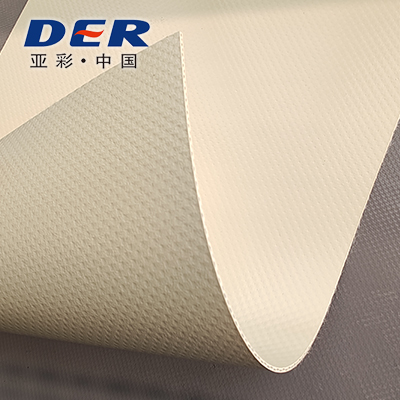
For this page, TPU technical fabric means a reinforced textile engineered with thermoplastic polyurethane as a functional barrier or bonding layer. The textile carries load and controls shape; the TPU contributes sealing, flexibility and surface performance. The useful specification is the complete composite—not the polymer name alone.
A 600D TPU fabric for a roll-top dry bag can require a very different hand feel, coating build and seam behavior from a 600D structure intended to hold air, contain liquid or survive repeated pressure cycling. The right material is the one that converts reliably on your production equipment and passes the tests that matter in the finished product.
Nylon can be useful where soft folding, tear performance and high strength-to-weight are priorities. Polyester can be useful where dimensional stability, process control and a practical industrial balance are important.
Polyether and polyester TPU families can be selected according to water/humidity exposure, abrasion, oil contact, mechanical demand and the final validation plan.
Single-side, double-side, full coating, film lamination and hybrid constructions can produce different balances of weight, air retention, peel behavior, hand feel and surface cleanability.
High-performance technical textiles are easier to specify when the project team first identifies the field failure that must be avoided. That creates a clearer path from end-use risk to material architecture, test method and bulk-control point.
Prioritize barrier continuity, coating/lamination adhesion, seam process, pinhole control and finished-product pressure or leakage testing.
Review base textile strength, TPU build, surface hardness, repeated flexing and how the product contacts floors, rocks, equipment or cargo.
Match TPU chemistry to humidity, immersion, cleaning agents, oil or other media. Compatibility should be evaluated for the exact service fluid and temperature.
Confirm whether the factory uses HF/RF, hot air, heat sealing or ultrasonic welding and validate settings on the actual production equipment before bulk approval.
There is no single “best TPU fabric.” The following directions help narrow the sample set before testing.
For soft goods where packability and hand feel matter.
For chambers that must maintain pressure and tolerate repeated flexing.
For flexible tanks, bladders and process containers.
For cushions, air cells and support systems.
For water-contact, buoyancy and emergency equipment.
For covers, bags, flexible components and demanding OEM equipment.
The ranges below are practical project directions based on DERFLEX TPU roll-goods capability. They are not universal performance guarantees; final values should be locked after sample conversion and application testing.
| Specification item | Available direction | Why it matters to the buyer |
|---|---|---|
| Base textile | Nylon / polyester; woven or selected textile constructions | Controls tensile behavior, tear performance, dimensional stability, softness and weight. |
| Common denier direction | Approx. 70D, 210D, 420D, 500D/600D, 840D, 1000D, 1680D and custom | Use denier as one design input—not as a substitute for finished tensile, tear and seam data. |
| TPU chemistry | Polyether TPU / polyester TPU | Selection can be aligned with water/humidity exposure, abrasion, oil contact and mechanical requirements. |
| Construction | Single-side / double-side; coating / film lamination; project-specific composite | Affects barrier, cleanability, weight, hand feel, peel behavior and joining method. |
| Total weight | Approx. 150–1500 gsm project direction | Lightweight soft goods and heavy-duty containment products require very different constructions. |
| TPU layer / thickness | Approx. 0.03–1.0 mm direction, subject to structure | Influences barrier performance, welding window, stiffness, surface durability and cost. |
| Width | Approx. 1.0–3.2 m by grade and process | Useful width can reduce seam count, cutting waste and conversion time on larger products. |
| Surface | Matte, glossy, smooth, embossed, textured and custom appearance direction | Surface affects blocking, cleaning, friction, visual positioning and downstream printing. |
| Joining route | HF/RF welding, hot-air welding, heat sealing and selected ultrasonic routes | The actual welding window must be confirmed with the buyer's machine, seam geometry and production settings. |
| Functional direction | Hydrolysis resistance, UV direction, antimicrobial, FR, anti-mildew, oil/chemical resistance, anti-static or other project options | Availability and compliance depend on the exact formulation and test requirement; confirm before specification lock. |
| OEM control | Color, finish, width, roll length, labels, packaging and repeat-order control points | Helps manufacturers convert a successful prototype into repeatable roll-goods supply. |
TPU technical textiles are most valuable where a flexible product needs a textile reinforcement and a sealable functional surface at the same time.
Air-holding products need more than a strong face fabric. The coating architecture, seam weld, coating adhesion and repeated pressure cycling all influence real performance.
Buyer focus: air retention · seam strength · puncture · hydrolysisFor soft goods, unnecessary weight can be as undesirable as insufficient durability. A useful structure balances folding, abrasion, welding, appearance and target retail positioning.
Buyer focus: weight-to-strength · hand feel · welded seams · finishWater, oils, cleaning fluids and industrial media place different demands on TPU chemistry and seam construction. The exact liquid should be disclosed before material approval.
Buyer focus: media compatibility · barrier · peel · fatiguePressure cushions, mattress cells and pneumatic components may need soft flexing, controlled air retention and surfaces that support the intended cleaning regime.
Buyer focus: cleanability · pressure cycling · sealing · documentationBuoyancy and emergency products can combine water exposure, folding, abrasion and critical seam requirements. Grade-specific standards and finished-product validation should guide selection.
Buyer focus: water exposure · tear · weld · standard-specific testingProtective bellows, equipment covers, flexible ducts, pneumatic elements and custom welded assemblies can benefit from a TPU technical fabric tailored to movement and fabrication method.
Buyer focus: dimensional behavior · abrasion · fabrication · repeatabilityA technically attractive data sheet does not guarantee that a fabric will weld well on your equipment or survive the real product cycle. DERFLEX supports a staged evaluation route so the approved material is tied to the application and conversion process.
Product size, pressure, media, temperature, folding, abrasion, service environment and target life.
Substrate, denier, TPU chemistry, coating/lamination route, weight, surface and width.
Weld, heat seal, cut, print or sew with the actual production method whenever possible.
Leakage, seam strength, abrasion, peel, pressure cycling, low-temperature flex or media exposure as relevant.
Approved color, weight, width, surface, roll length, packaging, labels and repeat-order checkpoints.
These terms overlap, but they are useful when they describe how the functional layer is built and what the buyer needs to validate.
“TPU technical fabric, 5,000 meters” is not enough information for an accurate technical recommendation. A concise product brief can shorten sampling cycles and reduce specification ambiguity.
DERFLEX combines coated-textile manufacturing experience with application-led specification work for manufacturers, converters, distributors and international product programs. The focus is on a repeatable material definition that can move from sample to bulk supply.
Discuss coated, film-laminated, one-side, two-side and project-specific composite directions rather than forcing a single standard structure.
Selection can account for pressure, water/humidity, abrasion, media contact, folding, welding route and target product weight.
Width, color, finish, roll length, packaging and selected functional directions can be aligned with the buyer's manufacturing program.
Material samples are more useful when the buyer tests them through the intended welding, cutting, lamination or assembly process.
Approved appearance and measurable roll-goods parameters can be converted into bulk checkpoints to reduce ambiguity on repeat supply.
DERFLEX has long-term coated fabric and export experience and supports global customers with application discussion, sampling and bulk roll supply.
It generally combines a textile reinforcement such as nylon or polyester with thermoplastic polyurethane by coating, film lamination or another composite route. The textile provides mechanical reinforcement while the TPU layer can provide a waterproof or airtight barrier, abrasion resistance, flexibility and heat-weldable surface behavior.
It can be engineered for waterproof and airtight applications, but those functions depend on the exact coating or lamination build, defect control, seam design and finished-product processing. Airtight products should be validated by leakage or pressure-retention testing after welding.
Many TPU constructions can be designed for HF/RF welding, hot-air welding, heat sealing or selected ultrasonic processes. The correct route depends on polymer chemistry, layer thickness, base textile, seam design and machine settings. Sample welding on the buyer's own equipment is recommended before bulk production.
Polyether TPU is commonly evaluated where hydrolysis resistance, humid environments or water contact are important. Polyester TPU can be evaluated for strong abrasion, oil resistance and mechanical performance. The exact choice should be confirmed against the service media, temperature and test requirements of the final product.
Share the finished product, base textile/denier if known, what the material must hold or resist, target weight and width, coating or lamination preference, welding method, color/finish, required tests, destination market, trial quantity and expected order volume.
Project-specific functional and compliance directions can be discussed, but such claims should only be made for the exact supplied grade after the relevant formulation, test method and target-market requirements have been confirmed. Send the required standard or media specification with your inquiry.
Tell DERFLEX what you are manufacturing, how the seams are made, what the material must resist, the roll width you need and how you plan to validate the finished product. We can discuss a practical material direction for sample evaluation and bulk quotation.
Technical data on this page is presented as selection guidance. Final specifications, compatibility, compliance and performance should be confirmed for the exact material grade, processing conditions, finished-product design and destination-market requirements.