Fast area coverage
Poly tarps offer a high coverage-to-weight ratio. That matters after wind, hail or fallen-tree damage when crews or relief teams may need to distribute many covers quickly.




When storm damage, fallen debris, unfinished roof work or a sudden leak leaves a building exposed, the first material decision is usually about speed: cover the opening, shed rain, control further damage and create time for permanent repair. DERFLEX supplies heavy duty polyethylene tarpaulins for temporary roofing programs where low weight, practical handling, waterproof laminated construction and scalable bulk supply matter.
For roofing contractors, restoration suppliers, building-material distributors, relief programs and OEM buyers. Final tarp performance depends on material grade, finished size, reinforcement, anchoring method, roof condition and weather exposure.
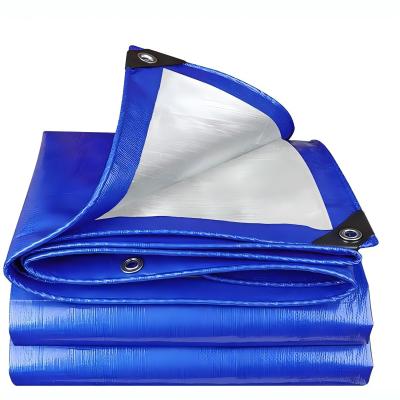
Heavy duty poly tarps are well suited to short-term emergency roofing because woven polyethylene is relatively light, folds compactly, covers large areas economically and can be laminated for water resistance. For a damaged roof, the useful specification is not simply “blue tarp”; it is the combination of material weight, scrim density, film quality, finished dimensions, reinforced edges, attachment spacing and the expected exposure period.
For longer service, repeated handling or severe mechanical stress, a heavier PVC coated polyester tarp may be more appropriate. DERFLEX can support both PE and PVC routes so buyers can match material cost to the real duration and risk of the job instead of over-specifying every emergency cover.
A roofing tarp is temporary protection, not a replacement roof system. Its value comes from giving repair teams a controlled window between damage and permanent work.
Poly tarps offer a high coverage-to-weight ratio. That matters after wind, hail or fallen-tree damage when crews or relief teams may need to distribute many covers quickly.
Laminated PE surfaces are designed to limit water penetration through the sheet. Proper slope, overlap and attachment are still essential because roof leaks often occur at edges, fastener points or pooled-water areas rather than through the middle of the tarp.
Folded PE tarps can be stocked by restoration companies, distributors and emergency-response programs without the storage weight associated with heavier reusable industrial covers.
Roofing failures often begin at corners, hems, grommets and sharp-contact zones. Reinforced edges, corner patches and appropriate attachment spacing help distribute load more effectively.
Blue is familiar for emergency roofing. White or silver can help reduce solar heat gain; other colors can support contractor identity, inventory coding or site requirements.
For a short emergency response window, PE can provide a more economical route than specifying long-life PVC material for every property. The right choice depends on how long the cover must remain in service.
Instead of asking only “How thick is the tarp?”, define how quickly it will be deployed, how long it may remain exposed and how often it will be handled.
Priority: immediate coverage, low handling weight and economical stock. Typical buyers include restoration crews, municipal or relief stock programs and roofing distributors preparing for storm season.
PE is often the practical routePriority: stronger edge design, better UV stabilization, secure attachment geometry and sufficient finished size to reach stable areas beyond the damage. Material grade should increase as exposure and wind risk rise.
Heavy PE + reinforcementPriority: tear resistance, abrasion tolerance, seam strength and repeat handling. Where the cover is expected to stay installed or be reused, compare reinforced PE with PVC coated polyester before confirming the purchase.
Consider PVC for higher dutyThe strength comes from a composite structure. The film provides the weather barrier; the woven reinforcement carries much of the tension created by handling and tie-down loads.
DERFLEX PE tarpaulin programs can be built around woven polyethylene reinforcement with laminated or coated protective layers. UV additives, edge reinforcement, eyelets, rope or webbing borders and corner treatment are selected according to the order specification.
These are configurable manufacturing ranges and buying considerations, not a single fixed model. Final specification should be confirmed against the roof condition, weather exposure, local requirements and installer method.
| Specification item | DERFLEX configurable direction | Roofing procurement logic |
|---|---|---|
| Material | Woven PE tarpaulin with laminated or coated protective surface | Use PE where low weight, fast deployment and temporary service are key priorities. |
| Weight | Approx. 60–300 gsm overall PE range; heavier grades available within the program | Emergency roofing commonly benefits from moving above light general-purpose grades when wind, abrasion or longer exposure is expected. |
| Thickness | Approx. 0.08–0.40 mm depending on construction | Do not compare thickness alone. Scrim, film consistency, hem design and eyelet reinforcement also affect field performance. |
| Scrim / weave | Woven PE reinforcement; construction selected by grade | Higher reinforcement density can improve strength-to-weight performance, especially near tension zones. |
| Color | Blue, white, silver, green, black, yellow, orange; custom colors for suitable quantities | Blue for recognizable emergency stock; white/silver where heat reflection matters; custom colors for distribution or site identification. |
| Finished size | Standard or custom finished dimensions; wider covers can be joined | Specify finished size rather than cut size so procurement and field teams know the actual cover dimension after hems and fabrication. |
| Edge reinforcement | Folded/reinforced hems, rope or compatible border reinforcement, optional corner patches | Important for wind-driven movement and repeated tension at the perimeter. |
| Eyelets / grommets | Metal eyelets with spacing defined by project requirement | Closer spacing can distribute load across more points. Final spacing should match the installer’s anchoring method and expected exposure. |
| UV treatment | UV-stabilized formulations available | Specify when tarps may remain exposed beyond immediate storm response or will be stored for seasonal emergency inventory. |
| Printing / labeling | Program-dependent logo, package label, carton mark or private-label support | Useful for distributors, restoration networks, relief agencies and contractor-branded emergency kits. |
| Packing | Folded units, bale/carton/pallet or project packing by confirmed order | For storm-season stock, define unit identification and pack count so field teams can deploy the correct size quickly. |
DERFLEX manufactures both polyethylene tarpaulin and PVC coated tarp materials, which lets buyers compare the duty level instead of treating one material as the answer to every roof-cover problem.
The key purchasing objective is fast, economical temporary coverage across many properties or a large exposed area.
The project requires stronger mechanical performance, repeated use or a longer service window.
The same material can serve several emergency and construction workflows, but the finished size and reinforcement should be adapted to the use case.
Temporary coverage after wind, hail or impact damage while inspections, insurance processing and permanent repair are arranged.
Short-term water-shedding cover for warehouses, retail facilities and other buildings while maintenance teams isolate the source and plan repair.
Covering unfinished roof zones, openings, decks or materials when work is interrupted by weather and a temporary barrier is needed.
Pre-packed emergency tarps for post-storm distribution, temporary shelters and rapid property stabilization programs.
Standardized tarp sizes, colors and packing for restoration branches that need repeatable emergency stock before severe-weather seasons.
Custom packaging, carton marking, size mix and specification control for building-material wholesalers and online/offline tarp distributors.
Roof tarp sizing is not simply the visible hole size. A professional installer needs enough material to extend past the damaged zone and develop a secure, drained cover geometry.
Use safe measurements, roof drawings, drone assessment or contractor estimates. Do not walk onto a damaged, wet or unstable roof to obtain dimensions.
The finished tarp must extend beyond the damaged area to locations that the qualified installer can secure. Required overlap varies with roof geometry and anchoring method.
A flat pocket can collect water and increase load. The cover layout should shed water according to the roof slope and professional installation plan.
For procurement, confirm whether the quoted dimensions are cut size or finished size after hemming. This prevents shortage at the site.
More attachment points can help spread load, but they do not replace correct anchoring. Define grommet spacing with the installer or project standard.
Distributors often gain more operational value from several standardized sizes than from one very large tarp that is difficult to handle on varied properties.
Do not attempt roof tarping during active high winds, lightning, heavy rain, icy conditions or when the roof deck may be structurally compromised. Keep clear of power lines and unstable debris. Steep-slope and multi-story work may require specialized access and fall-arrest systems.
For B2B buyers, the product is the specification plus the supply program. DERFLEX can align material grade, size mix, edge finishing and export packing with the way your teams actually deploy roof covers.
DERFLEX supports PE and PVC tarpaulin programs for global buyers. For roofing supply, the practical focus is keeping the confirmed grade, finished dimensions, perimeter construction and packing identifiable from batch to batch.
These six internal resources help buyers compare material, duty level and neighboring emergency applications without turning the page into a keyword list.
Short answers for contractors, distributors and procurement teams sourcing temporary emergency roof covers.
Yes, heavy duty polyethylene tarps are commonly used as temporary roof covers because they are lightweight, foldable, water-resistant when properly laminated and practical for rapid deployment. They should be treated as temporary protection until permanent repairs are completed. Installation quality, drainage, wind exposure and anchoring have a major effect on performance.
There is no single correct GSM for every roof. Light grades may be adequate for very short emergency coverage, while heavier PE grades are usually more appropriate where the tarp may face longer exposure, higher wind, abrasion or repeated handling. DERFLEX PE tarpaulin manufacturing ranges extend up to about 300 gsm, and the final grade should be matched to the project risk.
Blue is widely recognized for emergency roof covering, but color does not by itself determine strength. White and silver can be useful where solar heat reflection matters. For procurement, compare construction, weight, UV treatment, reinforcement and finished size first, then choose color for visibility, heat management or branding.
DERFLEX can support standard and custom-size PE tarpaulin programs with options for color, reinforced hems, eyelets, corner reinforcement, labels and export packing. Buyers should provide finished dimensions, quantity per size and the intended exposure window for specification review.
Consider PVC coated polyester when the cover will remain in service longer, be reused repeatedly, encounter greater abrasion, or require more robust welded fabrication and reinforcement. PE is often the more economical choice for fast temporary emergency coverage; PVC is often selected when durability and repeat use become more important.
Start with an appropriate material grade and reinforced perimeter, then have qualified personnel install it using a load-distributing method suited to the roof. Avoid sharp contact points, excessive point loading and loose sections that can flap. Do not install roof tarps during hazardous weather, and follow local safety and roofing requirements.
Send DERFLEX your expected exposure period, finished sizes, quantity, target weight or duty level, color, edge reinforcement, eyelet spacing and packing requirements. We can review whether PE is suitable or whether a heavier PVC coated solution should be considered for the project.