


Super Clear PVC Film for Industrial Applications, Flexible Windows, Protective Covers, Curtains, Packaging, and Custom Transparent Material Programs
Super clear PVC film for industrial applications is not a decorative commodity. It is a performance-driven transparent material used where buyers need visibility, flexibility, surface cleanliness, process compatibility, and commercially realistic roll supply. Industrial users often need more than “clear film.” They need a transparent PVC film that can be matched to temperature range, softness, thickness, curtain movement, welding method, print or cutting route, packaging format, and long-term appearance expectations. That is why this page is structured as a commercial and technical guide rather than a short catalog description.
DERFLEX supports buyers who are comparing super clear PVC film, clear PVC film roll, flexible transparent PVC sheet, soft PVC film, and custom vinyl film programs for industrial use. Whether the final product is a cold-room strip curtain, machine enclosure window, rainproof curtain, flexible door panel, inflatable chamber, protective table cover, tool cover, packaging window, welding curtain, or project-specific transparent partition, the purchasing decision should be based on application fit, supply stability, quality control, and conversion practicality.
What Is Super Clear PVC Film for Industrial Applications?
Super clear PVC film for industrial applications is a soft or semi-flexible transparent vinyl material engineered to provide visual clarity together with workable physical behavior in manufacturing, protection, partitioning, and flexible barrier systems. In everyday sourcing language, buyers may refer to it as clear PVC film, transparent PVC sheet roll, soft clear vinyl film, flexible transparent PVC, or super transparent industrial film. Regardless of the wording, the commercial issue is usually the same: the buyer needs a film that is clear enough to see through, soft enough or stable enough for the intended use, and practical enough to process at scale without creating unnecessary waste or quality risk.
The phrase “super clear” matters because not all clear PVC materials look the same. Standard clear film may still contain haze, slight waviness, surface inconsistency, or lower visual cleanliness than a buyer expects for premium protective windows, transparent covers, or display-oriented industrial products. A serious transparent film program should therefore consider multiple factors together: light transmission appearance, surface flatness, softness, memory, weldability, low-temperature behavior, scratch sensitivity, anti-static or phthalate-related requirements if applicable, and whether the film will be used indoors, outdoors, in cold storage, or in a repetitive open-and-close operating environment.
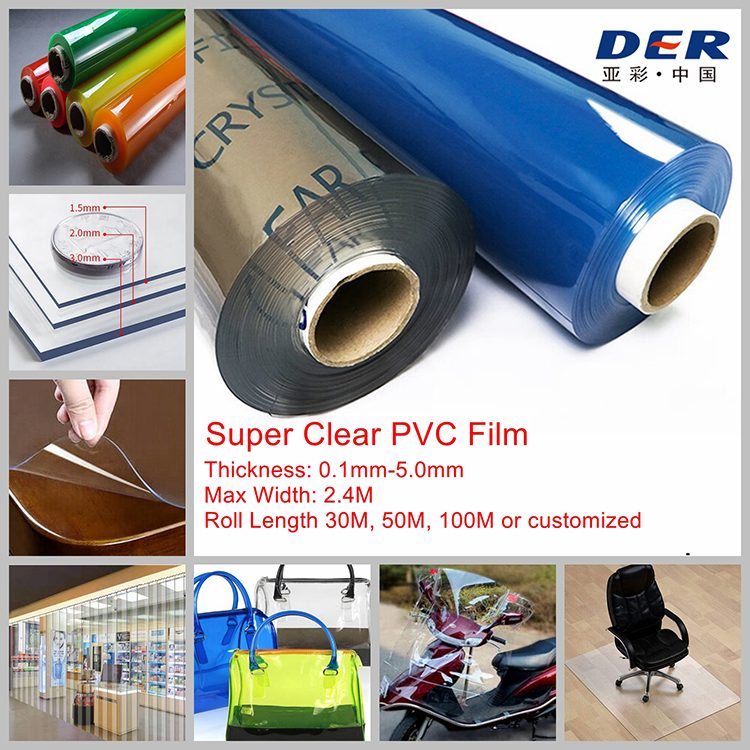
That is why industrial buyers do not simply purchase “clear PVC” by thickness alone. They evaluate how the film will behave in real production and real use. A thin transparent film for flexible packaging windows is different from a thick roll for soft doors or machine protection. A super clear PVC film used on rain curtains must perform differently from a transparent film for an inflatable structure or table protector. DERFLEX approaches this material as a specification-based product family rather than a one-size-fits-all roll good.
How Buyers Typically Define the Product
In practice, procurement teams usually define super clear PVC film through use case. Cold-room buyers ask for flexible strip door material with good transparency and low-temperature suitability. Factory buyers ask for a transparent curtain or partition film that separates work zones without eliminating visibility. Fabricators of covers and enclosures ask for clear windows that can be sewn or welded into tarpaulin structures, tents, canopies, and machine covers. Consumer-product and OEM brands may focus more on surface cleanliness, softness, packaging appearance, and reliable repeat orders across multiple batches.
Because the vocabulary changes from industry to industry, the safest way to define the material is to start with the end product. Tell the supplier whether the film will become a window, cover, barrier, enclosure, curtain, inflatable part, or protective layer. This makes it easier to match formulation, gauge, softness, and roll parameters to the actual job.
Why This Material Remains Important
Super clear PVC film remains commercially valuable because it solves a common industrial problem: many working environments and products need protection or separation without sacrificing visibility. Rigid plastics can crack, limit flexibility, or complicate conversion. Fabric barriers provide toughness but no transparency. Clear PVC film occupies the middle ground. It provides a workable transparent layer that can bend, roll, move, and integrate into broader systems.
It also supports customization. Buyers can adjust thickness, width, softness, tint, low-temperature level, and packing style more easily than in many rigid transparent material categories. That flexibility helps importers, converters, and OEM manufacturers build product lines around different market segments instead of forcing every customer into one standard grade.
Key Features Buyers Expect from Super Clear PVC Film
Industrial buyers are not evaluating this material by appearance alone. They look for a usable balance between clarity, processability, durability, and cost control. The features below are the most common reasons purchasing teams ask for a clear PVC film supplier or transparent PVC film manufacturer rather than a generic reseller.
1. Strong Visual Transparency
The most obvious requirement is visibility. Good super clear PVC film should provide a clean view through the material for monitoring, display, separation, or protective use. Buyers may accept different clarity levels depending on budget and application, but for premium industrial windows and covers, haze and cloudiness quickly reduce value.
2. Flexibility and Soft Hand Feel
A flexible transparent film is easier to roll, drape, sew, weld, and install into moving curtain systems or soft barriers. The correct softness depends on use. A strip curtain may need a different balance than an inflatable component or transparent weather cover.
3. Thickness Control
Consistent gauge matters because it affects appearance, welding behavior, weight, drape, and cutting yield. Thickness variation can cause trouble during production and can make a finished product look unstable or lower grade.
4. Process Compatibility
Many customers need the film to work smoothly with sewing, RF welding, heat sealing, cutting, punching, edge reinforcement, zipper installation, or hardware assembly. The right material is one that performs in the factory as well as in the final environment.
5. Temperature Suitability
Industrial transparent PVC film may be used in normal room conditions, refrigerated zones, winter outdoor settings, or transport-related applications. Low-temperature flexibility and anti-brittleness performance should be matched to the actual operating range before the order is confirmed.
6. Surface and Supply Consistency
Buyers need repeatable clarity, manageable roll packing, and predictable color or tint from one batch to the next. Consistency is especially important for OEM programs, project supply, and recurring export orders where each shipment must align with earlier deliveries.
Commercial Features That Also Matter
Beyond the physical film itself, serious buyers care about response speed, sample realism, MOQ logic, production lead time, export packaging, and documentation support. A strong material may still become a weak sourcing choice if it is difficult to quote clearly or hard to reproduce at reorder stage. DERFLEX therefore treats quality control, order communication, and custom program management as part of the product value.
Performance Is Application-Specific
There is no universal “best” transparent PVC film. The best grade depends on whether the buyer needs better softness, cleaner clarity, stronger cold resistance, higher thickness, easier welding, or more economical large-volume supply. The correct evaluation method is application matching, not keyword matching.
Technical Specifications for Industrial Transparent PVC Film
Buyers often begin with thickness and width, but an effective specification review goes further. The film must be evaluated through transparency level, softness, operating condition, converting method, and packaging expectations. The ranges below are typical reference points for discussion and quotation alignment. Final production standards should always be confirmed against the actual application and sample approval.
| Product Name | Super Clear PVC Film for Industrial Applications |
|---|---|
| Material Type | Flexible transparent PVC film / clear vinyl film roll / soft PVC sheet roll |
| Typical Thickness Range | Approx. 0.10 mm to 3.00 mm depending on end use, softness requirement, and conversion method |
| Typical Width Range | Customized by production route and order requirement; common industrial roll widths available on request |
| Surface Options | Super clear, standard clear, embossed variants, tinted transparent options, or application-adjusted finish pathways |
| Softness | Soft, medium soft, or application-specific flexibility depending on curtain movement, cover drape, or welding plan |
| Color | Clear transparent as standard, with optional custom tint or project-oriented appearance adjustment |
| Process Compatibility | Cutting, sewing, stitching, high-frequency welding, heat sealing, punching, and custom fabrication routes depending on grade |
| Temperature Pathway | Standard indoor use grades and low-temperature oriented grades can be discussed according to final environment |
| Roll Format | Customized roll length, core, outer packing, label, and pallet style based on OEM or project needs |
| Quality & Compliance Route | Requirement-based discussion for export market expectations, controlled production, and project-specific documentation needs |
| Supply Mode | OEM, custom roll supply, bulk export, sampling support, and repeat-order production programs |
How to Read the Specification Correctly
Thickness alone does not tell the whole story. A 0.50 mm film designed for premium flexible windows may behave differently from another 0.50 mm film intended for packaging or rain curtains. The formulation, softness, and surface quality change the user experience. For example, if the final product is a transparent side curtain for a tent or shelter, weldability and cold-weather flexibility may matter as much as visual clarity. If the film is for a machine cover, abrasion and surface cleanliness may be more important than drape.
That is why DERFLEX encourages buyers to discuss not only the gauge, but also the final fabrication method and the environment of use. This leads to fewer mismatches during sampling and a more efficient quote-to-order cycle.
OEM and Custom Specification Options
- Custom thickness for flexible windows, door panels, curtains, or covers
- Width and roll length adjustment for plant efficiency and freight planning
- Different softness routes for drape, movement, or structural stability
- Clear or lightly tinted appearance according to product positioning
- Outer packing, labels, private packaging, and export pallet logic
- Sampling pathway before bulk order for project approval and conversion testing
Applications of Super Clear PVC Film in Industrial Use
The strength of this material category is its versatility. One transparent PVC film program can serve very different industries when the formulation and thickness are aligned properly. Below are some of the most common industrial and commercial use paths for buyers searching for super clear vinyl film or industrial transparent PVC film.
Flexible Windows and Vision Panels
Used in tents, covers, tarpaulin doors, outdoor enclosures, side curtains, canopies, marine accessories, and temporary structures where visual contact must be maintained without switching to rigid glazing.
Strip Curtains and Soft Door Systems
Suitable for factories, warehouses, workshops, cold-room entries, logistics openings, and work-zone separation where repeated passage and visibility are both important.
Protective Covers and Machine Enclosures
Used for dust covers, splash barriers, transparent shielding, equipment windows, workbench protection, and custom covers that require easy observation of the internal area.
Inflatable and Soft-Structure Components
Transparent PVC film may be applied in inflatable chambers, soft barriers, display structures, and product components where flexibility and visibility need to coexist.
Rain Curtains and Weather Barriers
Clear curtains are used in patios, temporary partitions, weather screens, loading zones, farm environments, and semi-enclosed workspaces where wind or rain needs to be reduced without closing the view.
Packaging and Consumer Product Windows
Depending on grade and thickness, transparent PVC film can be used for product windows, covers, bags, cases, stationery products, storage solutions, and presentation-oriented clear components.
Why Application Matching Matters
Not every clear PVC film performs equally across these categories. A buyer ordering film for industrial strip curtains must think about hanging behavior, impact during passage, and temperature condition. A buyer ordering for a protective cover must think about surface appearance, folding memory, and fabrication speed. A buyer ordering for inflatable products must think about welding performance and leak-risk control. The same keyword can therefore lead to very different specification paths.
Typical Buyer Types
DERFLEX works with importers, roll converters, curtain producers, cover fabricators, industrial supply companies, OEM brands, project contractors, and sourcing teams that need transparent film in repeatable bulk supply. These customers usually care about quality consistency, freight efficiency, sample realism, and long-term reorder confidence as much as they care about price.
Why Choose DERFLEX as Your Super Clear PVC Film Supplier
Buyers looking for a super clear PVC film manufacturer usually need more than a price sheet. They need a partner that can understand the application, recommend a realistic material route, support OEM detail, and keep supply stable across repeat orders. DERFLEX positions itself around that purchasing logic.
Industrial Material Focus
DERFLEX serves industrial and commercial material buyers who need practical transparent film solutions rather than retail-level commodity rolls. That means more attention to specifications, processing, export supply, and application suitability.
OEM and Custom Development
Many customers need a custom transparent PVC film program rather than a fixed stock item. We support discussions around thickness, width, softness, tint, pack style, and project-oriented roll parameters.
Quotation Clarity
Clear communication shortens the sourcing cycle. When the buyer provides end use, target dimension, quantity, and market requirement, DERFLEX can return a more useful material recommendation instead of a vague generic offer.
Lead Time Awareness
Serious industrial purchasing includes production timing and shipping planning. We help buyers align sample approval, bulk order scheduling, and packing expectations early so delivery timing becomes more predictable.
Quality and Batch Consistency
Transparent materials reveal inconsistency quickly. Variations in clarity, tint, thickness, or softness are immediately visible. DERFLEX treats production control and repeatability as central value points for industrial clear film supply.
Export-Oriented Support
Packaging format, labels, roll handling, pallet logic, and commercial documentation all affect downstream operations. DERFLEX supports buyers who need an export-ready supply partner, not just a mill reference.
Quality, Certification, and Requirement Alignment
Industrial buyers often face market-specific expectations around material safety, restricted substances, transparency retention, low-temperature performance, and general product reliability. The right approach is to discuss those requirements before production rather than after the goods arrive. DERFLEX supports requirement-based communication so custom film supply can align more closely with your market and application.
What to Send for a Faster, Better Quote
- End use or finished product type
- Target thickness and width if known
- Softness preference or operating environment
- Indoor, outdoor, or low-temperature use
- Estimated quantity and reorder expectations
- Any special packing, labeling, or compliance request
Comparison: Super Clear PVC Film vs Other Transparent Material Options
Buyers comparing transparent materials often weigh clarity, flexibility, cost, process route, and temperature behavior at the same time. The chart below is intended as a commercial selection guide. Final material choice should still be based on actual application testing and sample approval.
| Comparison Point | Super Clear PVC Film | Standard Clear PVC Film | Rigid Transparent Plastic Sheet | Other Flexible Transparent Films |
|---|---|---|---|---|
| Transparency Appearance | Usually cleaner and more premium for visibility-driven applications | Acceptable for many uses but may show more haze or lower visual refinement | Can be optically clear, depending on material type | Varies significantly by polymer and intended function |
| Flexibility | Strong advantage for curtains, windows, covers, and soft systems | Flexible, but visual and softness level may be lower | Limited flexibility; often unsuitable for roll or drape applications | Some options are flexible, but not always as easy to source in industrial roll programs |
| Fabrication | Good for cutting, welding, sewing, and custom assembly depending on grade | Also workable, but end result may be less premium | Better for rigid forming than soft conversion | Depends heavily on chemistry and converter capability |
| Industrial Curtain Use | Well-suited when clarity and movement both matter | Common economical choice | Generally unsuitable | Application dependent |
| Soft Window Use | Strong option for tents, covers, and flexible enclosures | Possible for lower-tier applications | Too rigid for many sewn or welded flexible windows | Can work, often at different cost-performance levels |
| Cost Position | Usually above standard clear PVC due to improved appearance or requirement control | More economical entry route | Varies widely by material and thickness | Varies by niche material category |
| Best Fit | Visibility-led industrial and OEM applications needing flexible transparency | Budget-oriented general transparent uses | Structural or rigid transparent parts | Specialized cases where PVC is not the preferred chemistry |
When Super Clear PVC Film Is the Better Choice
This material category becomes more attractive when the buyer needs a transparent surface that still bends, rolls, hangs, or welds into a larger product system. It is especially useful when rigid plastics would be too hard, too brittle, or too difficult to integrate into soft goods manufacturing.
When Another Material May Be Better
If the project needs structural rigidity, high-temperature resistance beyond PVC’s comfort zone, unusual chemical exposure, or very specialized optical performance, another transparent material may be more appropriate. Good sourcing is about selecting the right material honestly, not forcing one keyword into every situation.
Case Study: Transparent Film Supply for Industrial Curtain and Soft Window Fabrication
A typical inquiry came from a customer developing transparent industrial barrier products for mixed-use workshop and warehouse environments. The buyer did not initially have a complete material specification. They only knew the finished products needed to remain visually clear, move easily in daily use, and work across two end-product types: hanging partition curtains and soft-window inserts for protective enclosures.
Buyer Challenge
The customer had previously sourced generic clear PVC film from different channels, but the quality varied from batch to batch. Some rolls looked cloudy, some felt too stiff during conversion, and some showed poor consistency once fabricated into larger panels. This created waste in the workshop and made it difficult to build trust with their own downstream clients.
In addition, the buyer needed clearer communication about roll dimensions, packing, and lead time because they were managing imported materials against production deadlines for finished goods.
DERFLEX Support Path
DERFLEX worked from the application backward. The discussion covered the finished product structure, target clarity, expected movement, processing method, and order rhythm. Instead of treating the inquiry as a generic “clear film” request, the project was framed as an application-matched transparent film program. This made it easier to recommend a more suitable thickness and softness direction, and to prepare samples that reflected real use instead of only catalog assumptions.
After sample confirmation, the customer could plan production more confidently. The benefit was not just the material itself, but a more stable purchasing process: clearer technical alignment, more predictable fabrication results, and a more reliable base for repeat orders.
Frequently Asked Questions
These questions address the issues most buyers ask when sourcing clear vinyl film rolls for industrial conversion and project supply.
What is super clear PVC film used for?
Super clear PVC film is used for industrial curtains, flexible windows, protective covers, weather barriers, machine enclosures, soft doors, inflatable components, transparent partitions, and other products that require visibility together with flexibility.
What is the difference between super clear PVC film and standard clear PVC film?
Super clear PVC film generally targets improved visual appearance, cleaner transparency, and a more premium result in applications where visibility matters. Standard clear PVC film may be suitable for economical uses but can vary more in visual refinement.
Can super clear PVC film be customized?
Yes. A custom program can include thickness adjustment, width, softness level, tint, roll length, packing detail, and other production parameters depending on order volume and application needs.
Is clear PVC film suitable for cold weather or refrigerated areas?
Some grades are developed more specifically for lower-temperature conditions, but the correct choice depends on the actual environment. Buyers should state the expected operating temperature during quotation and sampling.
Can the film be sewn or welded into finished products?
Yes. Depending on the selected grade, super clear PVC film can be cut, sewn, stitched, high-frequency welded, heat sealed, or integrated into other fabrication pathways used for industrial soft goods and transparent components.
What information should I send to get an accurate quote?
Please send the intended application, target thickness, preferred width, softness requirement if known, temperature environment, estimated quantity, and any special packing or market requirement. That makes recommendation and quotation more accurate.