
What actually passes under the cover?
Dry recyclables, green waste, sharp debris and wet fines create different demands for mesh openness, surface sealing, puncture resistance and local reinforcement.



Custom waste truck tarp covers for fleet replacements, municipal sanitation contractors, roll-off operations and waste-equipment distributors. Specify breathable PVC-coated mesh or solid PVC-coated polyester—then match the finished cover to the vehicle, tarp mechanism and your repeat-order standard.
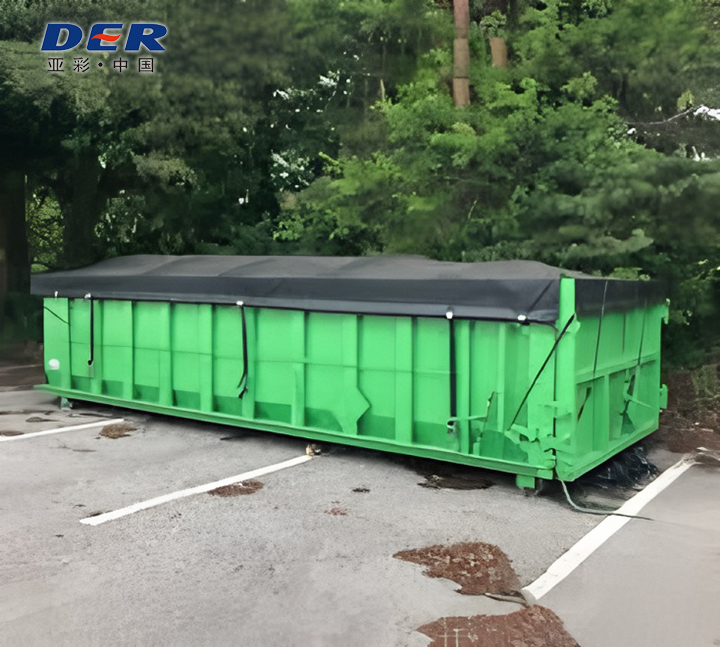
Refuse truck tarps are fitted or retractable covers used to help contain loose waste and recyclables during road transport. On roll-off trucks, hook-lift equipment, open-top refuse bodies and waste transfer vehicles, the cover may be pulled, rolled, carried by arms or attached manually. Material, fit and reinforcement must be specified as a working part of that cover system—not by truck type alone.
DERFLEX supplies tarp materials and custom fabricated covers. Electric motors, arms, rollers and hydraulic equipment are not implied to be included. Cargo securement and load-cover requirements must be checked for the relevant jurisdiction.
One waste truck tarp specification can be correct for a single vehicle and still be wrong for the rest of the fleet. Separate the operational requirement, the tarp-system interface and the replacement-supply standard before approval.
Dry recyclables, green waste, sharp debris and wet fines create different demands for mesh openness, surface sealing, puncture resistance and local reinforcement.
Record cover travel, roller diameter, pull-bar pocket, arm clearance and rail contact. The correct finished size cannot be inferred from the truck body length alone.
Approve a physical sample or dimensioned drawing, assign part-number logic and lock material, reinforcement, labeling, packing and revision history.
A refuse truck tarp needs to keep an irregular load covered without imposing avoidable drag or wear on the mechanism. The material decision is not simply about choosing the heaviest available fabric.
| Operating condition | Starting material direction | What it solves | Check before approval |
|---|---|---|---|
| Dry recyclables & bulky paper/plastics | PVC-coated polyester mesh | Airflow through the cover can reduce ballooning and make repeated handling easier. | Mesh opening vs smallest loose items, edge loading and peak load height. |
| Yard waste, brush & landscape debris | Heavy-duty coated mesh with targeted edging | Breathable coverage with local support near snag and pull points. | Branches, hooks, overfilled loads and fabric-to-load clearance. |
| Wet refuse, fines & rain-sensitive loads | Solid PVC-coated polyester | Non-porous material surface provides a weather-barrier direction. | Seams, drainage, overlap, attachment penetrations and system weight limits. |
| Mixed construction waste / abrasive loads | Application-specific mesh or reinforced solid PVC | Balances containment with localized wear reinforcement. | Exposed sharp points, rail contact and whether the load is safe for the tarp's travel path. |
| Mixed fleet with multiple cover systems | Approved material families + system-specific finished SKUs | Controls variety without forcing a universal size or pocket construction. | Each roller/arm family, approved sample and revision code. |
Mesh is not waterproof. Solid PVC-coated fabric can have a waterproof sheet surface, but the assembled cover is not automatically water-tight. Material options and final performance are project-dependent; request testing and acceptance criteria for critical applications.
A replacement waste truck tarp is exposed to repeated cycles of tension, bending, abrasion and wind. The finished seam layout and reinforcement map can matter as much as the fabric selected.
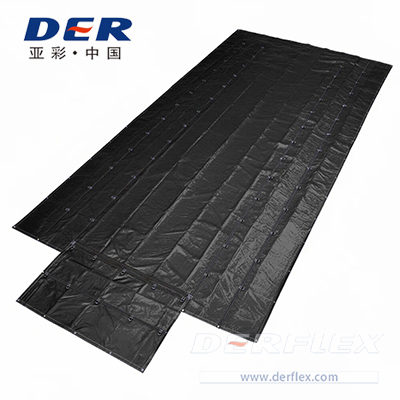
The same truck bed can carry different tarp hardware. Confirm the manufacturer's mechanism details before approving replacement covers for a waste truck tarp program.
Check arm attachment, full deployment span, pull edge, side clearance and whether a stiff reinforcement would interfere with folding.
Verify the roller or bar pocket, container height variations, front/rear overlap and contacts with gantry hardware.
Confirm roll direction, tube retention, edge stiffness, bow geometry and long-edge abrasion during opening and closing.
Provide grommet or loop centers, reinforced hems, tie-down layout, lifting/handling needs and safe access conditions.
For mechanism families and tarp-material options, see DERFLEX's truck tarp systems guide. Mechanical components should be sourced and approved separately where applicable.
When several sanitation trucks share a cover family, document one tested construction and treat every approved variation as an individual replacement SKU. That reduces the chance of confusing a similar-looking tarp with a compatible one.
DERFLEX can discuss finished replacement tarps, cut panels and mesh/PVC roll materials for converters, plus OEM color, marking and export packaging.
Discuss your replacement program ↗List body style, tarp-system family, current cover dimensions, daily use and most common failures.
Agree material direction, pocket geometry, edge build, labeling and a dimensioned sample or first article.
Confirm the cover clears hardware in fully deployed and retracted positions without undue stretching or rubbing.
Approve a drawing revision, part number, material reference, pack method and inspection checkpoints.
Use the following fields to make a custom quote more accurate. These are possible construction directions, not fixed catalog specifications or certified performance claims.
| Specification field | Available or relevant direction | Buyer information needed |
|---|---|---|
| Material construction | Coated polyester mesh, solid PVC-coated polyester or local reinforcement design | Waste stream, exposure, preferred existing material or sample |
| Weight / flexibility | Material weight and hand must suit system tension, bending and roll diameter | Existing GSM if known, system limits, temperature and cycling frequency |
| Finished geometry | Custom length, width, flaps, tapers, notches and overlap | Measured finished cover and vehicle/system dimensions |
| Front / rear interface | Roller sleeves, pull-bar pockets, spline or other confirmed system details | Bar diameter, pocket flat width, seam position and photos |
| Reinforcement | Webbing, backing patches, localized wear strips, double-layer zones | Marked wear points and preferred patch geometry |
| Fastening | Grommets, straps, webbing loops, D-rings, reinforced attachment zones as applicable | Attachment coordinates and whether hardware is included |
| Commercial & branding | Finished units, material rolls, cut panels, colors, labels, OEM packing | Order quantity, SKU series, forecast, destination, labeling file |
| Acceptance | Agreed measurements, material reference, visual inspection and sample fit | Drawing revision, inspection method and required documented test results |
No MOQ, lead time, load rating, service-life claim or test certificate is assumed here. These should be agreed in writing for the actual design, quantity and destination.
In a municipal or commercial refuse fleet, an inexpensive cover that does not fit can create installation labor, rework and extra vehicle downtime. Use a consistent acceptance procedure and track replacement performance by actual service.
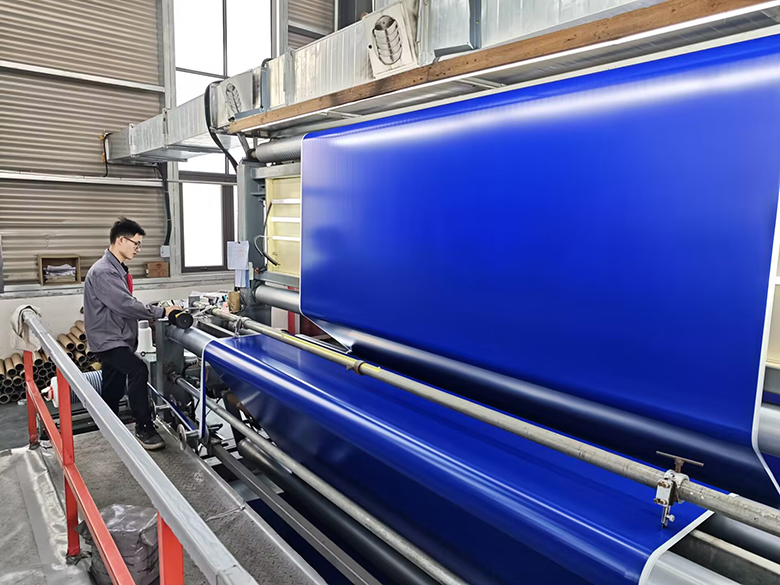
These manufacturer-hosted photographs show representative finished covers and coated-fabric production. They are not presented as documented customer installations or proof of a particular truck-system certification.
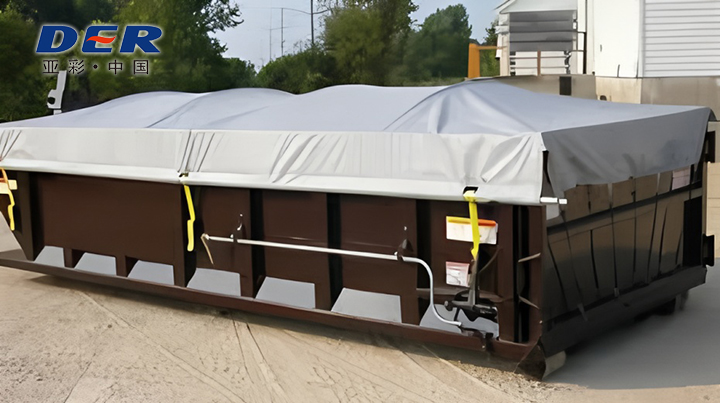
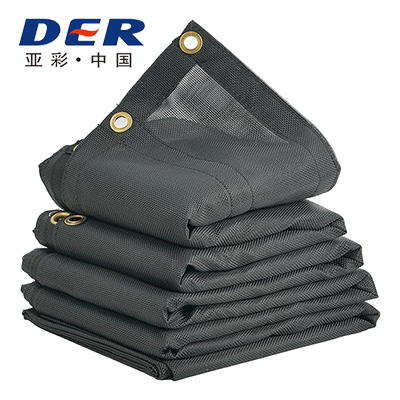
Straight answers for fleet managers, maintenance departments, tarp converters and equipment distributors.
In most purchasing contexts the terms overlap: both refer to covers for trucks or containers carrying waste and recyclables. The more important differences are truck configuration, load type, deployment hardware, fabric selection and finished cover geometry.
Breathable mesh is frequently suitable for dry, bulky material where airflow and manageable cover weight matter. Solid PVC-coated polyester is more appropriate when a non-porous rain barrier is needed. Evaluate the load's particle size, puncture risks and the full cover mechanism before selection.
Often, yes, if the existing motor, arm, roller and attachment hardware are serviceable and the replacement cover matches their geometry. DERFLEX concentrates on tarp material and fabricated covers; the vehicle-equipment supplier should verify hardware condition and compatibility.
Measure the finished existing cover laid flat, then verify required deployed coverage, roller and pull-bar pockets, attachment spacing, flaps, notches and hardware clearance on the actual vehicle. Include photos with the cover fully open and fully retracted. Do not order by container capacity alone.
DERFLEX can discuss custom finished tarps, coated-fabric roll goods and OEM supply based on approved dimensions, materials, reinforcement, labeling and packaging. Quantity, sampling, commercial terms and production timing should be confirmed during quotation.
Identify whether failure begins at the roller pocket, pull edge, corner, grommet zone or rail-contact line. Investigate clearance, tension, sharp contact and reinforcement layout. A heavier center sheet may not solve a local geometry or abrasion problem.
Provide vehicle and cover-system type, finished cover dimensions, pocket and hardware details, transported waste stream, preferred mesh or PVC, damaged-zone photos, quantity, color or branding needs, destination and any required inspection or test documents.
Send the old cover or drawing, open-and-closed system photos, waste type, material preference, wear locations, required quantity and destination. DERFLEX can review the material and finished-cover direction for a custom sample, replacement program or OEM supply.