Keep runoff moving
Use waterproof coating and compatible sealed seams, then establish a supported pitch to avoid standing water and seam stress.



Rain, sun, wind and months of inactivity demand more than a loose sheet. DERFLEX supplies custom boat storage tarp materials and marine cover tarp programs for boatyards, marina operators, distributors and OEM cover makers. Define waterproof fabric, winter-ready geometry, reinforced tie-downs and ventilation as one storage system.
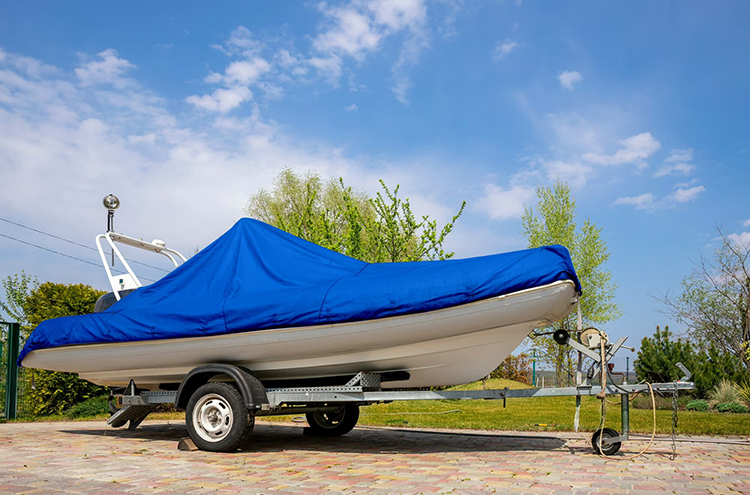
A boat storage tarp is a protective cover used while a vessel is parked, laid up ashore or stored between operating seasons. It shields exposed surfaces from precipitation, dust and sunlight, but reliable protection depends on the complete cover assembly—not fabric waterproofing alone.
Unlike a daily-use cockpit cover or a highway trailer cover, a storage tarp may remain installed for weeks or months. Its design must accommodate water runoff, supported spans, wind movement, moisture escape and access for inspection. A properly specified marine cover tarp can use PVC coated polyester for a durable, weldable exterior, with the final layout tailored to the vessel and yard conditions.
For material-only procurement, compare the DERFLEX boat-cover fabric roll program before defining seams and finished panels.
Storage location—not boat length alone—determines the useful tarp construction. Use this matrix to set the material and cover-design priorities before requesting a price.
| Storage scenario | Cover direction | Design priorities | What to confirm |
|---|---|---|---|
| Outdoor winter lay-up | Weather-resistant coated polyester; cold-flex grade where needed | Supported ridge, deliberate slope, reinforced attachment zones, managed vents | Lowest temperature, snow exposure, frame layout, inspection access |
| Coastal marina / humid yard | Waterproof, UV-resistant marine material with suitable cleanable surface | Air exchange, salt residue cleaning, chafe pads, stable tie-downs | Humidity, wind, salt exposure and months under cover |
| Trailer parked on land | Custom fitted tarp or reinforced storage sheet | Bow/motor clearance, side drop, trailer-aware attachment layout | Stationary use only; trailering requires a separate design assessment |
| Fleet / dealer inventory yard | Repeatable cover sizes in approved fabric and hardware packages | Easy installation, labeling, replacement panels and standard QC | Boat classes, target lifecycle, order quantities and packaging |
| Covered shed / short lay-up | Lighter protective fabric may be sufficient | Dust control, easy handling, soft contact points and ventilation | Indoor moisture, removal frequency and whether full waterproofing is required |
Selection guidance, not a structural certification or fixed product performance specification. Snow, wind and support loads must be evaluated for the actual site.
Fabric performance matters, but failures often begin at the unsupported span, friction point or wet pocket under the cover.
Use waterproof coating and compatible sealed seams, then establish a supported pitch to avoid standing water and seam stress.
Match the UV-resistant formulation and color to climate, storage duration and surface appearance requirements.
Plan protected vents or air channels; anti-mildew additives do not replace airflow and dry storage preparation.
Use chafe protection around rails, windshields, cleats, consoles and any points where wind can rub the tarp.
Even a waterproof marine tarp can leak, flap or fail prematurely if it is stretched across a flat deck without proper support. Describe the installed cover as a three-dimensional shape, not just a rectangular cut size.
For an explanation of material versus finished-cover performance, see how PVC tarp waterproofing really works.
Record hull and topside length, maximum beam, motor and platform projection, highest covered point and desired side drop.
Provide a ridge, frame or suitable supports so precipitation can drain without creating water pockets or abrasion against fittings.
Keep vulnerable joins away from high-contact bends where practical; plan protected air openings without direct water entry.
Specify hem reinforcement, grommet and strap layout, corner patches and attachment routes that avoid damaging vessel hardware.
Approve the manufactured cover size after weld overlaps and hems. Nominal fabric-cut size may not equal installed coverage.
Provide access for periodic inspection, drainage clearing, ventilation checks and safe removal after severe weather.
A lower purchase price can be appropriate for short storage periods. Repeat seasonal use calls for a broader comparison of reusability, manufacturing consistency and installation labor.
| Cover option | Useful when | Evaluate before purchase |
|---|---|---|
| PVC coated polyester | Reusable outdoor tarps, larger welded covers, repeat OEM programs and stronger tie-down requirements | Weight/handling, UV formulation, cold flexibility, seam testing, protected ventilation |
| Reinforced PE tarp | Temporary or cost-sensitive storage where lighter handling is valuable | UV life, fold durability, edge strength, size consistency and repair approach |
| Marine canvas / treated textile | Tailored sewn covers where textile hand and air permeability are priorities | Water resistance versus waterproofing, retreatment, stitched-seam leakage and care |
| Single-season shrink wrap | A closely fitted seasonal enclosure installed by trained crews | Frame/vent system, labor, access doors, removal, disposal and potential reuse limitations |
Properties vary substantially by grade and finished construction. For more material comparisons, see DERFLEX's PVC, PE, canvas and mesh tarp material guide.
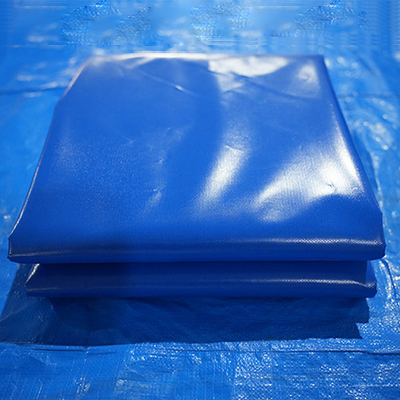
For a reusable winter boat tarp, coated textile construction should be chosen together with expected fold frequency, UV exposure, the coldest storage temperature and the joining method. Larger covers may need welded panel layouts; hardware and abrasion zones require separate reinforcement.
DERFLEX discusses coated polyester supply in roll form and custom panels. Buyers can explore the broader PVC coated tarp manufacturing and fabrication options before approving a material sample.
Fabric weight is not a standalone performance grade. Two fabrics with similar GSM may differ in yarn strength, coating adhesion, UV additives and cold-flex response. Require comparable test conditions when assessing candidates.
Ask for a Material Recommendation ↗Use the fields below in the purchase specification or drawing. Actual grade availability, test values, tolerances and lead time are confirmed by DERFLEX at quotation and sample approval.
| Requirement | Customizable direction | Approval detail |
|---|---|---|
| Material | PVC coated polyester; other marine cover materials according to project | Coating structure, backing, yarn/weave and approved sample |
| Fabric weight | Marine-cover references commonly span approximately 450–900 gsm; confirm selected grade | Nominal GSM, test method and production tolerance |
| Surface | Custom color; matte, glossy or easy-clean finish as feasible | Master color sample, coating face, appearance and cleaning method |
| Weather performance | Waterproofing, UV, anti-mildew and cold-flex options for review | Exposure definition and agreed test method / acceptance values |
| Size & geometry | Sheet sizes, panel configuration and fitted patterns by drawings | Finished length, beam coverage, side drop, support height, pattern revision |
| Seams & edges | Compatible heat welding; hems, webbing, rope edges, chafe patches | Weld orientation and sample seam / reinforcement inspection |
| Hardware & venting | Grommets, D-rings, straps, buckle points and protected vent locations | Layout drawing, attachment method and compatibility with cover supports |
| Production & packing | Roll goods, panels or fabricated covers; OEM labeling and packaging | Approved master sample, identification code, pack dimensions, destination |
Ranges above are reference directions published for DERFLEX marine tarp programs, not an offer of every grade, standard or certification. No unsupported waterproof-pressure, wind-load, service-life or snow-load values are claimed.
Source photos from DERFLEX's existing website, presented as application references. Final storage-cover construction is configured to each customer's pattern and installation plan.
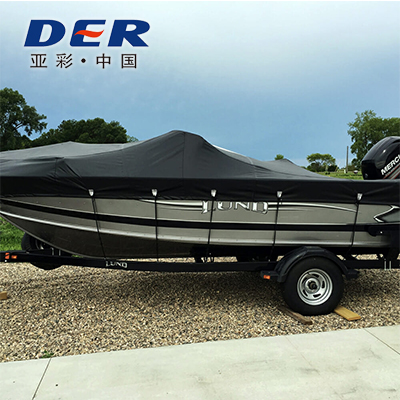
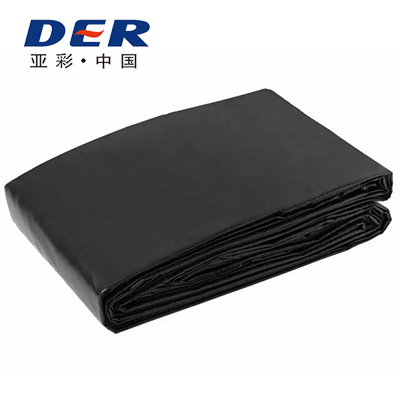
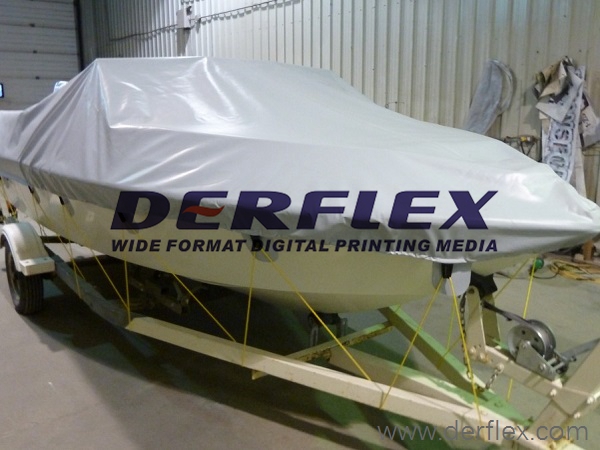
Photo credits: DERFLEX's verified website image URLs. Not claimed as project certification or test evidence.
Problems often trace back to a purchase specification that describes the textile but leaves the real installed system undefined.
Rain gathers where the cover has no positive drainage geometry. Design the support and inspect after weather rather than relying on thicker fabric.
A waterproof PVC surface is not breathable. Combine dry boat preparation, protected vents and a plan for inspection.
Motion against rails, consoles, sharp corners and projections causes wear. Define compatible padding and reinforcement at contact points.
Specify finished cover dimensions, side drop and acceptable tolerances on approved drawings after hems and welded overlaps.
Grommet spacing alone does not create wind resistance. Define patches, webbing, anchor locations and tie-down compatibility.
Stationary and trailering loads are different. Do not assume an off-season storage cover is suitable for highway speeds.
DERFLEX supports distributors, cover fabricators, boatyards and marine accessory brands with specification-led material matching, fabrication options and bulk supply coordination.
It is a protective cover used while a boat is stored ashore, in a boatyard, in a marina or between operating seasons. It should be specified as a complete system: waterproof or weather-resistant material, sealed joins where required, supported drainage slope, stable fixing points and planned ventilation.
No. A continuous PVC coating provides a rain barrier rather than meaningful fabric breathability. Properly positioned protected vents, dry storage preparation and periodic inspection can help control humidity and condensation beneath a marine cover tarp.
Suitable PVC coated materials can be selected for cold-weather flexibility and outdoor exposure. However, the tarp has no inherent structural snow-load rating. A properly engineered ridge or frame, water/snow shedding geometry, suitable anchoring and a maintenance plan are vital. Never rely on the textile alone to support accumulated snow.
Choose according to storage duration, reuse target and installation method. PVC coated polyester can suit reusable, custom-fabricated covers. Reinforced PE may suit temporary budget applications. Shrink wrap can create a closely fitted seasonal enclosure but adds labor, access and disposal considerations. Ventilation and support remain necessary in all cases.
Provide overall boat length including relevant protrusions, maximum beam, height to the highest covered point, hull/deck shape, bow/stern details, desired side coverage and the proposed support frame. Photos or an approved pattern help establish final dimensions and avoid confusing raw-cut size with the completed cover size.
DERFLEX can review orders for coated fabric rolls, cut sheets and custom fabricated cover programs, with optional welded panels, hems, webbing, grommets, straps, colors, logos and private-label packaging. MOQ, performance criteria, sampling and production availability are confirmed for each order.
Do not assume so. A cover meant for stationary storage may not be designed for road-speed airflow, uplift or repeated vibration. For trailering, request a separate assessment and a cover specifically suitable for transport.
Share your storage application, boat dimensions or cover drawing, climate, material preference, quantity and destination. DERFLEX will review suitable roll goods or fabricated boat storage tarp options for your next procurement program.
No on-page form or unsupported submission script.