News
Company News

Side Dump Truck Tarps | Custom Mesh & PVC Covers | DERFLEX

Update:2026/10/10 19:49:20 Views:
Side-tipping fleet covers / OEM supply

Side Dump Truck Tarps

Custom mesh and PVC/vinyl covers developed for the working geometry of side-tipping truck bodies—not just a generic sheet cut to bed length.

DERFLEX supports fleet operators, truck-body manufacturers, tarp-system suppliers and distributors with coated fabric selection, reinforced cover fabrication, made-to-drawing dimensions and repeat-order programs. Specify the load, roll direction, clearance and wear zones before bulk production.

Coated mesh or solid PVCCustom finished dimensionsReinforced working edgesOEM / distributor orders
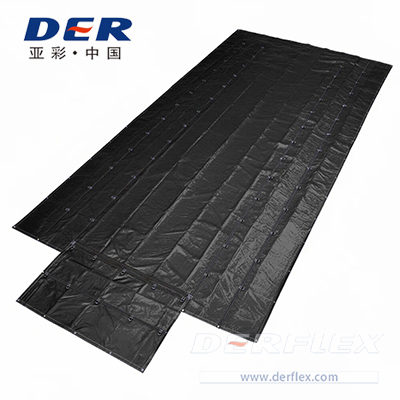
Custom cover supply DERFLEX heavy-duty black dump truck tarp panel with reinforced long edges, representative of custom tarp fabrication
DERFLEX reinforced truck tarp panel

Actual DERFLEX product image; representative finished-cover construction, not a claim of fit to a particular side-dump truck model.

For side-tipping bodiesPrioritize roll path, clearance and safe stowage.
Two material directionsBreathable coated mesh or closed-surface PVC.
Engineered finishingPockets, hems, webbing and local wear patches.
Manufacturing-led supplyRoll goods, panels or custom finished covers.
Quick answer

What is a side dump truck tarp?

A side dump truck tarp is a fabric load cover fitted to an open side-tipping truck body. It helps contain loose material during road transport and may limit wind and weather exposure depending on its construction. Unlike a general truck sheet, it must work with the cover's roller or attachment system and must not interfere with the body during deployment, stowage or dumping.

For general haulage solutions, see DERFLEX's truck tarp material and cover range. This page focuses on the operating and sourcing details specific to side-tipping truck bodies.

01 / Material selection

Cover the load. Respect the system.

A side-dump cover is moved repeatedly across bulk loads and then parked clear of moving body components. Fabric mass, permeability and edge build should be chosen together.

Airflow & containment

Coated Mesh Tarp

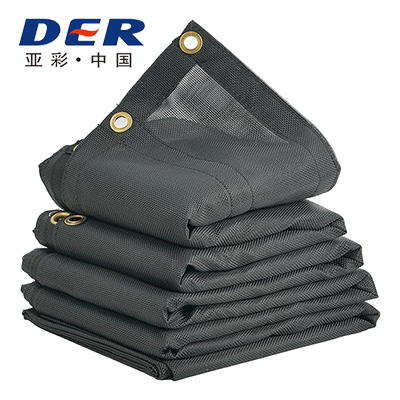
High-strength coated mesh is commonly considered for gravel, landscape debris, mulch and similar bulk loads when airflow and easier handling outweigh the need for a closed water barrier.

  • Allows air to pass, helping limit billowing relative to a closed sheet
  • Mesh opening must be matched to the size of loose material
  • Reinforce pockets and rail-contact areas for repeated cycles
  • Not waterproof—rain and fines can pass through the openings

See mesh dump truck replacement tarp options for related mesh constructions and replacement details.

Weather & fine-particle shielding

Solid PVC / Vinyl Tarp

PVC-coated polyester is a closed-surface alternative when surface waterproofing, rain shielding or finer particle containment carries more weight than high airflow.

  • Waterproof material surface when correctly specified
  • Suitable for welded and reinforced cover fabrication
  • Requires attention to wind loading, total cover mass and roller capacity
  • Overall weather sealing still depends on seams, overlaps and fit

A solid cover is not automatically suitable for hot cargo; the operating temperature must be verified.

Selection principle: Neither fabric type prevents every particle from escaping. Local load-cover rules, load condition, cover geometry and the manufacturer's vehicle operating instructions govern the final selection.
02 / Hauling decisions

Material selection by cargo and operating risk

A procurement shortcut for the first engineering discussion. Recommendations are starting directions, not universal product ratings.

Load / jobStarting material directionCheck before approving
Gravel, stone, aggregateReinforced coated mesh, subject to particle containment needs.Sharp edges, mesh aperture, load profile, abrasion at the roller and rails.
Sand, fines, dusty powdersMore closed coverage, often solid PVC/vinyl if system permits.Particle escape, wind pressure, seam/edge overlap, cleanout requirements.
Topsoil, mulch, vegetationCoated mesh is often practical when airflow is valuable.Lightweight windborne debris, mesh opening, repeated daily cycling.
Construction rubble, recyclingHeavy-duty coated mesh or project-specific reinforced cover.Protrusions, puncture risk, uneven heaped loads and local wear patches.
Moisture-sensitive bulk materialSolid PVC/vinyl where closed-surface coverage is necessary.Rain exposure, fastening geometry, ponding and water paths at ends.
Hot aggregate / asphaltApplication-specific thermal material review before selection.Actual cover-contact temperature, dwell time and validated temperature rating.

Mesh permeability, finished sealing and approval under local transport rules must be checked individually; this matrix is not a legal or performance certification.

03 / Side-tip geometry

Design for travel, stowage and the dump cycle.

The critical question is not just “Does it span the tub?” It is “Can the cover travel smoothly, fully stow and stay clear of every moving part throughout approved operation?”

Know the deployment direction

Identify the parked side, roller/tube type, wind-up direction, cross-tub travel and opposing anchor.

Map interference points

Record hinge-side rail, tipping-side rail, extensions, arms, brackets, end caps and protruding loads.

Design the high-stress transitions

Reinforce pocket mouths, leading edges and local contact points without adding unnecessary bulk to the wound roll.

Validate the stowed state

Confirm the fully parked cover does not obstruct the manufacturer's approved dumping sequence.

For broader manual/electric cover interface examples, see truck tarp system material guidance.

Side dump cover geometry schematicIllustrative side dump body cross section with roller at the left, a covered tub opening, cover travel arrow and fully retracted stowed position. Not an installation drawing. SCHEMATIC / CROSS SECTION Cover travels across opening Roll tube / stowage Opposite edge / rail Measure actual coverage & end clearance
Concept illustration only—not to scale. The system builder's drawings, operating limits and dumping sequence take precedence. Side dump trailers use related but not necessarily identical cover geometry.
Operating precaution: Follow the body and tarp-system OEM's instructions. As a general rule, fully retract and secure the cover before side tipping unless that specific system explicitly permits another procedure. Never use the fabric as a load restraint or to compensate for an unsafe load profile.

Need a replacement cover specifically for a side-dump trailer rather than a truck-mounted tipping body? See our side dump trailer tarp replacement guide.

04 / Procurement specification

A usable technical specification—not a generic GSM label

The following ranges describe related DERFLEX truck-tarp material portfolios. They are not verified side-dump-truck SKUs, system approvals or guaranteed finished-tarp ratings.

SpecificationDERFLEX supply directionPurchaser's decision
Product formatTruck tarp fabric rolls, cut panels, semi-finished or finished custom coversIn-house conversion vs ready-to-fit replacement / OEM supply
Coated meshHigh-strength polyester mesh with PVC coating; related truck mesh offerings discuss approx. 200–500 gsmOpen area, mesh aperture, load containment, fabric mass, tear behavior
Solid PVC / vinylPVC-coated polyester tarpaulin; related truck tarp offerings discuss approx. 450–900 gsm and other project-specific weightsWater-barrier need, roller load, flex and weather exposure
GeometryMade to approved drawing, system measurements or qualified sampleExact finished length, width, travel, curves, notches and allowances
Roller-side interfaceCustom pocket / sleeve, spline or agreed attachment methodInside dimensions, roll direction, winding thickness and retention
Opposing edgeWebbing, reinforced hem, clamp or pocket details as specifiedAttachment location and loading direction
Local reinforcementWebbing, reinforced seams, wear strips, pocket and corner patchesHigh-friction zones, rail contact, repeated bending and edge loads
Optional propertiesUV, low-temperature flexibility, color, surface finish, project-specific requirementsRequest an applicable test method and approved material sample
OEM presentationColor choice, marking, code labels, private-label and export packagingSKU management, replacement channels and order repetition

Published material-family ranges are only screening guidance. Final target weight, dimensions, tensile/tear performance, seams, hardware and testing need agreement in the purchase specification.

For buyers converting tarp panels locally, DERFLEX also offers truck tarp replacement fabric and roll-goods guidance, including seam planning and roll-width utilization.

05 / Made-to-fit ordering

Six measurements that prevent expensive mismatches

Nominal body length does not tell a fabricator how the cover will travel or where it must stop. Use an actual truck and an approved system reference.

01 / Body opening

Measure usable coverage

Record inside opening, rail-to-rail span and the working front/rear endpoints—not only the advertised body length.

02 / Finished cover

Measure relaxed dimensions

Lay out the old cover and note true finished size, taper, offset geometry, cut-outs, overhangs and deformation.

03 / Roller interface

Document the wind-up edge

Provide tube outer diameter, pocket's usable size, retention method, winding direction and available stowed envelope.

04 / Opposite attachment

Locate the fixing edge

Record hem, clamp, rope, bead, tube, webbing or fastener dimensions and exactly where force enters the tarp.

05 / Interference zones

Mark moving components

Photograph hinges, cylinders, guides, brackets, side boards, end structures and contact points with the cover open and stowed.

06 / Actual work duty

Describe the payload

Record material, load profile, sharpness, moisture, tipping frequency, route climate and any known recurrent tear location.

Useful tip: Send a short video showing the cover deploying and retracting—without obstructing safe operations—plus photos of any damaged part. A copy of the old cover may preserve geometry that an overall size misses.
06 / Durability engineering

Where tarp failures start

More fabric weight across the whole surface is not always the answer. Faults can be concentrated at the attachment, contact or transition points.

Pocket mouth

Repeated winding & flex

Incorrect pocket fit, trapped folds or abrasion at the tube line may cause early damage. Check the mouth reinforcement and wound thickness.

Leading working edge

Deployment tension

Track pulling loads into an approved reinforcing layer instead of allowing repeated tension to act on unreinforced coated mesh alone.

Rail & end transition

Contact during movement

Changes in edge thickness or proximity to brackets may snag. Local patches and smoother edge transitions can address confirmed wear points.

For a new SKU, approve the layout through a sample or pilot fit before repeating across trucks. Verify workmanship and material performance using tests relevant to the chosen construction rather than relying on a single “heavy duty” label.

08 / Manufacturing program

From one truck to a controlled OEM cover program

Convert body-specific fit information into one approved, reorderable fabric specification for dealers, converters and fleet maintenance teams.

STEP 01

Review application

Truck-body type, system, cargo, material choice, photos, proposed volumes and key performance requirements.

STEP 02

Agree construction

Material, cover pattern, pockets, reinforcing strips, sewing/welding method, labels and tolerances as required.

STEP 03

Confirm fit

Approve a sample, drawing or pilot installation; document winding, coverage, wear zones and safe full retraction.

STEP 04

Repeat purchasing

Use approved versions, part numbers and packaging specs for subsequent orders and distributor stocking.

Roll goodsFor cover fabricators & converters
Cut panelsFor local custom finishing
Finished coversFor approved truck-specific designs
OEM labelsFor private-label / fleet supply

DERFLEX's role is the fabric and tarp cover. Electric drives, hydraulic motors, arms, wiring and complete approved tarping mechanisms must be specified and validated with their respective manufacturers. If your vehicle uses a conventional front-to-rear setup, compare the dump-truck roll tarp guide before selecting a cover format.

09 / Commercial inquiry

Make the first quote technically useful.

Attach the items alongside the truck or cover photographs. DERFLEX can review suitable coated material and fabrication directions, then discuss the sample and production route.

The button opens DERFLEX's existing quotation page; this page intentionally contains no non-functional submission form.

Send with your RFQ

  • Truck/body make, model and market
  • Clear opening and finished tarp size
  • Roller and opposing-edge construction
  • Photos: deployed and fully retracted
  • Cargo type and loading profile
  • Mesh or solid PVC preference
  • Recurring failure or abrasion locations
  • Material testing or certification needed
  • Color, label and private-label details
  • Order volume, destination and timing
10 / Buyer questions

Side dump truck tarp FAQ

Specific answers about cover selection, tipping clearance and custom supply.

What is a side dump truck tarp?

A side dump truck tarp is a custom fabric cover used over an open side-tipping truck body to contain loose cargo during travel. The cover must fit the truck's tarping mechanism, body opening and operating clearances; it is not a substitute for load securement.

Should I use mesh or solid PVC for a side dump truck?

Coated mesh is a practical starting point where airflow and loose-load containment matter. Solid PVC/vinyl is used where a closed waterproof material surface and better shielding from rain or fine particles are needed. Choose based on cargo, operating system and local requirements.

Are side dump mesh tarps waterproof?

No. Mesh openings allow air and water through. If a waterproof material surface is necessary, discuss a solid PVC/vinyl cover; finished weather protection also depends on seams, overlap and attachment.

Can the side dump body tip while the tarp is deployed?

Follow the truck and tarp-system manufacturer's operating instructions. As a general precaution, the cover should , be fully retracted and secured before tipping unless the system manufacturer explicitly authorizes another procedure. Never assume a replacement fabric changes approved operating limits.

What measurements do I need for a custom side dump truck tarp?

Record the actual body opening, old tarp finished size, roller or attachment geometry, side-to-side travel, front and rear clearances, pocket construction, reinforcement and all obstructions. Supply photos of both deployed and stowed positions.

Does DERFLEX supply complete motors or hydraulic tarp systems?

DERFLEX focuses on tarp materials, cut or semi-finished panels, custom finished covers and OEM cover supply. Complete motor, hydraulic and arm-system compatibility must be established with the equipment manufacturer.

Can side dump truck tarps be supplied for wholesale and OEM fleets?

DERFLEX can discuss repeat material specifications, approved sizes, pocket and reinforcement layouts, part-number labels, private-label packaging, fabric rolls and finished cover programs for OEM, dealer and fleet orders.

Can a regular PVC tarp be used over hot asphalt in a side dump truck?

Do not assume standard coated mesh or PVC is suitable for direct contact with hot asphalt. The actual tarp-contact temperature, exposure time and validated material rating need to be reviewed before specifying a cover.

Start with the truck. Specify the cover.

Need side dump tarps for an OEM, dealer or fleet program?

Share the actual body, tarping mechanism, load and required quantity. We will review an appropriate fabric-and-fabrication direction for your project.

Send Your Requirements ↗
Consulting Services
+86-021-54361792 / 54361798
Email
sales@derflex.com