News
Industry News

Tarpaulin Cost per Use: PVC vs PE Lifecycle Cost | DERFLEX

Update:2026/9/21 17:03:43 Views:
B2B Tarp Economics · PVC vs PE

Tarpaulin Cost per Use: PVC vs PE Lifecycle Cost

The cheapest tarp to buy is not always the cheapest tarp to operate. For repeat-use truck, construction, agriculture, storage and industrial cover programs, compare cost per successful use, replacement frequency, handling labor, repairability and failure exposure—not purchase price alone.

This guide is designed for distributors, importers, fleet operators, contractors, OEM tarp buyers and procurement teams comparing PVC tarpaulin with PE tarpaulin over a real service cycle.

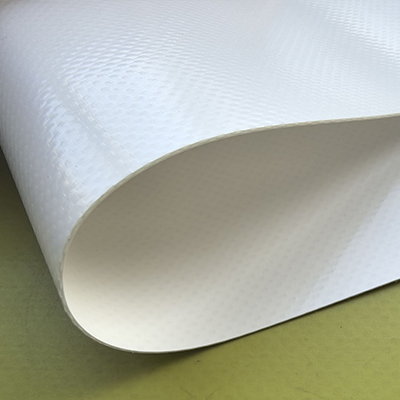
Heavy duty PVC tarpaulin material for lifecycle cost comparison
Compare the working cycle, not only the invoice. PVC and PE can both be economical when the specification matches the duration, stress and consequence of failure.
Initial CostWhat you pay to buy and land the cover.
Service CyclesHow many successful uses the cover delivers.
Operating CostLabor, repairs, handling and replacements.
Failure ConsequenceCargo, downtime, complaints or project disruption.
Quick Answer

Is PVC or PE tarpaulin cheaper per use?

PE tarpaulin often has the lower first purchase cost and can be the lower-cost choice for short-duration, light-duty or easily replaceable protection. PVC coated polyester usually starts at a higher acquisition cost, but it can deliver a lower cost per successful use when the cover is repeatedly handled, tensioned, welded, repaired or exposed to abrasion and long outdoor service.

The commercial answer depends on your own quote, working conditions and replacement cycle. For a material-first comparison, review DERFLEX's PVC vs PE tarpaulin comparison. For this page, the decision is narrower: which option protects the required asset at the lower lifecycle cost?
Cost per successful use = total lifecycle cover cost ÷ successful service cycles
Lifecycle Cost Model

Five costs that change the real price of a tarp

Normalize both materials on the same finished size, duty level, delivery basis and working period before comparing them.

01 · Acquisition

Landed purchase cost

Include the finished tarp or usable roll material, fabrication, packaging, freight, duties and other costs required to put the cover into service.

02 · Labor

Deployment and removal

A heavier cover can require more handling effort; a frequently replaced cover creates repeated installation, disposal and administrative work.

03 · Maintenance

Repair and inspection

Track patching, hardware replacement, seam work, cleaning and inspection. Repairability can extend the economic life of a reusable tarp.

04 · Replacement

Replacement frequency

A low-cost cover that is replaced several times may cost more over the program than a higher-priced cover with fewer replacement cycles.

05 · Risk

Failure consequence

For high-value cargo, time-sensitive projects or fleet operations, a tarp failure can create costs much larger than the fabric itself.

Normalize

Compare the same job

Use the same covered area, wind exposure, tie-down layout, handling frequency, climate and expected service cycle. Otherwise, the price comparison is not equivalent.

PVC vs PE Lifecycle Economics

What usually drives the cost difference?

Material names describe broad families, not guaranteed service life. Compare the actual construction, reinforcement and use environment.

Cost Driver PVC Coated Polyester Tarp PE / Poly Tarp Procurement Meaning
Initial acquisition Usually higher for a comparable finished heavy-duty cover. Usually lower for lightweight and general-purpose coverage. Do not stop the comparison here.
Repeated handling Often selected for frequent folding, fastening, welding and commercial reuse. Practical where handling is light or the intended cycle is shorter. Count successful uses, not calendar time alone.
Abrasion / edge stress Reinforced polyester construction is commonly chosen for higher mechanical stress. Grade-dependent; economy sheets can have less reserve under repeated abrasion. Inspect corners, tie-downs and contact points.
Fabrication / repair Well suited to welded seams, reinforced hems, webbing, hardware and many patching workflows. Simple finished covers are economical; repair and fabrication pathways depend on grade. Repairability can change replacement economics.
Handling mass Heavier specifications can increase manual handling and freight weight. Lower mass can improve portability and rapid deployment. Labor and transport can favor PE in temporary work.
Best cost direction Repeat / demanding use Temporary / low-risk use The correct choice follows the duty cycle and consequence of failure.

Need to normalize supplier quotations first? Use DERFLEX's tarp cost guide and PVC tarpaulin price-per-square-meter guide before calculating lifecycle cost.

Interactive Buyer Tool

PVC vs PE cost-per-use calculator

Enter your own quotation and operational assumptions. The calculator does not generate a DERFLEX sales price and does not assume a guaranteed service life.

PVC tarp scenario

Lifecycle cost
Cost per use

PE tarp scenario

Lifecycle cost
Cost per use
Comparison:

Enter values for both materials to compare lifecycle cost per successful use.

Use measured field data when possible. If your organization does not track service cycles, begin with replacement dates, repair tickets, crew time and tarp disposal records. A range is more useful than a false precision.

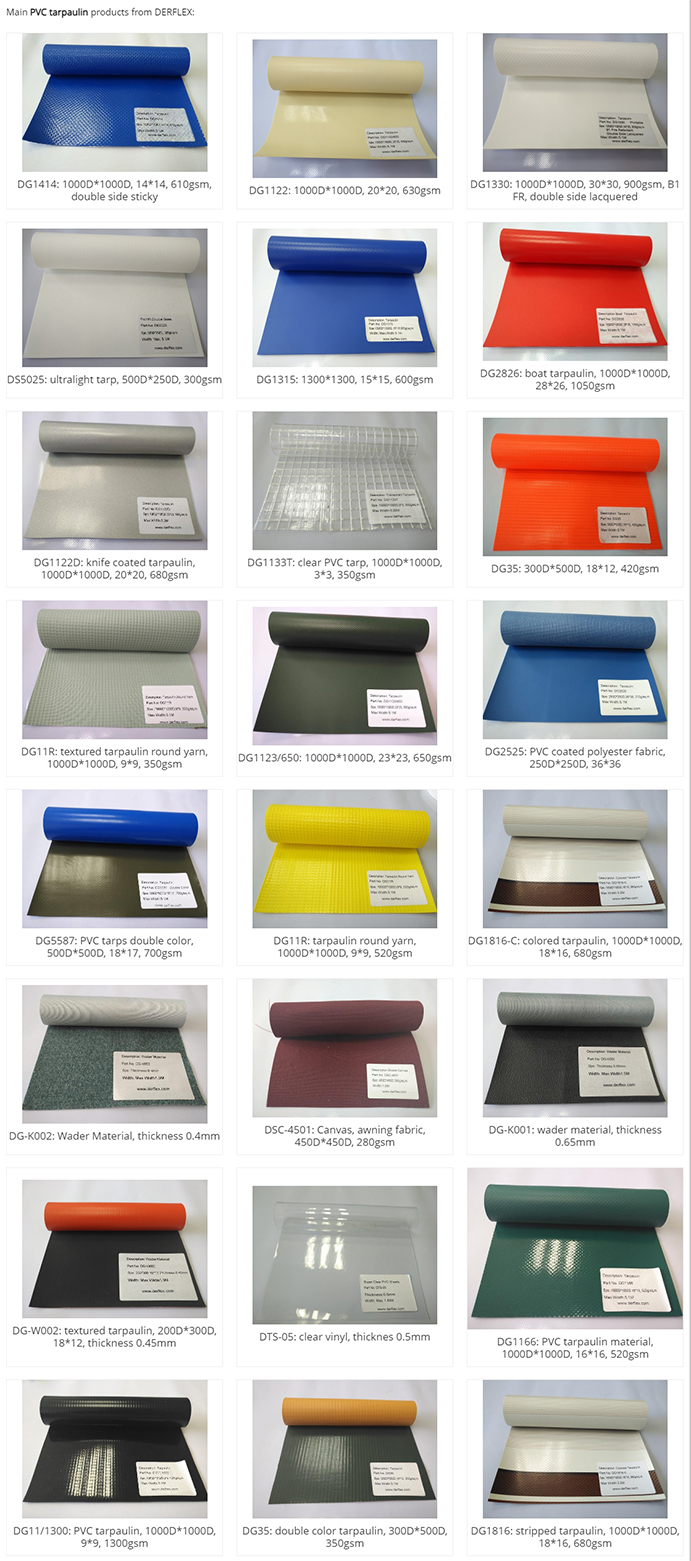
DERFLEX PVC tarpaulin material sample board showing multiple fabric constructions
Different constructions, weights and surfaces can produce very different lifecycle economics. Compare actual specifications rather than the material label alone.
Break-Even Thinking

When does a higher-priced PVC tarp pay back?

The break-even point is the number of successful uses required for the higher-cost option to match the lower-cost option's cost per use. The calculation is simple, but the inputs must be realistic.

Required PVC uses to match PE = PVC lifecycle cost before use-dependent labor ÷ PE benchmark cost per use

What moves the break-even point?

Wind flap and abrasionMore movement raises the value of tear, coating and reinforcement reserve.
Install frequencyRepeated fitting and removal can make material and hardware durability more important.
Crew timeLightweight PE can reduce handling effort in quick temporary work.
Failure consequenceHigh-value cargo or downtime can justify a larger durability margin.
RepairabilityA repairable cover can remain economically useful after localized damage.
Replacement lead timeLong replenishment cycles can make emergency replacement more expensive than planned purchasing.

If the project is specifically evaluating reinforced industrial PVC, review the heavy duty PVC tarpaulin specification direction before assigning a service-cycle assumption.

Application Decision Matrix

Where first cost matters—and where lifecycle cost matters more

The goal is not to make PVC win every comparison. The goal is to avoid paying for durability you do not need—or buying temporary material for a repeat-duty problem.

Application Economic Priority PE Direction PVC Direction
Short construction weather cover Fast deployment, low acquisition cost, easy replacement. Often commercially sensible when exposure and mechanical stress are limited. Consider when the cover will be reused, welded into larger panels or exposed to higher stress.
Truck / trailer cover Repeated handling, wind movement, abrasion, tie-down loads and downtime. Use only if the actual PE grade is engineered for the duty cycle. Common direction for reusable fabricated covers with reinforced edges and hardware.
Seasonal agriculture cover Season length, UV exposure, handling frequency and replacement logistics. Can be economical for shorter seasonal cycles and low-stress coverage. Evaluate when covers are retained, moved and reused across multiple cycles.
Industrial equipment protection Asset value, long outdoor exposure, abrasion points and inspection access. Suitable where the protection period is limited and failure consequence is low. Often preferred when the cover functions as a reusable operational asset.
OEM custom tarp program Batch consistency, welding, finishing, branding, complaints and repeat-order economics. Useful for economical general-purpose product lines. Useful when fabrication depth and long-term product positioning justify the added material cost.

For a broader material-selection framework covering size, reinforcement and duty level, see the tarpaulin buying guide.

Image & Application Context

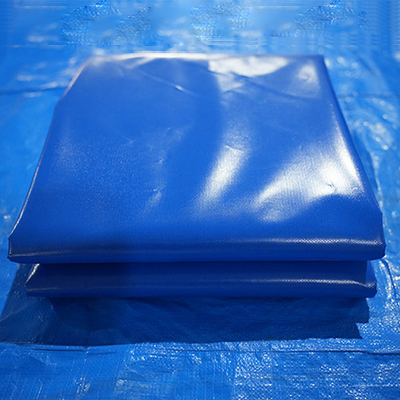
Lifecycle cost changes with the actual use environment

A material used as a truck cover is not exposed to the same loads as a temporary stockpile sheet. Use-site context must be part of the cost model.

Failure Cost

Four hidden costs procurement teams often miss

The financial impact of a failed cover is not always visible on the tarp purchase order.

Unplanned labor

Emergency removal, replacement, re-fastening and site visits can exceed the saving achieved on the tarp itself.

Protected-asset exposure

Water, dust, UV or debris can affect the goods or equipment the tarp was purchased to protect.

Operational downtime

A truck, machine, site or storage operation may wait while the cover is repaired or replaced.

Customer / warranty claims

For distributors and OEM programs, inconsistent service life can create returns, credits and reputation cost.

Procurement Workflow

How to build a defensible lifecycle comparison

  1. Define the same finished size, coverage area and use environment for both options.
  2. Collect landed price, not only EXW or FOB material price.
  3. Use actual historical replacement and repair records where available.
  4. Estimate deployment labor per use, especially for large or heavy covers.
  5. Record failure modes: tear, abrasion, grommet pull-out, seam damage, UV embrittlement or coating damage.
  6. Calculate cost per successful use and run a low / expected / high service-cycle range.
RFQ Checklist

Send these inputs for a meaningful quote

  • Application and protected asset
  • Finished dimensions or required roll width
  • Target GSM / thickness or approved reference sample
  • Expected outdoor exposure and climate
  • Handling frequency and fastening method
  • Seams, hems, webbing, grommets, D-rings or other hardware
  • UV, flame-retardant, cold-resistance or other performance needs
  • Order quantity, destination and Incoterm

For PVC roll-goods and custom specification options, review DERFLEX PVC tarpaulin.

Buyer Questions

Frequently asked questions about tarpaulin lifecycle cost

Short, decision-oriented answers for procurement teams comparing PVC and PE cover programs.

What does “tarpaulin cost per use” mean?

Tarpaulin cost per use is the total cost of owning and operating the cover over its useful service cycle divided by the number of successful uses. A practical total can include landed purchase price, repairs, handling labor and an internal allowance for failure or downtime risk.

Is PVC tarpaulin always cheaper over its lifetime than PE tarpaulin?

No. PVC can become more economical in repeat-duty, mechanically demanding or higher-risk applications, but PE can remain the better economic choice for temporary, lightweight and easily replaceable protection. The correct answer comes from your own duty cycle and costs.

How should I compare PVC vs PE tarp price fairly?

Normalize finished size, covered area, material grade, reinforcement, hardware, delivery basis and intended service condition. Then compare landed cost per cover and cost per successful use. Comparing a light PE sheet with a reinforced fabricated PVC cover only by square-meter price is not an equivalent comparison.

Should I use years, days or service cycles for tarp lifecycle cost?

Use the unit that matches the operation. Fleet and rental programs often benefit from trips or deployments; seasonal agriculture may use seasons; fixed covers may use protected days or months. The best denominator is the one your operation can measure consistently.

What is the biggest hidden lifecycle cost?

It varies by application, but replacement labor, downtime and the consequence of exposing cargo or equipment can be more important than the material price. Low-risk temporary covers may have very little hidden cost, while transport and industrial applications can have much more.

How can I estimate service life without inventing a number?

Use your historical replacement records, field trials, supplier test data for the exact grade, and a low / expected / high scenario. Avoid assigning one universal lifespan to all PVC or PE tarpaulins because formulation, weight, UV package, installation, wind, abrasion and maintenance can change performance substantially.

What information should I send DERFLEX for a lifecycle-focused recommendation?

Send the application, dimensions, target weight or construction, handling frequency, climate, fastening method, expected service cycle, quantity, destination and any required performance standard. DERFLEX can then discuss a material direction and current quotation basis.

Compare the cost of protection—not only the cost of fabric.

Send DERFLEX your application, finished size, current tarp specification, replacement experience, order quantity and destination. We can help structure a PVC tarpaulin quotation that can be compared against your current PE program on a consistent basis.

Consulting Services
+86-021-54361792 / 54361798
Email
sales@derflex.com