News
Company News

Heavy Duty Tarp Price Breakdown & Wholesale Cost | DERFLEX

Update:2026/10/22 19:17:01 Views:
Skip to price guide

Wholesale procurement / Price & specification

Heavy Duty Tarp Price Breakdown for Comparable Wholesale Quotes

A useful heavy duty tarp price starts with a shared specification. For importers, distributors and OEM buyers, this guide separates material, fabrication, reinforcement, accessories, packaging and freight so each quotation can be checked on the same basis. DERFLEX supplies PVC tarpaulin material and custom tarp formats; state whether you need rolls, panels or finished covers. Follow the clearly labelled cost model below, then submit the same drawing, quantity and delivery scope to request a comparable wholesale quote.

Procurement guide · Updated 22 October 2026 · All monetary examples are hypothetical

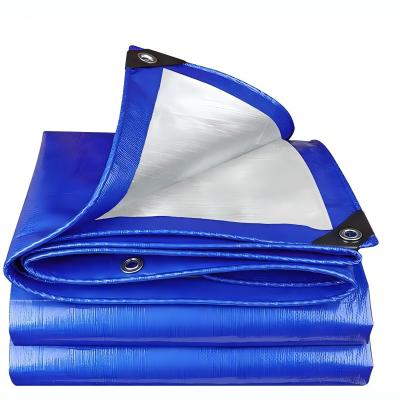
Folded blue and white tarp with metal eyelets and reinforced corners
Look beyond the sheet: hems, corner patches and fastening details belong in the finished-cover specification. DERFLEX source image; this is not a photograph of the worked-example order.
01
Lock the specificationOne drawing and one supply format
02
Expose the cost layersUnit charges and order-level fees
03
Align the commercial scopeDestination, currency and validity

The practical answer

How much does a heavy duty tarp cost?

There is no useful single price without a defined tarp. Compare the same finished size, fabric construction, seam plan, reinforced edges, hardware count, quantity and delivery basis. A price per square metre of roll material does not include the same work as a price per finished cover.

Comparable order spend = finished goods + separate order fees + transport within the agreed scope

Add any excluded insurance, duties, taxes, clearance and local delivery separately. Count each charge once. This guide models quote comparison; it does not publish a current price list.

01 / Establish a common basis

Freeze the cover before comparing the number.

Send one specification revision to every supplier. Record exceptions next to the price rather than letting each supplier silently choose a different fabric, eyelet count or packing method. For material-only buying, begin with the PVC tarpaulin supply overview and specify usable roll width and length.

Worked-example status: the specification and rates below are invented solely to demonstrate arithmetic. They are not an anonymous customer quotation, a released manufacturing drawing, a recommended duty rating or DERFLEX's actual production costs. No commercial offer or validity period applies.
Example reference
EX-01, revision A; 100 identical finished covers; USD throughout.
Finished outline
3.00 × 5.00 m; 15.00 m² per cover; 16.00 m perimeter. Finished size after hemming, not cut size.
Fabric assumption
Blue PVC-coated polyester, nominal 650 g/m². A real RFQ must also fix the fabric reference, construction, tolerances and applicable performance evidence.
Fabrication
One 5 m longitudinal welded joint; 50 mm finished hems, continuous edge webbing and four 100 × 100 mm corner patches. These are model assumptions, not fabrication instructions.
Accessories
32 brass eyelets, 12 mm internal diameter, at drawing-defined positions. No D-rings, straps, rope or installation hardware.
Packaging
Individual folded pack, plain label and master-carton allocation included in the packing line; no pallet or printed retail pack.
Price boundary
Material, processing, reinforcement, eyelet components, packing and a separate setup fee; freight shown separately. No tax or duty assumption.

A rectangular finished outline with reinforced border, four corner patches and one longitudinal joint. Accessory locations are not plotted. This is a schematic, not a production drawing. EX-01 / REV A · SCHEMATIC 5.00 m 3.00 m One longitudinal joint 5 m model seam length Finished area: 15.00 m² Perimeter: 16.00 m Eyelet positions and seam detail omitted.
Schematic only; not to scale. Blue border: reinforced hem. Orange corners: patches. Dashed line: joint. All 32 eyelet positions, centre offsets and tolerances must be defined on the approved production drawing.

650 g/m² describes areal mass, not thickness or guaranteed strength. Use the GSM, thickness and weight guide to keep comparison units consistent. Agree acceptance tolerances and measurement conditions before an actual order.

02 / An auditable cost model

Separate what is charged per cover from what is charged per order.

In this hypothetical wholesale tarp cost model, the main fabric allocation is 18.00 m² per cover: 15.00 m² of finished area plus a deliberately assumed 3.00 m² for the main-body hems, overlap and trim. Reinforcement is charged separately. This 20% uplift is a teaching assumption, not a normal factory allowance or a measured cutting yield.

Swipe horizontally to read the full calculation table.

Model A · EX-01 revision A · 100 covers · USD · Hypothetical charges, not market prices or a commercial offer
Cost layer Explicit calculation / scope USD / cover USD / 100 covers
Main fabric 18.00 m² allocated × assumed $2.40/m².
Webbing and corner-patch material are excluded here.
43.20 4,320.00
Fabrication Assumed charge for cutting, the model seam, hemming and attachment operations, including eyelet installation labour. 6.80 680.00
Reinforcement Assumed webbing and four corner-patch material charge. Attachment labour is already in fabrication. 4.50 450.00
Accessories 32 eyelet components × assumed $0.10 each. Installation labour is not charged again. 3.20 320.00
Packaging Assumed individual pack, plain label and master-carton allocation. 1.30 130.00
Packed product subtotal Sum of the five component charges above. 59.00 5,900.00
One-time setup Assumed $100 per order ÷ 100 covers; not a second fabrication charge. 1.00 100.00
Goods + setup Packed goods and the stated order fee, before transport. 60.00 6,000.00
Transport allowance Model A: assumed $900 for the comparison transport scope. Model B uses the same scope at a different assumed rate. No actual freight offer is implied. 9.00 900.00
Model comparison total Goods + setup + the stated transport allowance. 69.00 6,900.00

Before transport, per finished area

$4.00/m²

$6,000 ÷ (100 × 15.00 m²). The denominator is finished cover area, not the 18.00 m² fabric allocation.

Including model transport, per finished area

$4.60/m²

$6,900 ÷ 1,500 m². This remains a scoped comparison total; excluded import and destination charges still need to be added.

A selling price can include overhead, margin and risk allowances within its rates. The example breaks down hypothetical quoted charges; it is not an open-book factory cost statement. For actual fabric consumption, request a panel layout and cutting-yield calculation rather than applying the model uplift.

03 / Bring offers onto the same scope

A lower unit price can produce a higher order total.

Both models below assume the identical EX-01 cover, 100 accepted pieces, the same packing and transport scope, the same currency and the same evaluation date. Model B's rates are also invented. Neither model represents a supplier or a historical transaction.

Same finished specification · Same exclusions · Different hypothetical charge structures
Comparison line Model A Model B
Packed product unit charge $59.00 $57.80
100 packed covers $5,900.00 $5,780.00
Separate setup fee / order $100.00 $180.00
Transport / identical scope $900.00 $1,100.00
Comparable scoped total $6,900.00 $7,060.00
Total allocated per cover $69.00 $70.60

Model A is $160 lower for this defined scope. That follows only from these assumed charges. It says nothing about real suppliers, quality or future orders. If a quote excludes a required item, mark it incomplete until that charge is known.

Normalise the quotation.

Divide the same complete scope by the same accepted quantity or finished area. Use one exchange-rate date if currencies differ. Separate refundable deposits, optional tests and recurring charges from non-recurring fees.

Review deviations before ranking.

A thinner fabric, omitted patch, unpriced inspection or smaller finished size changes the product. Ask for a revised compliant quote, or approve the deviation explicitly. A missing charge is not zero.

04 / What changes the quote

Material, construction and packing are different purchasing decisions.

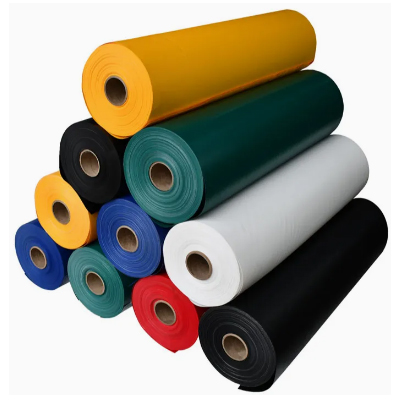
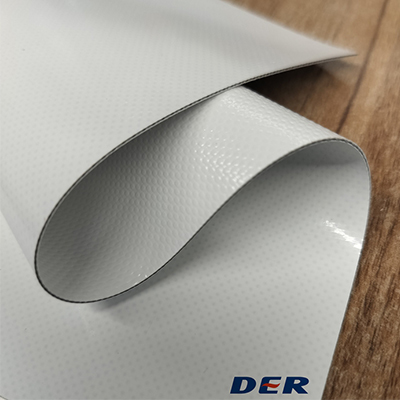
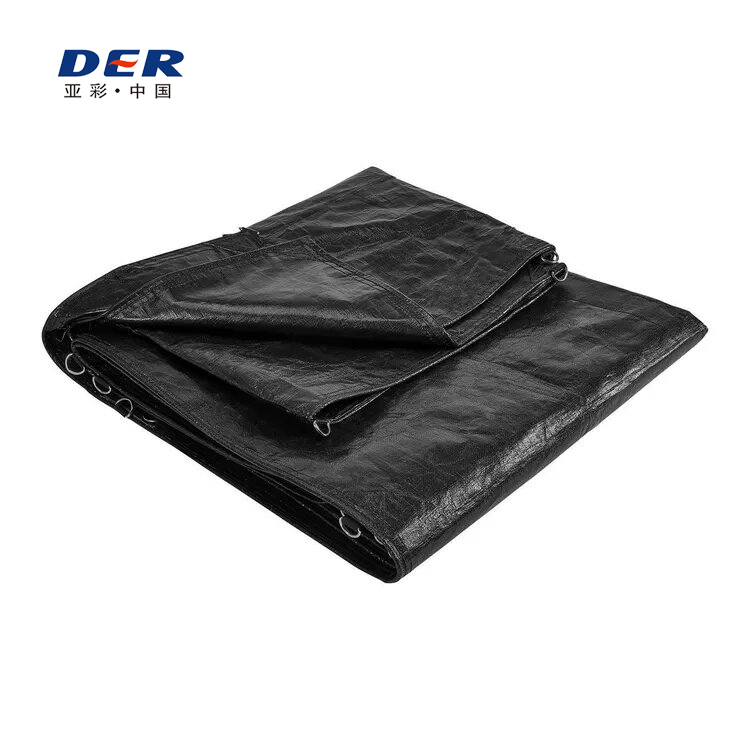
DERFLEX source photographs show different product formats. They do not establish the example's GSM, exact construction or test performance.

Match the material reference.

“Heavy duty”, “vinyl” and a colour name are insufficient identifiers. Fix the approved fabric or sample reference, nominal areal mass, tolerances and necessary test methods. Keep PVC-coated and laminated constructions distinguishable where the specification requires it.

Count the finished operations.

List seam length, edge treatment, pockets, patches, cut-outs and printing. Roll width can change seam layout and usable yield. Ask which setup and conversion activities are included before adding another line.

Define every fixing interface.

Specify eyelet material, internal diameter, count, centre position and reinforcement detail. D-ring and strap assemblies need their own bill of materials. The grommet tarp specification guide explains the surrounding construction decisions.

Request quantity tiers without changing the cover.

Keep the drawing, colour, pack and acceptance requirements fixed across tiers. Ask how setup, packing and transport change with order size. Explore bulk tarp supply formats before choosing material or finished-cover procurement.

05 / Freight, exclusions & time

A quotation needs a destination and an expiry.

Record the delivery rule, its version and the named place or port in full. An EXW, FOB, CIF or delivered number cannot be compared by its label alone. Request a written inclusion list and align offers to the same cost boundary; cost allocation and risk transfer are separate questions.

Information to capture from each actual quotation
Commercial field Required clarification Why it affects comparison
Currency & price basis Currency; price per roll, m² or finished piece; quantity tier; whether packing and fees are included. Stops mixed units and double-counted charges.
Transport scope Collection point, destination, freight mode, named delivery term and version, insurance scope and charge owner. A freight allowance is not automatically a complete landed cost.
Packing measurements Confirmed pack count, dimensions, gross mass, pallet requirement and stackability. Fabric mass alone does not establish shipping volume or billable freight.
Destination exclusions Clearance, terminal charges, duty, tax, inspection and onward delivery; mark each included, excluded or pending. Unknown charges remain unknown, rather than being treated as zero.
Product quote validity Issue date, exact expiry date and time zone, currency, specification revision and any adjustment triggers. The same product may be quoted under different conditions at different dates.
Freight validity Separate expiry, shipment window, rate confirmation basis and stated surcharges. The product quote and freight rate may expire on different dates.
Payment & schedule Payment terms, deposit conditions, sample approval, production start trigger and shipping window. Price validity, production lead time and transit time are distinct commitments.

The models on this page have no commercial validity. Actual quotes should state a calendar expiry rather than an undated “valid for 30 days” note. Reconfirm an expired product or freight quote before placing an order.

06 / Before you order

Make the price traceable to an accepted cover.

Agree how conformity is checked.

  • Dimensions: identify finished outside edges and measurement points. Agree conditioning, lay-flat method, applied tension if any, tolerances and sample count.
  • Material: reference the approved construction and areal-mass method; record thickness separately when required. Do not infer mil thickness from GSM alone.
  • Details: count hardware and patches, check locations and hems, and agree seam or attachment tests where needed.
  • Approval: retain the drawing revision, approved sample reference, inspection scope and rules for handling deviations.

Keep supply and use boundaries clear.

  • Supply format: rolls, panels and finished covers have different inclusions. Confirm which is being purchased through the DERFLEX tarp supply overview.
  • System scope: list frames, anchoring hardware, installation, engineering and site work separately if required. Do not assume they are included in a tarp quote.
  • Performance: a waterproof fabric claim does not verify every finished seam, fixing point or installed system. State the relevant conditions and evidence.
  • Repeat orders: link the accepted specification and packing revision to the new quote. Revalidate changes rather than assuming an old price covers them.

07 / Request a comparable quote

Submit one specification. Make every inclusion visible.

Send DERFLEX your finished size or drawing, material reference or application, quantity, fastening details, packing and destination. Ask for product charges, separate order fees and freight to be identified, with a written validity date and exclusions.

If you only have a sketch and an existing cover, start with those. The final quote still needs an agreed specification before it can be compared or accepted.

Request a Quote

Copy into your inquiry

COMPARABLE WHOLESALE TARP RFQ 
Application / exposure: 
Supply format: roll / panel / finished cover 
Drawing number and revision: 
Finished dimensions, units and tolerances: 
Fabric / approved sample / performance targets: 
Seams, hems, reinforcement and patch details: 
Hardware material, size, count and positions: 
Quantity and any quantity tiers: 
Colour, print and label requirements: 
Packing and inspection requirements: 
Destination, delivery term and required date: 

Please separate product, setup, packing (if extra), 
freight and other charges. State currency, inclusions, 
exclusions, product expiry and freight expiry. 
List every deviation from this specification.

Procurement questions

Heavy duty tarp price FAQ

Is the $69 per cover example a DERFLEX price?

No. It results from explicitly hypothetical component rates, a setup fee and a transport allowance for the model specification. It is not a historical quotation, market benchmark or offer. Request a current quote for your specification and destination.

Should wholesale tarp cost be compared per piece or per square metre?

Per-piece comparison works for identical finished covers. Per-square-metre comparison can help when you use the same finished-area denominator and scope. A raw fabric rate must remain separate because it excludes conversion and finished-cover details unless the supplier expressly includes them.

Why can two tarps with the same GSM have different prices?

They may use different base fabrics, coatings, usable widths, finishing, tolerances or verification requirements. Seam layout, edge reinforcement and accessories also change the finished product. Match the material reference and drawing before interpreting the price difference.

Does a larger quantity automatically mean a lower unit price?

No fixed reduction should be assumed. Order size can change the allocation of setup fees, material purchasing, packing and transport. Ask for quantity tiers with the same specification and list order-level fees separately.

Does the freight line include duties and all destination charges?

Only if the actual quotation explicitly includes them within its written delivery scope. Check insurance, clearance, duties, taxes, terminal charges and onward delivery one by one. The transport allowances in this guide do not include those items.

What should I do when a quote expires or the drawing changes?

Ask for a revised quotation referencing the current drawing, quantity, packing, destination and payment terms. Confirm product and freight expiry dates separately. Do not apply a previously quoted price to a changed specification without written acceptance.

Consulting Services
+86-021-54361792 / 54361798
Email
sales@derflex.com