01
Temporary Roof Zone
Requires reliable water shedding, controlled overlap, welded seams and strong perimeter anchoring. Ponding and sharp roof edges should be considered in the installation plan.




DERFLEX supplies PVC coated construction site tarps and custom fabricated covers for temporary roofing, scaffold enclosure, material storage, equipment protection, dust control and changing weather conditions. Each order can be developed around the installation method, exposure period, fixing stress and handling cycle of the project.
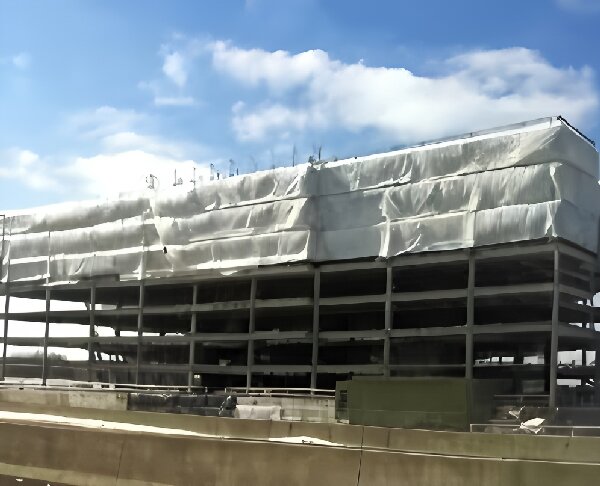
On an active jobsite, a tarp is pulled, tensioned, folded, dragged, fastened and exposed to changing loads. Treating it as a simple sheet can lead to torn corners, leaking seams, loose covers and premature replacement. A more reliable approach is to specify the tarp as part of the temporary protection system.
The same construction project may require waterproof covers, breathable barriers, wind-permeable mesh and abrasion-resistant ground sheets. Separating the jobsite into use zones helps buyers avoid overspecifying low-risk areas and underspecifying high-stress installations.
Requires reliable water shedding, controlled overlap, welded seams and strong perimeter anchoring. Ponding and sharp roof edges should be considered in the installation plan.
Needs balanced wind behavior, repeated fixing points and optional flame-retardant performance. Full tarpaulin or mesh structures may be chosen according to enclosure and airflow needs.
Protects timber, steel, insulation, flooring, cement bags and palletized supplies. Cover design should allow drainage and reduce direct abrasion against corners.
Custom fitted covers can reduce loose fabric and improve access around generators, mixers, machinery and temporary electrical equipment.
Tarps and curtains can divide work areas, limit dust movement, protect finished surfaces and create temporary access openings with zippers or hook-and-loop closures.
Ground covers, collection sheets and containment tarps need puncture awareness, reinforced lifting points where required and a surface suitable for cleaning between uses.
Tarps for construction sites perform different jobs as the building changes. A phase-based purchase plan can reduce emergency buying and create a clearer specification for each delivery batch.
Focus on abrasion, puncture risk, handling and easy cleaning. Cost-sensitive PE structures may work for short cycles, while reusable PVC covers support repeated movement.
Wind action becomes a major design consideration. Confirm attachment spacing, panel size, airflow strategy and any project-specific fire requirements before production.
Water management depends on more than the fabric. The design should account for slope, seam orientation, overlap, drainage and the possibility of abrasion against roof edges.
Smooth surfaces, light colors, cleanable finishes and custom openings can be more important than maximum fabric weight.
Reusable construction tarps should be dried, inspected and labeled before storage. Standardized sizes and repairable PVC structures can simplify fleet management.
Two tarps with the same finished size can perform very differently. Base fabric strength, coating balance, seam design, edge reinforcement and fixing-point construction all influence how the cover behaves on site.
Illustrative material architecture for heavy-duty jobsite covers.
Typical options shown for quotation planning; final values depend on project requirements.
| Specification Item | Typical Options | Procurement Consideration |
|---|---|---|
| Material | PVC coated polyester; PE woven tarpaulin; PVC mesh where airflow is required | Choose according to exposure time, waterproofing, wind behavior and handling frequency. |
| Indicative Weight | Approx. 200–900 gsm for common construction applications; custom structures may vary | Do not select by GSM alone. Review base fabric, coating and reinforcement together. |
| Finished Size | Custom panels, fitted covers or large welded sheets | Confirm whether dimensions are cut size or finished size and include overlap allowance. |
| Seams | Hot-air welded, high-frequency welded or sewn-and-sealed according to design | Waterproof projects usually benefit from properly developed welded seams. |
| Edge Reinforcement | Double-fold hem, webbing reinforcement, rope edge, corner patches | Reinforcement should match expected tension and fixing-point spacing. |
| Hardware | Grommets, D-rings, webbing loops, buckles, straps, pipe pockets, zippers | Specify material, size, spacing and orientation. Hardware should suit the installation system. |
| Surface Options | UV-stabilized, anti-mildew, low-temperature, cleanable or flame-retardant formulations | Request the relevant test method or sample rather than relying only on feature names. |
| Color & Branding | White, blue, green, gray, orange and custom colors; logo printing and labels | Light colors may support brighter work areas; high-visibility colors can aid zone identification. |
| Supply Form | Roll material, cut sheet, welded panel, finished tarp or private-label package | Choose the point in the fabrication process that matches your team and local installation capacity. |
Many tarp failures begin at the interface between material and installation. A clear risk review before production can improve the specification and reduce avoidable damage in use.
Loose panels repeatedly flex and pull against fixing points, increasing edge stress and noise.
Design response: panel sizing, closer reinforcement zones, tension plan and airflow strategy.Flat or poorly supported tarps can collect water and create loads beyond the intended design.
Design response: positive slope, supported drainage path and seam orientation.Steel corners, masonry edges and scaffold fittings can wear through a tarp even when the fabric is heavy.
Design response: protective pads, corner patches, sleeves and separated contact points.Fixing points can fail when loads are concentrated in unsupported material or tie-downs are uneven.
Design response: webbing reinforcement, suitable hardware and load distribution.Some tarp structures become less flexible in low temperatures, making installation and folding more difficult.
Design response: state the minimum service temperature and approve a suitable formulation.Using a general “FR” description without a specified test can create documentation and acceptance problems.
Design response: identify the standard, specimen requirement, report and destination market.Finished tarps may be installed as full building wraps, roof protection, perimeter covers, fitted equipment covers or modular enclosure panels. The fabrication detail should follow the way the cover will be handled on site.
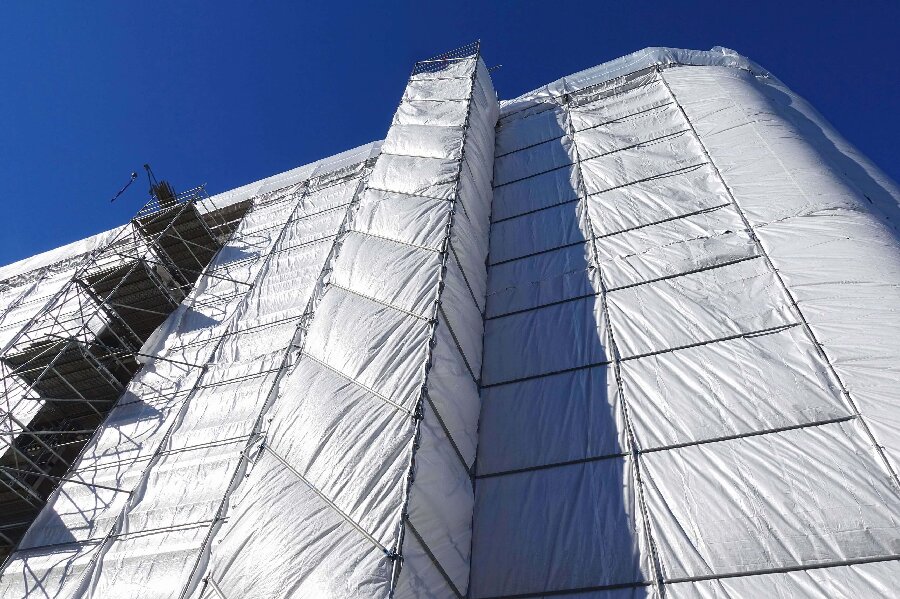
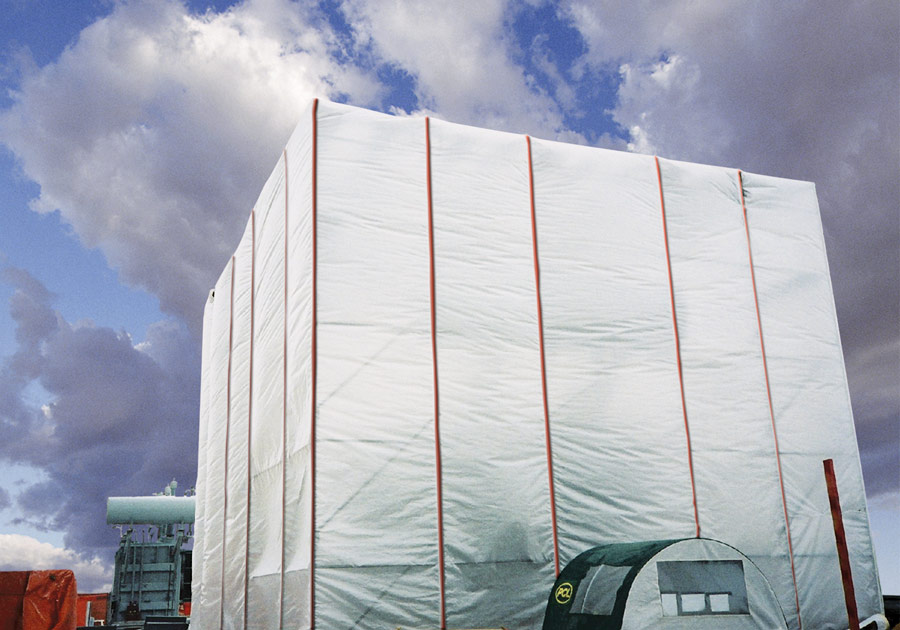
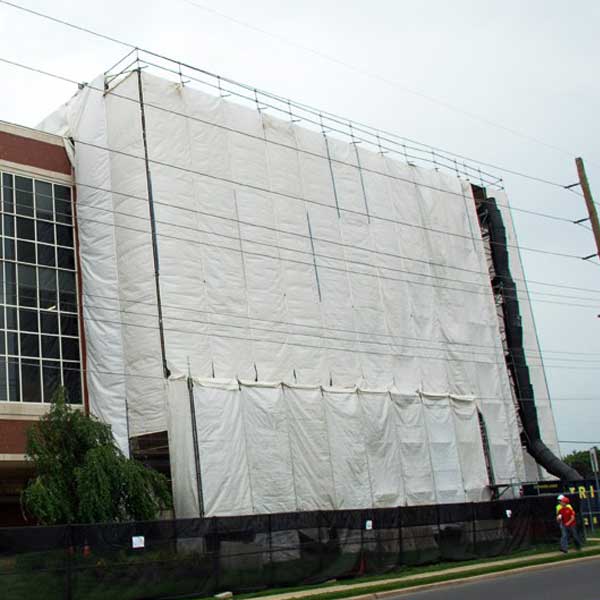
Standard tarps can be practical for urgent and low-complexity coverage. Project-specified tarps are more suitable when dimensions, attachment, weather exposure, repeat use or documentation influence the outcome.
The objective is to convert field conditions into a controlled specification before full production. The exact process depends on product complexity, quantity and documentation requirements.
Application, dimensions, project duration, climate, fixing method, quantity and destination are clarified.
DERFLEX recommends a material structure, weight range, finishing method and reinforcement approach.
Color, coating feel, weld quality, hardware layout and packaging details can be checked before bulk production.
Fabric, fabrication dimensions, seams, fixing points, marking and packaging are checked against the approved specification.
Finished tarps are folded, labeled and packed according to the agreed shipping and handling requirements.
A useful RFQ does not need to be complicated, but it should describe how the tarp will work. Photos, sketches and a simple fixing-point diagram can prevent assumptions and shorten the specification process.
Use these related pages to compare materials, application details and protection options before finalizing the specification.
Overview of heavy-duty construction tarpaulins for scaffolding, temporary roofing and jobsite protection.
View solution →Compare PVC, PE, canvas and mesh according to waterproofing, airflow, durability and cost.
Read material guide →Protection options for lumber, drywall, insulation, steel, cement bags and palletized materials.
Explore application →Technical overview of waterproof PVC coated polyester fabric used for fabricated construction covers.
Review material →Stronger coated tarp structures for repeated handling, outdoor storage and industrial protection.
Compare heavy-duty options →Outdoor tarp options developed for sunlight exposure and longer-term weather protection.
View UV options →PVC coated polyester tarps are often selected for heavy-duty waterproof protection, repeated handling, welded fabrication and longer outdoor exposure. PE woven tarps can be practical for temporary and budget-sensitive coverage. Mesh tarps are useful where airflow, shade or reduced wind pressure is more important than full waterproofing.
PVC coated tarp material can provide a waterproof barrier, but field performance also depends on seam construction, drainage, overlap, fixing details and installation. For temporary roofing or moisture-sensitive storage, request welded seams and plan the cover so water can drain without ponding.
There is no single GSM for every construction use. Lighter structures may suit short-term covers and easy handling, while heavier PVC structures may be appropriate for scaffold enclosure, temporary roofing, industrial equipment or repeat use. Base fabric strength, coating, seam design and reinforcement should be reviewed together with weight.
Yes. DERFLEX can discuss custom finished dimensions, welded panel layouts, hems, webbing, grommets, D-rings, rope edges, pipe pockets, access openings, zippers, printing, labels and packaging. Final feasibility depends on the design and order requirements.
Flame-retardant formulations can be developed for suitable applications. Buyers should specify the required test standard, project location, report requirement and end use before sampling because different markets and project types may use different methods and acceptance criteria.
The fixing method should distribute loads through reinforced areas rather than concentrating force at isolated points. Use the specified grommets, webbing loops, D-rings, straps or pockets and follow the project installation plan. Avoid sharp edges, uncontrolled flapping and water ponding. Site engineers should determine the final anchoring method for local conditions.
Provide the application, finished size, quantity, expected exposure period, climate, fixing method, desired material or weight, color, fire requirement, reinforcement layout, printing, labeling, packaging and delivery destination. Photos or sketches are useful for custom covers.
Share the application, dimensions, site conditions and fixing method. DERFLEX will review the project and discuss a suitable material, fabrication and reinforcement starting point.